The digital sewer is not my fault. It is, however, my problem.
I have shown my 3-year-old boy about four videos in the course of his life, and all of them were mistakes. Or, rather, all of them were, collectively, one mistake.
It has all been wholesome stuff—the little man likes An Innocent Man-era Billy Joel, so I played him the old MTV videos for “Uptown Girl” and “The Longest Time,” and, immediately, the video-watching became an expected part of listening to these two songs, though none others. Much to his papa’s satisfaction, he also has taken an interest in wrestling, so we watched one video of a recent college championship wrestling match. We also watched one video, when he was up particularly early one morning, about an English naturalist who has made his cottage garden into a haven for weasels and stoats. We do not have weasels where we live, and I assume this fellow learned the word “weasel” the same way he (don’t tell his mother) learned the word “schmuck”—from me.
Now, when it is just the two of us early in the morning and he is not otherwise occupied, he often asks to watch the weasel video or the wrestling video. In the evenings, before bed, he asked for “The Longest Time” almost every night for about a month. And after a few weeks of my saying “No” to that request, he stopped. I haven’t repeated the wrestling video and cut off the weasels after about the third viewing. But it is clear that it is not only the content he is after—it is the sensation of watching a video.
We are not super extreme about that stuff in my family: We do not have a television but may get one at some point if we decide to institute a family movie night or something like that. The older boy has the attention span for maybe 30 minutes, but his 2-year-old triplet brothers do not: A dramatic reading of The Pout-Pout Fish is more their speed, though they will sit through—they will demand—four or five back-to-back performances. It is like going to see a Lynyrd Skynyrd tribute band that only plays “Free Bird,” over and over. Our no-devices policy for the kids is, given their age, pro forma: Nobody is asking for a tablet or anything like that because none of them knows what that is. But they do see both of their parents working on laptops and checking their phones more often than they probably should. I intend to maintain a hard line on that stuff, but your guess is probably about as good as mine as to how it will turn out in fact. We are sticklers about bedtime routines and other schedules but pretty free with the cookies.
I very much doubt that any of you needs to hear from me that we live in an ugly time full of ugly things and ugly sentiments servicing some of the basest and meanest proclivities to which H. sap. is inclined. The damnable thing, of course, is that the vast sewer of modern digital culture runs through the same channels as the flow of good things enabled by the internet: the fact that my wife and I can do most of our work without commuting into offices; the fact that Jeff (PBUH), our personified shorthand for Amazon, kept those boxes of diapers and other needful things hitting our front porch for all those months when that convenience mattered so enormously; the ease with which I could download a copy of Dogma to watch and write up in between flights while traveling for work; the very existence of The Dispatch and most journalism as we currently know it. My wife and I occupied an idle morning on our honeymoon in France looking around for a particular French brand of tea she likes, and that was not a bad way to spend a few hours (the weather was glorious and we were driving a convertible) but we did not succeed in finding the tea—instead, she ended up ordering it from Jeff while we drove along the coast toward Nice, and it was waiting for us at our home in Texas when we returned. So, yes, I like the internet, and not only because it is where I earn my living.
But I don’t think I want my kids anywhere near it. At least for a while. I like Las Vegas, too, but I am not going to turn my children loose there.
As my Competitive Enterprise Institute colleague Jessica Melugin points out, parents have the tools in front of them to manage their children’s digital lives. I think here of Michael Oakeshott’s view of the relatively modern phenomenon of individualism: Some people will experience it as liberation, and others will experience it as a burden. Some parents appreciate the tools they have to moderate their children’s experience of technology, but others—many others—feel experience the use of such tools as just another difficult obligation from which they wish to be liberated.
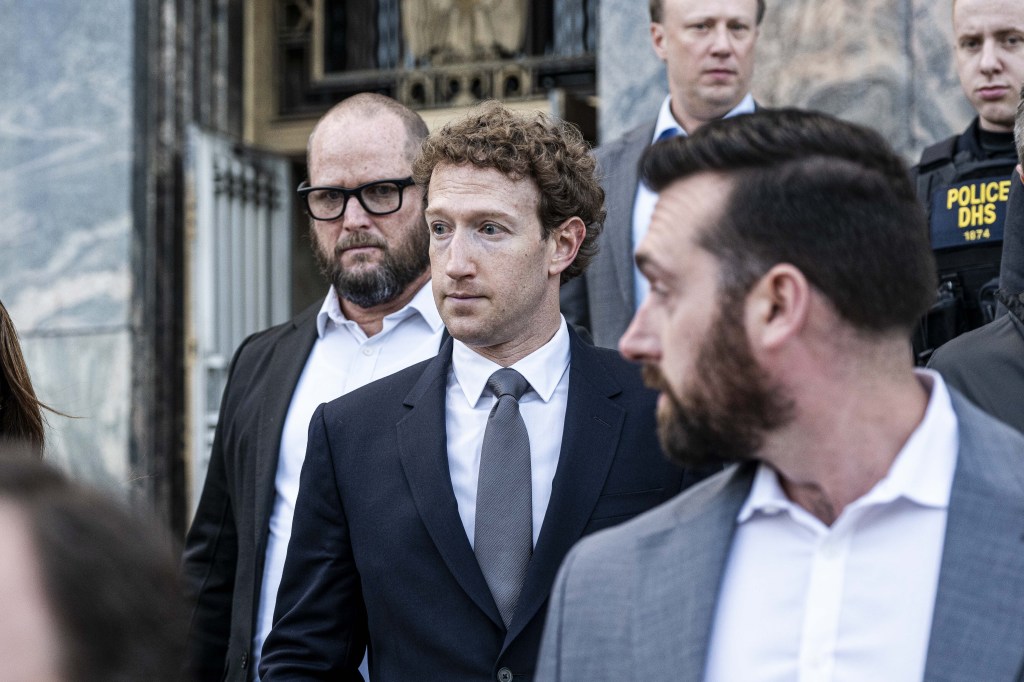
I am not here to lecture anybody about how to be a good father or a good mother—the jury is out, and will be for another couple of decades, on whether I am qualified to do that. I met Mark Zuckerberg once, and I’d bet good money that he is well-qualified to raise his own kids—and I am entirely sure he is not qualified to raise mine.
The recently concluded litigation against Meta and Google, which was centered on a very sympathetic plaintiff who apparently was turned loose on the Internet without much guidance from a very young age, is based on the much-lionized—and, in my view, still extremely dubious after all these years—litigation against tobacco companies a generation ago. The firms behind such products as Instagram and YouTube, according to the plaintiffs, design their products to be addictive. And addictive is, in this case, a funny word: Instagram is not addictive in the way cocaine or nicotine is addictive. “Designed to be addictive” is another way of saying that tech companies figure out what their customers respond positively to and then … do more of that. No doubt there is a good deal of dopamine action going on, and talking about neurotransmitters makes the proceedings sound science-y, but it is not only tech platforms and drugs that have an effect on dopamine: shopping does, exercise does—hugs do, too. I probably spend too much money on shirts and may be addicted to hugs from my children, but that is not the kind of addiction or addiction-adjacent problem that (to take a totally random example that for sure has nothing to do with my life!) drinking a liter of bourbon every day for seven or eight years does.
As my CEI colleague Alex Reinauer put it: “While the mental health challenges facing young people are real and require urgent attention, speech is not a drug. Pathologizing it as such is unscientific and subverts the First Amendment. The verdict in Los Angeles formalizes this error, greenlighting a wave of litigation against editorial freedom while doing nothing to make kids safer online.” That seems to me about right.
(CEI, where I am a writer in residence, works with tech industry groups on issues of this kind as an advocate and sometimes files amicus briefs and things of that nature, though in this case I am not aware of any direct conflicts of interest for me in this matter.)
The creepiest part of this litigation—one of the creepiest parts, at least—was the plaintiffs’ lawyers posing with a big jar of M&Ms and telling jurors that each piece of candy represented $1 billion in the firms’ market value. “ As the New York Times described the scene:
“You can take out a handful and not make a difference,” he said, scooping out a few with his hand. “You can take out two handfuls and not make a difference.”
That is a very old canard and a profoundly dishonest account of how corporate value works. Corporations may look like monoliths, but they are owned by shareholders—most of whom are not yacht-hopping billionaires. The great majority of Meta’s shares are owned by institutions, with the largest single owner being Vanguard through its various index funds, aka your Aunt Helen’s IRA. The notion that you can pull billions of dollars out of shareholders’ pockets without anybody suffering any meaningful financial pain is a lie—and billions, not the few paltry millions involved in this particular case, is what the plaintiffs’ bar has its eyes on. The myth that big businesses are simply bottomless wells of wealth that can be pillaged without consequence is both dumb and destructive.
I don’t love a lot of this stuff. And I don’t think I want much of it—if any—in my kids’ lives for a good long while. I also think you have to raise your own kids. The courts cannot do it for you, nor can the president, and neither can Congress. Have you met the people in Congress? If that is what help for beleaguered 21st-century parents looks like … no thanks.
(And while I have no particular love for tobacco companies, really: Who didn’t know cigarettes were bad for you?)
It is a complicated world. Some people I respect, including Jonathan Haidt, are cheering this verdict. I think we have to resist the temptation to divide the world into good guys and bad guys and cheer anything that seems to hurt the supposed bad guys—I think we have to look at this stuff a little more conservatively and sensibly. There are all sorts of parental controls people can use to oversee their children’s technology use—including the obvious one: not giving them phones or allowing them the private, unsupervised use of laptops and tablets and other such devices. I know, I know: Brave words from the new-ish father, check back in a few years. Maybe I am wrong. But it seems to me that if monitoring your kids’ technology use is too hard for you, then the problem isn’t the children, and it isn’t the marketing dorks at Instagram: It’s you. Be the parent.
No, you didn’t put all that porn and gambling and madness and ghastliness on the internet. It isn’t your fault.
But it is your problem. Mine, too.