You’re reading Dispatch Culture, our weekly newsletter exploring the world beyond politics. To unlock all of our stories, podcasts, community benefits, and our newest feature, Dispatch Voiced, which allows you to listen to our written stories in your own podcast feed, join The Dispatch as a paying member.
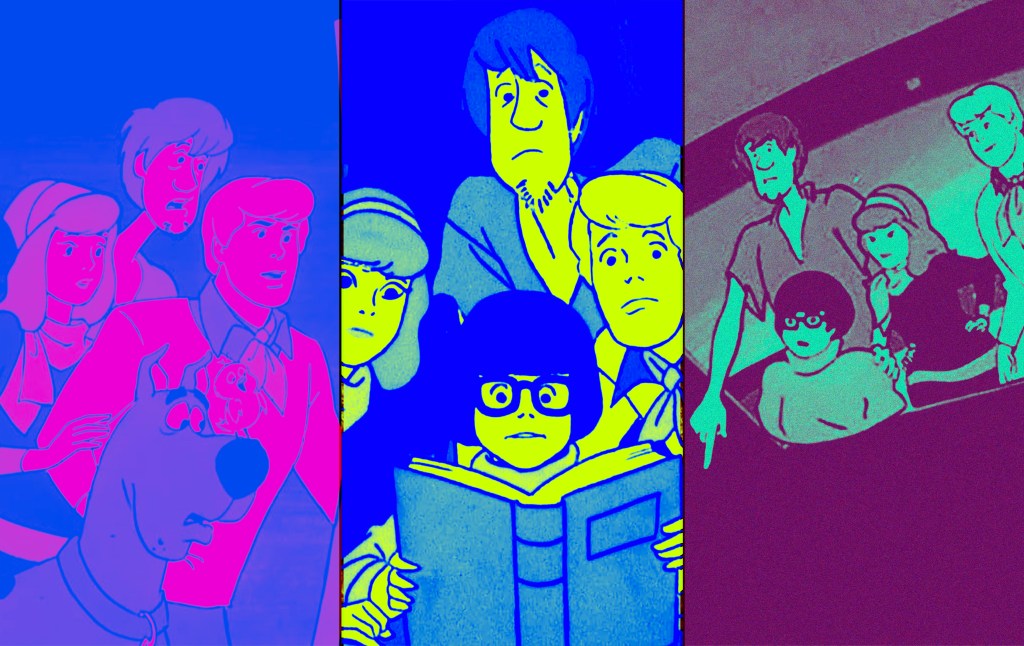
After last weekend’s American Artifacts entry on postwar Westerns, we’re moving forward in time to something a little less stiff-upper-lip: an entry on Scooby Doo, Where Are You! Our writer, Illinois college professor Zachary Michael Jack, worried that, so many years after his 1980s childhood, the show might be “cringe or cancel-worthy.” But to his delight, it’s stayed evergreen—and remains an enjoyable portal into mystery and friendship. Elsewhere in this newsletter, you’ll find an essay suggestion from yours truly, a book review by Chicago writer Sam Buntz, recommendations from Dispatch reporter Grayson Logue, and a Work of the Week by Dispatch member Anthony Holmes.
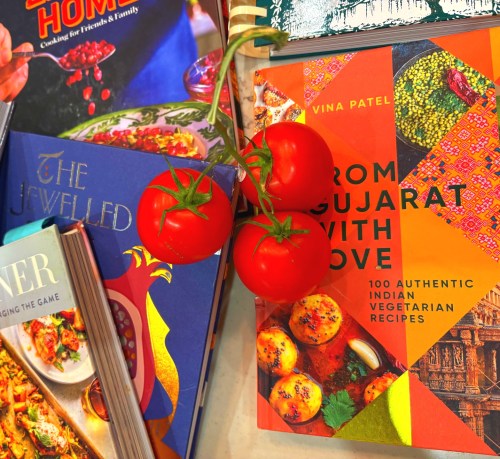
Look around your kitchen. Maybe some pots, pans, water glasses that have been out a suspiciously long time. Maybe some salt and pepper shakers. But what about cookbooks? For the site today, former New York Times reporter Jennifer Steinhauer writes an ode to the cookbook, which persists despite the proliferation of recipe websites and online newsletters. “If web recipes offer a quick metro ride to dinner—I just need something to do with these chicken thighs—cookbooks are a slow luxury cruise through cuisine,” Steinhauer writes.
Next, we have Dispatch contributor Jay Nordlinger on The Wealth of Nations—not the book, but a piece of music inspired by said book, written by American composer David Lang, which premiered at the New York Philharmonic on March 19. “It was a pleasure, sitting in the concert hall, to get a little reacquainted with Adam Smith,” Nordlinger writes. “His intelligence and humanity are evident.”
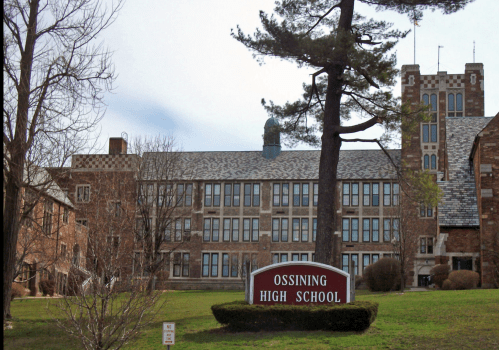
Finally, we have frequent Dispatch writer Thomas Dichter with the next installment in our “Where I’m From” series, this time focused on Ossining, New York, and Dichter’s younger days there in the 1950s. “What was striking was how much we all believed (or at least, did not question) our American-ness,” Dichter writes. “Without thinking about it, we seemed to know, however vaguely, that we’d be able to relate to people from other parts of the U.S.; that somehow our town, for all its geographical closeness to New York City (32 miles) was similar to towns in Idaho, Missouri, Maine, or Nebraska.”
American Artifacts
Groovy Mysteries and the Power of the Unseen
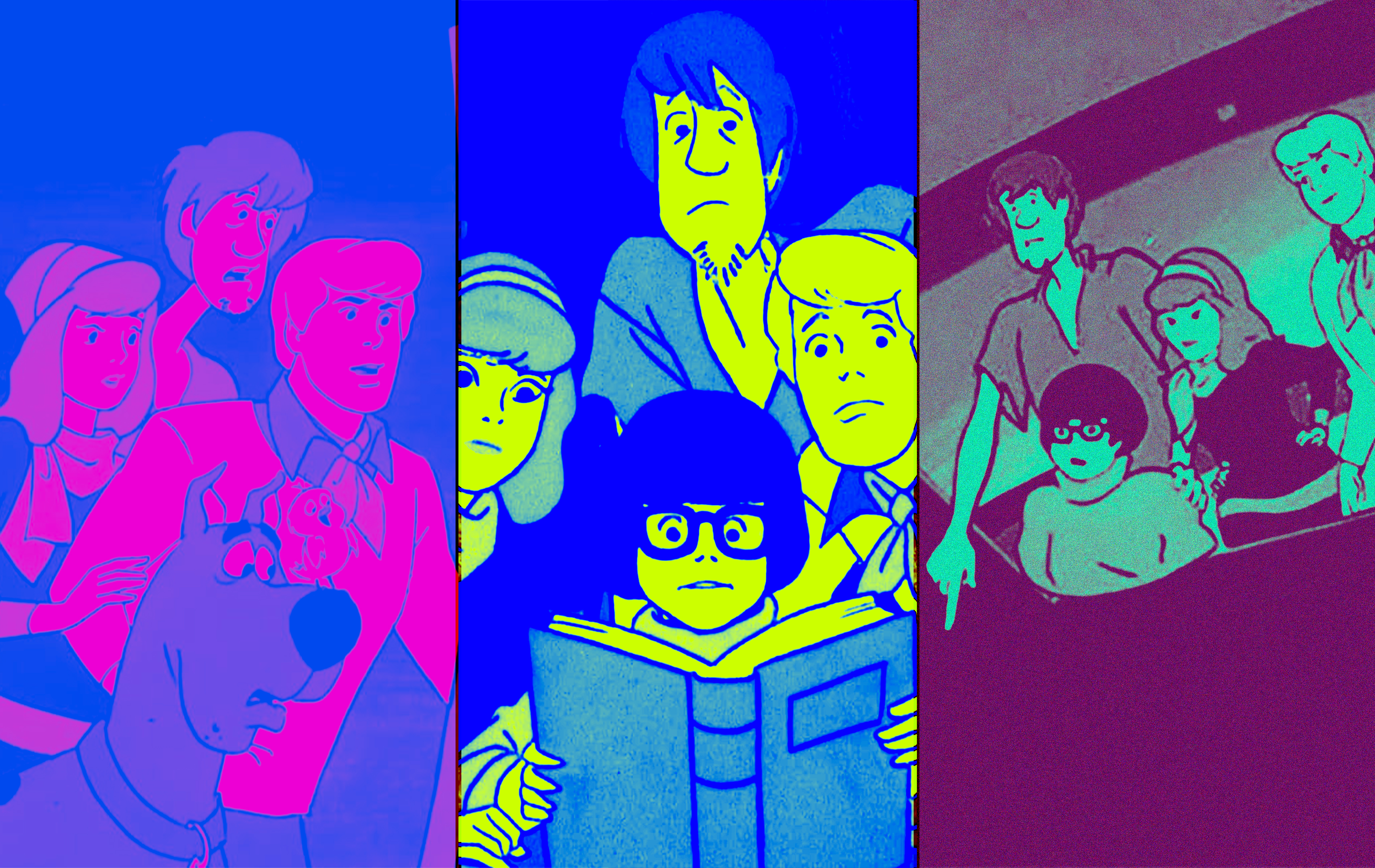
Though the 1969 network debut of the animated series Scooby-Doo, Where Are You! arrived well before my time, the show’s 1980s reruns had me hooked. For early-’80s preteens like me, mystery, not fantasy, reigned supreme. And yet until Scooby arrived on the scene, my classmates and I mostly resorted, for our mystery fix, to the goody-two-shoes books of our parents’ and grandparents’ generation: Nancy Drew, the Hardy Boys, even sometimes, God help us, the Bobbsey Twins.
Scooby-Doo felt new. Its on-screen sleuths were mature enough to drive themselves to campy haunts, and hip enough to boogie down at beachy clambakes and bunk together in spooky hotels while traveling from town to town in their tricked-out, psychedelic van. Somehow, too, they had formed their own unlikely corporation, Mystery Inc., a disco-era version of a wunderkind internet startup. Best friends, they raised tantalizing questions for teens: Were Fred and Daphne really a couple? Was Shaggy (famously voiced by a young Casey Kasem) a stoner? Did Velma even like boys?
In the Scooby-verse, no helicopter parents harshed their mellow, and the antagonists Scoob and the gang thwarted were precisely the type Reagan-era kids had come to suspect as the real cultural villains: overzealous developers, frauds and hucksters, tricksy phonies of all kinds. No wonder the sour-grapes refrain of the show’s many villains (“And I would have gotten away with it, too, if it weren’t for you meddling kids!”) became a cultural catchphrase for the jaded Gen-Xers the series helped reinvest in notions of justice, or at least karmic comeuppance. Scooby taught us that even scaredy cats and shrinking violets could learn to lean in.
Rewatching the series recently, I worried that it, like so many artifacts of a 1980s childhood, had morphed into something cringe or cancel-worthy. To my delight, I found the franchise mostly evergreen. Though Fred, Daphne, Velma, and Shaggy are stock characters (blonde hunk, accident-prone beauty, fastidious bookworm, and lovable fool, respectively) a deeper look reveals the show’s embrace of, for example, second-wave feminism, with Velma owning her role as the brains and conscience of the group and Daphne serving as a bona fide member of the team, not just cartoon eye candy. Via good vibes, groovy collabs, and serendipitously hatched to-catch-a-thief plots, these amateur P.I.s and their irrepressible Great Dane solved mysteries law enforcement wouldn’t deign to touch, while prefiguring the rise of cozy mysteries from the 1980s Murder, She Wrote to the 2020s Only Murders in the Building.
Beyond its widespread cultural influence, Scooby-Doo’s many and various haunts instilled in me a deep love of the gothic I would later explore as a writer and a professor. The series introduced young viewers to the allure of adventure-fueled travel, and to the lore of the diverse regions Mystery Inc. treated as terra incognita. My first encounters with the mist-shrouded coasts of New England, the haunting mining towns of the desert Southwest, and the swampily evocative bayous of Cajun country—these myriad and mysterious manifestations of regional identity—came not through childhood travel, which my family often could not afford, but via the richly rendered storyboards of a Saturday morning cartoon. Indeed, for me and many other ’80s kids, a deep and abiding interest in the unseen can be traced back to a show whose mysteries spoke uniquely to those of a mind to see beyond.
An Outside Read
This week I stumbled upon a delightful essay titled “RIP Dan Simmons. Why Weren’t You More Famous?” (If you, like me, don’t know the name, Simmons was a sci-fi writer who passed away last month.) In the essay, Substacker Erik Hoel describes Simmons’ writing career—and argues that Simmons, despite not existing at the tippity top of our literary pantheon, was incredibly important for our culture anyway. “In fact, I think it’s arguable that lowly school teacher Dan Simmons, who truly and earnestly loved Shakespeare and Homer and Keats—and referenced them constantly in his books about laser guns—did more for the Western canon than Harold Bloom’s entire Yale tenure,” Hoel writes. “It certainly helped make this one very young man become interested in it.”
On Our Shelves
Techno-Negative: A Long History of Refusing the Machine. By Thomas Dekeyser, published March 26, 2026
As AI slop inundates our lives and AI infiltrates workplaces and schools, we badly need guidance on how to navigate the perils of this technology. To that end, I picked up Techno-Negative: A Long History of Refusing the Machine, written by Thomas Dekeyser, a lecturer at the University of Southampton in England.
But Techno-Negative will likely disappoint. Written in dense critical theory argot, Dekeyser’s book will appeal primarily to academics. And although the book relates the stories of many historical movements that rejected technology, it develops a purely negative thesis, arguing that we should engage in the total refusal/rejection of technology without formulating a coherent social alternative.
Dekeyser’s basic contention—that we should simply refuse many of these technologies as they infiltrate our lives—is totally reasonable and correct. But, for academic and philosophical reasons, he can’t articulate the most natural reason for engaging in this rejection, which is that these technologies are damaging our humanity. This is a point that would resonate widely across the political spectrum, from Christian conservatives to secular leftists. But Dekeyser’s book offers no readily legible notes of authentic care or social concern. He has nothing to offer except anarchism, formulated with Byzantine verbosity, attached to fragments of frequently interesting history, and presented in distinctly non-euphonous prose. For instance, he is more intrigued by the phenomenon of 19th-century Parisian rioters smashing lamppost lanterns and by French anarchists blowing up computers than by articulating how we can realistically dissever from AI in education and the workplace.
Surprisingly, Techno-Negative largely criticizes thinkers who defend the human spirit against excessive or misguided technologization. Nihilistically, Dekeyser rejects both the category “human” and technology in total, arguing for a nebulous alternative in which all categories evaporate and we live in animistic union with sticks and stones. This makes the book worth reading only if you’re engaged in academic debates, are already conversant in their jargon, and want to understand precisely what it is that makes the left so incapable of summoning any effective resistance to OpenAI, Anthropic, Grok, and all the rest. In the battle between civilization and its discontents, Dekeyser sides with the discontents—which ironically puts him in the same awful boat with Sam Altman. He writes at one point that his book seeks only an “abolitionist politics” and not “solutions.” It is an all too familiar and depressing abdication of responsibility.
Stuff We Like
By Grayson Logue, Staff Writer
- Coffee Percolator: I have cycled through various home coffee brewers over the years. I started with French press, then Chemex. An aeropress after that was eventually followed by a Kalita Wave. But a few months ago, I found a stovetop percolator at a thrift store for $3 and fell in love. The percolator’s gurgling, acoustic brew is now a highlight of my morning ritual. For the coffee purists who say the contraption is antiquated and only makes overextracted, bitter coffee, there’s a solution. Use a finely ground coffee in a paper filter and preheat the water before you add it to the pot. Reject modernity, embrace tradition.
- Mad Men: I tried Mad Men years ago but didn’t make it past the first few seasons. This time around, it clicked. The design and aesthetics, the writing, the layered character and period studies are all engrossing. I’ve separately been reading a bunch of midcentury political history, so the show has been a perfect complement. (For the record, the percolator purchase came before the rewatch, though I have since taken up chain smoking and bourbon at lunch.)
- Empty Bookshelves: There are two kinds of readers. Those overwhelmed by the size of their “to read” lists and the stacks of books intended to be picked up years ago, now collecting dust. And those who acquire new volumes with abandon, unconcerned about how much more “behind” they’re putting themselves. I used to be the former partly because I approached books with an achievement mindset and partly because of space constraints in our Brooklyn apartment. We recently cleared out the basement of the home we moved into last year, freeing an entire wall’s worth of book shelves that I’m looking forward to filling.
Work of the Week
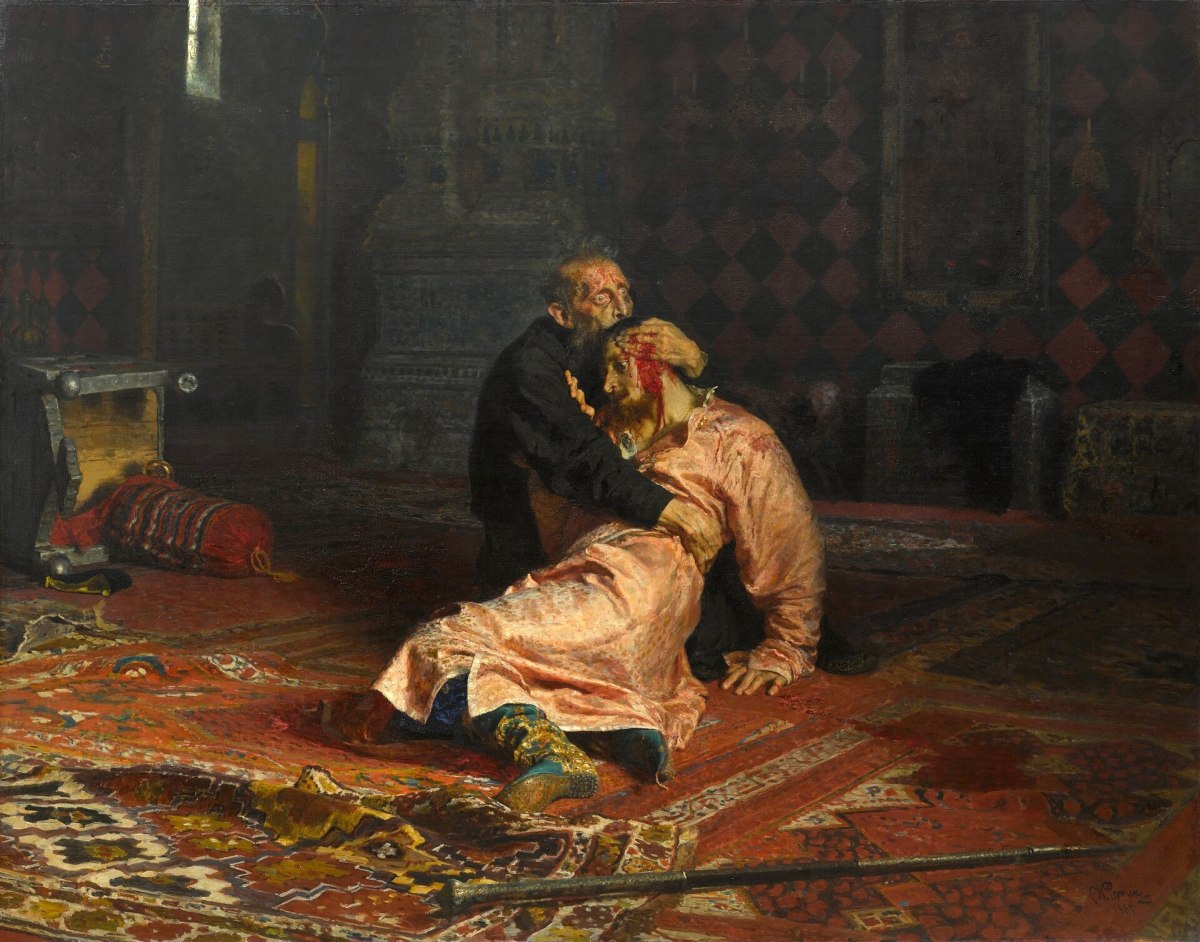
Work: Ivan the Terrible and His Son Ivan on 16 November 1581, Ilya Repin, c. 1883
Why I’m a Dispatch member: I’ve long been a fan of Jonah Goldberg ever since I was active in politics as a college student in Texas, and recently discovered Kevin Williamson, who may be the most skilled writer in modern political discourse. I have let my subscription to The Dispatch expire twice before missing it delirium tremens-style when I saw one of them post an article I couldn’t read. It’s important to me to see conservatives who embrace conservatism as a philosophy when many of the other blogs have been subsumed into the Trump personalismo personality cult. Waiting for Dear Leader to say something and then adapting our governing philosophy to match his divine utterances.
I tell this story about how I used to be a paying member of the Babylon Bee (I wanted to support their work against the governing Biden-era forced monoculture) but grew incredibly frustrated that every time Tucker Carlson would make a pro-Russia or anti-Zelensky jeremiad, Babylon Bee would instantly put up a “satirical” piece parroting his points. For example, Tucker says Ukraine destroyed its own dam to flood its own people so it could use sympathy money to buy a yacht (I am paraphrasing) and then Babylon Bee the next day would have “Zelensky says Russia massacred civilians while still holding comically large cartoony detonator plunger thingy.” I used to be a dues-paying member of Heritage. Again, no more.
I wondered if anything was safe from the gravitational singularity. Turns out, The Dispatch is.
Why I chose this work: This is the kind of art that you are transfixed by before you know why you are. You do not need to know anything about Ivan the Terrible or that he killed his son in a fit of rage to know that in this painting you are looking at someone who just killed someone dear to them. The central figure did not discover the dead body of a loved one, he caused it. I have seen this kind of regret in people’s eyes before in real life, but thankfully not for wanton murder. The artist had to be a master of his craft to convey so much in a still image. You can see Father Ivan’s eyes fixed open eyes in shock and his son’s eyes fixed open in death. If you read Repin’s account of his struggle to paint it, he sounds like a man who was mentally tortured by the majesty of what he was creating.
The work was so powerful, so incendiary, and so provocative that contemporary Russian authorities tried to ban it but failed. The piece has now come under recent attacks by Russian nationalists who see its depiction of Russia’s autocrats capable of doing wrong as Western propaganda.
Interested in being featured in this section? Submit a work of art here.
Interested in being featured in this section? Become a Dispatch member here.