By Stefan Koopman, Senior Macro Strategist at Rabobank
President Trump began this week’s Monday‑morning jawboning ahead of schedule. Speaking to reporters aboard Air Force One on Sunday evening as he returned to Washington DC, he talked up the negotiations with Iran, said that Iran’s new leadership already constitutes “regime change” and praised the “deal” with Iranian speaker Ghalibaf to allow up to 20 Pakistan-flagged oil tankers to pass through the Strait of Hormuz under Iranian (!) escort.
Markets have already brushed aside Trump’s comments, preferring instead the trading wisdom offered by Ghalibaf, who posted on X: “If they pump it, short it. If they dump it, go long.”
Heads-up: Pre-market so-called “news” or “Truth” is often just a setup for profit-taking. Basically, it’s a reverse indicator.
Do the opposite: If they pump it, short it. If they dump it, go long.
See something tomorrow? You know the drill.
— محمدباقر قالیباف | MB Ghalibaf (@mb_ghalibaf) March 29, 2026
If the Iranian speaker wants to unsettle markets a bit more, he might consider writing a long Substack titled “The 2028 Global Intelligence Crisis,” describing a future in which AI sweeps through white-collar professions, upends business models, and helps trigger a stock market correction followed by a consumer‑led recession. Those were the days when we still had the luxury of worrying about this.
Instead, the market is grappling with two major unknowns that feed directly into each other:
- when oil flows through the Strait will resume in meaningful volumes, and
- at what price level oil switches from an inflation story to a recession story.
Brent climbed this morning to 115 dollars, up 2% from Friday’s close and about 11 dollars above the low reached after Trump extended the talks until April 6. This came as President Trump told the Financial Times that he wants to “take the oil in Iran” and is considering seizing Kharg Island, Iran’s main export hub. Riffing off the Venezuelan model, he boasted that the United States could control oil there “indefinitely”.
Of course, seizing Kharg Island would not mean “taking Iran’s oil.” It would simply choke off large parts of Iran’s export capacity, leaving the barrels in Iranian ownership while pushing global prices higher unless those volumes find their way back to the market. If Trump truly intends to seize Iran’s oil, he would have to capture thousands of wells spread across a vast country, which can’t happen without a much larger military footprint or genuine regime change.
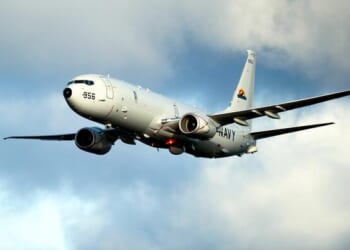
US media reported over the weekend that the Pentagon is preparing for “weeks” of ground operations in Iran, with thousands of soldiers and Marines moving into the Middle East. The deployment gives Washington more leverage and optionality in the negotiations, and it could produce tactical gains if used. Yet it remains unclear what an escalation with “boots on the ground” is meant to accomplish in Iran from a strategic perspective.
BREAKING: 🇺🇸🇮🇷 The U.S. Central Command confirms an amphibious warship carrying troops has entered its area of responsibility, signaling a potential escalation as forces position closer to the conflict zone. pic.twitter.com/fo1V0tQDp3
— War Radar (@War_Radar2) March 28, 2026
If the objective is to reopen the Strait, and if that succeeds, the immediate question becomes what follows. At some point US forces will leave, and Iran will know it can close the Strait again whenever it chooses. Keeping it open would therefore require some sort of permanent occupation of part of Iran rather than a few weeks of operations. A reopened Strait might also be used to hasten a peace agreement on US terms. But for such an agreement to stick long-term, the United States would again need to keep troops in Iran indefinitely.
The only exit strategy for a ground war that could even remotely work is to topple the regime and install a puppet government, as in Venezuela. But Iran is not Venezuela. It would instead require fighting a long counterinsurgency campaign with heavy casualties and widespread destruction, including damage to Gulf energy and water infrastructure for as long as Iran maintains its ability to fire missiles. Iran would also mine the Strait. A ground war is a recipe for a disaster far larger than the one already unfolding.
And then there are the Houthis. The Iranian-backed group had been relatively quiet in recent weeks, but on Saturday they entered the conflict by firing missiles at Israel. Their involvement raises the risk of further disruption to oil flows. Around five million barrels of Saudi crude are diverted each day through the pipeline to Yanbu on the Red Sea coast, with shipments to Asia then sailing south through the 29‑kilometre‑wide Bab al‑Mandeb chokepoint off Yemen. All the Houthis would need to do is fire at a few passing tankers, and shipping through the Red Sea would come to an immediate halt. Even at 115 dollars per barrel and Asian stocks now under heavy selling pressure, the market is not priced for that.