Following our “Google’s DeepSeek Moment” report last week, which detailed how TurboQuant, a compression algorithm for large language models and vector search engines, could sharply reduce AI memory requirements and sparked a selloff in top memory stocks, a Taiwanese financial outlet is now reporting a plunge in memory stick prices this week.
Taiwan-based Economic Daily News reports that DDR5 memory stick prices have dropped by 15% to 30%, marking the first major price correction after a rally that began in early fall, as AI data center demand for memory ramped up. The correction comes as the market expects lower memory demand following the unveiling of Google’s TurboQuant.
In the U.S., Amazon listings showed steep declines in DDR5 pricing. In mainland China, retailers described the move as a “price collapse,” with 16GB DDR5 modules falling from about $145 to $101 and 32GB modules dropping from about $435 to $319, based on current exchange rates. Distributors said the price drop was driven by sellers dumping previously hoarded inventory.
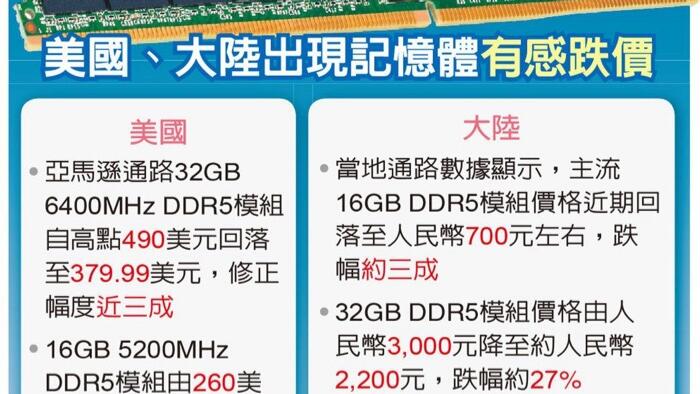
Reporters Li Mengshan and Xie Shouzhen posted an infographic on price drops by region, which we have translated here:
United States
-
Amazon Micron 32GB 6400MHz DDR5 module fell from a high of $490 to $379.99, a correction of nearly 30%.
-
16GB 5200MHz DDR5 module fell from $260 to $219.99, a decline of more than 15%.
Mainland China
-
Local channel data shows mainstream 16GB DDR5 module prices recently fell to around RMB 700, a drop of about 30%.
-
32GB DDR5 module prices fell from RMB 3,000 to around RMB 2,200, a decline of about 27%.
-
Prices for DDR4 and DDR5 on secondhand platforms have also fallen in tandem.
Taiwan manufacturers’ view
-
The DRAM uptrend has not yet peaked.
-
Overall pricing momentum is still continuing.
-
Original factory contract prices have not declined at all.
-
“There is simply no need to worry.”

“Industry insiders point out that this is the first significant price drop in recent months, and the simultaneous price adjustments across multiple platforms indicate that end-user demand is becoming more conservative under the pressure of high prices,” the reporters said.
The report continued: “Industry insiders say that the current ‘visible price drop’ reflects a short-term correction in supply and demand and market sentiment, rather than a reversal in the industry’s fundamentals.”
There’s growing speculation that OpenAI’s Sam Altman soaked up the entire memory market with non-binding orders.
But now…
So Sam Altman blew up the memory market with non-binding DRAM orders of 40% of global supply and then changed his mind because Stargate can’t get off the ground? $MU pic.twitter.com/ioe6PZN0S8
— investingLive (@investingLive_) March 30, 2026
Given the emerging theme of sliding memory stick prices, driven by TurboQuant and growing doubts that Altman’s Stargate will get off the ground, memory stocks are now hovering near critical support and trading at levels not seen since earlier this month and mid-January levels.

“On the memory side, what did not help were weekend datapoints pointing to DDR5 prices dropping, in some cases by as much as 30%, after the Google TurboQuant news. U.S. prices for 32GB 6400MHz DDR5 modules and China prices for mainstream 16GB DDR5 modules have both fallen around 30% from their peaks,” a Goldman analyst wrote earlier today.
And remember, Korea’s Kospi has already slipped into a bear market amid the downdraft in memory names. It is all linked.

More on memory stock charts via our technicians at The Market Ear (chartpack here).