Every rabbi—and, more broadly, every community leader—struggles with the question of antisemitism in both a professional and a personal register. If I give a sermon about the Sabbath, I will be greeted with polite nods and smiles. Speak about hatred and the rafters will ring. Conflict, danger, and hatred are, by their nature, arresting; they cut through the ambient noise of communal life. Our reaction to antisemitism is immediate, visceral, and impossible to ignore.
That reality presents an obvious temptation: to return again and again to antisemitism as a central organizing concern of Jewish life. Within the Jewish community, this is not merely a rhetorical question but an ongoing and often heated debate. How central should antisemitism be to our communal agenda? How does it compare in urgency to education, to internal cohesion, to spiritual growth, to the myriad responsibilities that attend any religious, ethnic, and—yes—tribal community? Is it the defining issue, or one issue among many?
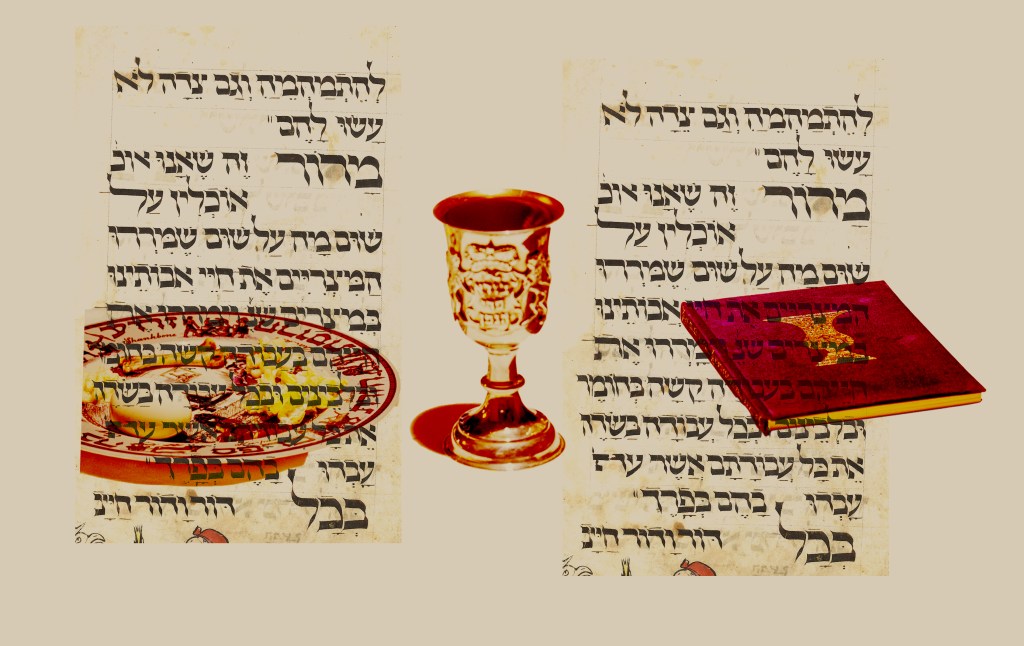
I find myself holding a response—quite literally—in my hands. It is the Haggadah, the book that guides a Passover Seder. The rabbis who shaped the Haggadah some two millennia ago understood the depth of enmity Jews faced. But they did not permit it to overwhelm their spiritual sensitivities. The Haggadah is not a denial of antisemitism or an evasion of it, but a calibration of its place. Although the Haggadah is perhaps the best known work to Jewish laypeople, it is also a template for communal leadership.
The Haggadah’s most famous declaration is stark and unambiguous: In every generation, they rise against us to destroy us. This is not a metaphor. As former Israeli Deputy Prime Minister Abba Eban is said to have once written, “There are things in Jewish history too terrible to imagine, but none so terrible that they did not happen.” This line functions as both memory and warning, collapsing past and present into a single moral horizon. The Haggadah insists that Jewish vulnerability is a recurring feature of history. Who today can doubt that declaration?
At a climactic moment in the Seder, we open the door and recite a passage asking God to “pour out Your wrath upon the nations that do not know You.” Each year that moment is both emotionally raw and theologically charged. But we are not pleading for human vengeance; rather, we plead for divine justice. The anger is real; the retribution is not ours. The Haggadah teaches us to voice the pain of the community without letting anger or pain metastasize into self-destructive fury.
Paying homage to the pain of the past is well known to those who have attended a Seder. Yet the overwhelming majority of the text is devoted to other themes: liberation, education, memory, gratitude, and ultimately redemption. The narrative of oppression is the precondition of the story, but it is not the story itself.
The Seder begins not with denunciation but with invitation: Let all who are hungry come and eat. Before we remember our historical travails, what was done to us, we say who we are—a people mindful of those in need. Morality mixes with memory, for each is essential to the other.
The genius of the Haggadah is that it both remembers and teaches. It acknowledges danger and celebrates deliverance.
The Haggadah is, above all, a teaching document. The Four Questions, each asking something about the anomalies of the Seder (e.g. “Why is this night different from all other nights”) are traditionally asked by the youngest present and frame the entire experience. The Seder is designed to provoke curiosity, to stimulate inquiry, to ensure transmission. The rabbis understood that transmission is both general and particular: The message endures but must be filtered through the ability and temperament of different students. The Four Children—the Wise, the Wicked, the Simple, and the one who does not yet know how to ask—are not a charming literary device. Each is provided with an answer, which together form a theory of education. Every child comes to the table differently, and the obligation of the teacher is not to deliver a uniform message but to find the point of entry particular to each learner. The text repeatedly insists on telling the story “to your child”—in language suited to this child, in this moment. Attention is a deep form of homage and even of love.
The Seder is about character formation. That is why the matzah is a central symbol—called the “bread of affliction,” it is also the bread of haste, of transition between slavery and freedom. The bitter herbs evoke suffering, but in the framework of redemption. Through all of these, the background of slavery is presupposed, but the experience of the Pesach is not focused on the agony of oppression. It is the road to redemption.
No more striking instance could be given of the philosophy of the Haggadah than its ending. It ends with songs—playful, repetitive, even whimsical. “Chad Gadya,” “Echad Mi Yodea”—these are children’s songs, placed at the end so that children will sustain their delight throughout the evening. The final declaration—Next year in Jerusalem—transcends anger and grievance and looks hopefully to a time when the world will not be convulsed with human suffering.
If we read only the line about enemies rising in every generation, we might conclude that the central task of leadership is vigilance against threats. As important as vigilance is, defending matters because there is something worth defending. The primary work of the community is not to fixate on its adversaries but to cultivate its own internal life—to educate, to transmit, to celebrate, to bind its members to one another and to a shared story of purpose.
A beautiful midrash (a rabbinic legend) on the Song of Songs makes this point. When God offers the Torah to Israel, the people are asked to provide guarantors—figures who will vouch for their commitment. They propose the patriarchs. God declines. They propose the prophets. God declines again. Only when Israel offers its children as guarantors does God accept. The future, not the past, secures the covenant. The burden of transmission falls not on the heroes of the past but on the living generation. The Haggadah embodies this insight. Its orientation toward children is not merely sentimental; it is strategic and theological.
To focus exclusively—or even predominantly—on antisemitism is to misread the lesson of Passover. The Haggadah leaves no doubt that antisemitism must be confronted and resisted. But the Jewish people are not about the hatred that had swirled around them; we did not survive because of animus but in spite of it. Judaism is the evidence that tradition and wisdom and covenant can keep a people alive for thousands of years.
The genius of the Haggadah is that it both remembers and teaches. It acknowledges danger and celebrates deliverance. It gives voice to pain and channels it toward a higher moral horizon. It insists on the reality of threat while refusing to allow that threat to monopolize the our imagination.
For those of us charged with leading communities today, the Haggadah is a roadmap. At each Seder we open the door in hopes of redemption, that Elijah the prophet will walk in and announce the coming of the Messiah. But Elijah’s failure to appear does not leave us with despair, but with the tools to build our lives and our world, and prepare to open the door again next year.
To hold a Haggadah is to hold more than a ritual text. It is holding the wisdom of our ancestors, reminding us that human enmity is not new, dangers have been faced before, and resilience, faith in our future, and trust in God have ever been the path forward.