We’ve unlocked this edition of The Morning Dispatch, our flagship daily newsletter explaining all the news you need to know today in fewer than 15 minutes. To get the full, unlocked version every day, become a Dispatch member today.
Happy Wednesday! And Happy Passover! And also, Happy April Fools!
Editor’s note: We would run a joke, but three years ago we made a joke about an issue being the last TMD, and a lot of people got very concerned. We’d never do that to you again.—Ross Anderson, in his final edition as TMD editor.
Quick Hits: Today’s Top Stories
White House Sends Mixed Signals on Iran
President Donald Trump told reporters at the White House on Tuesday that the war in Iran would end “very soon,” possibly within the next two or three weeks, even if Iran refuses to reach a deal with the U.S. “Iran doesn’t have to make a deal,” Trump said. Earlier, Defense Secretary Pete Hegseth presented a different message, stating that while talks with Iran were continuing, if Iran did not meet U.S. demands, then they have “more options” militarily against Iran. “In only one month we set the terms, the upcoming days will be decisive,” he said. Meanwhile, Pakistani Foreign Minister Ishaq Dar met with Chinese Foreign Minister Wang Yi in Beijing on Tuesday, where the two countries released a joint five-part U.S.-Iran peace proposal: Implementing an immediate ceasefire, entering talks for a long-term peace plans that provides security for Iran and other Gulf nations, halting attacks on critical infrastructure such as energy, reopening the Strait of Hormuz, and reaching a long-term peace deal that abides by the United Nations Charter and international law. Trump declined to comment on the China-Pakistani proposal on Tuesday, but said that talks with Iran were progressing well.
- The Iranian government continues to deny that negotiations are taking place.
- On Tuesday, Iran struck an oil tanker loaded to capacity owned by Kuwait’s state-owned oil company that was anchored off Dubai.
- The Iranian regime said Tuesday that it had executed two men from the People’s Mojahedin Organization, a banned Iranian opposition group. While Iranian officials alleged they were involved with several attacks against the regime, including firing launcher weapons at a government building, neither was provided due process within Iran’s legal system.
Supreme Court Rules on ‘Conversion Therapy’ Ban
The Supreme Court ruled in an 8-1 decision on Tuesday that a Colorado state law banning “conversion therapy,” defined by state lawmakers as practices intended to change an individual’s sexual orientation or gender identity, violated the First Amendment, reversing a lower court ruling. The law took effect in 2019 but was soon challenged by Kaley Chiles, a licensed counselor in the state. A federal appeals court ruled in 2024 that the law did not regulate speech per se, but rather conduct that included speech. Justice Neil Gorsuch, writing for the majority, said that the statute violated the First Amendment free speech rights of Chiles and other treatment providers. Among First Amendment principles, “the spoken word is perhaps the quintessential form of protected speech,” he wrote. To learn more about the Supreme Court’s decision in Chiles v. Salazar, read Amy Howe’s coverage at SCOTUSblog.
- Justice Elena Kagan wrote a concurring opinion, joined by Justice Sonia Sotomayor, noting that a theoretical law regulating the opposite perspective and banning practices affirming sexual orientation or gender identity would likewise be barred for violating First Amendment free speech protections.
- In the lone dissenting opinion, Justice Ketanji Brown Jackson argued that the law regulated medical professionals, not speech, noting that lawmakers passed it because the medical community reached a “broad consensus” that such treatment “is ineffective and harmful.”
Hungarian Minister Exposed for Coordinating with Russia
A joint investigation from five European news outlets published on Tuesday revealed leaked audio of what appears to be Hungarian Foreign Minister Péter Szijjártó agreeing to act on Russia’s behalf to remove the sister of a prominent Russian billionaire from the European Union’s sanctions list. In the alleged August 2024 recording, Russian Foreign Minister Sergei Lavrov reminds Szijjártó of a prior commitment to secure the delisting, and the Hungarian minister confirms he planned to follow through. Szijjártó responded that the report “proved that I say the same publicly as I do on the phone,” while alleging that “foreign intelligence services” had wiretapped him with the help of Hungarian journalists. The revelation drew sharp reactions across Europe: Czech President Petr Pavel called on his government to reexamine its contacts with Hungarian officials, while Polish Prime Minister Donald Tusk tweeted that while “Hungary is and will be in the European Union,” Prime Minister Viktor Orbán and Szijjártó “left Europe long ago.”
- European Union High Representative for Foreign Affairs Kaja Kallas, the European Union’s chief diplomat, told reporters in Kyiv on Tuesday that European ministers “should work for Europe, not Russia.”
- After Russian officials rejected Ukrainian President Volodymyr Zelensky’s Easter ceasefire proposition, which the Kremlin said was due to a lack of details, Zelensky said he requested that the U.S. help pass a formal offer from Ukraine.
- Russia’s Defense Ministry said that a military transport plane crashed into a cliff in the Russian-occupied Ukrainian region of Crimea, killing 29 people aboard. Russian officials attributed the event to a possible technical malfunction with the aircraft.
American Journalist Kidnapped in Iraq
An American journalist was kidnapped on Tuesday in Baghdad. News outlets reported that the journalist abducted was Shelly Kittleson, a 49-year-old freelancer and contributor for the Al-Monitor news agency. Iraqi officials said security officials chased after the abductors after she was taken and managed to detain one of the suspects, who they identified as having ties to the Iranian-backed, Iraqi-based Kataib Hezbollah group (separate from the Lebanese-based Hezbollah). The officials also said they seized the car Kittleson was first forced into, before she was transferred to a second car after the initial vehicle crashed in pursuit with law enforcement. In a tweet on Tuesday confirming the kidnapping, State Department Assistant Secretary for Global Public Affairs Dylan Johnson noted that the agency had “previously fulfilled our duty to warn this individual of threats against them,” while adding that State Department officials will continue working with FBI agents to secure her immediate release.
- Alex Plitsas, an Atlantic Council senior fellow who described Kittleson as his friend, told news outlets on Tuesday that the U.S. government warned her that a Kataib Hezbollah document listed the terrorist group’s intent to “kidnap or kill” female journalists.
- One U.S. official told CBS News that the U.S. sent Kittleson several warnings, most recently on Monday night.
Trump Issues Mail-In Ballot Executive Order
Trump signed an executive order on Tuesday that directs the Department of Homeland Security (DHS), in conjunction with the Social Security Administration (SSA), to compile a list of all eligible voters in each state and requires the U.S. Postal Service (USPS) to deliver mail-in and absentee ballots only to individuals appearing on that list. The order also directs the attorney general to prosecute election officials who distribute ballots to ineligible voters and withhold federal funds from noncompliant states. The order also directs DHS and SSA to identify, for all 50 states, each legal resident who is a U.S. citizen and 18 years old or older and and calls for a USPS review of the design of ballot envelopes and for all ballots to be given a unique Intelligent Mail barcode.
- A similar Trump executive order from March 2025 has been blocked by three federal courts that concluded the president lacked the constitutional authority to set voting policy since the Constitution vests election administration in the states, with some authority delegated to Congress.
- In response, Arizona Attorney General Kris Mayes and Oregon Attorney General Dan Rayfield, both Democrats, separatelyannounced their intent to challenge Trump’s order on legal grounds.
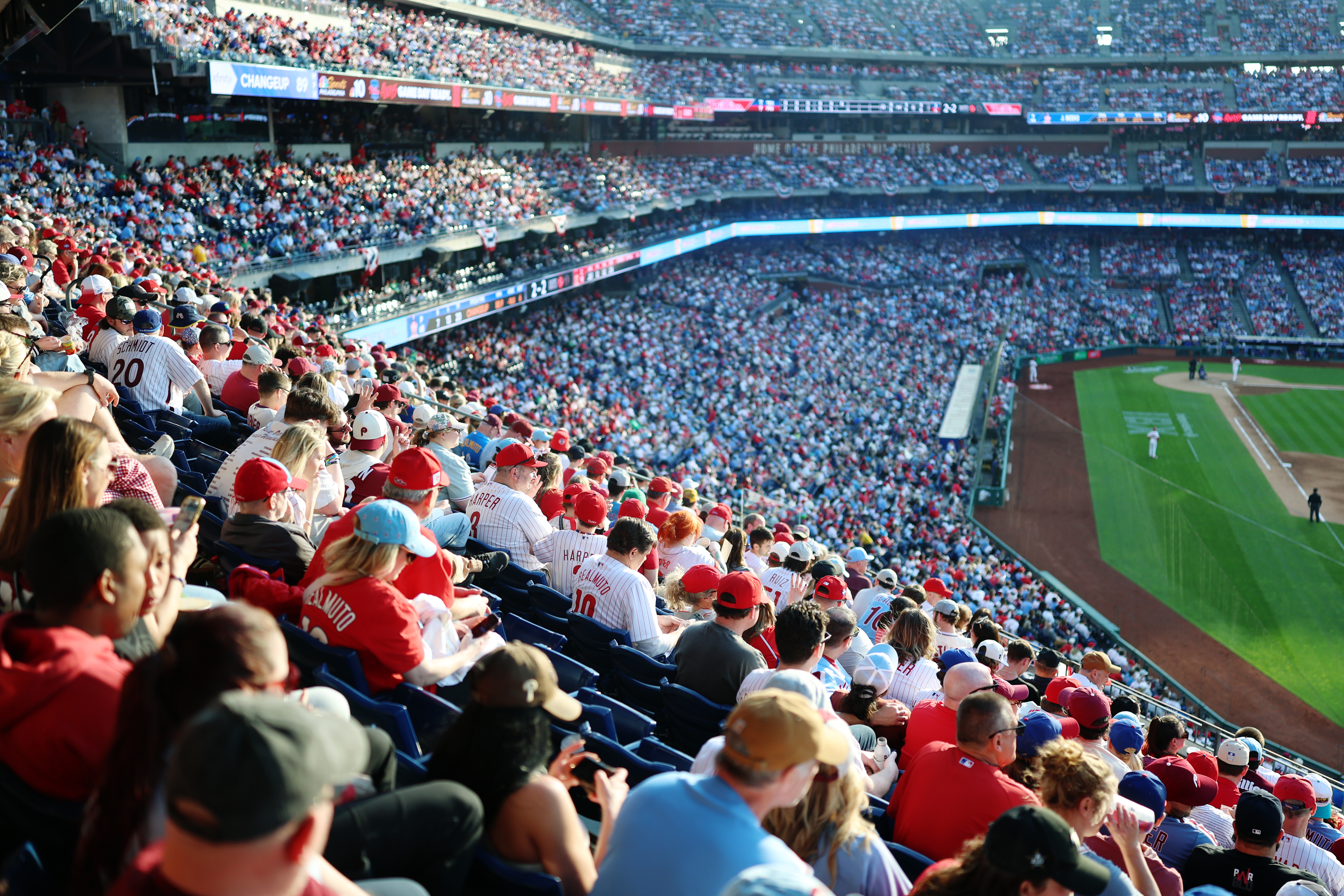
In 1969, media theorist Marshall McLuhan declared “Baseball is doomed. It is a dying sport.” Baseball, he said, is “just too individual a sport for our new age.” In 1955, the Fort Scott Tribune in Kansas predicted that “within 25 years there’ll be no organized baseball except the major leagues, if even they’re in existence then.” And John McGraw, manager of the New York Giants through 1932, publicly worried that the end of the “dead ball” era and rise in home runs would destroy baseball’s appeal.
For a professional sports league that dates back to 1876—by far the oldest in the U.S.—Major League Baseball has always been remarkably eager to predict its own demise.
“This has been a theme, pretty much forever—baseball and its place in today’s fast-paced life,” Tyler Kepner, the senior MLB writer for The Athletic, told TMD. “Everybody always worries that this sport, that’s measured by innings, not by time, where there’s downtime in the action … people have always wondered whether that sensibility is sustainable.”
Throughout the 2010s, the doom prediction seemed to finally be coming true. A sport once called the perfect product for radio was struggling to hold attention in the age of social media. Games lasted longer than three hours, strikeouts and walks were on the rise (to the detriment of action on the bases), and there were few household names—TV ratings and attendance continually declined. In 2019, just 23 million viewers tuned in to Game 7 of the World Series—the lowest audience for a deciding game ever. Newspapers ran headlines about the dire straits of America’s former pastime.
But now, baseball is back. Attendance is up, with three straight years of growth for the first time since the mid-2000s, TV ratings are up, and more young fans are getting into the sport. But what changed? And how long can the resurgence last?
This edition of The Morning Dispatch is fully unlocked. To receive the full version every day—and access all of our stories, podcasts, community benefits, and Dispatch Voiced, which allows you to listen to our written stories in your own podcast feed—join The Dispatch as a paying member.

The turnaround started in 2023, when MLB implemented a series of new rules: a pitch clock to speed up at-bats, bigger bases to encourage basestealing, and restricting defensive shifts—a tactic where teams repositioned fielders to turn would-be hits into easy outs. The pitch clock was the most significant change—and the most controversial, given that baseball was the only major sport without some type of running clock. Under the new rule, pitchers had 15 seconds after each pitch to deliver the next one with the bases empty, or 18 with runners on—and it immediately shortened games.
“It restored the natural rhythms and pacing of the game, and it hasn’t lost anything that anybody misses … which was just somewhat self-indulgent, standing around, or stepping off or conferring,” with teammates, Kepner said. Average game times fell to less than 2 hours, 40 minutes after the 2023 changes.
The effect went beyond the clock itself. Before the rule changes, the conversation around baseball was dominated by what was broken—marathon games, defensive shifts that turned hits into outs, a product that felt stagnant. “The conversation was, like, ‘Have we fixed this?’ Rather than, like, ‘That was a great game,’” Joey Duffield, the creator of the popular YouTube channel “Baseball Doesn’t Exist,” told TMD.
The number of marathon-length games has also dropped dramatically. In 2021, 391 regular-season games lasted more than 3 hours, 30 minutes. By 2024, that number had dropped to seven. And legalized sports betting has been a modest boost, Andrew Zimbalist, an economist at Smith College and a baseball, told TMD. Baseball offers more opportunities for in-game wagers than almost any other sport, drawing casual fans who once tuned out. But it’s also risky. Duffield noted that if just “one guy goes in the World Series and really just gets caught throwing a game in a big moment,” the fallout could rival the steroid era.
Television ratings for MLB—whose teams play a combined 2,430 games a season (compared to 1,230 for basketball and 1,312 for hockey)—are difficult to compare directly to other professional sports leagues. But the numbers are on an upward trend. Last fall’s World Series—a seven-game classic between the Los Angeles Dodgers and Toronto Blue Jays widely regarded as one of the best ever—averaged 16.1 million viewers per game, a nearly 10-year high, including more younger viewers. And those fans aren’t just watching from the U.S. Dodgers star and Japan native Shohei Ohtani plays at an All-Star level both on the mound and at the plate, and led the Dodgers to a thrilling World Series win over the Blue Jays last season. “He’s done things that nobody else has ever done,” Zimbalist said, “other than Babe Ruth, perhaps.”
But the Great Bambino never had a large country rooting almost exclusively for him. The 2025 World Series—featuring Ohtani and fellow Japanese star Yoshinobu Yamamoto—had modest U.S. TV ratings by historical standards, but it broke records for international viewership. Canada, home of the Blue Jays, averaged 8.1 million viewers per game. But Japan brought in an average of 9.7 million viewers, with the Game 6 broadcast breaking Japanese single-broadcast records. That reflected more than five years of growth for MLB in Japan—viewership has grown every year since 2021, including by more than 20 percent in 2025. Japanese brands have followed the eyeballs: the Dodgers alone counted 20 Japanese corporate sponsors in 2025, eager to reach American audiences through Ohtani’s star power.
This has also transferred to attendance, with many Japanese fans flying to the U.S. to watch games. But even so, attendance is still below its 2007 peak, when the total season attendance stood at almost 80 million people, and average game attendance was more than 32,000. Last season’s total attendance stood at 79 million, with average game attendance at 29,000.
The way fans actually watch games has grown more complicated. As regional sports networks have struggled financially, teams have increasingly turned to streaming, and following a single team’s 162-game season can now require juggling multiple streaming subscriptions and platforms. Even so, local-market blackouts often prevent fans from watching their own team’s games without a linear cable subscription. “It’s dizzying and exhausting to fans,” who aren’t trying to lock into every single game, said Zimbalist.
But becoming a relatively niche product may not be the worst thing, Victor Matheson, an economist at the College of the Holy Cross who studies pro sports, told TMD. In the 1930s, America’s top three spectator sports were baseball, horse racing, and boxing. By the 1970s, more Americans went to horse race tracks than to baseball games. Now both horse racing and boxing have all but disappeared from the mainstream. “The question is not whether you’re going to be the NFL,” Matheson said, “but whether you’re going to go the way of boxing and horse racing.” On that score, at least, the outlook is positive. “When you’re a country of 340 million people, with a GDP of $30 trillion, you can be a kind of niche and still be wildly successful,” he argued. “For as much as we talk about Brazil being a soccer powerhouse, the vast majority of people in Brazil don’t care about soccer.” Even if baseball never regains its status as “America’s Pastime,” it can still enjoy a very prominent place in American life.
But all of this momentum now faces its biggest test: a looming labor dispute. The league’s collective bargaining agreement between team owners and players expires on December 1, and most observers expect a lockout. The last major work stoppage—the 1994 player strike—canceled the World Series and delayed the start of the 1995 season. Frustrated fans who left the sport behind took years to come back.
The core issue is that MLB is alone among the four major American sports leagues in not imposing a salary cap. That combined with its lack of a salary floor leaves baseball with the widest disparities in club payrolls among major U.S. pro sports.
The Dodgers, winners of two straight World Series and three of the last six, are set to spend about $413 million on their 2026 roster, closely followed by the New York Mets’ $375 million expenditure. Meanwhile, the Miami Marlins will pay around $81 million for their players this year, and the Cleveland Guardians roughly $89 million.
Owners of the small teams are not happy with the status quo. This offseason, when the Dodgers signed star right fielder Kyle Tucker to a deal that will pay him $60 million a year, many owners were reportedly “raging” about how dramatically they were being outspent. Even if large market teams like Los Angeles and the New York Mets object, the remaining owners have the votes to override them.
That internal split among owners is what makes baseball’s labor dynamics uniquely difficult. Unlike the NFL or NBA, where unified ownership bargains against a players’ union, baseball faces what Matheson called a “three-front war”—players against owners, but also big-market owners against small-market ones. “These three-front wars are difficult to figure out,” he said.
But the MLB Players Association (MLBPA) has long opposed a salary cap, which it maintains would deprive players of potential earnings. Last year, then-MLBPA Executive Director Tony Clark, called a cap “institutionalized collusion.” Clark and others have also criticized MLB’s revenue-sharing system, which they claim enables small-market owners to pocket profits generated by more competitive teams.
Both sides have been preparing for a prolonged standoff. The players’ union has amassed hundreds of millions of dollars to sustain its members through lost paychecks, while owners have built up their own financial reserves. A delayed start to next season risks dulling fan interest, especially if it lasts more than a few months. While fans are often forgiving of brief labor disputes, “they didn’t seem to come back nearly as quickly in ’94,” noted Matheson. “They do risk losing this momentum that they have.”
But for this spring, at least, it looks like baseball fans have good reasons to hope that their sport isn’t set on a long path of decline. “It’s a totally different story today than I would have been telling you in 2019,” said Matheson.
Today’s Must-Read

Antisemitism is part of the Passover story, and when Jewish families gather for their Passover Seder this week, it will be a key theme. But Passover is not only about antisemitism, says newest Dispatch Contributing Writer Rabbi David Wolpe. “Paying homage to the pain of the past is well known to those who have attended a Seder,” Wolpe writes, reflecting on the Haggadah that guides the Passover Seder. “Yet the overwhelming majority of the text is devoted to other themes: liberation, education, memory, gratitude, and ultimately redemption. The narrative of oppression is the precondition of the story, but it is not the story itself.”
Toeing the Company Line




In Other News
- A federal district judge temporarily blocked Trump from continuing construction of a new White House ballroom, ruling that his plan to fund the project through $400 million in private donations was illegal.
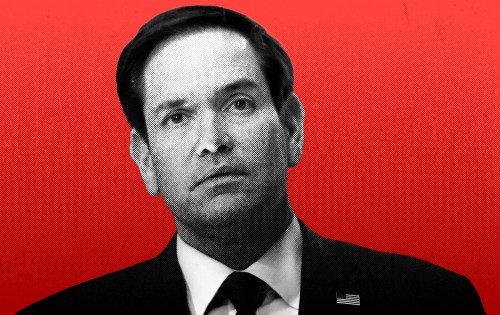
- The Defense Department is reportedly considering stationing an anti-drone laser system at Ft. McNair Army base in Washington, D.C., home to both Secretary of State Marco Rubio and Defense Secretary Pete Hegseth.
- California prosecutors arrested and charged former San Francisco government official Sheryl Davis and a nonprofit director, James Spingola, for allegedly developing a scheme to divert city funds for personal benefit.
- On the night that an Air Canada jet collided with a Port Authority firetruck last month, the air traffic controllers at New York’s LaGuardia airport may have violated internal policy by allowing air traffic controllers to take on consolidated roles, which they are barred from doing before midnight.
- The U.S. reportedly assured Colombian officials that the country’s president, Gustavo Petro, does not currently face criminal charges in an ongoing U.S. investigation into potential links between the Colombian leader and drug trafficking networks.
- On Tuesday, Defense Secretary Pete Hegseth lifted suspensions issued earlier that day to two U.S. Army helicopter crews who flew their aircraft around the Tennessee home of Kid Rock. “No punishment. No investigation,” Hegseth tweeted.
- Germany and Syria said they would coordinate an effort to return hundreds of thousands of Syrian refugees currently residing in Germany back to the Middle Eastern nation.
- Japan deployed its first long-range missiles—upgraded Type-12 cruise missiles with a range of about 1,000 kilometers—at a base in southwestern Japan.
- A Tunisian court issued a two-year prison sentence for Ghassen Ben Khelifa, a journalist whom Tunisian officials accused of publishing false information about a closed case. A union of Tunisian journalists said the sentence showed a “systematic targeting of critical voices.”
- Law enforcement officials said that Irish nationalist militants were likely behind an attempted bombing in Northern Ireland, in which the suspects hijacked the vehicle of a food delivery driver, forcing him to drive to a police station. The driver was able to escape the vehicle and alert officials before the attack could be carried out.
- Senegalese President Bassirou Diomaye Faye signed into law legislation that increases criminal penalties for homosexual acts, including increasing prison lengths for those currently sentenced between one and five years, to between five and 10 years.
- A new report from the Labor Department found that the U.S. economy had 6.9 million job openings in February, down from 7.2 million in January.
- Inflation across eurozone nations was 2.5 percent in March, a 0.6 percentage point increase from the previous month.
- The Australian government is investigating Instagram, Facebook, Snapchat, TikTok, and YouTube for potential non-compliance with a law banning users under the age of 16 from holding accounts.
- The Dutch-based AI infrastructure company Nebius announced plans to construct a new massive AI data center in Finland, expected to be operational next year.
- China and Kenya agreed to resume construction on a railway project that was suspended in 2019 over concerns about commercial viability.
- Oracle began mass layoffs, with thousands of workers expected to lose their jobs at the tech company.
- “The Pitch That Ruled the 1980s Is Driving Baseball Crazy Again.” (Wall Street Journal)
- Joseph Lawler on the housing policies common across U.S. cities that “destroyed urban America.” (The New Atlantis)
- Lily Ottinger on China’s failed push to harness geothermal energy. (ChinaTalk)
- Ambika Grover on how “tiny gas-filled spheres” present a promising innovation to more precisely deliver drugs to the intended organ. (Works in Progress)
- Leading AI writer Zvi Mowshowitz reviews The AI Doc: Or How I Became an Apocaloptimist. (Don’t Worry About the Vase)
- Nicholas Decker curates 100 economics papers that capture what’s exciting about the field, spanning surge pricing, gangs and labour mobility, and the history of lighting. (Substack)
Associated Press: A South African Politician Goes Snorkeling in a Giant Pothole To Highlight City Management Failures
CBS News: Camels Used To Smuggle Hundreds of Bottles of Alcohol Into Indian Capital To Avoid Taxes, Police Say
New York Post: NBC Apologizes After Mistakenly Airing Wrong Tiger Woods Crash Footage
Let Us Know
Have any thoughts or questions about today’s newsletter? Drop us a note in the comments or via email at tmd.questions@thedispatch.com. We read every submission, and your message could be featured in an upcoming “Behind the Scenes” segment.
Have any thoughts or questions about today’s newsletter? Become a member to unlock commenting privileges and access to a members-only email address. We read every submission, and answer questions in the following edition of TMD.