Hello and happy Saturday. President Donald Trump had a busy day on Wednesday. That morning, he became the first sitting president to attend Supreme Court oral arguments, as the justices heard a suit challenging his January 2025 executive order ending birthright citizenship. That evening, he gave his first live address to the nation on the war in Iran, saying that military operations would be over in two to three weeks and calling on European nations to handle the opening of the Strait of Hormuz themselves.
Let’s talk about both. The 14th Amendment, ratified in 1868, declares that “All persons born or naturalized in the United States, and subject to the jurisdiction thereof, are citizens of the United States.” The Supreme Court affirmed birthright citizenship in an 1898 ruling, United States v. Wong Kim Ark, and that was mostly that—until Trump issued his executive order.
We’ll need to wait several weeks for the court’s ruling, but The Dispatch put the question to two legal scholars in a Dispatch Debate this week. The clause “and subject to the jurisdiction thereof” played a big role in the case. Pete Patterson—a lawyer who filed an amicus brief on behalf of Trump—argued:
Are those with no permanent home in the United States subject to the full and complete jurisdiction of the United States? The answer is no. Such individuals are subject to a temporary and local jurisdiction that evaporates when they leave the country. They are not, in other words, subject to the jurisdiction of the United States to the same extent and quality as are citizens.
John Yoo, a law professor at Berkeley and Justice Department official in the George W. Bush administration, took issue with the “subject to the jurisdiction thereof” argument.
This reading is historically and textually implausible. If an illegal immigrant were not subject to American jurisdiction, he could break American laws and claim the government had no authority to arrest, try, or punish him. That conclusion is untenable. Foreign nationals on American soil, lawful or not, are bound by American law. Indeed, the Supreme Court has long confirmed that an immigrant, “although alleged to be illegally here,” falls within the jurisdiction of our laws.
Sarah Isgur and David French recorded a live Advisory Opinions episode immediately after oral arguments, noting that the Trump administration faced an uphill battle to win over the justices and predicting that the court would uphold birthright citizenship—perhaps in an 8-1 or 7-2 decision.
Kevin D. Williamson noted that Trump’s decision to visit 1 First Street on Wednesday may have been “another halfhearted attempt at bullying the justices,” but also mused that “maybe he really did simply want to know what the hell is going on with the Supreme Court, which has left the president both perplexed and irritated by doing the one thing Donald Trump never has and never will do: its job.”
At the same time, Kevin defended the court from what he called a “smear campaign” from the left:
Like any of its predecessors, the Trump administration appeals only a small number of losses in the lower courts and then takes an even smaller share—the cases it thinks it is most likely to win—to the Supreme Court. And how is that going? The Supreme Court has rejected Trump on tariffs and on domestic deployment of the National Guard, and it seems almost certain to reject the administration on birthright citizenship. The court has stymied the president’s efforts to purge the Federal Reserve and to deport people without due process under the Alien Enemies Act. Where the Trump administration’s top policy preferences have been in conflict with the law—as they often will be in a lawless administration—the Supreme Court has reliably sided with the law.
Later Wednesday evening, Trump addressed the nation on the Iran War. Ahead of his speech, pundits suggested that he might announce an end to hostilities and/or criticize the United States’ NATO allies for what he considered a lack of support for the war effort.
Instead, Trump told the country that military operations would continue in the near-term and, while he did call on allies to reopen the Strait of Hormuz (somehow), he did not mention NATO specifically. What gives? “Markets are usually the explanation whenever the president pulls a TACO,” Nick Catoggio wrote in Boiling Frogs. “A market crash under The Greatest Economic President in History would look really bad. Maybe someone in his orbit reminded him before the speech that, with markets already anxious, abruptly ending the transatlantic alliance and declaring Europe fair game for Russia would … not have a calming effect. So he backed off. The formal break with NATO is postponed for now, delayed until (if?) the global economy stabilizes enough for investors not to lose their minds about the official end of the Pax Americana.”
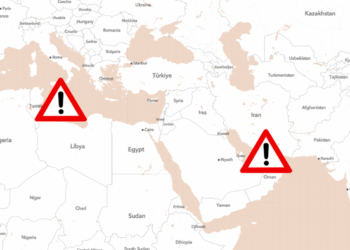
Iran’s closure of the Strait of Hormuz—the problem that Trump apparently wants our allies to solve—has driven up gas prices and poses a broad threat to the global economy. The president’s temporary solution—lifting sanctions on Russian and, um, Iranian oil—had Kevin scratching his head. “Right now, we are subsidizing Iranian and Russian petroleum production by suspending sanctions,” he wrote in Monday’s Wanderland, “and, hence, backstopping the economies of two hostile regimes, one of which we are actually in a shooting war with as I write.”
Trump didn’t mention the possibility of deploying ground troops in Iran in Wednesday’s speech, but that doesn’t necessarily mean we won’t see them—the Pentagon has reportedly been planning for the possibility. As contributing writer Mike Nelson wrote this week, though, such an operation—aimed at seizing Kharg Island, a hub for Iranian oil exports, targeting coastal areas along the Strait of Hormuz, and/or securing the uranium Iran retained after the U.S. struck its nuclear facilities last year—would carry significant risk.
Not only will American soldiers and Marines potentially face Iranian forces in close combat, these operations would further test the air defense systems that cover American forces from Iranian ballistic missiles and drones, placing the land-based forces closer to the points of origin of these attacks. But these options will also likely put U.S. forces within range of shorter-range unguided rockets and, in some cases, traditional tube artillery.
Don’t miss our other great stuff, highlighted below. And to those of you observing holidays this week, Happy Easter and Chag Sameach! Thank you for reading.

How central should antisemitism be to our communal agenda? How does it compare in urgency to education, to internal cohesion, to spiritual growth, to the myriad responsibilities that attend any religious, ethnic, and—yes—tribal community? Is it the defining issue, or one issue among many? I find myself holding a response—quite literally—in my hands. It is the Haggadah, the book that guides a Passover Seder. The rabbis who shaped the Haggadah some two millennia ago understood the depth of enmity Jews faced. But they did not permit it to overwhelm their spiritual sensitivities. The Haggadah is not a denial of antisemitism or an evasion of it, but a calibration of its place. Although the Haggadah is perhaps the best known work to Jewish laypeople, it is also a template for communal leadership. The Haggadah’s most famous declaration is stark and unambiguous: In every generation, they rise against us to destroy us. This is not a metaphor. As former Israeli Deputy Prime Minister Abba Eban is said to have once written, “There are things in Jewish history too terrible to imagine, but none so terrible that they did not happen.” This line functions as both memory and warning, collapsing past and present into a single moral horizon. The Haggadah insists that Jewish vulnerability is a recurring feature of history. Who today can doubt that declaration?
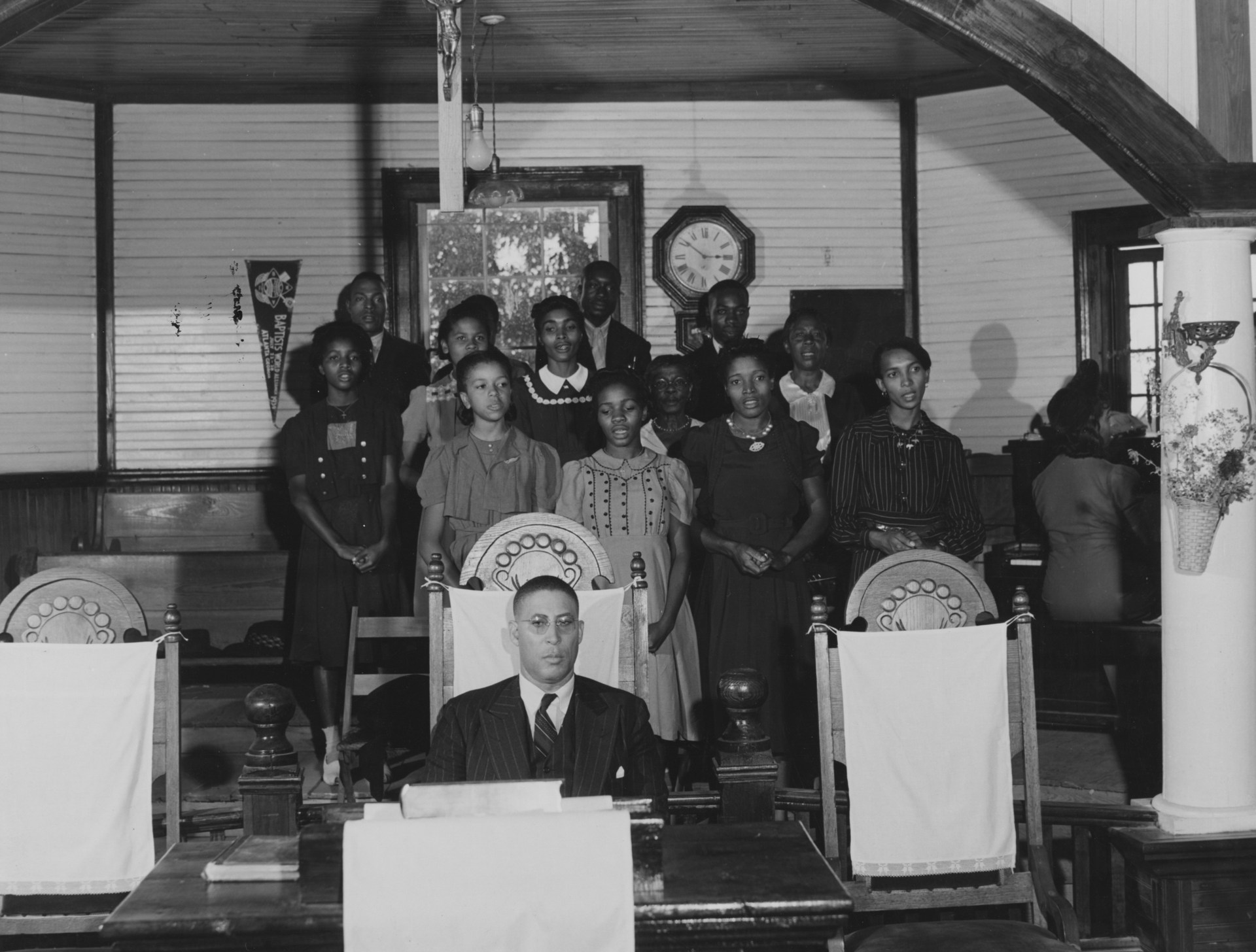
It was a Sunday in Chicago, sometime in the mid 1950s. The Rev. C.J. Rodgers—a large, handsome, dark-skinned man—stepped into the pulpit of Mount Eagle Missionary Baptist Church to preach to the congregation that packed the building and to an even larger audience tuning in by radio broadcast. During the week, Rodgers said, someone had warned him that the broadcast would be cut immediately if he chose to speak about the Freedom Riders who were heading south to work for voting rights. George Greer, who was a little boy in the congregation that Sunday, still remembers the determination in Rodgers’ voice as he boomed, “Well, if you’re gonna cut me off, you better slice that cut, because I’m gonna speak the truth.” They did cut him off. But, he kept speaking. The hundreds who had gathered that Sunday at Mount Eagle were more than sufficiently inspired to make sure the message got out, perhaps more effectively than the radio broadcast. Rodgers was large, loud, and free in a city and a century that offered black men very few freedoms. His freedom was not accidental. It was institutional. Rodgers could say what he wanted to say because his congregation owned its building, paid his salary, and expected him to speak. He was economically independent of every white power structure in Chicago—the schools, the private businesses, the government agencies that held the livelihoods of his members in their hands. Rodgers’ example illustrated a larger truth: The black church was the engine of the civil rights movement because it was institutionally robust.
For a brief moment, it looked as though the administration might have come to its senses. The Justice Department told the D.C. Circuit in early March that it wanted to drop its appeal defending President Donald Trump’s executive orders targeting four major law firms after those firms sued and won. We saw that as a hopeful sign that maybe, just maybe, some sanity was returning to Washington. But that hope did not last long. Less than a day later, the Justice Department reversed itself and asked to keep fighting after all. According to the Wall Street Journal, the department’s move to retreat had angered Trump, so he ordered it back onto the case. Bloomberg Law later reported that an administration official described the original dismissal filing as “inadvertent,” one of those wonderfully implausible Washington words that somehow only makes the story stranger. The government then filed its merits brief anyway, and the appeal is set for argument on May 14. That weird little procedural boomerang would be amusing if the underlying issue were not so serious. But it is. In fact, of all the administration’s current campaigns against institutions that can check presidential power, this one may be the most dangerous and the least appreciated.
Best of the Rest

Trump’s Other Tariff
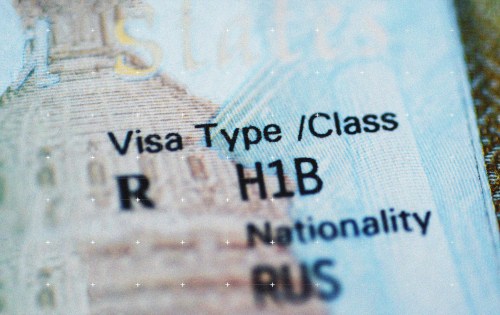
Like his tariffs on goods, Trump’s huge tax on overseas talent will harm the economy and fail its stated objective.