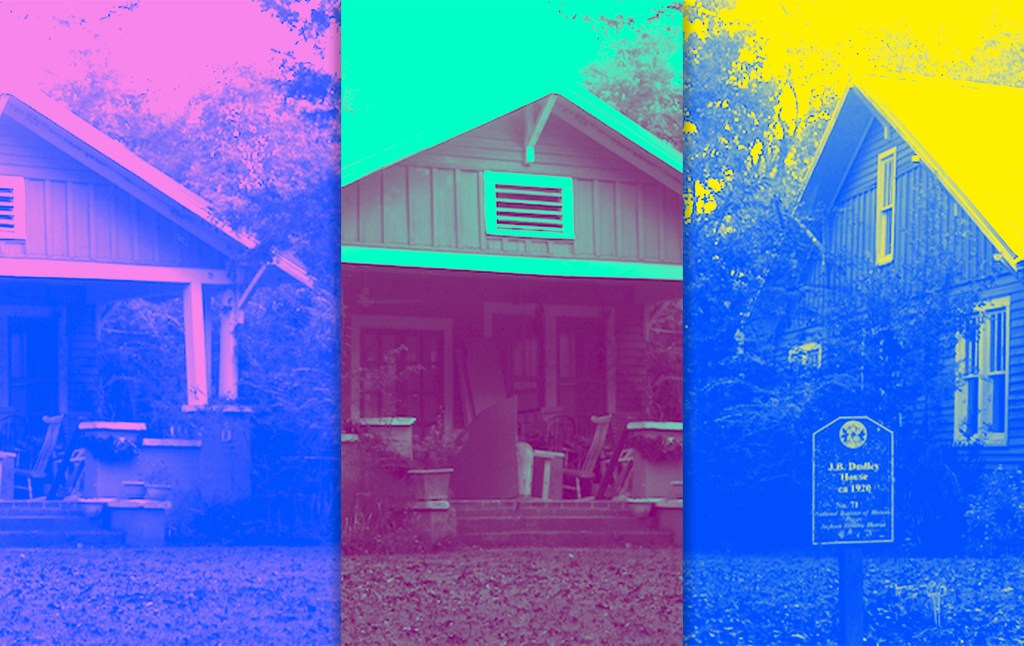
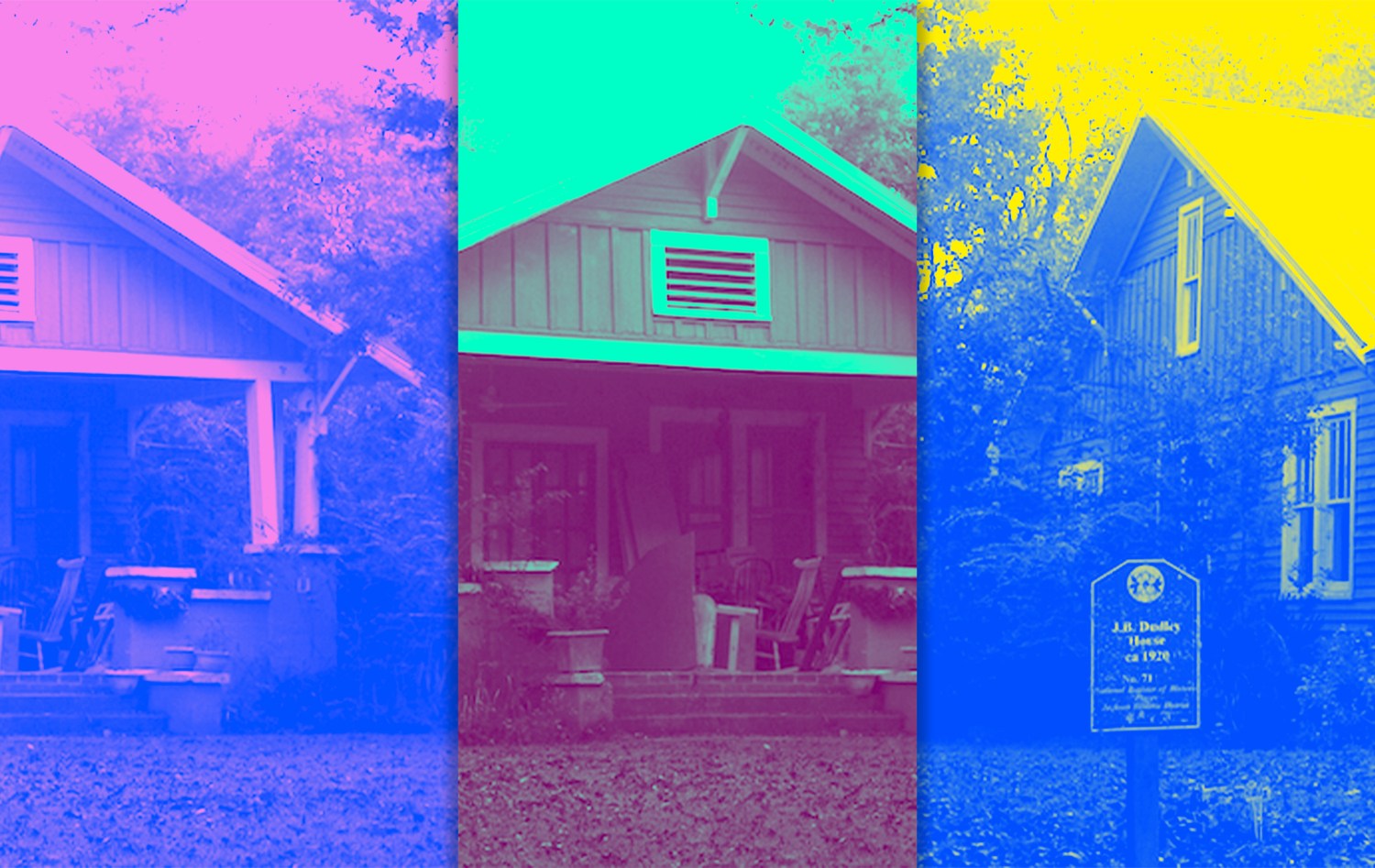
Looking for somewhere to move? Why not to a historic home? In today’s American Artifacts, James Taylor Foreman writes about his family’s decision to move to an old house in Jackson, Louisiana, and how their new domicile really roots them within their community. Elsewhere in this newsletter, you’ll find an essay suggestion from yours truly, recommendations from SCOTUSblog executive editor Zachary Shemtob, a review of Lena Dunham’s new memoir by Elizabeth Grace Matthew, and a Work of the Week by Dispatch member Ben Connelly.
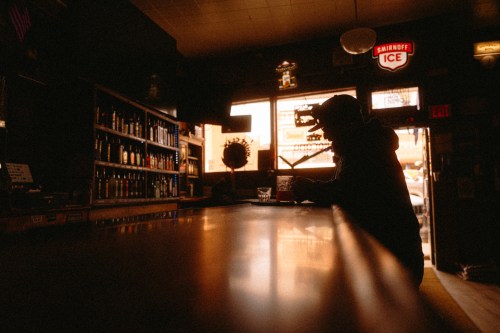
For the site today, we have the fruits of the writer Lawson Chapman’s recent trip to Philipsburg, Montana, the inspiration for Richard Hugo’s 1973 poem “Degrees of Gray in Philipsburg.” That poem spoke of a community in decline—and Chapman went to see if that was still true. “I ask him if he’s familiar with Richard Hugo, and he smiles, saying everyone in Philipsburg knows about that poem,” Chapman writes of a man he met in town. “I ask him if he thinks it’s still an accurate portrayal of Philipsburg. He smiles kindly.”
We also have Dispatch first-timer Noah Swank on a new book about opera as a teacher of virtue. “Opera, [the author] dares to suggest, can help form us into the new, more virtuous citizenry that society needs,” Swank writes. “After all, while Rousseau, Kant, and their fellow scribblers can teach the head, through music Mozart and his confreres are able to teach the heart.”
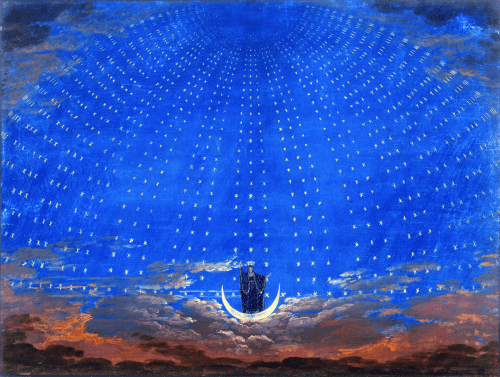
Opera, Teacher of Virtue
Writers can instruct in matters of the head. But composers can do the same in matters of the heart.
And finally, our latest entry in our “Where I’m From” series comes from Victoria Holmes, the Dispatch’s associate multimedia producer. In this entry, Victoria writes about Dallas, Texas, and the hidden grottoes she’s found across the city. “There’s nothing particularly special about the geology of Dallas, but when you look up, you get the sense that you could fall off the face of the earth,” Victoria writes.
American Artifacts
Our Heads Are Just Houses
C.S. Lewis’ vision of hell was an endless gray suburb with uncountable gloomy streets in a permanent half-light. No one can remember if it’s dusk or dawn.
Everyone quarrels with their neighbor and moves further and further apart. It’s rumored to take thousands of years to get to ancients like Genghis Khan. One ghost says he spent a lifespan venturing to see Napoleon, who was ceaselessly pacing his great libraries muttering about who was to blame for his defeats.
It all reminds me of the North American sprawl. Europeans at least are forced nearer each other by the limitations of land. Americans have spread themselves across a landscape so thin, and yet we’re still finding ways to get further and further apart in our endless suburban egress.
I live in a small town called Jackson, Louisiana, which once held the state’s second-highest number of nationally registered historic structures, behind only New Orleans. A lot of them are now abandoned or greatly in need of repair. Driving through town, you might think there just isn’t the money to fix them up. Live here for a while, though, and you’ll see McMansions hiding behind oaks down quiet country roads. Money is here. People just don’t want to be too close to each other.
Great Western wealth makes this rural sprawl almost as effortless as in Lewis’ hell. Why bother dealing with historical committees, preservationists, the quirks of an old house, and weirdo neighbors when you can plop a plastic and cement house in the woods, have Amazon deliver your groceries, and never have to talk to neighbors like PigBooty? (A real guy in my town.) You wouldn’t, unless you really internalized the cost of living abstracted away from other people.
Sartre said that hell is other people. As usual, that’s half right. The fear of being seen by other people sends you to a comfortable McMansion with high fences. The only way back is reconciliation with others who will need to see you and all your flaws, which have been thriving in private. This burns something like hell.
My wife and I live in one of these historic homes, built in 1885. It is freezing in the winter, squirrels seem to be supernaturally immune to our efforts to remove them from the attic, and some of the neighbors are approaching the crackhead variety. All of this mundane humanity hopefully delivers us from slowly shutting ourselves up in a voluntary hell. Our friends are octogenarians, we go to the local Mass, and once a week my wife helps out the local coffee shop owner, who has cerebral palsy. Our heads are just houses: We depend on each other and the context of our environment for vitality and sanity.
The greatest artistic opportunity of our time, I think, is for young families to move back to small towns and steward these homes. Nothing against abstract art like film or books, but true creativity thrives best under constraints, and technology is making that scarce. Instead, go where it is abundant: Buy a cheap historic home. Get to know the warps and the wood and the history. Plant a garden.
That, at least, gives us a reason to be together.
An Outside Read
Dispatch colleagues often share links with one another, and this week, TMD editor Ross Anderson made me much less productive when he sent me Scott Sumner’s essay “A painter’s painter.” In the piece, Sumner describes what exactly makes early European oil painting so important to art history, and notes that the place to see the best of these works is in Madrid’s Museo del Prado.
“I have no problem with people that prefer Bergman, Scorsese or Kurosawa to Hitchcock,” Sumner writes. “But if you wish to understand what makes cinema unique as an art form, what distinguishes it from other genres such as theatre, you need to study the visual style of directors like Hitchcock, Tarkovsky, Ozu and Kubrick. … Similarly, I have no problem with people that prefer Caravaggio, Rembrandt and Vermeer to Rubens—indeed I share this preference. But studying the development of oil painting from Titian to Rubens to Velázquez is the best way to educate yourself about what oil painting can do better than any other genre of art.”
On Our Shelves
By Elizabeth Grace Matthew
Famesick, by Lena Dunham, published April 14, 2026.
Lena Dunham has not just talent, but some measure of genius. That’s why her messy yet luminous prose in her latest memoir, Famesick—like her maddening yet insightful screenwriting in her HBO series, Girls—wrests reluctant admiration. Even from those like me, who are typically poised to dislike the solipsistic “voice of a generation.”
In Famesick, Dunham tells her story: How her debut feature, Tiny Furniture, and then Girls, came to be. How she became an infamous cultural icon, both beloved and despised as an avatar of the millennial feminism that she could neither control nor represent in full. And, most of all, how her body and mind fell apart while her brand skyrocketed.
Most readers and reviews of Famesick have so far focused on various juicy tidbits and sad revelations: That Girls protagonist Hannah’s troubled intimacy with her on-screen boyfriend Adam reflected more of Dunham’s own tumultuous relationship with actor Adam Driver than we might have surmised; that Dunham’s fallout with colleague and bestie Jenni Konner left lasting scars on the former; that Dunham is a daddy’s girl, as her father proves time and again to be the only person whose love for her is pure and mostly unfraught; and that Dunham has been really, really sick in ways that merit our unequivocal compassion, no matter what else we think of her.
But here’s the grand finale that might cause conservatives to hide a smile: Dunham’s “famesickness”—like its eponymous story—essentially ends where her 2021 marriage to musician Luis Felber begins. A privileged 35-year-old bride who walks down the aisle in a glow of “happily ever after,” having spent her 20s and beyond lionizing anything but?
Dunham might just be the voice of a generation after all.
Stuff We Like
By Zachary Shemtob, SCOTUSblog executive editor
Archspire is a technical death metal band. That means they play their music very, very quickly, and accompany some insane guitar work and machine-gun drumming with a host of guttural growls and occasional shrieks. But before you stop reading, I’d implore you to check out, in a how-do-they-do-that? sort of way, at least one song from their latest album, the quasi-accurately named Too Fast to Die. Front and center is the absolutely insane vocal speed of lead singer Oliver Rae Aleron, who, by mastering a series of breathing techniques (not unlike those of Tuvan throat singers), shows us that humans can still do wondrous things in the age of AI—even if death metal, like all else, is falling to our robot overlords.
What happens when a Catholic mystic and a Zen Buddhist get together to discuss “art and philosophy at the limits of the unthinkable”? Some very pretentious podcasting. But also some delightful conversations on such topics as David Lynch (warning: If you don’t like David Lynch you will not like this podcast), The X-Files (same), H.P. Lovecraft (same), and “horror and the retail experience” (I’m still not exactly sure what that means). Best of all, there’s no politics or current events discussed (well, unless it has to do with UFOs). So, for the 2 percent of you still with me, turn off The Rest Is History for a few minutes and try something completely different.
While he does make some mean scrambled eggs (and an assortment of other dishes), and I once took pride in making an excellent spaghetti carbonara, my husband and I are not into cooking. As a result, we’ve tried meal plan after meal plan, although most with little success. Relatively recently, however, we came upon Eat Clean Bro, and despite the cringey name, gave it a whirl. Overall: pretty good. The meals are reasonably priced, the selection is decent (if not stellar), and, most importantly, the food actually tastes like … food (I’d especially recommend the turkey bolognese and chicken parm). So, without endorsing Eat Clean Bro’s underlying philosophy or ideology (of which, along with Archspire’s, I am entirely unaware), I would recommend it for those—like myself—who stubbornly refuse to be shamed into cooking by all the home chefs out there.
Work of the Week
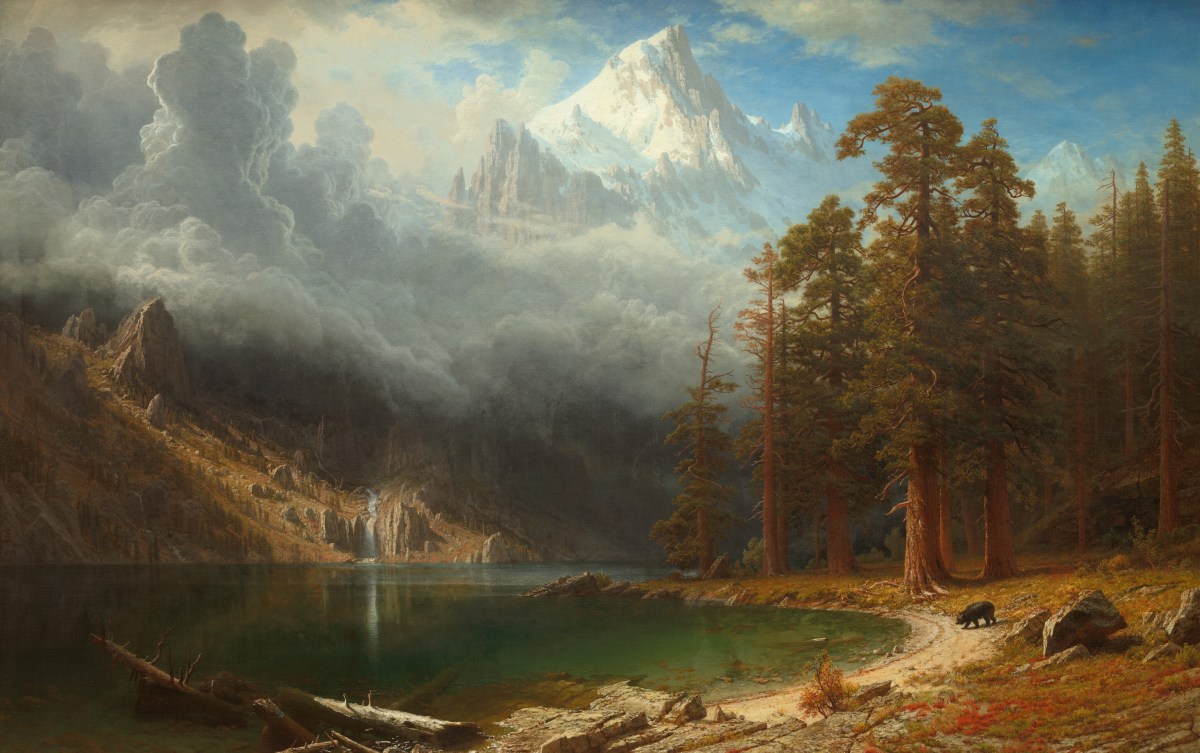
Work: Mount Corcoran, Albert Bierstadt, c. 1876-1877
Why I’m a Dispatch member: The Dispatch family makes me feel like I’m not the crazy one in this seemingly so crazy world seemingly so populated by crazy people, and The Dispatch has gotten me from describing myself as a “recovering Republican” to (as once said during a podcast) a “moderately right of center Libertarian.”
Why I chose this work: Albert Bierstadt was one of the greatest American landscape painters, doing more than perhaps any other artist to solidify an image of the American West in the public mind. I could easily spend an hour at the National Gallery looking at landscape paintings every time I visit D.C. America is a country of stunning natural beauty and something about these paintings has always spoken to my soul.
Mount Corcoran is one of Bierstadt’s better-known works, although as the [National Gallery] readily acknowledges, it [is] an imagined landscape combining classic features Bierstadt saw out in his travels. In art, sometimes the imagined better captures reality than the strictly true.
Interested in being featured in this section? Submit a work of art here.
Interested in being featured in this section? Become a Dispatch member here.