Last April, the Intercollegiate Studies Institute invited eight college students to what an ISI staffer described in an email as an “exclusive retreat and dinner with Tucker Carlson” in Florida.
Founded nearly 75 years ago, ISI is a prominent conservative collegiate intellectual institution in the United States. ISI also runs the Collegiate Network, a collection of alternative conservative newspapers on college campuses across the country, and the eight student journalists had been selected by ISI to attend the retreat and dinner because their campus newspapers were top-performing publications. After a Journalism 101 session at the Art Ovation Hotel in Sarasota, the students filed into a shuttle for a 90-minute trip to Carlson’s home on Gasparilla Island, where Carlson dispensed career advice.
“Thanks to @TuckerCarlson for joining three generations of @amconmag editors/executive directors for a dinner with campus journalists from @ISI’s @collegiatenet,” ISI President Johnny Burtka posted on Twitter alongside a photo of himself, Carlson, then-Collegiate Network Executive Director Dan McCarthy, and The American Conservative editor Curt Mills. “It was an unforgettable evening that our students will cherish for years to come.”
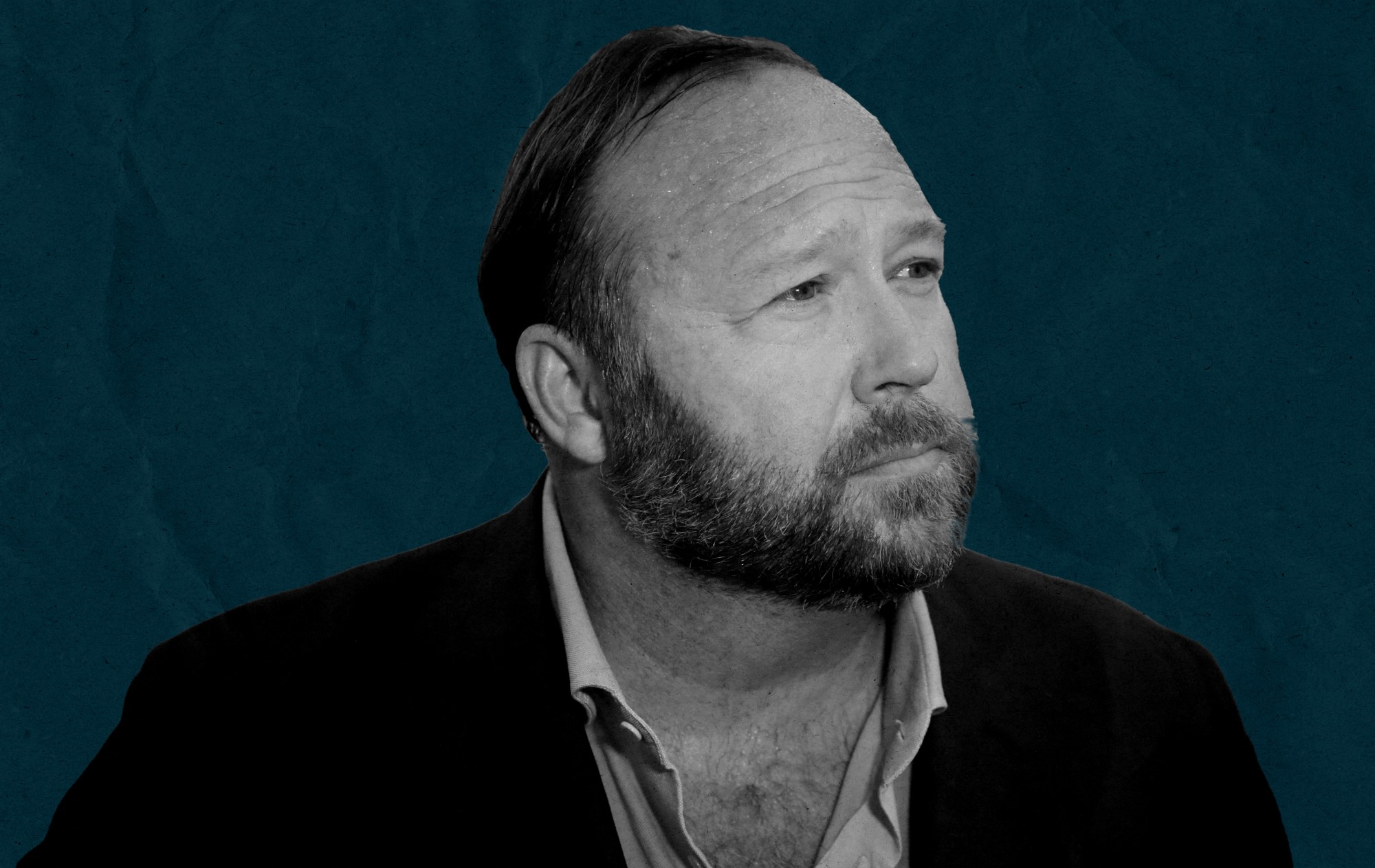
One person left out of Burtka’s photo was Carlson’s special guest at the dinner that night: Alex Jones, who appeared on Carlson’s podcast that aired the next day, April 9.
Jones is one of America’s most prominent conspiracy theorists. He was ordered to pay $1 billion in defamation damages for claiming the 2012 Sandy Hook Elementary School massacre was “staged” with crisis actors, and he has repeatedly said the September 11 terrorist attacks were an “inside job” committed by the U.S. government.
“I said the CIA is going to fly planes into the World Trade Centers and blame it on [Osama] Bin Laden,” Jones told Carlson on the April 9 podcast. “You called 9/11!” Carlson told Jones. “How come you were the only one who figured this out?”
“You’ve never been a racist or an antisemite or a crazy person,” Carlson told Jones, who used his show InfoWars to promote vicious antisemites like the Hitler-loving, Holocaust-denying Nick Fuentes and Kanye West.
By the spring of 2025, it was no longer surprising that Carlson would host Jones for a softball interview. Carlson had already claimed (falsely) in 2024 that Jones had predicted 9/11 and said that Jones had been “vindicated on everything.”
Yet for some intimately involved with ISI, it was still a shock that the institution would pay for student journalists to dine with a conspiracy theorist like Jones. “You’ve got to be kidding me,” former ISI President Chris Long told The Dispatch in a text message when asked if he was aware of such an event. Thomas Lynch, former ISI board chairman, offered a similarly incredulous “you’re kidding” in a phone interview with The Dispatch. The dinner wasn’t a secret—one student paper posted a photo with a caption that read, “The Intercollegiate Studies Institute sent one of our own contributors … to sit down and have dinner with both @tuckerCarlson and Alex Jones!”—but you can forgive Lynch and Long for not closely following the Instagram feed of BYU’s Cougar Chronicle.
Lynch and Long caused a stir on the right last month when they resigned from the 15-member board of trustees that governs ISI. In an open letter to the conservative movement, Lynch and Long said that Burtka had carried out a “post-liberal hijacking” of ISI with the support of ISI trustee Kevin Roberts, the president of the Heritage Foundation. The letter highlighted Burtka’s decision to host writer Curtis Yarvin on Burtka’s podcast as an example of the hijacking by postliberals—who reject the classical liberalism of the Founding Fathers. Yarvin once wrote that Americans are “going to have to get over their dictator phobia” if they want to change their government, and he has also said, “Although I am not a white nationalist, I am not exactly allergic to the stuff.”
But Lynch and Long’s split with Burtka was about much more than one guest on one roundtable podcast discussion: They had been butting heads with Burtka for two years over the ideological direction and institutional purpose of ISI.
The extent to which the institution has been transformed under Burtka’s leadership is debatable. There are still a significant number of traditional conservatives—both journalists and scholars—who participate in ISI programs. But ISI’s movement toward nationalist-populism and postliberalism under Burtka is undeniable. And it has been deliberate.
In 1953, ISI, originally known as the Intercollegiate Society of Individualists, was founded by Frank Chodorov, a staunch libertarian and isolationist, to provide a counterweight to collectivist indoctrination on college campuses. As the historian George Nash recounts in his authoritative history of the conservative intellectual movement, Chodorov wrote in 1950 that collectivism had triumphed over individualism in the United States because “the collectivist seed was implanted in the soft and fertile student mind forty-odd years ago.”
This trend, Chodorov believed, could be reversed over the course of decades. “We are not born with ideas, we learn them,” he wrote. “If socialism has come to America because it was implanted in the minds of past generations, there is no reason for assuming that the contrary idea cannot be taught to a new generation. What the socialists have done can be undone, if there is a will for it.”
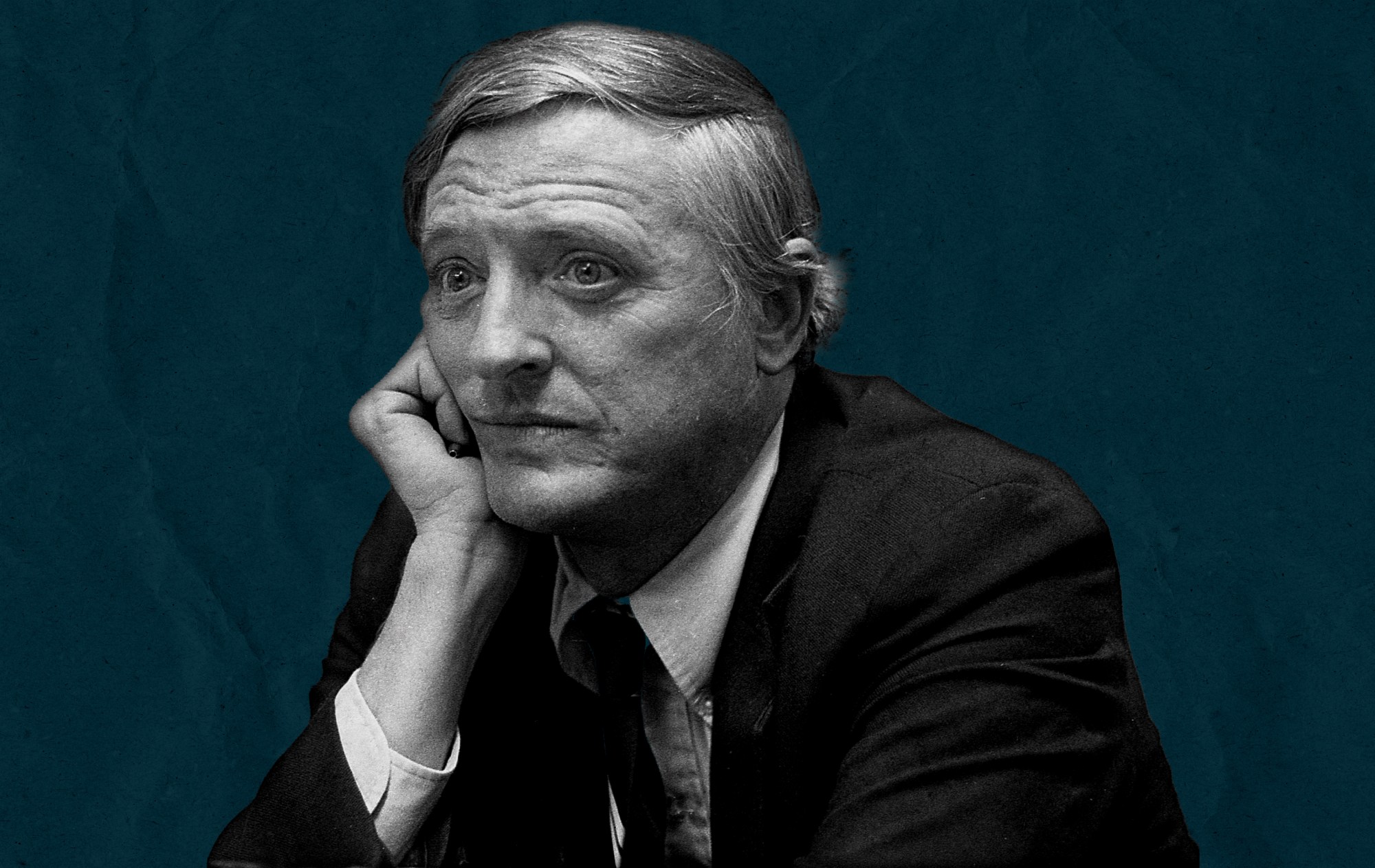
Chodorov, the son of Russian Jewish immigrants, selected the Catholic William F. Buckley Jr.— fresh off the publication of his first book, God and Man at Yale, but two years before the founding of National Review—to serve as ISI’s first president. Over the years, ISI grew to embrace a “big-tent” approach toward conservatism, adopting the motto “educating for liberty.”
ISI played a key role in the development of many young conservative and libertarian minds by publishing books—providing them at first free of charge to those who requested them—and by organizing conferences, reading groups, and lectures. “Historically, ISI is a philosophical organization, and our mission is to educate students in the values of Western civilization as interpreted by the Founding Fathers,” said Lynch, who once received an ISI-funded scholarship to study at Oxford under the philosopher John Gray. In 1995, ISI absorbed the Collegiate Network, an organization founded in 1979 that supported alternative student papers and funded summer internships for college students and yearlong journalism fellowships for college graduates. ISI’s Collegiate Network has helped launch the careers of numerous journalists, including both authors of this article, and it funded a fellow and an intern at The Dispatch several years ago (before stopping placements at The Dispatch). Famous alumni of the Collegiate Network include Supreme Court Justice Neil Gorsuch, billionaire Peter Thiel, Ross Douthat of the New York Times, Matthew Continetti of the Wall Street Journal, Jonathan Karl of ABC News, and columnist Ann Coulter.
In 2021, the ISI board tapped Johnny Burtka, who had served as editorial director of the magazine The American Conservative, as president. In 2020, while running The American Conservative, Burtka sought to appeal to and speak for what he called the “Tucker Carlson wing of the GOP,” but according to Lynch and Long, he promised the ISI board when he got the job the following year that he wouldn’t take steps to remake ISI in the image of his former magazine.
“He had to commit to the entire board that he was going to be a big-tent conservative and not advocate for the populist agenda, and he made that commitment to all of us,” Lynch said. That pledge appears to have been short-lived. In addition to putting Tucker Carlson on a pedestal for students to emulate, Burtka personally blacklisted a well-known conservative journalist who had previously spoken at ISI events for offending populist sensibilities. Burtka also pushed for ISI to purchase The American Conservative, and he tipped the scales of ISI’s academic programming at its annual conferences in favor of postliberal professors who favor a powerful, explicitly religious state.
For its annual conference for editors of campus newspapers in 2021, ISI’s Collegiate Network decided the first night of the event should feature a journalist who had fallen prey to cancel culture in the mainstream media. Senior staff and Burtka had considered having an “ex-liberal” like Bari Weiss, formerly of the New York Times, or Andrew Sullivan, formerly of New York magazine, speak that night, but logistical and financial considerations took those speakers off the table.
A senior ISI staffer suggested that Kevin Williamson, who had been hired and then abruptly fired by The Atlantic, would do a great job discussing cancel culture. But Williamson, then of National Review and now of The Dispatch, had essentially been blacklisted by Burtka on ideological grounds.
“I would never invite Kevin Williamson to speak at an ISI conference regardless of the price,” Burtka wrote in an email to ISI senior staff. “In my mind, his contempt for ordinary, working-class Americans is everything that’s wrong with the conservative movement.”
Instead, Burtka selected journalist Helen Andrews, then of The American Conservative, to deliver the speech. According to a source in the room for Andrews’ remarks, one of the first examples she mentioned of cancel culture in journalism was The Atlantic’s treatment of Kevin Williamson.
Burtka’s 2021 blacklisting of Williamson sheds light on his elevation of Tucker Carlson in 2025—and is a reminder that everyone believes in gatekeeping at some level. The question is simply who is kept outside the gates—dishonest propagandists like Tucker Carlson, postliberal cranks like Curtis Yarvin, and kooks like Alex Jones—or conservatives who criticize populism or postliberalism too harshly.
Burtka wrote in his 2021 email that, while he’d tolerate a wider range of views on a debate stage, “the ideological composition of the speakers is just as important to me as the quality of their presentations about professional development. Success in journalism is only as good as the network of contacts you have and students assimilate the views of their mentors and peers.” There can be no doubt that Burtka has presented Tucker Carlson to young conservative journalists as a role model, long after it was defensible to do so.
In 2024, the same year Carlson said 9/11 truther and Sandy Hook truther Alex Jones had been “vindicated on everything,” Carlson also produced a misleading, anti-American propaganda video in a Moscow grocery store after conducting a softball interview with Russian autocrat Vladimir Putin. “Coming to a Russian grocery store, the ‘heart of evil,’ and seeing what things cost and how they live, it will radicalize you against our leaders,” Carlson said after learning how much $100 could buy in a Russian grocery store—never bothering to tell his viewers that the average Russian household spends 29 percent of its budget on groceries, while the average American household spends less than 7 percent.
In the fall of 2024, Carlson sparked outrage again when he hosted a little-known amateur historian named Darryl Cooper on his podcast, during which Cooper called Winston Churchill the “chief villain of the Second World War,” described the Holocaust as happening almost by accident, and likened the Nazis’ extermination of millions of Jews to Israel’s defensive war against Hamas in Gaza. “I want you to be widely recognized as the most important historian in the United States,” Carlson told Cooper, who had posed with a Nazi-themed coffee mug in a photo posted online a couple of weeks before the podcast appearance.
Despite all that, Burtka still brought top conservative student journalists to dinner with Alex Jones at Tucker Carlson’s home in April. And this year, for the first time, ISI placed one of its three yearlong fellows at the Tucker Carlson Network at a cost to ISI of $75,000 (with the other two fellows going to Fox News and The Free Press).
Carlson has also been at the center of the most recent controversy to roil the conservative movement, when in October of this year he hosted neo-Nazi Nick Fuentes for a two-hour podcast episode in which Carlson posed no challenging questions to Fuentes. Heritage Foundation President (and ISI board member) Kevin Roberts responded to calls from other conservatives to distance Heritage from Carlson by posting a short video to social media defending the podcaster. Roberts’ defense angered many staffers, prompted the resignation of a prominent board member, and damaged Heritage’s reputation.
Since the Carlson-Fuentes playdate, Burtka, who declined an interview request from The Dispatch, has not said anything publicly about whether ISI will maintain its own relationship with Carlson. Larry Arnn, an ISI board member and Hillsdale College president, told Hillsdale’s student newspaper: “I support the U.S. alliance with Israel and abhor the nutty Nick Fuentes, as does Kevin [Roberts]. I did not like the Tucker Carlson interview with the Nietzschean Fuentes.” But he did not respond to a request for comment on Monday about whether he thinks ISI should cut ties with Carlson.
While ISI’s journalism programming has sought to elevate the likes of Tucker Carlson, its academic programming for students has given an ever larger platform to postliberal Catholic integralists—who reject the classical liberalism of the Founding Fathers in favor of a powerful and explicitly Catholic state—and sidelined several professors who oppose the integralist project.
“The old ISI was more like a place that was interested in political ideas for their own sake, and the new ISI is more interested in political ideas as an instrument for political action,” Michael Federici, a professor of political science at Middle Tennessee State University, told The Dispatch. Federici has been involved with ISI for decades, first as a student and later as a scholar, most recently participating in an ISI debate camp in 2024. “ISI was very instrumental in my intellectual development and really in my life journey because it changed the whole trajectory of my life. I became a college professor largely because I met Russell Kirk and Claes Ryn,” Federici said, referring to his mentor at Catholic University.
Federici believes ISI has maintained some connection to its old self by providing scholarships for students, and he says that the ISI-published magazine Modern Age, founded by Russell Kirk and now edited by Dan McCarthy, “has not changed fundamentally from what it has always been, which is a journal of conservative intellectual ideas.”
But ISI as a whole has, according to Federici, “kind of lost a sense for the big-tent approach that it used to have, and moved—I’m not saying completely away—but moved more away from traditional conservatism” and “sort of tipped the scales on the side of the integralists.”
To see the change in ISI under Burtka, look to ISI’s summer honors conference, one of the organization’s most important annual events. Each year, a small group of engaged college students listens to lectures, attends seminars, and engages in discussions with scholars on a range of topics.
The 2022 honors conference had mostly proceeded as normal, and was wrapping up with a final lecture by Bradley Watson, a senior fellow of the Claremont Institute who was then a professor at Saint Vincent College and now teaches at Hillsdale College.
As he had often done over the many years he had appeared at ISI’s conference, Watson spoke in defense of the American constitutional tradition. He also took aim—respectfully and in a scholarly manner, according to multiple accounts of what happened in the hotel ballroom in Philadelphia—at what he perceived as a flawed response to the current problems facing the United States coming from certain thinkers on the right, some of whom had spoken at this very conference. The Catholic integralists and postliberals, Watson argued, were making the same mistake that the Christian-influenced progressives of the early 20th century had made in attacking the classically liberal framework of the Constitution.
Suddenly, one of the other scholars in the room, Catholic University professor and prominent integralist Chad Pecknold, stood up. “Your nose is growing!” Pecknold said, according to Jeff Polet and Elizabeth Corey, two scholars with longstanding ties to ISI who were among those who witnessed this stunning break in decorum. Pecknold then left the room in a huff, they said.
“The old ISI was more like a place that was interested in political ideas for their own sake, and the new ISI is more interested in political ideas as an instrument for political action.”
Michael Federici
Many students were confused and upset, according to Polet and Corey, and the other academics in the room were appalled. This was quite atypical of the civil ISI events of the past, and it conflicted with the spirit of open debate over philosophy, culture, and politics that had defined ISI since its founding. Corey, a professor at Baylor University, was disturbed enough that two days later, on July 20, she brought up Pecknold’s outburst in an email to Burtka that otherwise praised the conference.
“He did not even listen to the views of someone who disagrees with him,” Corey wrote. “The students definitely noticed. A number of them came to talk to us about it and they were upset. To my mind, this is precisely the attitude of intolerance we do not want to foster in young conservatives.”
Pecknold, when asked by The Dispatch over email about what happened during the Watson lecture, at first replied, “I have no recollection of this.” An hour later, unprompted, Pecknold sent a second reply, in which he said he left Watson’s lecture because Watson made an inappropriately vulgar comment in his remarks. “Watson is critical of postliberals, certainly, but if what is being reported is that I walked out of his talk, let the record show that it is because he was setting a deplorable example for students,” Pecknold wrote, adding in a subsequent email that he recalled leaving “quietly.” None of the other attendees who spoke with The Dispatch about the incident recalled Watson making any sort of vulgar or inappropriate comment. Polet, formerly a professor at Hope College, observed that the comment “Your nose is growing!” is not the kind of thing a person would say in response to a vulgar comment—it’s an accusation of dishonesty.
Corey and Polet were also disturbed by a comment they witnessed Pecknold make following his own lecture earlier that week. In response to a student’s question about how Pecknold would reconcile his vision for American society with the constitutional order, Pecknold replied, according to Corey and Polet, that Americans needed to “blow up the system” and effectively get rid of the Constitution. Pecknold, who has called for the enactment of blasphemy laws in the United States, denied that he mentioned anything about getting rid of the Constitution or blowing up the system. “I have never said such things and in fact I have written the opposite — namely that there is nothing intrinsically wrong with our constitutional system of governance, but we need to stop using liberalism as our governing philosophy,” he wrote to The Dispatch. Despite Pecknold’s denials, Corey and Polet stand by their recollections and have contemporaneous emails documenting both comments attributed to Pecknold.
“I’m disappointed to learn of Chad’s behavior during Brad’s lecture,” Burtka wrote in 2022 while responding to Corey’s email about Pecknold. “I’m fine with strong disagreement among speakers, but it is important that professors model civil discourse to students and engage in a spirit of collegiality. I will keep that in mind for the future.”
“As to integralism generally,” Burtka added, “the center of gravity for ISI programing (as well as to our understanding of the American Founding) will always be the Kirkian tradition as expressed in the Roots of American Order. The tension between traditionalist and fusionists and libertarians existed at the time of ISI’s founding and throughout its history and will continue to play out in our conferences, panels and debates moving forward.”
The 2022 summer honors conference, it turned out, would be the last time ISI would invite Corey, who had been a mainstay for more than a decade, and Watson, who had been a mainstay for nearly two decades, to participate. Polet, who privately raised concerns to Burtka about the dominance of integralism in ISI programming at the 2022 conference, has also not been invited back to an ISI honors conference since 2022 after more than a decade of participating.
Pecknold, however, was invited back to the 2023 honors conference and just participated in an ISI government conference in November. After his email exchange with The Dispatch, Pecknold posted a photo of himself with Heritage Foundation president Kevin Roberts, an ISI trustee who is the chairman of ISI’s programs committee: “Celebrating America 🇺🇲with the great @KevinRobertsTX — I am so grateful for his leadership, his patriotism, and his friendship! Onward!”
Thomas Lynch, the former ISI board chairman, believes the story playing out at ISI—in which a traditionally conservative institution is turning populist and postliberal—is the same story that has played out at the Heritage Foundation over the past four years. Both situations involve a conservative institution with an excessive devotion to Tucker Carlson, and both involve three characters who sit on the boards of both ISI and the Heritage Foundation: Hillsdale College President Larry Arnn, Sarah Scaife Foundation chairman Michael Gleba, and Heritage Foundation President Kevin Roberts.
“You have Michael Gleba of Scaife and Larry Arnn of Hillsdale using their money and influence to silence the opposition and support the postliberal agenda. Kevin Roberts is the brute force behind it,” Lynch said. “That’s what happened at Heritage, and that’s what happened at ISI.”
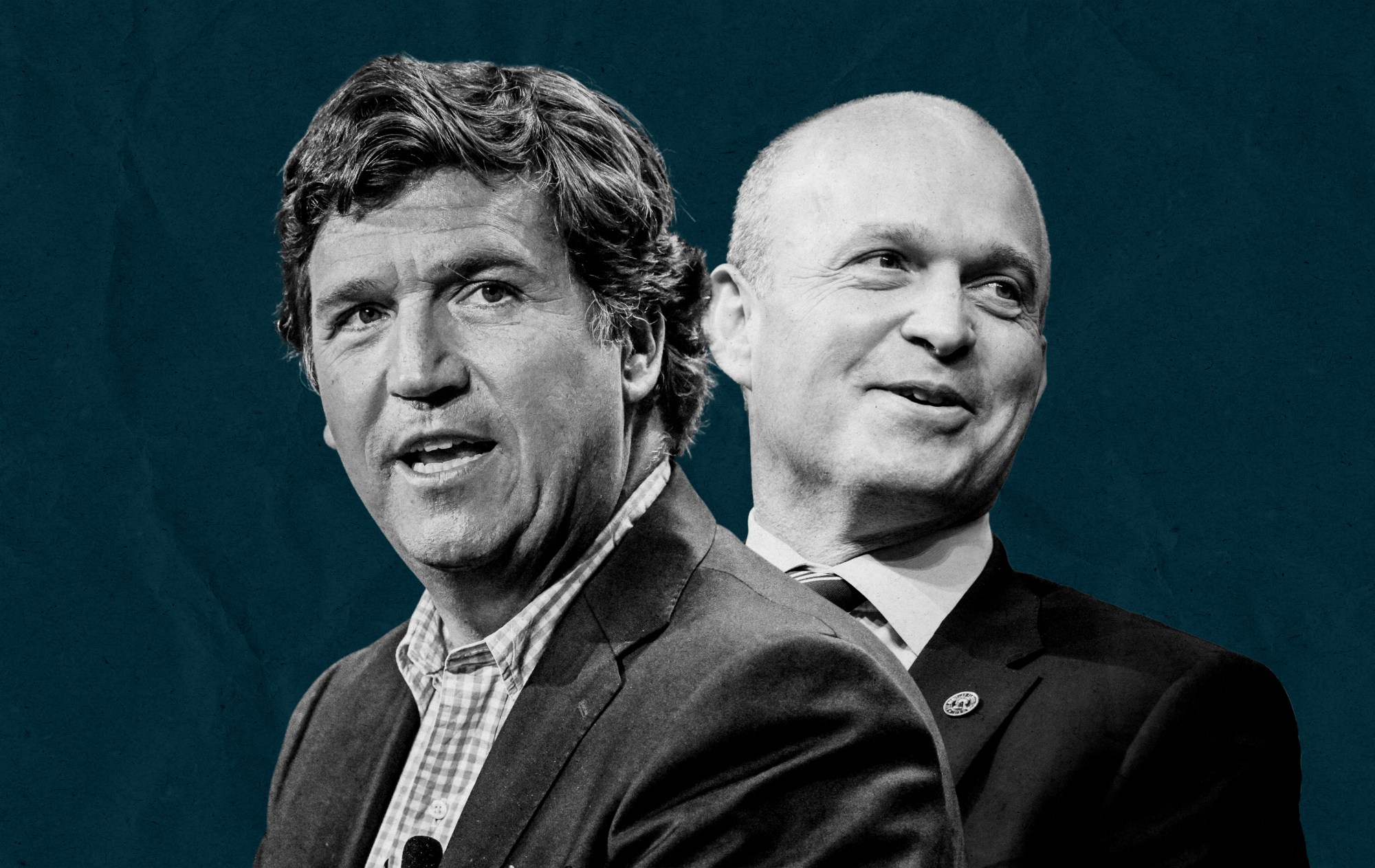
Arnn, the president of Hillsdale College, played a key role in hiring Burtka, a 2012 Hillsdale graduate, as ISI’s president. Gleba, chairman of the Scaife Foundation (which sits on $600 million in assets and funds a wide array of conservative organizations), led the Heritage Foundation search committee that hired Roberts in 2021 and has been, according to a knowledgeable source, a key defender of Roberts on the Heritage board following the Carlson-Fuentes controversy. Inside ISI, all three men played a role in helping Burtka implement his agenda.
“Kevin basically positioned himself as Shadow Chair of ISI,” Lynch said. “Kevin had been working around me for the last two years at least.” In 2023, for example, according to Lynch, Burtka proposed that ISI buy his onetime employer, The American Conservative, at Roberts’ request after Roberts tried and failed to get the Heritage Foundation to buy it. “Without consulting me, Kevin went to Johnny and said: ISI should acquire or subsume The American Conservative. I didn’t find out about this until discussions were well underway,” Lynch said. A spokesman for the Heritage Foundation told The Dispatch that Roberts did not bring a proposal to the board for purchasing or financially supporting the magazine, but that he did talk about the idea with some of the think tank’s executive leaders.
Lynch opposed the idea of ISI purchasing The American Conservative because the magazine— founded by Pat Buchanan, the godfather of nationalist populism—is involved in day-to-day politics. “I thought it was a terrible idea because The American Conservative is a mouthpiece of the national-populist conservative movement. And ISI has always been a big-tent organization,” Lynch said. “I did not want the community to think TAC speaks for this organization, and I did not want the ISI to take any of their liabilities.”
Given Burtka’s desire to bail out his former magazine, Lynch pushed for an offer he thought would be unappealing to TAC’s board—that ISI would effectively pay the salary of one top editor in exchange for ISI taking over the board. Burtka reported back in a December 2023 email that he concluded ISI should not acquire TAC because the magazine’s “financial situation is quite dire” and worse than they had been led to believe—adding that the idea of forming a joint board with TAC was not worth the trouble because TAC’s “board has not behaved in an honorable way throughout the acquisition process.”
Besides the attempt to purchase The American Conservative, Lynch and Burtka have disagreed over the past two years on many other matters—any one of which may seem small, but, taken as a whole, point to different visions of what ISI is supposed to be.
Lynch traces the beginning of his fraying relationship with Burtka back to Burtka’s decision to invite Carlson to speak at ISI’s 70th anniversary gala in 2023. Though many of Carlson’s worst hits hadn’t dropped yet, Lynch was concerned back then that Carlson, who had been fired by Fox News earlier that year, was “increasingly a fringe polemicist” who was out of step with the mission and purpose of ISI. But Carlson accepted Burtka’s invitation before Lynch knew about it, and Lynch insisted thereafter that Burtka get approval from a board subcommittee for gala speakers. “It was the first moment in the relationship where he got a pretty clear sense that I wasn’t going to acquiesce to the organization moving in that direction,” Lynch said.
For the 2025 ISI gala, Burtka wanted Vivek Ramaswamy to be the keynote speaker, but Lynch didn’t want an intellectually unserious politician like Ramaswamy for the role. According to Lynch, Burtka was disappointed when the gala, featuring poet and literary critic Dana Gioia as keynote speaker, didn’t sell as many tables as Burtka thought he could have sold with Ramaswamy.
Both Lynch and Long say that in private conversations in the fall of 2024, Burtka told them that he wanted ISI to be “the vanguard” of the right, along with the Heritage Foundation and Hillsdale College. Lynch and Long both say they told Burtka that turning ISI into a vanguard fundamentally misunderstood the institution’s purpose. “Our objective was to educate students of good character, who would understand the virtue of their heritage and that was most likely going to enable them to be good citizens and good conservatives,” Lynch said. “There’s always been a concern at ISI that we would become a contemporary political organization.”
Burtka also wanted Dan McCarthy, editor of the ISI-published Modern Age, to start a podcast. Lynch pushed back, he said, pointing out that in the founding documents of Modern Age, Russell Kirk wrote that a “preoccupation with the hour’s political controversies” is one of “the curses of American conservatives.” When Burtka insisted on the show, Lynch said he wanted McCarthy, a former editor of The American Conservative (who participated in a Dispatch Debate this spring), to have a co-host or an alternating host to maintain the organization’s big-tent conservatism. “We weren’t trying to shut him down,” Lynch said. “We just wanted another voice, and I didn’t care who it was, as long as it was someone who had a different perspective than Dan.” On top of that, there was Burtka’s own play to turn himself into a new media personality and promote postliberals like Curtis Yarvin.
By the summer of 2025, Burtka had had enough and pushed for Lynch’s removal as chairman. Lynch said he received a call from trustee Larry Arnn in June telling him that Burtka felt micromanaged and that either Burtka or Lynch needed to go, leaving no doubt Arnn wanted Lynch to step down. Lynch agreed to step aside from his role as chairman on the condition that ISI trustee and former president Chris Long, who could keep ISI’s drift toward postliberalism in check, would take the job. The board agreed to give Long the role, but Burtka was upset and demanded a new chairman. At the earliest available board meeting, Kevin Roberts pushed for a vote to approve ISI trustee Mark Henrie as the new chairman, which the board did.
At the November 7 board meeting, Lynch and Long made the case that Burtka should be removed, not only for promoting Curtis Yarvin, Tucker Carlson, and a postliberal agenda, but also because ISI had been misrepresenting to donors and the public the extent of ISI’s on-campus engagement as it focuses on new media.
“I said, ‘I was deeply concerned that we were providing a platform, directly or indirectly, to people like Curtis Yarvin and Nick Fuentes,’” Lynch recalled. “And Johnny jumped in and said, ‘We never provided a platform to Nick Fuentes.’ And I said, ‘Well, you’re sending Tucker Carlson $75,000 a year to do so.’”
At the same board meeting, Lynch also highlighted the contents of an October 23 memo that was circulated to the board and signed by Lynch, Long, and current trustee Alfred Regnery. ISI had represented to donors, including the Scaife Foundation in the spring of 2025, that it had 91 active campus publications, but only 52 papers had published an article in the 2024-25 academic year, according to the memo. Michael Gleba, who serves as both an ISI board member and chairman of the Scaife Foundation, did not reply to a request for comment from The Dispatch.
What would Lynch say in response to the observation that the issue of misrepresenting the number of campus publications was raised only after the ideological fight with Burtka had erupted and after Burtka pushed for Lynch’s ouster as chairman? “During the year, from 2024 to 2025, I became increasingly concerned that ISI was not doing what it said it was doing,” Lynch told The Dispatch, adding that he only learned of the problem after doing some digging. Lynch said that it wasn’t until 2025 that he learned from Burtka that there were only 15 to 20 truly active ISI chapters, which are discussion groups distinct from Collegiate Network papers. In documents presented to the ISI board, more than 100 ISI chapters were typically listed.
Ultimately, Lynch and Long’s arguments fell on deaf ears. Even some trustees who shared some of their concerns voted against removing Burtka, and the motion failed 13-2. In the end, Long and Lynch were the ones who resigned from ISI, not Burtka. It’s similar to the fallout at the Heritage Foundation, where conservative scholar Robert George is the one who resigned from the Heritage board over his objections to Kevin Roberts’ response to Tucker Carlson and Nick Fuentes.
Lynch believes that both institutions, ISI and Heritage, are lost to postliberalism and national populism, at least in the near term. The only hope for reform in the long term, he believes, is for traditional conservatives who have long supported the organizations to know what’s really going on behind the scenes.