Since September of this year, the United States military has been blowing up boats allegedly trafficking drugs in the Caribbean.
Whether these attacks are legal is hotly debated. Congress hasn’t declared war or even authorized the use of force against “narco-terrorists” or against Venezuela, the apparent real target of a massive U.S. military buildup off its coast.
The Trump administration has simply unilaterally designated various—alleged—drug traffickers as “terrorists” or members of “terrorist organizations,” and then waged war upon them. The administration’s internal legal finding supporting all of this hasn’t been publicly released. But whatever their case in private is, it was sufficiently weak that the British government announced in early November it would no longer share intelligence with the U.S. relevant to the Caribbean operation over concerns about its lawfulness.
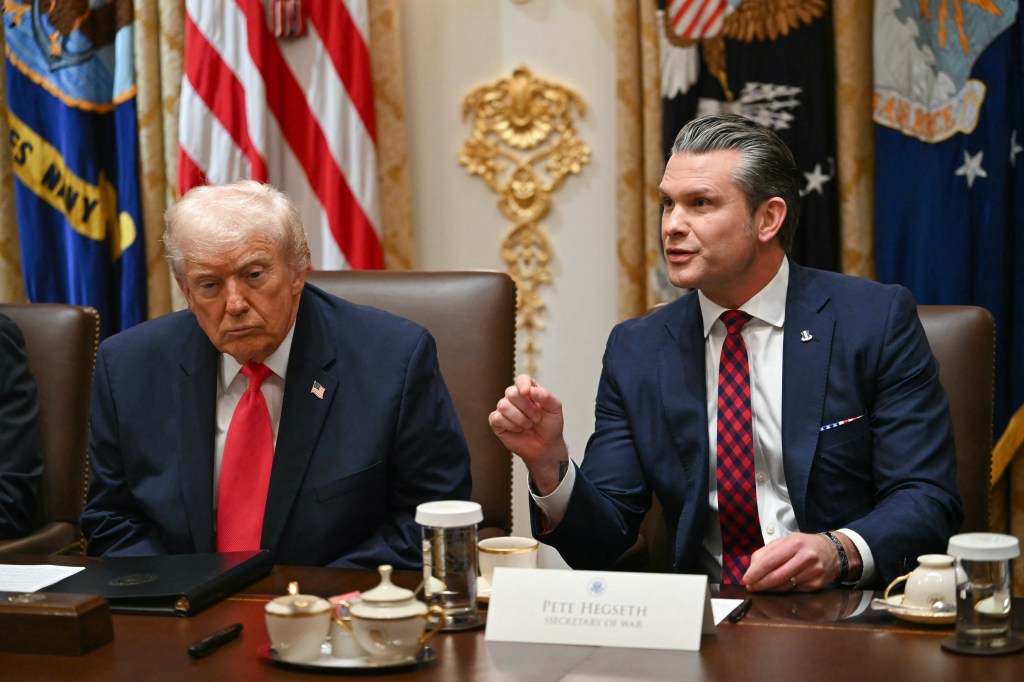
On Friday, the Washington Post dropped a bombshell report about the first of these operations back in September. During the strike, the Navy not only took out a suspected drug-trafficking boat—as had been reported previously—but when survivors were spotted clinging to the wreckage, the Special Operations commander overseeing the operation ordered a second strike on the survivors to comply with Defense Secretary Pete Hegseth’s order to kill everyone involved.
“Hegseth gave a spoken directive, according to two people with direct knowledge of the operation,” the Post reported. “‘The order was to kill everybody,’ one of them said.”
Whatever you think about the broader Caribbean operation, it is a simple fact that shooting survivors at sea is a war crime, under American and international law. Of course, as some suggest, since this operation is not a legal war, maybe it’s not a war crime, just a crime-crime.
Later Friday, in a lengthy social media post, Hegseth attacked the Washington Post’s report as an instance of the “fake news … delivering more fabricated, inflammatory, and derogatory reporting.”
What Hegseth didn’t do was directly deny the report. Instead, he insisted that, “We’ve said from the beginning, and in every statement, these highly effective strikes are specifically intended to be ‘lethal, kinetic strikes.’”
Declaring your intent was to kill everybody on the first try isn’t a legal excuse to finish off unarmed survivors.
With even Republican members of Congress expressing grave concerns, the official story changed from “fake news” to an actual denial. Trump said that Hegseth told the president that he did not give any such illegal order, “and I believe him, 100 percent,” adding that he “wouldn’t have wanted that. Not a second strike.”
So it now appears the White House has confirmed there was a second strike on the survivors, and conceded that it would at least be against the president’s policy. Whether the White House will concede the strike was unlawful remains to be seen. Indeed, exactly what happened remains murky. It surely seems like someone gave an order for a second strike. And if it wasn’t Hegseth, whoever that person was could be looking at a court-martial—or given who the commander in chief is, a pardon.
But I don’t want to get ahead of the news.
Instead, I’ll make a few points.
First, a minor gripe: This administration and its defenders need to be more selective in their use of the term “fake news.” I have no problem calling a false story “fake news.” But if you know that a story isn’t false, calling it “fake news” just sets you up to look like even more of a liar or hypocrite down the road when you end up admitting the truth and defending actions you once pretended were slanderous.
More importantly, the whole Caribbean strategy is constitutionally and legally dubious. As a matter of foreign policy, it looks more and more like a pretext for some kind of regime change gambit in Venezuela. If the administration has evidence that justifies its actions, they should share it with Congress and ask for permission to wage war.
Even more important: Illegal orders cannot be justified. When a half-dozen Democratic members of Congress released a video saying that the military shouldn’t follow “illegal orders,” the president and many of his defenders became hysterical. Trump lamented that America has become so “soft” that such “seditious behavior” isn’t punished by death anymore.
More sober critics of the Democrats complained that the video sowed confusion in the ranks and hurt morale. I’m actually sympathetic to that argument.
But you know what else sows confusion and hurts morale? Issuing illegal orders—or even appearing to do so.