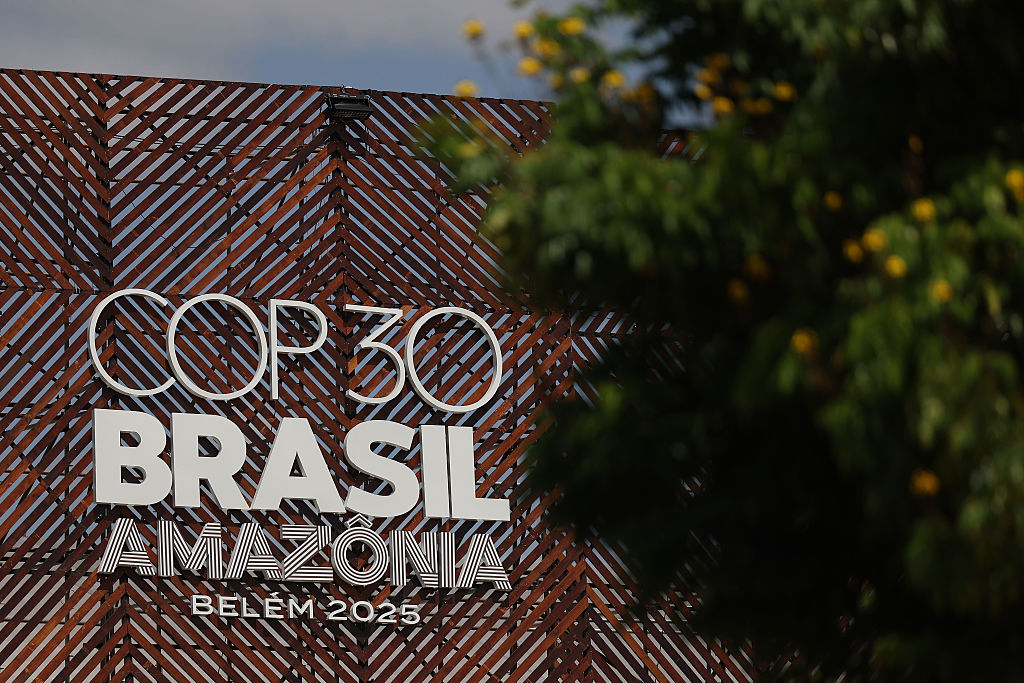
Over 70,000 people just left Belém, Brazil after attending the annual UN climate change party, called COP30 because it was the 30th annual “Conference of the Parties.” This year there were 56,118 delegates, appointed by governments who are parties to the 1992 UN Framework Convention on Climate Change. Besides the delegates themselves, there were over 14,000 observers, journalists, lobbyists, skeptics, protesters, and opponents of the entirely predictable recommendations.
COP29 climate finance deal clinched, what are countries saying? | ReutersThose recommendations attempted to address four political issues. First, where COP recommendations used to be threats against all the industrialized countries, this year it devolved into a debate about whether such countries should even be asked to do better. Second, how to spend $300 billion that has been pledged for climate aid – which could become pointless as various nations renege on those pledges (keep reading). Third, how to handle various trade barriers that are only marginally related to climate. Fourth, how to report global climate progress, which the UN refers to as “improving transparency.”
Real transparency might also involve disclosing the carbon footprint of such a gigantic conference that always points fingers at everyone else’s carbon footprint. Not everyone there is a hypocrite, as some delegates express this concern every year, though of course they continue to attend. The impact is expressed as metric tons of greenhouse-gas emissions (CO₂-equivalent). And the estimated climate footprint for 56,118 delegates attending COP30 is roughly 113,000 metric tons of greenhouse gas emissions. That includes hotels, local transportation, energy used by the venue itself (17,000 metric tons), and especially all the plane flights (96,000 metric tons).
That means every delegate was responsible, on average, for two metric tons of greenhouse gas emissions, roughly half of the total annual footprint of the average human. How’s that for transparency?
As always, the conference tried to make the case that the global climate continues to deteriorate. But this year’s delegates were far more worried about the deteriorating political climate in which they gathered. For years they basked in the almost universal consensus that something had to be
done to head off a dire man-made catastrophe. They demanded industrial countries end fossil fuels and pay trillions of dollars to less developed countries. This year leaders from around the globe said that “almost universal” consensus has evaporated, and they now struggle once again to convince countries that the crisis is real, and their proposed solutions are practical.
Almost every day there is foreboding news for this movement.
Last month the International Energy Agency published new data showing that worldwide demand for oil and gas is growing, with no end in sight to the upward trend. For at least 25 years, IEA says fossil fuel use will continue to increase.
Governments that once fully embraced their role in mitigating climate change are steadily withdrawing from earlier commitments. Pennsylvania’s democratic governor signed legislation withdrawing from the northeast’s Regional Greenhouse Gas Initiative, citing the need to “reduce the cost of energy for all Pennsylvanians.” Bill Gates just made headlines by ending his donations to climate groups, saying they are “diverting resources from the most effective things we should be doing to improve life in a warming world,” such as fighting poverty. He shocked the whole climate industry with fear that the money machine might stall.
Even the European Parliament in Brussels retreated from its highly touted regulations that required companies to fix environmental issues in their supply chains or face severe fines. After the U.S. and Qatar warned that the rules risked disrupting Europe’s gas supply and deindustrializing the continent, the EU relented on the fines, and exempted 90 percent of European companies, all but the very largest. Politico called it “Parliament’s defining meltdown,” predicting it might usher in a new conservative majority.
One of the most comical ironies came when Britain’s Energy Secretary told delegates, “At this very moment, there are people in a number of countries across the world, including my own, who want to deny the crisis even exists or delay the urgent action we need to address it.” Proving the point, his own Prime Minister, Keir Starmer, followed with “Today, sadly, that consensus is gone.” His government then officially withdrew from a $125 billion fund it had created to support rainforests.
Numerous countries have reconsidered their previous commitments as they realized the impact on consumer prices and government budgets. Several have scaled back those commitments, including Canada, Turkey, Poland, and Russia.
The Brazilian official chairing the conference said other nations should emulate China’s “commitment.” Isn’t that ironic, as China continues to build 100 new coal-fired power plants a year?