As has always been the case, the number of users both fuel and drive the economic train. The greater number of people that use your product, the better it is for you.
In the pre-internet age, “users” almost always meant “customers.” To use your product, they almost always had to purchase your product. It was the overwhelmingly predominant way to monetize what you do.
The internet age has revolutionized and expanded the definition of “user.” Many Big Tech companies like Alphabet (Google) and Meta (Facebook) devised a new business model: selling data collected about and from the “users.”
Big Tech’s objective remained fundamentally the same: draw in as many users as possible, which was inordinately easy to do given that they were giving away everything free.
Big Tech then harvested as much information about as many people as possible to then sell to as many people as possible.
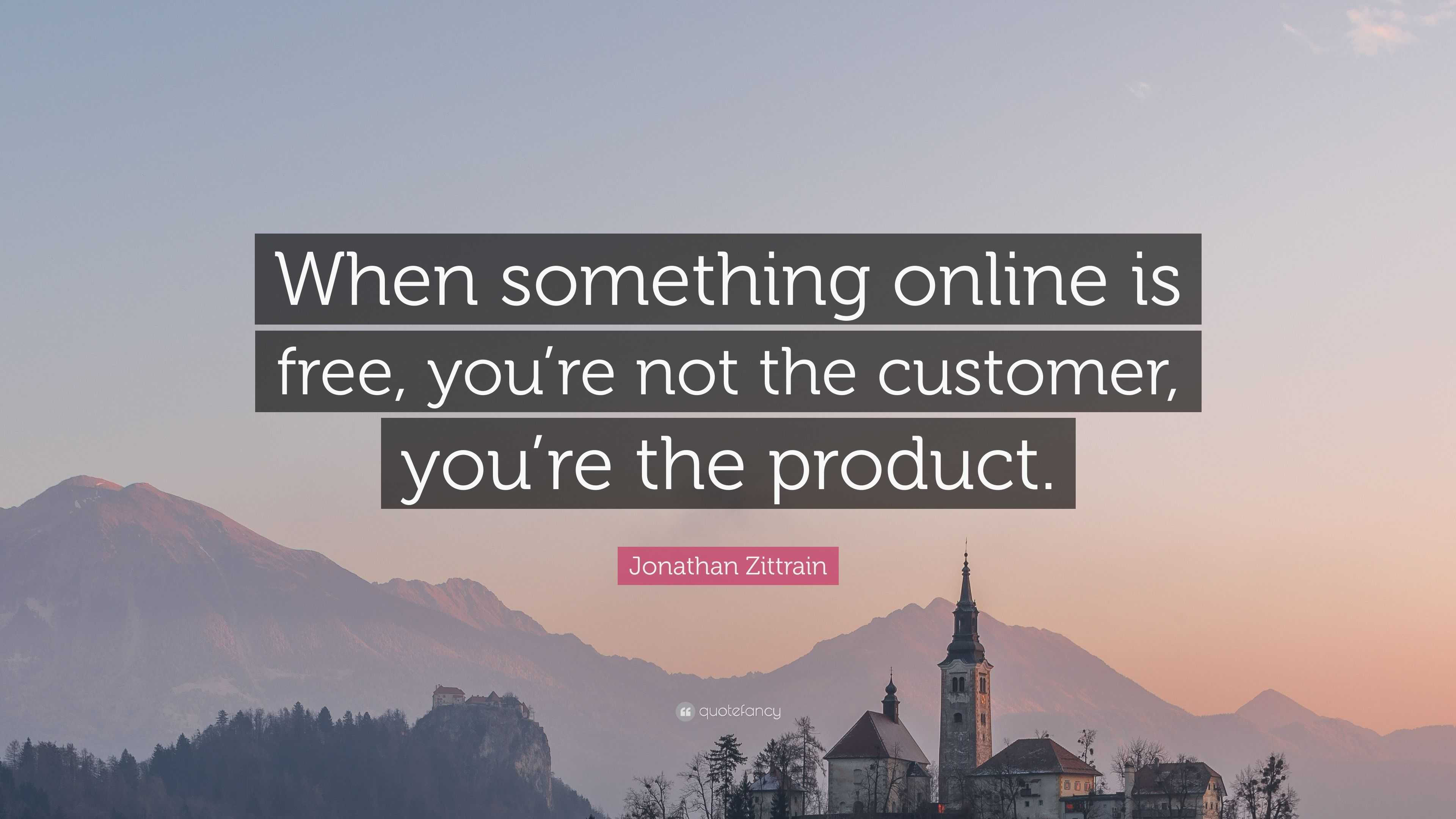
This new paradigm was wisely distilled by Jonathan Zittrain:
“When something online is free, you’re not the customer – you’re the product.”
This new business model allowed Facebook, little more than a societally destructive social media billboard, to drive its parent company Meta to a current $1.54 trillion market cap.
Aided and abetted of course by Washington, DC, which Big Tech owns.
The internet has now been around commercially for three decades. DC has NEVER passed ANY law limiting ANYTHING Big Tech does with our data. Because that’s exactly how Big Tech wants it.
Big Tech was even greedier still. They have spent the past decades demanding DC impose Network Neutrality, which Congress has dutifully, repeatedly attempted to do.
Net Neutrality is omni-directional stupid policy, coveted by Big Tech wants for many reasons. One HUGE reason is that it outlaws Big Tech from being charged for the MASSIVE bandwidth they use.
Google’s YouTube (Alphabet Market Cap: $3.8 trillion) alone consumes 16 percent of ALL global bandwidth.
And Netflix (Market Cap: $442 billion) alone consumes 15 percent.
Were Net Neutrality to be successfully imposed, you and I will pay MUCH more to connect to the internet – augmenting Big Tech’s massive profits.
Since you and I pay to connect ourselves to the internet, we do so with the bottom line firmly in mind.
“Which service gives me the best bang for my buck?” is what Americans ask. And the numbers behind how we are answering that question are clear.
Our current two chief internet connection options are wired and wireless. (Satellite is an up-and-comer – with about a 6 percent market share)
And We the Users have been deciding – in real time, over a long period of time – that we prefer wireless over wired.
Wired subscription numbers have been cratering whilst wireless subscription numbers continue to skyrocket. We the Users are speaking – loudly.
Comcast Takes Drastic Action As Customers Rapidly Cut Service:
“In Comcast’s second-quarter earnings report for 2025, it revealed that it lost about 226,000 internet customers during the quarter, which is almost 88% higher than the number of internet customers it lost during the same quarter last year.”
Spectrum Is Losing More Internet Customers Than Expected:
“Spectrum is losing more internet customers than expected, and it’s not just a small dip in numbers. The company’s internet customer base has dropped by 1.2% in the last quarter, which is a significant decline….
“The reasons for this decline are complex, but one major factor is the rise of mobile internet. Many customers are switching to mobile plans that offer faster speeds and more flexibility, making traditional internet services less appealing.”
Let’s look at some mobile numbers:
AT&T Gains 324,000 New Wireless Subscribers
“(E)xpanding its customer base with over 300,000 net additions in mobility and broadband.”
As noted, AT&T, Verizon, and some other providers offer both wireless and wired services. But as the numbers indicate: wireless is where the real growth is.
So much so, that wireless connections are now more ubiquitous than Americans. There are currently 1.7 wireless connections – for every American.
That’s a lot.
The reasons for these respective trends are simple. Wired is utterly immobile – and way more expensive to implement. Wireless goes pretty much anywhere – and is WAY less expensive to implement.
Which means more mobile and less expensive for We the Users.
This isn’t a difficult market analysis. Well, except for government, apparently.
Government insists on wasting hundreds of billions of dollars on programs to connect people to the internet.
When there are already 1.7 connections per person in the United States. When 98 percent of Americans were connected to the internet – in 2015.
And given the wired and wireless options we just detailed, government choose poorly – almost every time.
Fiber Still in Line for Two-Thirds of BEAD Locations
“Fiber” being…wired. BEAD being the latest government internet boondoggle.
In conclusion:
Big Tech wants Big Government to force We the Users to pay for their internet.
Big Government is exceedingly stupid and wasteful when spending our money on their internet boondoggles.
The only people making actual sense with our choices and our money are We the Users.