Since our society is conditioned to believe all vaccines are “safe and effective” many do not realize the risk and benefits of each vaccine vary greatly. One of the most controversial vaccines has been the Hepatitis B vaccine, which is given to every newborn in the country at their most fragile moment of life despite their risk of contracting hepatitis B being negligible.
Bonnie Dunbar PhD has also been in contact with numerous physicians and research scientists from several countries who have independently described thousands of identical severe reactions occurring in Caucasian recipients of the hepatitis vaccine.
Since entering the market, the hepatitis B vaccine has been marred with safety concerns:
• As early as 1976, one researcher cautioned that since autoimmunity is involved in the pathogenesis of hepatitis B infections, it they might also be provoked by molecularly similar hepatitis B vaccines. Numerous papers and major news articles since have shown that vaccine provokes a wide range of autoimmune disorders.1,2,3,4,5,6
• In 1998 Scientist highlighted growing concerns threatening to derail the hepatitis B vaccine program, such as more and more people claiming it caused serious autoimmune diseases (e.g., rheumatoid arthritis [RA], optic neuritis, and multiple sclerosis [MS]), that one doctor had collected over 600 cases of this happening, and that in July, attorneys representing 15,000 people sued France’s government for exaggerating the vaccine’s benefits and downplaying its risks (after which France suspended the vaccine in schools—a move widely condemned by health authorities).
• In January 1999 ABC News aired a scathing criticism of the Hepatitis B vaccine.
Note: 55 other news programs criticizing vaccines they would never air today can be read here.
•A May 1999 Congressional hearing on the vaccine highlighted that:
- Serious side effects included infant death, seizures, autism, dysautonomia, MS, RA diabetes, and rare cases of liver cancer in children post-vaccination, with (vastly underreported) VAERS data showing over 8,000 reactions, including 43 deaths in children under 2 in 1997. In contrast, there were only 95 (or less) annual hepatitis B cases and no infant deaths, indicating the risks of newborn vaccination vastly outweighed any possible benefit.
- There was massive underreporting of injuries (e.g., 4-5 day trials were too short to identify them, and physicians denied they’d occurred when parents reported them) and no effort had been made to identify injury susceptibility.
- All long-term research into the safety of the vaccine was being stonewalled, yet the medical community argued the lack of robust long-term safety studies actually proved the vaccines were “safe” but promised to do future research to determine if the vaccines were safe (which 25 years later still has not happened—but again was repeatedly promised this year as a way to dismiss proposals to stop giving the vaccine to newborns).
- Vaccinating low-risk newborns for an adult-associated disease is inappropriate, particularly since immunity can wane before adolescence and 10–30% of individuals fail to produce antibodies, questioning efficacy.
- The National Vaccine Injury Compensation Program denied most claims, leaving debilitated victims unsupported despite a $1 billion trust fund, with restrictions limiting filings for hepatitis B vaccine injuries.
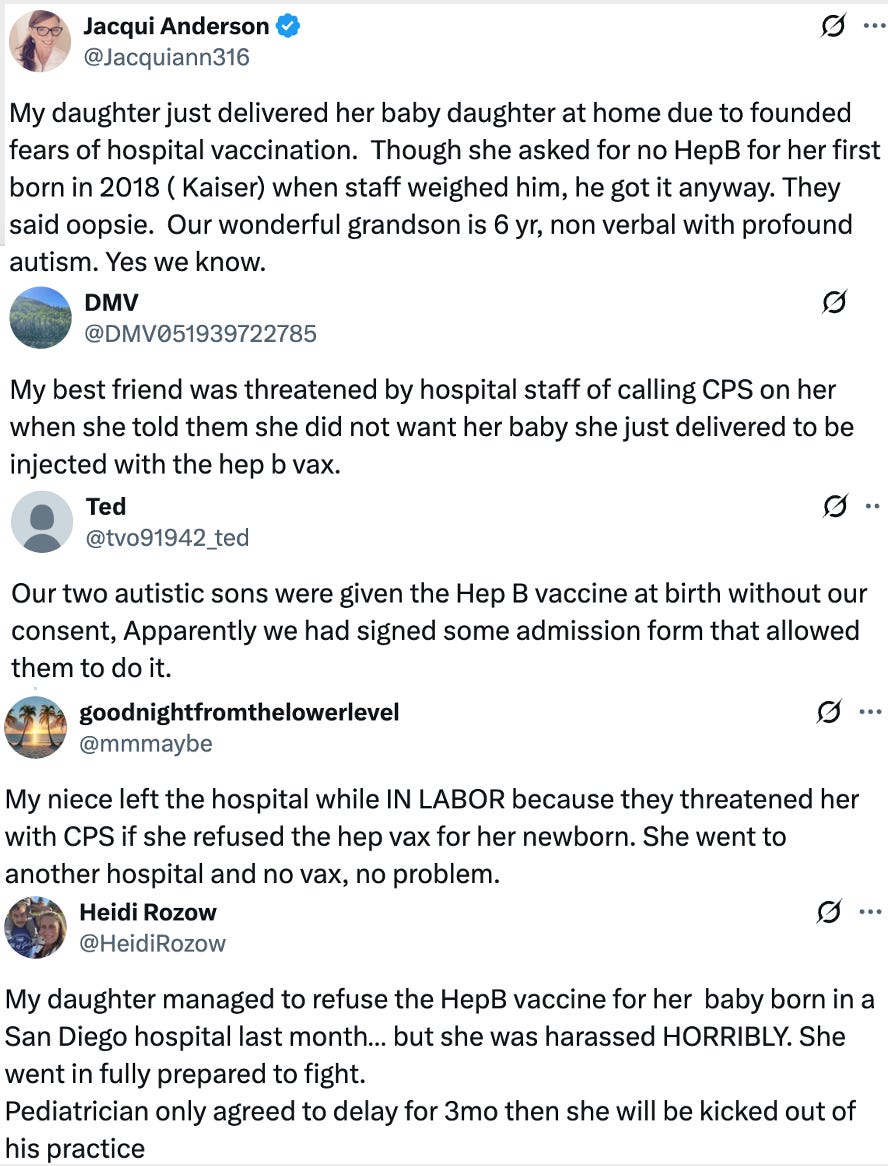
- There was no informed consent as parents were not provided with information on the vaccine’s risks, newborns were vaccinated without parental consent, and parents faced coercion, including threats of social services intervention if they did not vaccine.
Note: this is still an issue. Consider what these readers reported.
Vaccine Autoimmune Disorders
One of the Congressional witnesses produced a report highlighting the dangers of the hepatitis B vaccine including cases of encephalomyelitis he’d observed (resulting in a two week coma for one, a four week coma for the other, along with optic neuritis and significant neurological disability for both). He and others1,2,3 ultimately identified hundreds of publications linking that vaccine to a wide degree of autoimmune disorders:
- MS,1,2,3,4,5,6,7,8,9,10,11,12,13,14 myelitis,1,2,3,4,5,6,7,8,9,10,11,12,13,14 encephalitis,1 encephalomyelitis,1 optic neuritis,1,2,3,4,5 Guillain–Barré syndrome,1,2,3,4,5,6,7,8,9 neuropathy,1,2,3,4,5,6,7,8,9,10 myopathy,1,2,3,4,5,6,7,8 Myasthenia Gravis,1,2,3 APMPPE (an eye disease)1 uveitis1,
- Arthritis,1,2,3,4,5,6,7,8,9,10,11,12,13 Lupus,1,2,3,4,5,6,7,8,9,10,11,12,13,14,15,16,17,18,19,20,21,22 juvenile dermatomyositis,1,2,3,4,5 macrophagic myofasciitis,1 polyarthralgia-myalgia,1 Still’s disease1
- Vasculitis (general,1,2,3,4 pulmonary and cutaneous,1,2 Churg-Strauss,1,2 Henoch–Schonlein purpura,1 Kawasaki’s disease1 polyarteritis nodosa1), hemolytic anemia,1 thrombocytopenia,1,2,3,4,5,6,7 antiphospholipid syndrome1,2
- Lichen planus,1,2,3,4,5,6,7,8,9,10,11,12,13,14,15,16,17,18,19 lichen striatus,1 bullous pemphigoid,1,2 erythema multiforme,1,2,3 erythema nodosum1 Gianotti–Crosti syndrome,1,2 alopecia,1,2 buchal aphthosis1
- Chronic Fatigue Syndrome,1,2,3,4,5 Fibromyalgia,1 Graves’ disease,1,2 Sjogren’s syndrome1
- Hepatitis,1,2,3,4 glomerulonephritis,1 pancreatitis1 pneumonitits1
Note: this vaccine has also been linked to a variety of other disorders not classically classified as autoimmune disorders such seizures,1,2 Bell’s palsy,1,2 cerebellar ataxia,1 tic disorders,1 anorexia,1 tufted angioma1 and to increase common childhood illnesses (e.g., one study found a 1.6X increase in acute ear infections and a 1.41X increase in pharyngitis and nasopharyngitis). Worse still, one study found an 81% increase in death.
Molecular Mimicry
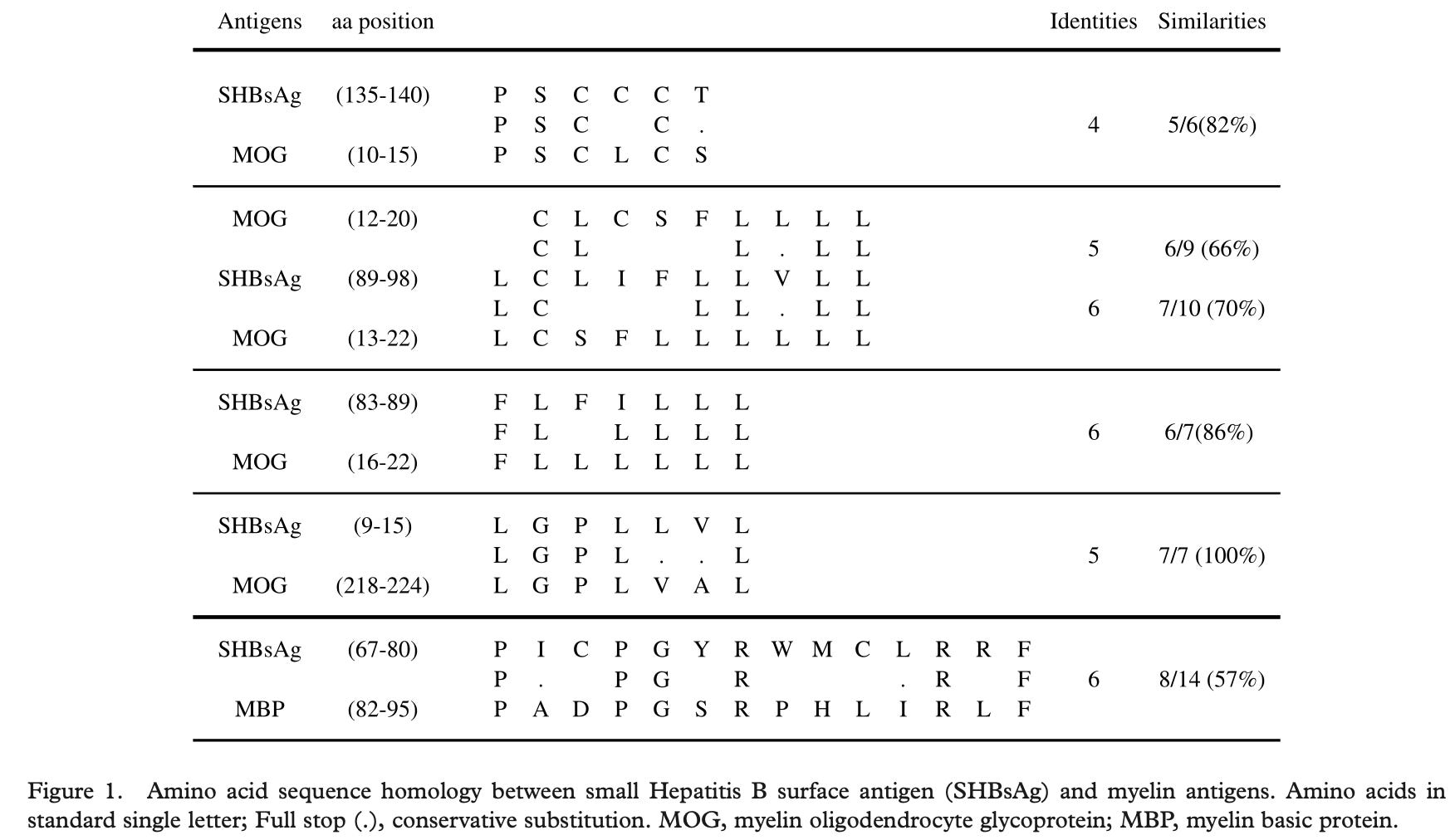
If an immune provoking substance (e.g., an infection or antigen co-administered with an adjuvant like aluminum) overlaps with human tissue, it can cause the immune system to target human tissue and hence cause autoimmunity. From the start, many believed the Hepatitis B vaccine’s issues resulted from it overlapping with myelin (what coats nerves).
This link was vociferously denied by the medical community (yet never researched) but in 2005, proven by a study which showed until the hepatitis B vaccine had a significant overlap with myelin and that 60% of its recipients also developed immune reactivity to the myelin coasting their nerves (which in the majority of cases persisted for over 6 months).
Furthermore:
• A 2005 VAERS study found the hepatitis B vaccine, in adults, (compared to a tetanus vaccine) was more likely to be followed by a variety of autoimmune disorders (5.2X for MS, 18X for rheumatoid arthritis, 14X for optic neuritis, 9.1X for lupus, 7.2X for alopecia, 2.6X for vasculitis, and 2.3X for thrombocytopenia). A similar 2002 study found a 6.1X increase for chronic arthritis (persisting for at least one year), which affected women 3.5X as much as men, and on average occurred 16 days after vaccination.
• A 2002 study found individuals who received a hepatitis B vaccine, within the next two months, were 1.8 times as likely to experience a demyelinating event.
• A 2015 study found cases of MS in France rose by 65% in the years following an aggressive national campaign to increase hepatitis B vaccination rates, and that a statistically significant correlation existed between the number of hepatitis B vaccine doses given and the number of MS cases 1-2 years later.
• A 2004 English study compare 163 MS patients with 1,604 randomly selected matched controls without MS. It found that MS patients were three times more likely to have received the hepatitis B vaccine within three years of symptom onset (which was not seen from tetanus or influenza vaccination).
• A 2009 study in children found that the GSK’s hepatitis B vaccine, which contains five times more yeast protein antigen than other brands, was associated with a 2.77X increased risk of developing MS. A smaller increase (1.5X) was observed for other CNS inflammatory demyelinating disorders.
The hepatitis B vaccine has also been repeatedly linked to autism and other developmental disabilities:
• Secretary Kennedy revealed that in 1999, the CDC conducted a study which found that receiving a hepatitis B vaccine in the first 30 days of life caused a 12.35X increase in autism—after which the study was buried.
Note: Kennedy likely referred to this (unpublished) study, which, via the CDC’s private database, found the highest doses of mercury containing vaccines caused a 1.8X increase in neurologic development disorders, a 7.6X increase in autism, a 5.0X increase in nonorganic sleep disorders and a 2.1X increase in nonorganic sleep disorders.
• A 2007 study of 1824 children found boys who received the hepatitis B vaccine were 9 times as likely to have a developmental disability.
• A follow-up 2010 study found giving the hepatitis B vaccine at birth increased autism 3X, while a 2017 study found newborn (mercury containing) hepatitis B vaccines increased the risk of autism by 4.6-6.7X.
Note: a 2015 study found they increased the risk of developmental delays by 1.6X-1.7X (which a 2016 study estimated equated to over a trillion in healthcare costs).
Similar results were also seen in animals:
• A 2010 monkey study determined that the vaccine caused a significant delay in the acquisition of root, snout, and suck reflexes (critical processes for development).
• A 2016 mouse study found the vaccine impaired neurogenesis, behavioral performances and hippocampal long-term potentiation which simultaneously increased brain inflammation (that was proportional to the neurologic damage which occurred), later determined to largely result from elevated IL-4.
Note: a 2013 study found that hepatitis B vaccination spiked their inflammatory CRP levels, and in 22 out of 70 infants, this increase was large enough to pass the diagnostic threshold for sepsis.
In contrast, the licensing studies for the vaccines only monitored for side effects during a short window long before these side effects would emerge (typically 4-5 days), and did not use actual placebos.1,2 This limited data shows:
• 17%-22% of adults reported injection site reactions.1,2
• 5%-14% of adults and 10.4% of children reported systemic adverse reactions (e.g., fatigue/weakness, dizziness, headache, fevers above 100°F, malaise, nausea, diarrhea, pharyngitis, upper respiratory infection).1,2
• Around 1% (or 3.8% of diabetics) had significant systemic reactions (e.g., anorexia, somnolence, hypotension, a wide range of gastrointestinal conditions, hives, irritability, and weakness).1
• In newborns, within 48 hours of vaccination, the following were reported: pain (9%), erythema (20%), swelling (4%), irritability (20%), vomiting (23%), diarrhea (12%), feeding difficulties (17%), drowsiness (28-32%), restlessness (31%), and fever ≥38°C (0.7%).1,2,3
Note: many of these symptoms can be immensely consequential in infants (e.g., fevers trigger invasive sepsis workups).
• The only long-term study of these vaccines found that after 7 months, 5.8-6.2% of recipients reported a serious adverse event.1,2,3
Note: a definitive 1994 report by the Institute of Medicine noted that preliminary data existed for many of the injuries attributed to the hepatitis B vaccine, no further research had ever been done (and still has not been), so there was insufficient evidence to prove or disprove a link between these conditions. Remarkably, that was taken as proof the vaccines did not cause harm.