You’re reading Dispatch Faith, our weekly newsletter exploring the biggest stories in religion and faith. Looking for more ways to support our work? Become a Dispatch member today.
Welcome back to Dispatch Faith. Hopefully, your Thanksgiving holiday was joyous. One of the things I’m thankful for today is Americans’ willingness to sacrifice for one another. So I’d be remiss not to point out that today is the 84th anniversary of the bombing of Pearl Harbor, made all the more somber because this year it falls on a Sunday, just as it did in 1941.
Much has been made of the waves of young people seeking religion. As Stephen G. Adubato points out below, news stories about Gen Z’s return to faith (often in the Catholic or Orthodox traditions) proliferate just about every week. We’ve covered it before in this newsletter.
Though it’s legitimate to consider the current political, cultural, and ideological shifts as playing a part in the religious trends, Adubato argues that to reduce young people’s search for faith to only a search for fellow ideologues misses much of what millennials and Gen Zers are looking for—and why.

Tired of chaos and toxicity? Get some good news instead
The negativity of today’s 24/7 news cycle is crushing. At The Progress Network, we decided to create something more balanced. Our weekly newsletter, What Could Go Right?, combines intelligent analysis with underreported stories of progress from around the world. It’s positive news you’ve never seen before: never fluffy, but always uplifting. Readers of The Dispatch can sign up for free!
Stephen G. Adubato: Don’t Be a Cynic About Today’s Religious Revival
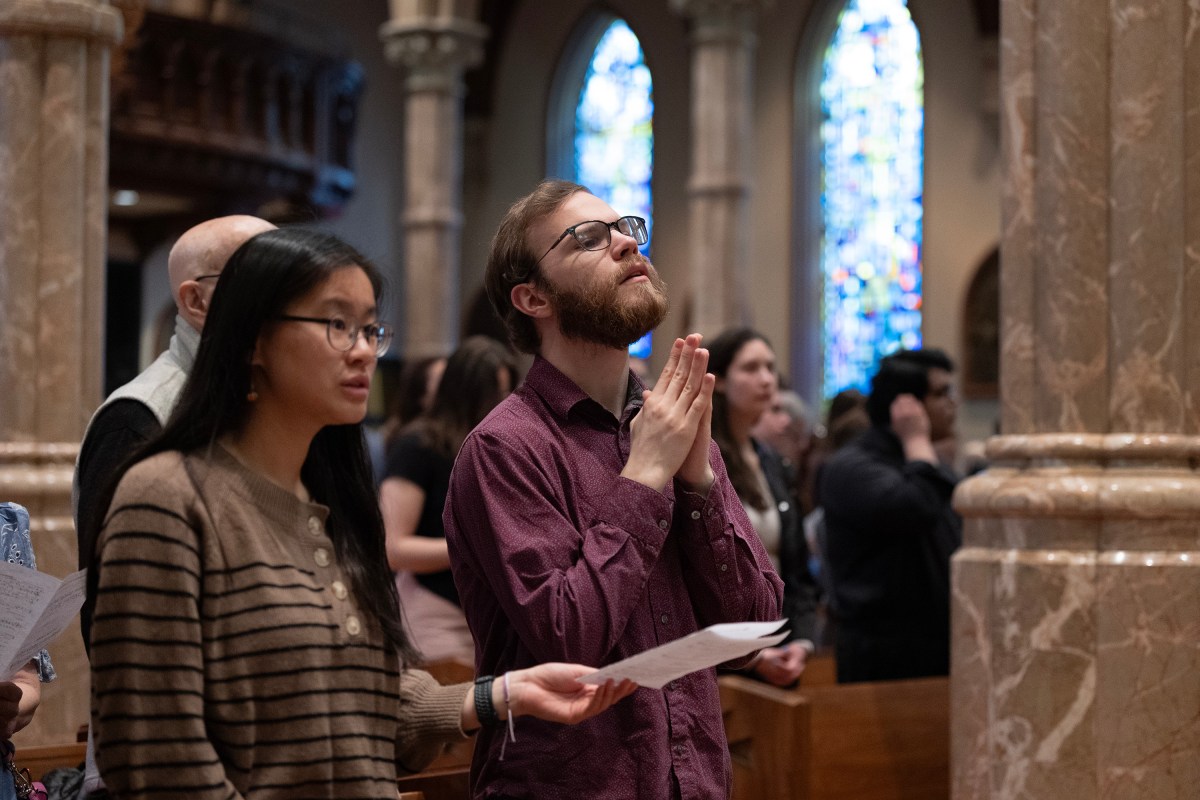
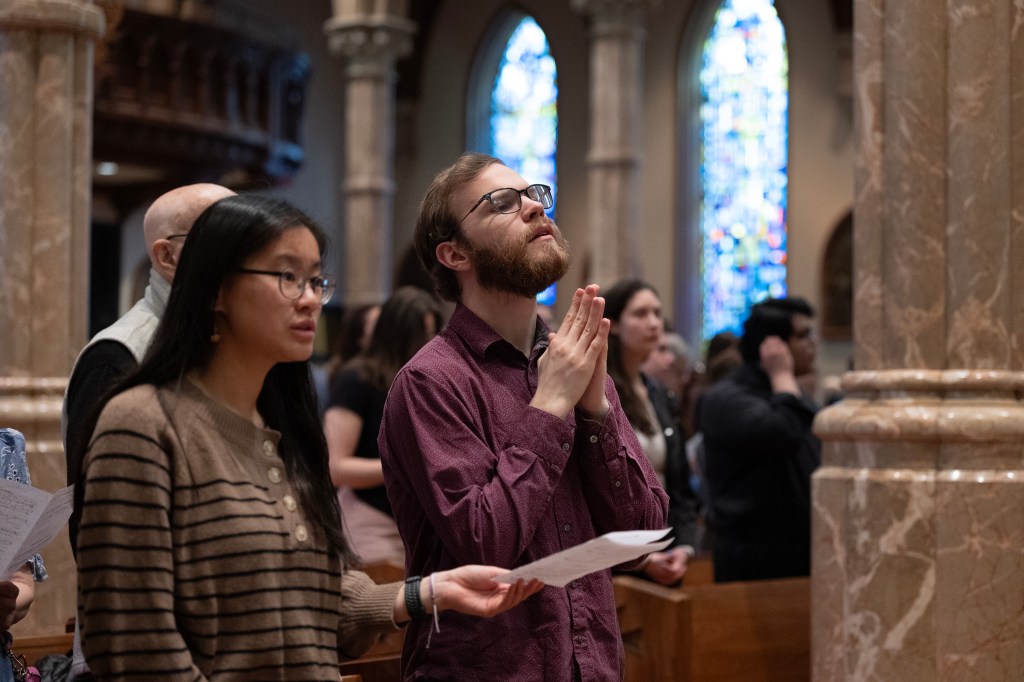
The “quiet religious revival” spreading throughout the United States and England has been rapidly garnering attention. Statistics show that zoomers are increasingly identifying as religious and are attending religious services with more frequency than the generations before them. Roman Catholic dioceses the world over have reported record increases of adults seeking baptism this year, and Eastern Orthodox Christian and Muslim communities also report an uptick of adult converts.
This shift has not been lost on the mainstream media. Take for example the New York Times’ new newsletter dedicated to covering religion and spirituality, or headlines in USA Today proclaiming that “Gen Z is returning to Christianity. Data proves it.” and in CNN that “Faith is a hit among Gen Z.”
Some have called the hype into question, with more nuanced polls indicating that what’s happening is less a full-blown “revival” than it is a slowing of attrition rates and the intensification of piety among a still small fraction of the population. Others, like New York Times columnist (and former Dispatch writer) and practicing evangelical David French, have expressed reservations about the sincerity of these new converts’ zeal, claiming that what’s happening is more a reactionary swinging of the ideological pendulum, a performatively childish rebellion against “the Man”—which in our case is the liberal secularism of their parents.
Though the jury is still out on whether this new trend is positive or problematic, genuine or performative, the vibe has certainly shifted. And as much as my own experience has shown me that there are plenty whose interest in religion may indeed be shallow—whether motivated by a taste for the exotic or by an ideological agenda, I’ve also noticed elements of this shift that have seemed to fly under the radar of the media’s coverage of it, elements that I’d argue are quite promising. Indeed, for many of these young people, their coming to faith is the result of having discovered a precious treasure—what the late Pope Francis referred to in his first apostolic exhortation as “the joy of the Gospel”—which rather than being reduced to countercultural posturing, instead propels the believer to share her new joie de vivre with others around her.
Stories We Think You’ll Like
I continue to find myself shocked by how curious the college freshmen are when, in my intro to theology course, I assign them readings from the sacred texts of the world’s religions, and how enthralled they are by the story of the martyrdom of the North African saints Felicity and Perpetua and Confessions of Saint Augustine. This is a marked change from the groans provoked by any topic touching on religion when I started teaching 10 years ago, and a complete 180 from when religion was demonized as an antiquated, oppressive enemy when I started college 15 years ago.
In her essay on the United Kingdom’s quiet revival earlier this year, philosopher Mary Harrington highlights the generational gap between boomer and Gen X parents and their millennial and zoomer children, namely the vacuum of meaning and morals created by the former’s relativism and lack of religiosity. Understandably, some young people raised to believe that the purpose of life is to “be your authentic self” and whose moral compass was guided by vague exhortations about being tolerant of others and “making the world a better place” are, as Harrington puts it, “in search of clearer guidance” which they find in the clarity and firmness of ancient religious doctrine and rituals.
While the lack of religiosity and solid morals certainly played a role in creating this vacuum, various other forces contributed to it: social atomization, cultural deracination, and the sense that we have lost our agency. The common sense passed down by one’s elders has been replaced by distant technocratic “experts.” The freedom to express one’s true self quickly morphs into the pressure to consume an endless array of products designed to signal our individuality. The exponential growth of social media has only exacerbated this pressure. Customs tied to particular cultural heritages are being replaced by a globalized monoculture. Take the extinction of local dialects in countries like Italy and the disappearance of folk music throughout Europe. The erosion of extended family units, tight-knit neighborhoods, small businesses, and local civic and communal institutions have given way to the outsourcing of our agency to impersonal bureaucracies and corporate conglomerates.
The bourgeois, frictionless life idealized by so many of our parents is embodied by the ethos of the suburbs—the move to which symbolized a sort of apotheosis for them (especially for those who grew up in lower-income cities). Indeed, sociologist and Catholic priest Andrew Greeley feared the challenge that the “material prosperity” brought about by “the suburban way of life”—with its “unbelievable array of gadgets: television, air conditioners, ‘hi-fi, power lawn mowers, deepfreezers, electric dishwashers, automatic dryers, automobiles, back-yard swimming pools, and tranquilizing drugs”—would pose to religious leaders, who preached the need for salvation from the chaos of “this world,” in addition to their chastisement of selfishness and materialism. Indeed, it’s hard to love one’s neighbor and care for the poor if one rarely even sees poor people, let alone their next-door neighbors.
When Piper Ratliff of HBO’s The White Lotus tells her wealthy, nominally Christian father and Lorazepam-popping mother that the real reason she brought her family to Thailand was not to interview the abbot of a Buddhist monastery for her thesis but to enter the monastery, they can’t fathom what could possibly attract her to it. They provided her with everything: a loving family, a nice home, an elite college education, economic security, easy access to antidepressants. What could possibly be missing? The abbot of the ashram explains to Piper’s perplexed father that many young Americans seek monastic life because of “spiritual malaise: lost connection with nature, the family, the spirit. What is left? The self, identity. Chasing money, pleasure. Everyone runs from pain towards the pleasure. But when they get there, only to find more pain.”
The motif of the spiritually hungry child who is disillusioned with her cozy yet spiritually empty life continues to show up in popular culture. The most recent season of Hulu’s Ramy—loosely based on the story of producer and lead actor Ramy Youssef—plays on the trope of the millennial attempting to recover his religious and cultural heritage after his parents (Muslims who immigrated from Egypt to suburban New Jersey) discarded them in their pursuit of the American Dream. Yet as they look at their kids’ lack of direction and bouts with depression, they begin to fear that their greatest error was feeding their children hot dogs—symbolic of both their wholehearted embrace of American culture and rejection of Islamic moral teachings—“when they really needed to be fed God.”
The comforts and conveniences many of our parents thought would promise a full, happy life turned out to be a dead end. Rather than opening the door to greater freedom, the lifting of the burdens of economic instability, of ties to extended family, place, and tradition, and of seemingly antiquated moral and religious precepts, seemed to shut the door to the possibility of pursuing a higher meaning that transcends the mundane.
Surely, not all of our parents shunned religion wholesale: Some retained at least a nominal tie with it, and some maintained much more. But while those whose relationship with the remnants of a fading spiritual foundation afforded them enough meaning to stave off total existential dread, their children—lacking any roots whatsoever in such a spiritual foundation—were forced to face the logical consequences of their parents’ haphazard relationship with religion. Upon being confronted with the empty promises of the bourgeois consumerist ideal, some young people attempted to escape the void via mind-numbing substances or political causes, while others turned to religion.
Plenty of my peers’ spiritual seeking gets co-opted by political and cultural zeitgeists du jour, landing them in a rather paradoxical position. Take the nationalist politicians and pundits claiming to be a voice for young Christians who are disillusioned with the left’s hostility toward religion. For many, religiosity amounts to posting about their newfound religious faith on X or Reddit forums by engaging in “tradition-coded” activities (homesteading, powerlifting, breadmaking), owning the libs or the boomers, and engaging in other performative reactionary antics.
French fears for young people for whom witnessing faith amounts to fighting for a set of ideological convictions in hopes of defeating their opponents, while downplaying traditional Christian teachings about empathy, love, and even giving one’s life for one’s enemies. Ironically, the attempt to rebel against “the Man” of secularism and progressive identity politics serves as a mirror-opposite form of play-acting, which, though different on the surface, is substantially the same. There is something drably self-referential, and perhaps even self-indulgent, about parading one’s newfound identity as a “tradcath” or “orthobro.” While religion can serve as an identity marker of sorts, it is above all a way of life and a transformative experience.
These identities are very much like those of nonbinaries and other sexual minorities they label as their sworn enemies: the fruit of personal choice or taste. This is precisely the error of reducing faith to a matter of pietistic rituals, moral precepts, intellectual concepts, or ideological positions: It obscures the fact that faith is a gift bestowed from above, that one receives rather than chooses.
As Catholic theologian Luigi Giussani often put it, faith is “something that happens” to you. It implicates “an event” both unmerited and unforeseen, which transforms one’s experience of daily life. This transformation or conversion is sustained not by the force of one’s intelligence or moral efforts, but by one’s fidelity to the places and faces through which God chooses to make himself present in one’s life.
Furthermore, this gift of faith is remarkable precisely because it “corresponds with the fundamental needs of the human heart.” God’s resonant presence in one’s life generates a new way of living characterized by a fullness, a gusto for things that one never knew to be possible. From God’s resonant presence in one’s life flow the secondary elements of religion—the rituals, dogmas, and ethical precepts. Such an outgrowth is what fueled the late Pope Francis’ emphasis on “the joy of the Gospel.”
Amid the noise about MAGA Christians, trad wives, and Catholic integralists are the stories of millennials and zoomers looking to share the joy of newfound faith with others rather than to scandalize them with it. The “first millennial saint,” Carlo Acutis, an Italian Catholic who died in 2006 at the age of 15 of leukemia and was recently canonized by Pope Leo XIV, was one such example.
“I did not grow up in a practicing family,” says Carlo’s mother, Antonia Salzano Acutis. “I was baptized, but my parents were not devout. I studied in Catholic schools in Rome simply because they were nearby. My real conversion began later, through Carlo.” She remembered being struck by her son’s spirituality, which “was simple and focused on Christ.” Even after his diagnosis, “he never complained, [he was] always smiling, and reminding others that many suffered more than he did.” Indeed, it was Carlo’s “contagious” happiness, his distinct way of living and treating others, that attracted his own mother, as well as the many people—from the sick and homeless, to his non-believing classmates and teachers—he met.
Alas, I must confess to having been one of those performatively pious millennials, who—despite genuinely desiring meaning—reveled in prodding my parents with my countercultural new beliefs and practices. I enjoyed challenging the status quo and attempting to signal how unique I was. I would often strike up debates with my dad in order to scandalize him, and would cross myself in an ostentatious, exaggerated manner when I passed by a church while walking with my non-religious friends. It wasn’t until I met people who were genuinely happy, whose faith made their lives substantially fuller, that I had my first legitimate religious awakening. Surprisingly, most of these people were not very outwardly pious. It was then that I began to view my faith as a gift and a source of hope that began to overflow into my relationships with my parents, friends, and others.
“Instead of seeming to impose new obligations,” Pope Francis wrote during the first year of his papacy 12 years ago, believers “should appear as people who wish to share their joy, who point to a horizon of beauty and who invite others to a delicious banquet. Despite the criticism it received from detractors, there is something deeply intuitive about Francis’ characterization of the church as a field hospital tending to casualties on a battlefield, in need of hope and healing, meaning and purpose—rather than an ideological institution that must defend itself from its enemies. While of course a religion that has no moral, cultural, or political demands is—at best—a crutch, the reduction of religion to nothing more than these is equally, if not more, useless and dangerous.
Francis adds that “it is not by proselytizing that the Church grows, but ‘by attraction.’” Much of the quiet religious revival taking place among young people may be unattractive, infantile, or even dangerous. But we can dare to hope the voices of those who are experiencing a literal revival—that is, a “coming back to life”—can emerge as the true face of the phenomenon.
More Sunday Reads
- Writing for The Algemeiner, scholar Samuel J. Abrams considers a new study showing the pipeline of rabbis in the U.S. seems is changing radically. “The next generation of rabbis will look markedly different from previous ones. Among current rabbinical students, 58 percent identify as women and 51 percent identify as LGBTQ+, with a significant portion identifying as trans or nonbinary. Many come from non-traditional Jewish backgrounds — converts, children of intermarriage, Jews who found their way to serious practice later in life. These demographic shifts are inevitable and, in many ways, enriching. A diverse rabbinate that reflects the breadth of Jewish experience can strengthen our communities. The question is not who enters the rabbinate, but how they are formed. A diverse rabbinate formed in deep textual literacy, halachic fluency, and communal responsibility will serve the Jewish people brilliantly. A diverse rabbinate formed primarily through ideological conformity and therapeutic training will not. The issue isn’t identity. It’s formation. It has always been. Religious leadership cannot long endure when it becomes unmoored from the moral instincts, lived traditions, and covenantal expectations of the communities it serves. A rabbinate shaped more by the ideological grammar of elite secular culture than by the rhythms of Jewish religious life will struggle to command authority, inspire loyalty, or sustain continuity — no matter how sincere or well-intentioned its members.”
- In Arc, historian Daniel K. Williamssat for an interview about his forthcoming book The Search for a Rational Faith, a history of Christian apologetics. The wide-ranging interview covers the history of Christian apologetics but also the role Christian apologetics played in America’s institutions of higher education, particularly at certain historical inflexion points. “But in the immediate aftermath of the French Revolution, there was a bestselling book in America by Thomas Paine, who of course was the author of Common Sense. But Thomas Paine then wrote a book called The Age of Reason, which didn’t sell quite as widely as Common Sense, but nevertheless was widely distributed and was affordable for a lot of people. And it made the case against the Bible and against orthodox Christianity and argued in favor of a theistic skepticism, a belief that yes, there must have been some sort of creator who was rational, but there was really not a whole lot of value in the Bible. And it certainly was not a supernaturally produced book. And that led to a lot of fear on the part of ministers and Protestant educators at the time. But I think what helped them make the case against Paine was that, even as that book was appearing in print, the French Revolution was taking a more violent and chaotic turn. And so in some ways, that move against deism on the part of Christian colleges was considerably bolstered by the belief that America needed to be a different sort of republic than France, that religion was vital to preserve society against social disorder and political anarchy or authoritarianism.”
Religion in an Image