In this time of fervid populism in the United States, it is almost always a struggle to define what we mean by “populism” and what it is the “populists” want. During Shays’s Rebellion, populists were angered by heavy taxes and rose up against a government that would not leave them alone. In contrast, the Free Silver movement demanded government action, insisting on the unlimited coinage of silver in order to aid people like debtors and farmers. Differing from both, Louis Farrakhan led the Million Man March on the Capitol steps, decrying a social order that they felt was ripping their communities apart.
Looking at these movements separately, it can be hard to understand what brings them together. But one thread that runs through these disparate histories, and what makes those stories populist, is a simple demand that people get something for their work. The Shaysites had carried our country through the crucible of the Revolutionary War, but were left destitute by a new national government. The Silverites were fed up with watching the homesteads of Manifest Destiny be drowned in debt, gone to enrich faraway bankers with political pull. Even the Million Man March, though muddied by its association with the Nation of Islam, was essentially focused around a single idea: that black men and women could not succeed in a system that refused to reward their labors. Despite their historical differences, populists are united by their drive to ensure that struggle and effort are rewarded, and that what is already possessed is not taken away.
So too, do the young men and women who identify with the America First movement. Raised during the Great Recession, their first memories of life were tainted with financial instability, learning early how scary losing a home could be. Mainstream culture had promised them a world of opportunity, powered by technological growth, where the upward mobility available to their parents was within reach. Reality quickly corrected them. Whether saddled with college debt or surrounded with lackluster job opportunities, many young people find themselves no longer on a path to prosperity. They are making six-figure salaries and still feel trapped. They find themselves struggling just to break even.
This means that the cornerstone of the American Dream—home ownership, white picket fence or otherwise—is no longer guaranteed. In real terms, housing prices have sharply increased since the early 2000s. The COVID pandemic brought about rock-bottom mortgage rates, which would have helped—had home prices not spiked even higher in response. Even in areas with less housing demand, locals still felt the effects of out-of-state refugees seeking cheaper costs of living. In general, their paychecks, although seemingly extravagant in nominal terms, dissolved on contact with inflated prices and left little room for savings. The life that they thought had been promised to them—the security and comfort of their parents—had been taken from them by forces out of their control.
Hence the battle for the soul of the Republican Party. The particulars of the ensuing drama have been covered elsewhere in great detail, and are not worth repeating here. But if you remove the various internet celebrities, the debate becomes remarkably simple. There are populists—the America First devotees, the groypers, etc.—and there is the Establishment. The populists feel that, in the version of the past they prefer, the stereotypical American hometown was a place they could live in comfortably. They could attend a state college with decent grades and earn a decent living once they graduated. They could find a nice decent spouse at church and settle down with a brood of nice decent children. In the past, the American Dream was something that was to be handed down to them as their birthright. But now, it’s being pulled out from under them. The villains responsible vary—globalists, foreign nationals, shadowy investment groups. But generally, the members of America First agree: The Dream has been stolen.
And they want it back. They want to tax the cheap foreign goods that have replaced low-level American manufacturing. They want to deport the immigrants that are taking up university seats and buying up housing stock. And they’re determined to tear down the forces that they hold responsible: elites, the uniparty, a concert of radical Democrats and RINO Republicans that are in the thrall of a corrupted liberal ideology. Anyone who stands in their way, Donald Trump included, has to go.
This rhetoric should probably appeal to me. After all, I did all the “right things.” I worked hard in school. I got a scholarship at a moderately selective university, and graduated debt-free. I got a job at the manufacturing plant two miles away from my childhood home, where I help turn titanium sheet metal into American air superiority. I got married before having children, to a woman who sees motherhood as her ultimate calling. When we tied the knot, one year ago, it was in the sanctuary of our local church. So on paper, I’m the success sequence brought to life. The rest of it should be easy. I should be settling down, starting a family, living a modest but comfortable life.
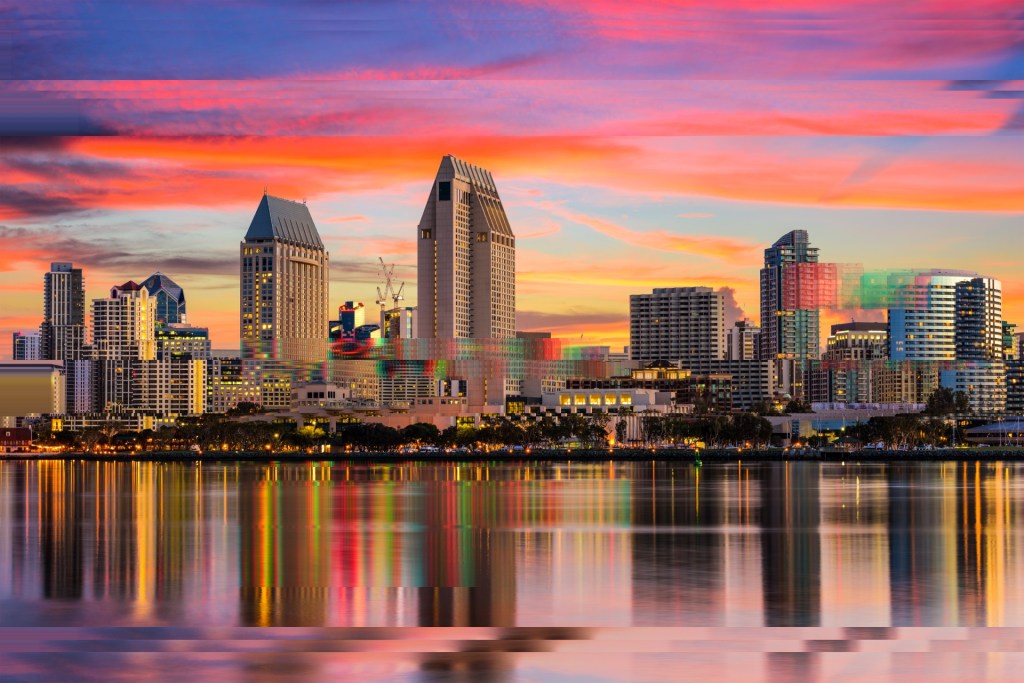
But the simple truth is that I can’t afford it. The main problem is that I live in San Diego, California. I grew up going to the same beaches and parks as Tucker Carlson (although admittedly, the schools he attended were more posh). And to live here is to be in constant competition with the 3 million or so other souls in the county, who all are fighting over a limited supply of housing, jobs, and resources. It’s draining. It’s draining to look at my monthly budget and watch a majority of it go to rent and utilities. It’s draining to watch my wife fall in love with a house and then have to explain to her that, even though we’ve saved up a hefty down payment, the monthly mortgage would just be too much to afford. It’s draining to know that the house she fell in love with is a mid-size two-bedroom in an exurban area, that it needs some repairs, that it is 30 minutes away from her workplace, and that it represents the bottom of the housing market.
It weighs on you. I know that just a few missteps—a lost job, lost savings, a bad accident—could easily make it impossible for us to continue on here. We live on the outer limits of the city, where we can afford to rent, but where the homes around us sell for seven figures. As we search for a house we can raise a family in, we’re faced with tradeoffs between old construction, bad neighborhoods, and long commutes. If enough goes wrong, we could have to pack up and move out of the state entirely. I have watched this happen to dozens of family and friends: high school classmates have fled, our church bible studies have slowly thinned out, and our extended family faded away. I know what it’s like to feel like your home is slipping away.
So, probably, I should agree with the populists about the solution to my problems. The job market is tight, and advancing my career means trying to stand out in a job market full of hungry people desperate to get ahead. Solution: cut off the San Ysidro border crossing and cancel H-1B visas so that jobs go to people who were born here. Our universities are packed full. My straight-A brother-in-law couldn’t gain admission to the prestigious University of California system, and my straight-A sister might not make it either. Solution: kick out the foreign students and reserve those seats for Americans who respect our values. Our housing market is one of the most expensive in the country. Solution: deport the immigrants, free up the housing stock. Get rid of the competition. Gut the leftists and the cultural Marxists who took over our state and return it to the hands of the people. Give us our birthright.
But there’s something that I love about San Diego, beyond the sunshine and the beaches and the cholla. It’s the people who live here. You see, Southern California is ill-suited to support human life. Most bodies of water are only present for a few months out of the year. Wildfires are a persistent threat. If it does rain, flash floods and mudslides quickly follow. Before any competition happens between the human residents, we have to compete with a natural world that doesn’t want us to live here. That is what makes our culture so great—it’s made up of the people who are actively choosing to fight for it.
It’s made us truly diverse—not just in ethnic terms, but politically and socially. We’re home to nuclear science labs, dairy ranches, a Spanish mission, biotech startups, big warships, a big lemon, and an almost-good baseball team. We’re home to social reform Catholics, radical libertarians, progressive activists, and the sort of people who were MAGA when Trump was still a registered Democrat. Class status and cultural ties can’t rebuild a family home when it burns to the ground. Hard work will. As a result, we’ve become a people who value hard work. We value those who can build something, whether it’s airplanes, guitars, or cellphones. We built a way of life here. And it’s because we’re not afraid of competition.
This is where I break away from the populists. As much as I want a comfortable life and a stable place in the world, I understand that I live in a city that was a struggle to build. There’s no way for me to stay here without contributing to it. If I want our manufacturing plant to stay open, I have to provide better tools and techniques to the men and women I work with, in my role as an engineer. If I want my church to be a warm and welcoming community, I have to take an active role in it. And this gives me what the populists complain that our modern society lacks: meaning. I don’t spend my time finding people to blame. I have a purpose here, not a sinecure, not a cushy make-work job created by fiat. I can hold my head up high. I can stand with my fellow San Diegans as a man, not as a legacy admission.
I understand the populist impulse. They want to conserve what already exists and protect the people they care about. The problem is that we in California know full well what that “protection” looks like. Just like the populists, our progressive state government has tried everything in its power to reduce competition, and the results speak for themselves. Our housing market is a maze of zoning regulations and environmental controls that have flattened the growth of new homes. We drive businesses out by the dozens, thanks to hyper-partisan regulatory schemes. Progressives in Sacramento have allegedly tried to protect Californians from competition similar to that which the populists fear. But all those policies have simply reduced the size of the pie we’re fighting over.
Right-wing populists now intend to borrow those policies for the same well-intentioned but misguided purposes. Affirmative action will now be directed towards American-born students, since it’s not fair for them to have to compete against high-achieving students from other countries. The HR department will very carefully screen applicants based on demographics, so that American-born workers won’t have to compete against the likes of Vivek Ramaswamy and Usha Vance. We will be safe, alone here in Fortress America. And like every other leftist project, every other attempt to cancel the laws of nature, it will fail. Our pool of resources will shrink further. Our ability to manufacture goods will slowly dissipate as more companies shutter. Businesses around the country will lose their innovative edge under the mirror image of blue-state governance. We will consume closer to home—American cultural products, American health care, American luxury goods—and have less to go around. We will turn America into Europe. Or Canada. Or California.
Populists have given up the fight. The discomfort of a competitive world has broken them down, and they are panicking. They’re telling us that women entering the legal profession has completely destroyed the rule of law. They’re telling me that my salary is the equivalent of a poverty wage. They’re telling us that salvation is impossible, that the battle is already lost, that we have to hoard what little we have left. But what will that leave us with? Will our culture really become more high-trust in a world where the government picks winners and losers? Will birthrates increase in a world where the government controls the housing market? Will victory in the public square still taste sweet when the square is empty?
If we love our homes and our communities, we must understand that they are not to be taken for granted. They will not be handed to us on a silver platter. We cannot defend them by winning culture wars or “owning” our opponents. We can only preserve them if we are willing to compete—with other citizens, with other countries, and with nature itself. This is not a matter of patriotism or empathetic policy, but stark reality. No state subsidy can cause stalks of wheat to rise out of the ground. There is no immigration control that will make more engine assemblies roll off the line. And there is no tariff policy that can give someone dignity. Those are things that will not happen unless real men and women are on the ground to do them, and are willing to do their best.
This is a risky prospect. We may lose the competition. Our struggle may not be rewarded. It could well be the case that I won’t make it here after all, and that some time soon, I’ll be writing from the back of a U-Haul. But if we want to address the issues that populism is so concerned with—struggling young men, economic hardship, and decaying moral values—it will require the kind of prosperity that only honest competition can produce. And this is something anyone can contribute to. Whether it’s researching major breakthroughs or reorganizing a filing cabinet, each one of us can make our workplaces better and smarter. Each one of us can find a way to contribute to our communities. And all of us together can build clusters of innovation—places like San Diego—where people can pursue their own American Dream. Places where we can dream of more than fighting over the scraps of a decaying empire.
The choice is ours. If we refuse to face the discomfort and challenges of the world, we will lose what makes our home great. If all of us choose to compete—to measure our best efforts honestly—our children will inherit a place worth living in.