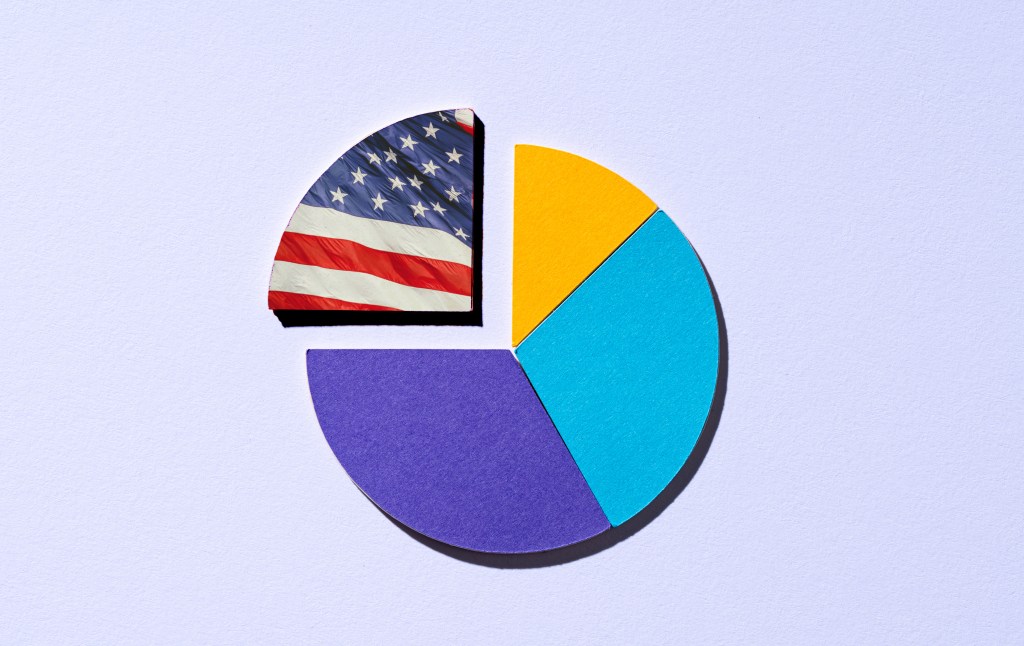
The first Trump administration ushered in a new era of industrial policy, attempting to reshape the macroeconomic landscape through the use of tariffs. The Biden administration built upon its predecessor’s interventions, championing massive subsidies for the semiconductor and green energy industries. In his second term, Trump has raised the tariff ante and taken an alarming step further by directly inserting the federal government into the corporate boardroom.
Over the past six months, the administration has unilaterally engineered a series of deals that give the federal government ownership stakes in a portfolio of private companies. It’s a seismic and disturbing development in federal policymaking—and it’s not done. Congressional Republicans, who would be foaming at the mouth were this occurring under a Democratic administration, have thus far chosen to sit on their hands.
Here’s a quick recap:
- June: Trump issues an executive order allowing Japan’s Nippon Steel to purchase U.S. Steel in exchange for a “golden share,” giving the president extensive control over U.S. Steel’s operations.
- July: The government becomes the largest shareholder in MP Materials, a company that produces rare earth metals.
- August: The administration announces that the government is taking a 10 percent equity stake in Intel, becoming the storied American semiconductor company’s largest single shareholder.
- September: An equity deal is reached with Lithium America, including a share of its joint venture with General Motors on the Thacker Pass lithium project in Nevada.
- October: The U.S. acquires stakes in Canadian-based Trilogy Metals, inserting the government into a joint venture with Australia’s South32 to develop the Ambler mining district in Alaska.
- October: A deal is reached with the Canadian owners of Westinghouse to finance nuclear reactors in exchange for the government receiving a share of future profits, with an option to require an initial public offering of Westinghouse and convert the profit share into a 20 percent ownership stake.
- November: The U.S. acquires stakes in rare-earth magnet manufacturer Vulcan Elements, alongside a complementary agreement with rare-earth processor ReElement Technologies that includes warrants giving the government the right to buy stock later.
Last week, the White House announced a preliminary agreement to acquire a stake in xLight, a startup developing technology to enhance extreme ultraviolet lithography machines used in the manufacture of advanced semiconductor chips.
Trump administration officials have made it clear that more deals are forthcoming. Potential targets include defense contractors, quantum-computing companies, and, according to Reuters, “deals across up to 30 industries, involving dozens of companies deemed critical to national or economic security.”
If it seems like the administration is making it up as they go, it’s because it is. The director of the Federal Housing Finance Agency, Bill Pulte, recently stated that Fannie Mae and Freddie Mac (the federally backed housing finance entities his agency oversees while in government conservatorship!) are considering equity stakes in technology companies. That isn’t just a bad idea, it’s downright bonkers.
What’s going on?
Analysts and pundits have tossed out numerous labels for what the administration is doing—state capitalism, socialism, corporate statism, etc. Although these descriptors may be more or less accurate to some extent, it ultimately boils down to Trump’s transactional mindset and his disregard for constraints on (already excessive) executive power. The federal government is, for Donald Trump, literally his business.
We now have, as Jonah Goldberg explains, a Donocracy.
The Trump administration’s “strategic stakes” policy is a deliberate attempt to shape corporate behavior and obtain leverage under the guise of bolstering domestic capacity in semiconductors, critical minerals, and other industries. A couple of years ago, his vice president said, “there is no meaningful distinction between the public and the private sector in the American regime.” Disentanglement of government and business is overdue, but the administration views the entanglement as a fact of life to be exploited for political ends.
The seed for this equity wheeling and dealing was planted when Trump signed an executive order in early February, instructing his administration to plan the establishment of a U.S. sovereign wealth fund (SWF). A SWF is a government-owned investment fund that manages public assets, typically financed from surpluses or natural resources, to generate financial returns for state use. Norway’s Government Pension Global Fund and Saudi Arabia’s Public Investment Fund are prominent examples.
The U.S. doesn’t need a SWF as its deep, liquid capital markets are “unmatched” in the world. Besides, the federal government is $38 trillion in debt, mismanages the money it does have, and should leave wealth creation to the private sector. Not to mention that giving Uncle Sam an investment fund and thinking clairvoyant technocrats can run it without political meddling is fantasyland.
In registering my dissent for a SWF at the time, I noted that although Trump agreed with the Biden administration that the Nippon Steel-U.S. Steel deal should be blocked, “it’s not inconceivable Trump sees an opportunity to ‘make a deal’.” Five months later, Trump indeed made a deal—one giving him the ability to dictate to U.S. Steel everything from how the company sources its materials to the location of its headquarters.
While the single Class G preferred share (“golden share”) conferred control, albeit without a monetary value, to the government, it signaled the interventions that would soon follow. In August, the administration also announced an “unprecedented” deal with Nvidia and AMD, which allowed the companies to sell certain chips to China in exchange for 15 percent of the revenue from those sales going to the government.
Then there’s the $550 billion from Japan and $350 billion from South Korea that the administration claims to have secured in exchange for reducing the so-called reciprocal tariff rates Trump put on goods imported from the two countries. The money will finance projects “owned and controlled by the United States” that would be selected by Trump himself, or so the administration claims. According to Treasury Secretary Scott Bessent, “Other countries, in essence, are providing us with a sovereign wealth fund.”
It’s “in essence” because there’s no actual fund. Instead, the administration is attempting to leverage tariffs to finance a pseudo-sovereign wealth fund under presidential control, outside the regular appropriations process. That’s quite different from ordinary foreign direct investment. A formal SWF would require congressional legislation. The accompanying funding, structure, governance, and investment rules would restrict Trump’s ability to do as he pleased.
Congressional involvement and legal constraints? Remember, it’s his government.
Questions and concerns.
So, there’s no actual fund. It appears that the CEO of America Inc. and his yes-men are content to continue with the ad hoc partial nationalization wheeling and dealing.
To begin with, political ownership distorts corporate decision-making. Intel was pressured into the stock issuance after Trump called for Intel CEO Lip-Bu Tan to be fired, causing Tan to rush to the White House to seek forgiveness. What happens if Intel decides that its already years-delayed fabrication project in Ohio should be axed to protect the company’s bottom line? It took Trump a matter of months to exercise his “golden share” when U.S. Steel announced it was going to pause steel production at its Granite City Works plant in Illinois. U.S. Steel intended to continue paying the workers there not to produce anything, but that wasn’t good enough for the administration, which proceeded to demand the plant continue producing steel, economics be damned.
By preventing U.S. Steel from optimizing operations, the government is intentionally propping up less efficient production, with the costs being passed along to the company’s customers. American steel-utilizing industries are already taking it on the chin from Trump’s exorbitant tariffs on imported steel and derivative products. In terms of economic value and employment, the steel-utilizing industries collectively dwarf those of steel producers. That’s a net loss for the broader economy.
Next, when the government picks a winner to back with equity, it implicitly tilts the playing field against that firm’s competitors—including smaller firms and upstarts that now find themselves at an even greater disadvantage. Maybe you’re a startup developing a promising technology that could revolutionize the capabilities of numerous industries. You didn’t get Uncle Sam as a partner, or perhaps you didn’t want to do business with him. Well, you’re probably out of luck. Not only did you lose out on the federal capital, but private sector investors now want to place their bets on the government’s horses.
Or maybe you’re a global powerhouse like Apple, looking for the best chip for a new product. Intel is pinning its hopes for advanced chip manufacturing on new processes intended to make it competitive with global juggernaut Taiwan Semiconductor Manufacturing Company (TSMC). TSMC currently manufactures Apple’s chips. Suppose Intel’s intentions fall short and TSMC remains the preferred producer for Apple. The president of the United States catches wind, hops on Truth Social, and announces that Apple should use the Intel chip. And, by the way, he’d hate for Apple’s recent application for an export license to be denied.
“The administration is attempting to leverage tariffs to finance a pseudo-sovereign wealth fund under presidential control, outside the regular appropriations process. A formal SWF would require congressional legislation. The accompanying funding, structure, governance, and investment rules would restrict Trump’s ability to do as he pleased.”
Even without overt pressure, the knowledge that Washington has a stake in the game may spark concerns from a company’s customers—especially those overseas. In high-tech sectors, foreign customers may become wary of relying on an American supplier that is now partially owned by the U.S. government, aware that geopolitical tensions or policy shifts could suddenly disrupt supply.
Intel, which derives three-quarters of its revenue overseas, explicitly warned in an SEC filing that its “non-US business may be adversely impacted by the US government being a significant stockholder.” That’s because foreign governments may distrust a company partly owned by the U.S. government. Foreign regulators could block new facilities, joint ventures, or acquisitions, withhold subsidies or tax breaks, or steer defense and infrastructure contracts to other suppliers rather than strengthening a firm they now view as an arm of U.S. policy.
Speaking of foreign concerns, an irony of the “national security” rationale for the government taking equity stakes is that targeting industries deemed vital for national defense could undermine the goals of strength and security that it professes to advance. History has shown that state-controlled or heavily state-influenced enterprises often become complacent or inefficient (see, for example, Amtrak and the U.S. Postal Service).
When Commerce Secretary Howard Lutnick openly speculated about taking equity stakes in defense firms, it sent shockwaves through the industry. Let’s say a future weapons development program runs over budget. Will the Pentagon demand shares as compensation? Would the Pentagon favor the company it partially owns in contract awards, even if a competitor has a better product? Would a government-backed contractor feel less urgency to deliver cutting-edge weapons on time, knowing that its government shareholder might rescue it or steer more work its way regardless?
Government equity naturally increases the likelihood of a government rescue in the event of trouble. For policymakers on both sides of the aisle, there will be tremendous political incentive to employ further government intervention to keep a partially nationalized company propped up. And tying industrial policy to select firms magnifies the risks if that firm underperforms. In short, a potential cycle of problems, followed by further intervention, is already baked into the cake.
The questions and concerns associated with Trump’s willy-nilly foray into partial nationalization are ubiquitous.
This time is different.
For most of the last century, federal equity and warrant positions were emergency tools, not peacetime industrial policy. In the 1930s, the Reconstruction Finance Corporation recapitalized banks by purchasing preferred stock to stop runs and restore solvency. In 1979, Washington received stock warrants from a troubled Chrysler in exchange for loan guarantees. After 9/11, the federal Air Transportation Stabilization Board paired guaranteed loans with warrants in airlines to stabilize the industry. In response to the 2008-09 crisis, the government injected capital into financial institutions and automakers, receiving preferred stock, warrants, or common equity in return. And in the wake of COVID, the government again received warrants from airlines in exchange for financial support.
Whether or not the government should have undertaken these interventions is a separate discussion. The point is that previously, an emergency arguably existed. And the interventions were intended to be temporary, not open-ended.
That is not the case now. Not only is there no immediate emergency, but these interventions are clearly not intended to be short-term. Take the Intel deal, for example. The government also acquired a five-year warrant for an additional 5 percent of the company’s stock, which can be exercised if Intel no longer owns at least 51 percent of its foundry business.
That contingent trigger, by the way, exists to deter the company from exiting the chip manufacturing business. However, it probably makes sense for Intel’s chip design and manufacturing businesses to be split up. It’s been reported that administration officials initially sought a consortium of private investors to take control of Intel’s manufacturing arm, including TSMC. For whatever reason, it didn’t happen. Unfortunately, the federal government’s sudden acquisition of Intel’s shares complicates any potential separation of the company’s design and manufacturing businesses.
Yes, an argument can be made for government support to sustain a U.S.-owned, leading-edge chip manufacturing capability on national security grounds. But even if we take that as a given, why equity stakes and warrants?
“An irony of the ‘national security’ rationale for the government taking equity stakes is that targeting industries deemed vital for national defense could undermine the goals of strength and security that it professes to advance.”
The 2022 CHIPS Act awarded Intel $3 billion to produce advanced chips for the Department of Defense, money that the Trump administration is now using to acquire its equity stake in the company. Procuring weapons (or sourcing semiconductors) doesn’t necessitate government ownership stakes in defense contractors (or semiconductor companies). Similarly, the federal government already has mechanisms to encourage increased domestic supplies of essential minerals.
That is absolutely not an argument for heavy government intervention, particularly in the form of subsidies. Intel pined for federal subsidies, got its wish, and now Uncle Sam is its largest shareholder. But even if the choice were between subsidies or government ownership, subsidies would be preferable.
Defenders argue that companies shouldn’t receive a check from the government and then keep all the profits. “Any upside should be shared with taxpayers!” they say. But if the government sold its Intel shares for double the price per share it paid, the profit would cover only about half a day of federal spending. And, of course, stock prices can also go down. In any case, investment returns should be retained in the private sector, regardless of whether subsidies are involved. The federal budget isn’t a mutual fund, nor should it be.
Fix problems. Don’t create new ones.
The first order of business should be to strengthen the market’s ability to supply such goods. Reforming or eliminating regulatory inhibitions is a must. For example, the permitting process for opening a mine in the U.S. takes seven to 10 years, compared to two to three years in Australia and Canada. The good news is that the administration has been actively pursuing deregulatory steps—especially those related to environmental review and permitting—to increase supply capacity for both semiconductor manufacturing and mineral projects.
Unfortunately, the administration’s trade and immigration policies are counterproductive to those aims. If China’s role in the supply chain is the primary concern, the U.S. should be building trading relationships with our allies, not using tariffs to bully and shake them down. Driving up production costs for U.S. companies by taxing foreign-sourced inputs and forcing companies to constantly readjust their supply chains due to incoherent tariffing is obviously not beneficial.
The White House is convening a new eight-country framework with key allies, including Japan, South Korea, the Netherlands, the UK, Israel, Singapore, the UAE, and Australia, to negotiate an agreement on critical minerals, advanced manufacturing, semiconductors, and AI-related infrastructure. However, if the administration is serious about utilizing it to bolster AI and critical mineral supply chains, it will need to reconcile the goal with its own tariff policy. Broad “national security” tariffs on semiconductors, copper, and key components are at odds with any push to friend-shore such inputs.
The U.S. should also increase the supply of high-skilled foreign talent (like China!), rather than chasing it away. As my colleague David Bier notes, Trump’s $100,000 fee to obtain an H-1B visa “would force leading technology companies out of the United States, reduce demand for US workers, [and] reduce innovation.” Oh, and launching an Immigration and Customs Enforcement raid on a Hyundai-LG battery complex in Georgia isn’t exactly a welcoming message from an administration that claims it wants foreign companies opening up shop in the U.S.. Completion of the battery plant has been delayed, and the Washington Post recently reported that “several South Korean firms have pulled or prolonged a pause on investment in U.S. projects” in the raid’s wake.
Pandora’s box is open.
In closing, it’s probably safe to say that Pandora’s box is open, and the odds it’ll be closed anytime soon aren’t good. The precedent is being set. And the political party in Washington traditionally associated with market capitalism and government restraint in economic activity no longer exists. There’s reason to believe that many, if not the majority, of Republican policymakers know Trump’s partial nationalization spree is bad policy. But few in Congress are willing to stand up and take action, let alone speak up.
Republicans could put an end to this, but like with Trump’s unilateral tariff abuses, pushback has consisted of little more than a few grumbles.
The Democrats? They’re not fans of the president, of course. Still, many are undoubtedly licking their lips at the abundance of possibilities that will come with a Democrat eventually returning to the White House. After all, it was Sens. Elizabeth Warren and Bernie Sanders who introduced an amendment to what eventually became the 2022 CHIPS Act that would have given the federal government equity stakes in companies awarded subsidies. The amendment was tabled, but those same subsidies are what Trump would use three years later to make the federal government Intel’s largest shareholder.
It’s often said that politics makes strange bedfellows. But when it comes to economic policy, the Trump administration and congressional Democrats actually have quite a bit in common. If and when a future Democratic president uses the government equity stakes Trump obtained to push a progressive agenda in corporate boardrooms, Republicans will only have themselves to blame.