In 2002 I asked an Iranian journalist whether recent spontaneous, pro-American demonstrations at Iranian soccer matches meant Iran was on the verge of a counter-revolution. “No,” he said.
The people who run Iran were graduate students in Eastern Europe during the Communist period. They know how to control a population. What they don’t know how to do is to control their own children. There will be a counter-revolution but not for quite a while.
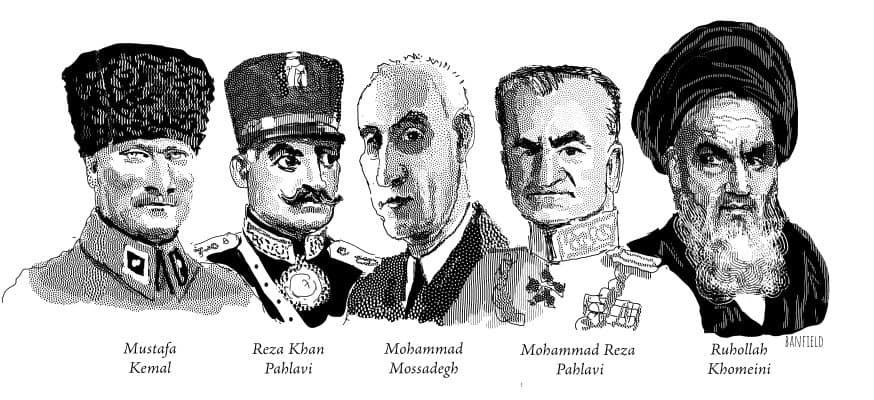
I have often reflected on that conversation. What happened in Iran in 1979 was a genuine revolution—an upheaval as profound as those which took place in France in and after 1789, in Russia in and after 1917, and in China in and after 1947. In Iran, revolutionary fervor waned quite some time ago (as it did at a similar stage in France, Russia, and China). But the regime established by the Ayatollah Ruhollah Khomeini and his followers in 1979 is not apt to collapse until the generation that made the revolution 46 years ago (or came of age not long thereafter) passes from the scene. Mikhael Gorbachev was the first Soviet leader who had no direct personal connection with the Russian Revolution, and he did not come to power until 1985—nearly 70 years after the event.