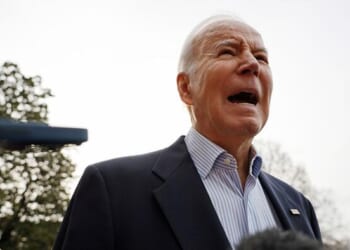
Hello and happy Saturday. The push to “Make America Great Again” that has defined our politics for the last 10 years is based on nostalgia for (or imagination about) life in the 1950s, an era when American families could own a home—complete with a white picket fence and a car in the driveway—and enjoy a respectable standard of living with just one income. (Never mind that those homes were smaller and one-third of Americans still lacked indoor plumbing.) But while it can feel like we’re living through an earlier decade of American history these days, that decade is the 1970s, not the 1950s: high inflation, political scandals, disillusionment with our institutions.
That point was driven home on Wednesday when President Donald Trump delivered a prime-time address to the nation focused largely on the affordability crisis. “Affordability” has been a big buzzword for Democrats throughout most of the first year of Trump’s second term, and Democrats such as New York City Mayor-elect Zohran Mamdani and New Jersey Gov.-elect Mikie Sherrill rode to victory in part on campaign promises to address the issue.
Trump himself has begun discussing affordability, one year out from midterm elections that will determine control of Congress for the rest of his term. But at a rally in Pennsylvania on December 9, the most memorable line he delivered on the matter came as he defended his tariffs on China: “The one thing you need, you need steel. You can give up certain products. You can give up pencils because under the China policy, every child can get 37 pencils. They only need one or two. They don’t need that many, but you always need steel. You don’t need 37 dolls for your daughter. Two or three is nice, but you don’t need 37 dolls.”
The president stuck to the script a little better in his address Wednesday, vowing to bring down costs on health care, energy, and housing, but he blamed former President Joe Biden and illegal immigrants for the problems. All of it reminded Nick Catoggio of President Jimmy Carter’s “malaise speech” of 1979, a speech that is both widely remembered and broadly mocked. Nick noted that both presidents seemed to blame Americans for their own feelings about the economy.
The crisis of confidence that [Trump] zeroed in on was also distinct from the one that troubled Carter. It isn’t Americans’ lack of faith in each other or, Lord knows, in any spiritual purpose that’s bugging Trump. True to narcissistic form, it’s their lack of faith in him. He’s made America great again, supposedly, and it’s going to be even greater in a few months after the new tax cuts kick in—and yet the fickle public, drowning in bad “vibes,” insists on giving him some of the worst numbers in handling the economy of his nearly five years in office.
The president was asking essentially the same question that Carter did in “malaise” mode, albeit with less of a theory to answer it: What’s wrong with all of you?
Michael Warren also wrote about the speech, and he called attention not just to what Trump said, but what he didn’t say. For example, Trump mentioned “tariffs” only six times, did not mention the Department of Government Efficiency or Elon Musk at all, and barely touched on foreign policy despite having frequently bragged in other settings about all the wars he allegedly resolved. He writes:
Trump appears to be both vexed by the salience of those economic issues and eager to appropriate that message for himself. He promised to “dramatically reduce the price of prescription drugs,” prattled on about providing cheaper health insurance, claimed that energy prices will “fall dramatically,” and pledged early next year to “announce some of the most aggressive housing reform plans in American history.”
This litany of promises to address affordability laid it all bare: What was an asset for Trump and the Republican Party just a year ago has now become a serious liability.
Trump might have wanted to blame Biden for inflation and illegal immigrants for the housing crisis in his speech, but Kevin Williamson unwittingly gave a “prebuttal” of those arguments in his Wanderland newsletter on Monday. Kevin runs through various specific price increases since Trump first took office in 2017—meat, eggs, milk, housing, cars—and finds plenty of blame to go around. He writes:
Americans’ concerns about affordability are the result of a “con job,” Trump insists. He is kinda-sorta telling the truth without meaning to. There was a con job. Trump was the con artist, and his voters—numerous enough to put him back in the White House—were the marks. In reality, Donald Trump and Joe Biden have a lot in common when it comes to basic economic policies: tariffs and special-interest protectionism, too much spending, too much debt, too much political cowardice, supine congressional enablers all too happy to let the president take the lead and catch the flak.
On that cheery note, thanks for reading, and have a great weekend. And Merry Christmas to everyone who celebrates! I’ll be doing some last-minute shopping and a great deal of wrapping. If you happen to have any names left on your list to cross off—and if you don’t enjoy wrapping as much as I do—there’s still plenty of time to gift a Dispatch membership. It won’t be the wrong size or wrong color, and it never goes out of style! Please note that there will be no Dispatch Weekly next Saturday because of the holiday.

Suddenly, my mother looked terribly young and vulnerable. She told the story quietly, with a quaver in her voice: the high school boyfriend, a miserable freshman year in college, a motel near Albany, the boyfriend’s refusal to marry her … and finally, the home for unwed mothers in Buffalo where she’d waited out the pregnancy and given the baby up for adoption. “He was the love of my life,” she said of that boyfriend, and the look on her face—well, she looked just as she must have looked when he’d abandoned her almost 60 years before, with every bit of love and innocence and bewildered hurt written on her face. For the first time in my life, in thinking about that young man, I understood what “murderous rage” actually meant. In the brief, insane moment that followed, I thought about tracking down the 80-year-old man he’d become, and doing something violently illegal. But my mother was still talking. “You know how your grandfather is.” (By which she meant that he was, like her, decent, honorable, and generous to a fault.) “I couldn’t imagine that any man I loved would leave me like that.”“What happened to the baby?” I asked, when I was finally able to quell my fantasies of inflicting grievous bodily harm on a geriatric patient. “I don’t know,” she said. “All I know is that I named him David, and the nurses at the hospital said he was the most beautiful baby they’d ever seen.”
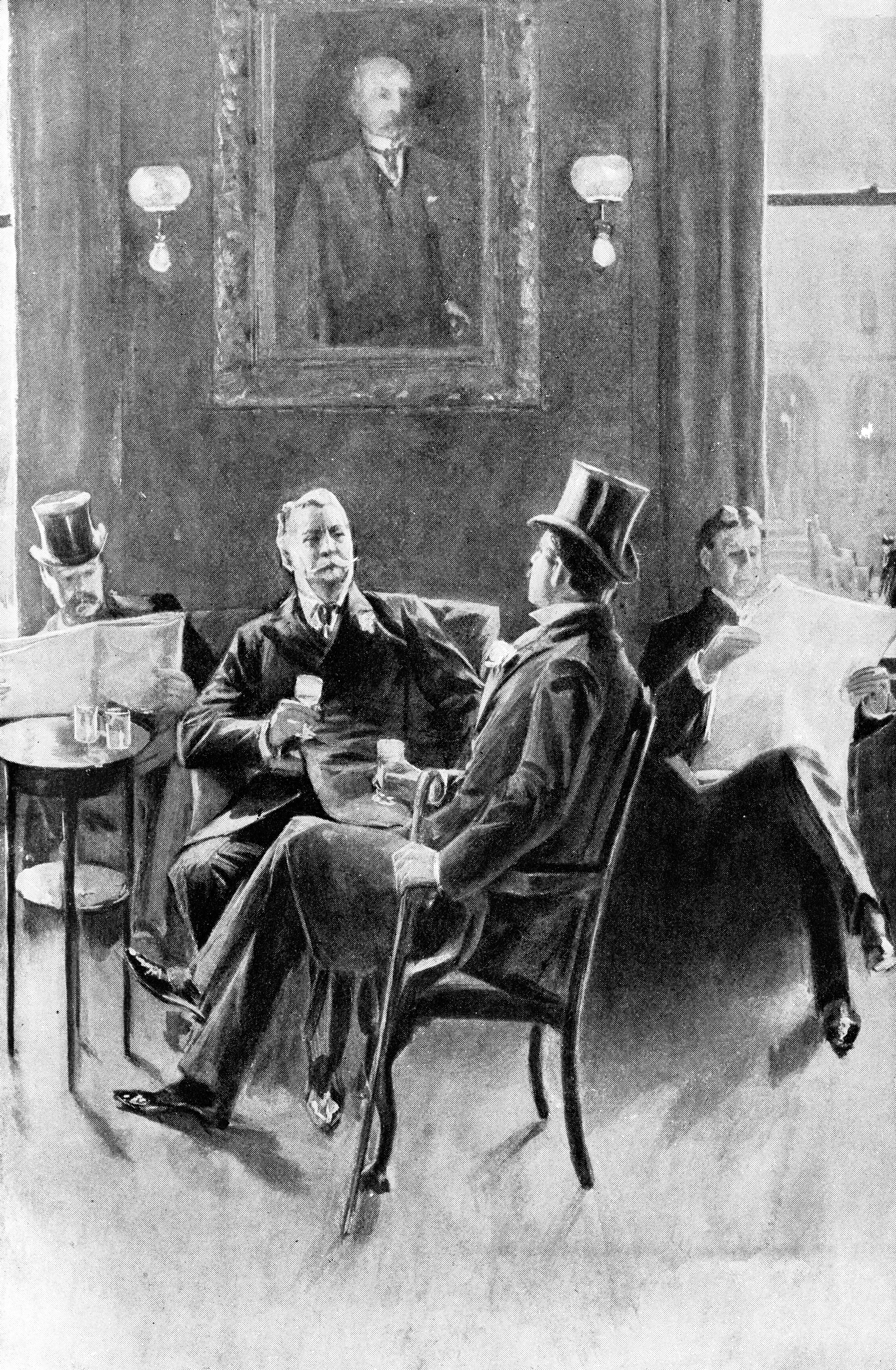
The Great Depression makes any economic complaints we have look paltry. The rising fascists and communists in Europe in the ’30s make our radicals look relatively tame. But the widespread sense of anxiety might be familiar to us. So too might be the sense that an old consensus is falling apart. But America remained a free republic. How? To fully answer that question would probably require volumes of writing. But one interesting experiment in the 1930s may have helped. John Studebaker, the superintendent of public schools in Des Moines, Iowa, who in 1934 became Franklin D. Roosevelt’s commissioner of education, was worried about the rise of radicalism and what he saw as a decline of civility, and he wondered what he could do to get Americans to talk and reason with one another. What would it take to cultivate a public capable of maintaining our republican form of government? His answer was what became known as the Public Forum Movement.

While Charlie Kirk denounced the groypers as white supremacists and antisemites, Michelle Malkin came to their defense. “Here’s my message to the new generation of America Firsters exposing the big lies of the anti-American open borders establishment and its controlled opposition operatives: If I was your mom, I’d be proud as hell,” Malkin declared, during a Young America’s Foundation-sponsored speech. Although YAF promptly severed ties with Malkin over her support of, in their words, “holocaust deniers, white nationalists, street brawlers, [and] racists,” she was praised by Fuentes and his followers. Malkin’s speech marked a profoundly strange moment in far-right politics: An Asian woman with a deep golden-brown complexion had become a leader of a movement advocating for the drastic reduction of America’s nonwhite population. Malkin hasn’t retained a significant presence within Fuentes’s political movement or public life generally, for that matter. Nevertheless, her metamorphosis from a darling of establishment conservative institutions—YAF, Fox News, the American Conservative Union, and so on—to a mother figure to groypers remains relevant insofar as it demonstrates both how and why the white identitarian movement is marked by significant nonwhite involvement at virtually every level. Moreover, the multiracialism of the groypers, broadly speaking, highlights the more fundamental reality that America is undergoing a racial realignment—such that an increasingly nativist and racist right wing will not necessarily be a whiter one.