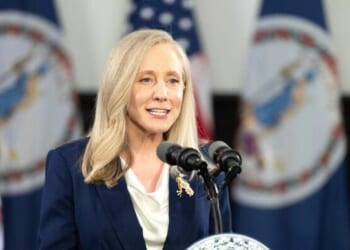
New Yorkers received a dubious holiday gift last week when Gov. Kathy Hochul announced she would sign a bill legalizing assisted suicide (also known as “Medical Aid in Dying” or “MAiD”). Beginning this summer, New Yorkers who have been told by a doctor that they have six months or less to live will be able to request lethal prescriptions, which they can self-administer at the time and place of their choosing.
New York’s journey to becoming the 13th state to legalize physician-assisted suicide has been a long one. First introduced in 2015, the state’s “MAiD Act” failed to pass an Assembly vote every year until this one. Narrowly passed by the Senate in June, the bill had been awaiting the governor’s signature for months, with both opponents and advocates fearing the meaning behind the delay.
In a press conference, Hochul said signing the bill was “one of the toughest decisions [she’s] ever made as governor,” acknowledging the concerns of many constituents about the effect the bill could have on the most vulnerable. As originally written, the bill would have made New York’s assisted suicide law one of the most permissive in the country, with no waiting period between request and access to lethal drugs, no required screening for depression, and minimal reporting requirements. Hochul’s signature is conditional upon the passage of amendments designed to tighten requirements and prevent abuse. But even with guardrails, the decision to sanction deliberate self-killing and legalize a procedure that the American Medical Association this summer called “fundamentally incompatible with the physician’s role as a healer,” is a watershed moment.
Hochul’s decision comes as a blow to all those in New York who believe in the sanctity of life. New York’s Catholic bishops and Timothy Cardinal Dolan (New York’s archbishop from 2009 until his retirement last week) responded with a statement reiterating that physician-assisted suicide “is a grave moral evil” and suggesting that the passage of the bill undermines Hochul’s other anti-suicide efforts. Many Jewish leaders also lobbied against the bill, and religious opposition seemed to prompt Hochul, who is Catholic, to respond in religious terms: “I was taught that God is merciful and compassionate, and so must we be. This includes permitting a merciful option to those facing the unimaginable and searching for comfort in their final months in this life.”
But mercy is not what many people see in physician-assisted suicide. “She really, really did not understand where the disability community was coming from,” said Sharon Shapiro-Lacks, board member for the Brooklyn Center for Independence for the Disabled, who is herself disabled, in an interview. “Kathy Hochul could not get that this is not a religious issue, that we were objecting to the systemic issue that doctors would be making the call as to who has a rational cause to want to end their life prematurely.”
While severe pain is often used as a reason to legalize assisted suicide—and is indeed one reason some patients seek it—many requests for lethal doses also come from those who fear loss of independence. Indeed, what many in the disabled community fear is a world where a loss of autonomy is seen as a valid reason to die.
“People are more scared of losing their capacities more than of the pain,” argues Shapiro-Lacks, who has been fighting for disability rights for more than 40 years. “Throughout my life, I’ve been told, ‘Oh my, you’re remarkable, I could never live like that. If I had to be in a wheelchair, I don’t know what I would do.’ And that always bothered me, because that kind of inspiration is a backhanded compliment. What it actually says is, ‘I wouldn’t live if I were you.’”
According to Shapiro-Lacks, a choice to end one’s life because of a terminal illness is not a free choice unless one has access to an array of supportive options for the remainder of one’s life. At a time when New York is seeing a caregiver shortage, a breakdown in the state’s home care program, a crackdown on opioid prescriptions that relieve chronic pain, and abysmal Medicare utilization of hospice, the basics for supportive end-of-life care are barely there.
Some physicians fear that the structure of the medical system will not encourage attentive and nuanced care to those in distress. “There is in fact danger that many of our patients will be coerced into death,” said Dr. Lydia Dugdale, a physician and ethicist at Columbia University, in an interview. “The number one drive in medicine is efficiency, and that’s not going to leave ample space for properly evaluating someone’s mental health or working through death anxiety.”
Those who trust the proposed guardrails to prevent abuse should look at what’s happened in other states, says Jessica Rodgers, coalitions director for Patients’ Rights Action Fund, a national nonprofit fighting assisted suicide. “In every state where [assisted suicide] is passed, the work is to organize to fight expansion.” Compassion and Choices, a well-funded nonprofit advocating for assisted suicide, has sued multiple states to remove residency requirements, and multiple states have quietly rolled back guardrails after the fact. Oregon and Vermont have removed their residency requirements. In 2023, Washington reduced its waiting period and expanded the list of eligible prescribers of lethal doses to include nurse practitioners and physician’s assistants. In Vermont, there has been an attempt to allow naturopaths to provide assisted suicide, though so far it has not succeeded. California reduced its waiting period from 15 days to 48 hours.
“The future is in litigation,” Rodgers says. Shapiro-Lacks agrees: “We’re going to have to try the best we can to put even more guardrails around it and prevent the dissolution of existing guardrails. We are going to be very vigilant around that. Also, we need to educate people about their intrinsic value and how they can lead meaningful lives, with supports, technology and pain relief, as they lose their capacities over time.”
How much support anti-suicide advocates will have in New York remains to be seen. Black and Hispanic populations largely oppose assisted suicide, and the Chair of the New York State Black, Puerto Rican, Hispanic, and Asian Legislative Caucus argued that the bill would “target vulnerable communities of color.” Hochul seems to have dismissed these voices, along with those of the disabled—though after a delay that lends credence to her claim that she found the decision difficult. She seems unlikely to have purchased much political favor with her approval—while a majority of New Yorkers approve of assisted suicide, it is not a make-or-break electoral issue, and the bill only narrowly passed in the legislature, with more than 20 Democrats voting against the bill in each house. Perhaps the story of the bill’s passage is the story of how a small but vocal minority of highly engaged activists won by their persistence.
With new bishops in Albany and the archdiocese of New York, the Catholic Church in the state has a chance for a fresh response. Will new leadership focus on end-of-life issues as much as on abortion? Will there be consequences for the Catholic lawmakers who voted for what the Church considers grave evil? Will young people respond as they see their grandparents end their lives?
And will the Orwellian nature of the pro-suicide lobby’s language—beginning with the euphemistic MAiD acronym—prevail? Assisted suicide is “[not] about shortening life but rather about shortening dying,” Hochul says. Compassion and Choices argued that Hochul should “lead with love” in passing the bill, calling it a way to “stop suffering.”
But the hollowness of that language was clear the first week of December, when hundreds gathered in New York City, Albany, and Buffalo for vigils in hopes of convincing the governor to veto the bill. Standing in freezing temperatures, protesters in Manhattan held candles and stood quietly amid the hustle and bustle of holiday shoppers and partygoers. Many held signs with a simple line: “It’s still suicide.”