You’re reading Dispatch Faith, our weekly newsletter exploring the biggest stories in religion and faith. Looking for more ways to support our work? Become a Dispatch member today.
Happy Sunday and happy New Year—and hope you all had wonderful holidays.
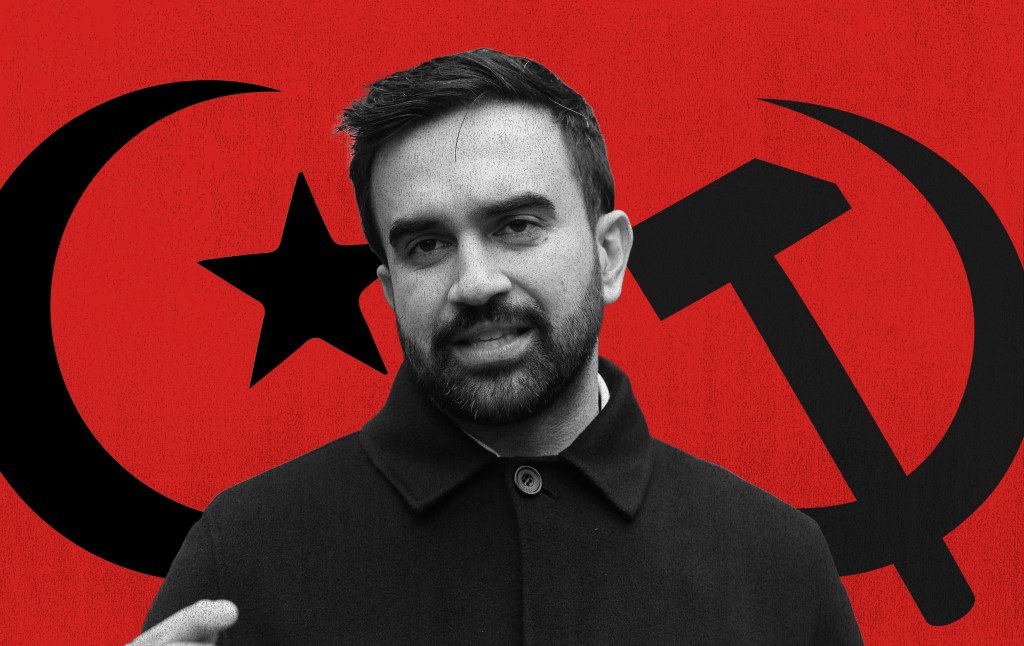
In New York City, this New Year begins with a new mayor: Zohran Mamdani, the city’s first Muslim mayor. For Dispatch Contributing Writer Mustafa Akyol, what’s more notable about Mamdani is how his socialist ideology jives with his Muslim faith. Or perhaps, how it doesn’t jive.
Akyol, a scholar with the Cato Institute and a Muslim himself, writes this week about how Islam has had more compatibility with capitalism and democracy than with socialism.
Mustafa Akyol: Zohran Mamdani May Be a Socialist, but Islam Is Not
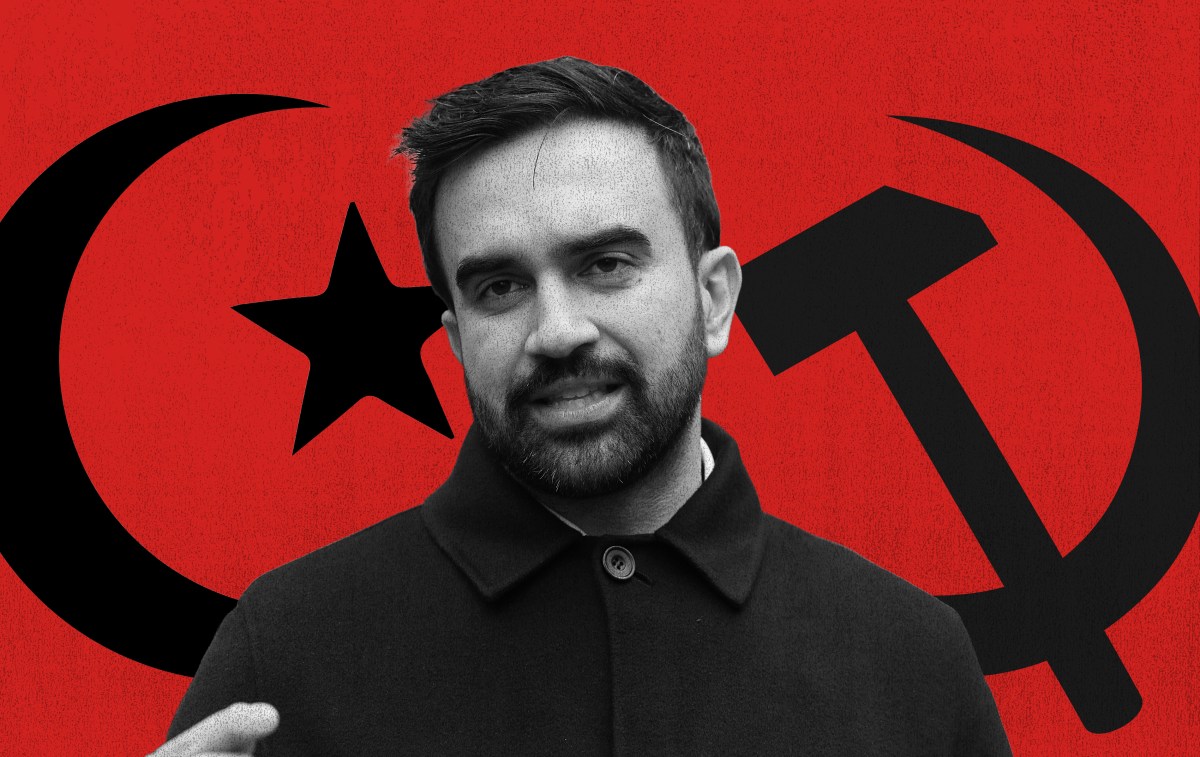
“The first Muslim mayor of New York City.” That is how Zohran Kwame Mamdani, an unexpected star in American politics, is often defined in news stories these days. And just like every other remarkable “first” in politics, this excites some people, while stoking fears in others.
So it was with John F. Kennedy, the first Catholic to become president of the United States. Some Protestants worried that he would be more loyal to the pope than the U.S. Constitution, and would use his presidential powers to pursue a sectarian agenda: He would, they warned, criminalize birth control, funnel tax money to Catholic parochial schools, and even persecute evangelicals.
Some recent fears raised about Mamdani—such as that he is a dangerous “jihadist” or oppressive “Islamist” who will put New York women in burqas—sound similarly cartoonish. Indeed, if anything, Mamdani has more in common with secular progressives than traditional Muslims, let alone the hardline Islamists, as noted by some of his more reasonable critics. “He wants to make New York an ‘LGBTQIA+ sanctuary city,’” as Sadanand Dhume of AEI noted in the Wall Street Journal, adding, “it’s hard to think of an idea less likely to resonate with the Muslim Brotherhood or the mullahs in Iran.” A New York Post editorial also advised its readers, “Don’t go down the ‘Islamist’ rabbit hole,” explaining that “Mamdani shows no sign of interest in anything like that.”
The real issue to discuss about Mamdani’s political vision may be what he does show interest in, which is “democratic socialism.”
Stories We Think You’ll Like

This, to be fair, is not “communism,” as some right-wing commentators sometimes label all too quickly. Communism, which produced some of the worst dictatorships in modern history, targets all political, economic, and civil liberties in the pursuit of a totalitarian utopia. Democratic socialism, as seen in Europe, is much softer, where a highly redistributive welfare state co-exists with private property and free enterprise.
As explained by my Cato Institute colleague Michael Chapman, however, even in the “democratic” version of socialism, government interference in the economy “distorts market processes, producing inefficiencies and crises,” and ultimately erodes prosperity. A better future for New York lies not in “further centralization or state control,” Chapman writes, but what has built the Big Apple in the first place: “individual freedom, entrepreneurial energy, and the rule of law.”
If Mamdani were to embrace these values, where might he go for inspiration? As surprising as it may sound, his Muslim faith, informed by the message of the Quran, would be a good start. Indeed, for all the hyperventilating about Mamdani’s supposed jihadi brand of socialism, there is just one glaring issue: Islam and socialism actually don’t go well together. Instead, as a religion with a strong free market tradition, Islam is much more compatible with capitalism.
To see why, one should go back to the very founding moment of Islam in early seventh century Arabia.
Its prophet, Muhammad, began preaching monotheism to his polytheist society at the late age of 40. Before that, for about two decades, he had another job as one of the successful merchants of Mecca, the Arabian city which itself was the hub of regional trade. That is also true for some of his earliest followers—such as Abu Bakr, Umar, and Uthman—who became pillars of the new religion and the immediate successors, or caliphs, of the prophet.
It is no wonder both the Quran and hadiths (sayings) of Muhammad are filled with an abundance of commercial terms and an appreciation of free trade. “Do not wrongfully consume each other’s wealth,” the Quran commands, “but trade by mutual consent.” Muhammad acclaims the “honest merchants,” and praises commerce as the key vehicle by which God distributes His blessings among people.
These teachings in Mecca soon found an application in Medina, where Muslims established a new order after their historic migration in 622 C.E. The very first institution Muhammad founded in this city was, unsurprisingly, the mosque. The second one was more worldly. As the 15th century Muslim historian al-Samhudi reports, based on earlier narrations, Muhammad went to an open space, stamped its ground with his foot, and said to his followers: “This is your market … do not let any tax be levied on it.”
A few years later, when prices went up in this tax-free Medina market and some of his followers asked him to lower them, Muhammad refused, saying, “Allah is the One Who fixes prices.” It was a theological precursor to Adam Smith’s “invisible hand.”
In other words, “Muhammad was not a socialist,” as the French historian Maxime Rodinson (who himself was a socialist) put it in his seminal 1966 book, Islam and Capitalism. “There are religions whose sacred texts discourage economic activity,” Rodinson also observed, adding, “this is certainly not the case with the Koran, which looks with favour upon commercial activity” and has “nothing against private property.”
Moreover, these market-friendly teachings of Islam set the tone for early Islamic civilization. In just a century after Muhammad’s death, through rapid military conquests that stretched from Spain to India, Muslims established not only a vast empire but also an extensive free-trade zone where Islamic law safeguarded private property, protected markets, and enforced contracts. This environment fostered the rise of a diverse entrepreneurial class—mostly Muslims, but also Christians and Jews—who pioneered “archetypal tools of capitalism,” as American economic historian Gene W. Heck demonstrated in his 2006 book, Charlemagne, Muhammad, and the Arab Roots of Capitalism.
A more recent (and brilliantly readable) work on this topic is Early Islam and the Birth of Capitalism by Benedikt Koehler, a scholar at the Institute of Economic Affairs in London. Here Koehler demonstrates how medieval Muslim merchants advanced innovations such as “the corporation, business management techniques, commercial arithmetic, and monetary reform,” which were later adopted in Venice and Genoa, and then in broader Europe.
Such Islamic contributions to Western capitalism are also evident in daily language. The numerals you use every single day are called “Arabic numerals” for the simple reason that they were introduced to Europeans by the Arabs—with origins in India. The check you cash at a bank is derivative of the Arabic word sakk, which means a written document. And “tariffs”—the big term of the past year—come from ta‘rif, a word “from bygone days of Arab trade,” as one Wall Street Journal writer put it.
The medieval Islamic civilization also produced a genius who wrote the theory of its economic practices: the North African polymath Ibn Khaldun (who died in 1406), who, in the words of European economist Dániel Oláh, shared “very similar ideas as Adam Smith,” hundreds of years before the Scottish philosopher. One of his insights—that low taxation leads to higher tax revenue—was picked up more recently by American economist Arthur Laffer and President Ronald Reagan, as I have previously written in The Dispatch.
All this means that capitalism—the best wealth-generating system in human history—is not alien to Islam. Muslims can in fact take pride in their own civilization’s role in its development.
In contrast, socialism has a much more recent history in the Muslim world. It gained prominence only in the early 20th century, largely by capitalizing on anti-colonial sentiments that arose as an inevitable response to European imperialism. In the 1920s, communist parties emerged in Muslim-majority countries such as Indonesia and Iran. By mid-century, a few Islamist thinkers, such as Mustafa al-Siba’i—the leader of the Muslim Brotherhood in Syria—began advocating “Islamic socialism.” They emphasized the Quran’s deep concern for the poor and needy, but unlike classical Islamic practice, which relied primarily on private charitable endowments (awqaf), they called for a powerful centralized state to enforce top-down “social justice.”
Yet aside from certain Islamist variants, which also influenced Khomeinism, socialism in the Muslim world—peaking in the 1960s and 1970s—was predominantly a secular ideology, at times fiercely anti-religious. Its final major stronghold was the Ba’athist regime in Syria, a brutal dictatorship that tortured and killed hundreds of thousands of its own people, which was finally toppled in late 2024 by Islamist-led rebels. It was no coincidence that, having endured decades under a socialist system, the new authorities quickly signaled a major shift, announcing plans to “adopt a free-market model and integrate Syria into the global economy.”
With this direction, Syria’s new leadership was only affirming a pattern well noted by The Economist: “The Middle East’s most religious politicians are often its most capitalist as well.” This is because they have long suffered enough under socialist dictatorships, and there is a much more authentic model, Islamic capitalism, that they evoke and revive.
It is unfortunate that the very socialism that failed terribly in the Muslim world— as it did elsewhere—found new life on American campuses, where young minds were charmed by its alluring advocacy for the poor and the downtrodden. This may also help explain Mayor Mamdani’s attraction to it. But let’s hope that his “very rational” personality, to borrow President Donald Trump’s words for the mayor, prefers facts over ideology, and actually lifts up New York City, which we should all wish to see. In the meantime, let’s hope more Americans grow comfortable with a Muslim mayor. This would in itself mark a positive step toward the fuller integration of Muslims—a small minority of about 1 percent of the population—into this great nation of diverse faiths and backgrounds. Let Americans also recognize that Muslims—just like Christians, Jews, and others—are not a monolith and hold a wide spectrum of views. While some embrace socialism, many others definitely do not, and for very good reasons.
Daniel Darling: Ben Sasse’s Greatest Lesson
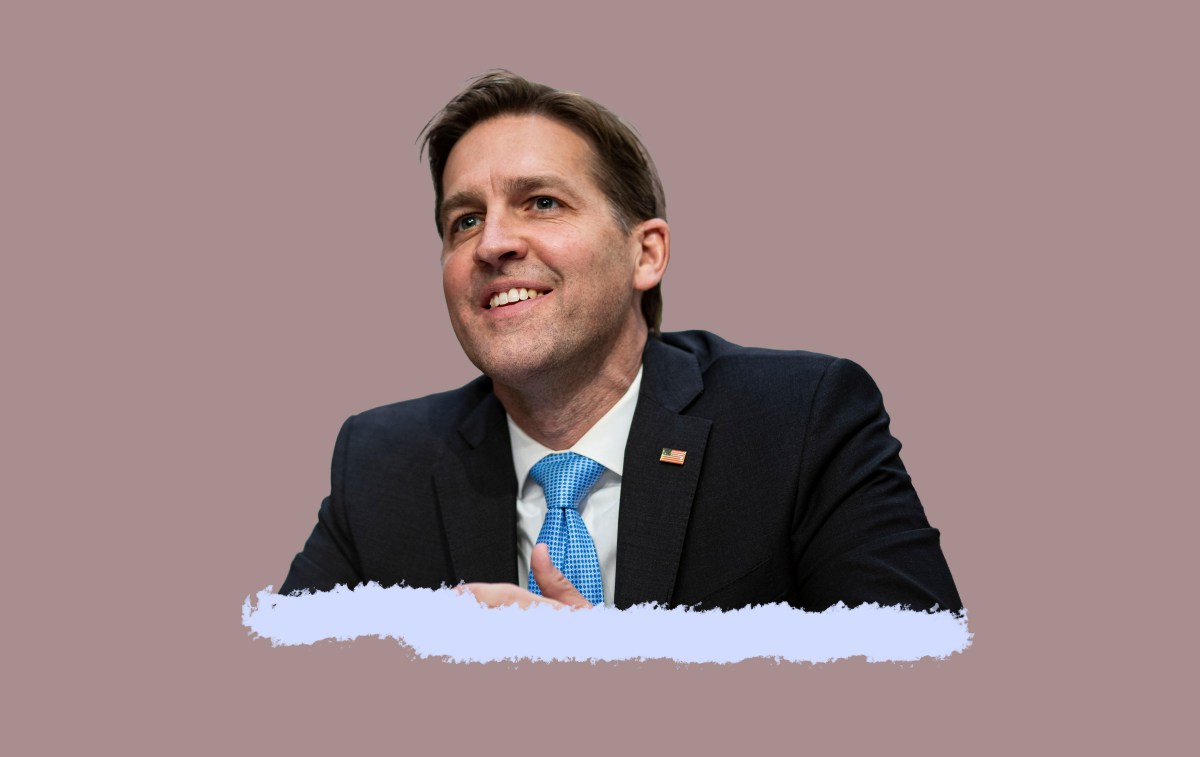
Former Nebraska Sen. Ben Sasse’s public announcement, just before Christmas, that he has been diagnosed with advanced pancreatic cancer was a gut punch to many of us. Sasse, a friend of The Dispatch, has spent his public career displaying virtue and commitment to his principles. On the website today, Daniel Darling writes that Sasse seems no less committed to those principles—including how to face death—as he lives out what look to be his final days.
Sasse’s thoughtful announcement comes at a time when Americans have few models of suffering well. On the one hand, tech entrepreneurs publicly muse about transhumanist utopias, where the body is mere hardware to be upgraded and extended indefinitely. On the other hand, there is the advancing Orweillian horror of “death with dignity,” where the sterile answer to a less-than-ideal life is no life at all. Governors in New York and Illinois recently signed expansive legislation that mirrors Canada’s expanding Medical Assistance in Dying (MAiD) regime.
To fight against cancer with joy and hope, to suffer well in the face of his own mortality, is a kind of counter to these insidious social movements that seek to deny our humanity. And Sasse offers the rest of us the perspective we need to live with purpose for however many days we have left on this earth.
As a middle-aged man not much younger than the former senator, I read his words with much grief. I wondered how I’d face a similar future, with my own children in high school and college. I wept, not only for him and his family, but for an America that desperately needs his voice.
Yet I was inspired by a man who, facing the worst days of his life, is meeting them with true Christian hope and joy.
More Sunday Reads
- Political scientist and religion-data guru Ryan Burge has some new data to parse, showing once again the degree to which the evangelical voting bloc is important to Republican political candidates. But there’s much more interesting data he points out too: “About 13% of Obama’s votes came from evangelicals in 2008. It was 13% for Harris in 2024. Think about this simple fact for a minute – there were more evangelicals who voted for Harris than mainline Protestants. That’s just how small the mainline is now. Even if they were super liberal (and they aren’t) there just aren’t enough voters to really make a huge difference at this point. But it’s also true that the Democrats have problems with the Catholic vote – white Catholics were only 11% of the Harris vote. So, how do Democrats not get blown out in every election? It’s the nones. That’s the answer. There are a lot of nones and they lean heavily towards the Democrats. I just wrote about this, but I want to make this point clear – atheists and agnostics were 16% of the Obama coalition. Now, they are about a quarter of the Democratic party. If you throw the nothing in particulars in there, the nones make up 45% of all Democratic votes cast. That’s up 10 points since 2008. Let me just summarise this succinctly. The GOP vote is 80% Christian and 17% non-religious. The Democratic vote is 48% Christian and 45% non-religious. That’s the God Gap.”
- For The Pillar, Jack Figge profiles the Catholic Church’s diocese in Fairbanks, Alaska, which features about 10,000 parishioners and covers more than 400,000 square miles—making it the largest by area and one of the most remote dioceses in the country. “In 1779, Franciscan missionaries celebrated the first Catholic Mass on record in Alaska. In 1794 the Russian Orthodox established the first permanent Christian presence on Kodiak Island, In 1877 the Nulato mission was established by Catholic Archbishop Charles Seghers. The diocese was formally established August 8, 1962, after Jesuit missionaries had been evangelizing and establishing parishes both in Fairbanks and in the bush since the early 1900s. The Jesuits have played a critical role in the establishment of Alaska’s Catholic Church and has had priests serving in the diocese its entire history, with the last two due to retire and conclude the mission this summer,” Figge writes. He continues: “When preparing new priests to be sent to the bush, Father Robert Fath, vicar general and judicial vicar for the diocese, emphasizes the importance of personal relationships. ‘We have very few catechists and so it means that the priest is becoming the primary catechist instead of having a cadre of volunteers to help,’ Fath said. ‘A lot of the village ministry is really a ministry of relationship. You’re visiting people in their homes. You’re going, fishing with them, you’re berry picking, you’re meeting them at native dance or at basketball games at the school, and getting to know them that way as opposed to you know, so many of us in the larger urban parishes, the normative relationship we have with our parishioners is, you, the five minute conversation after mass.’”
Religion in an Image