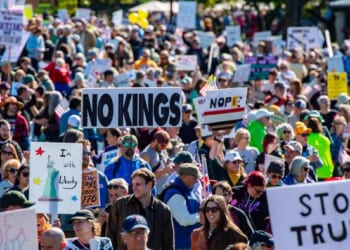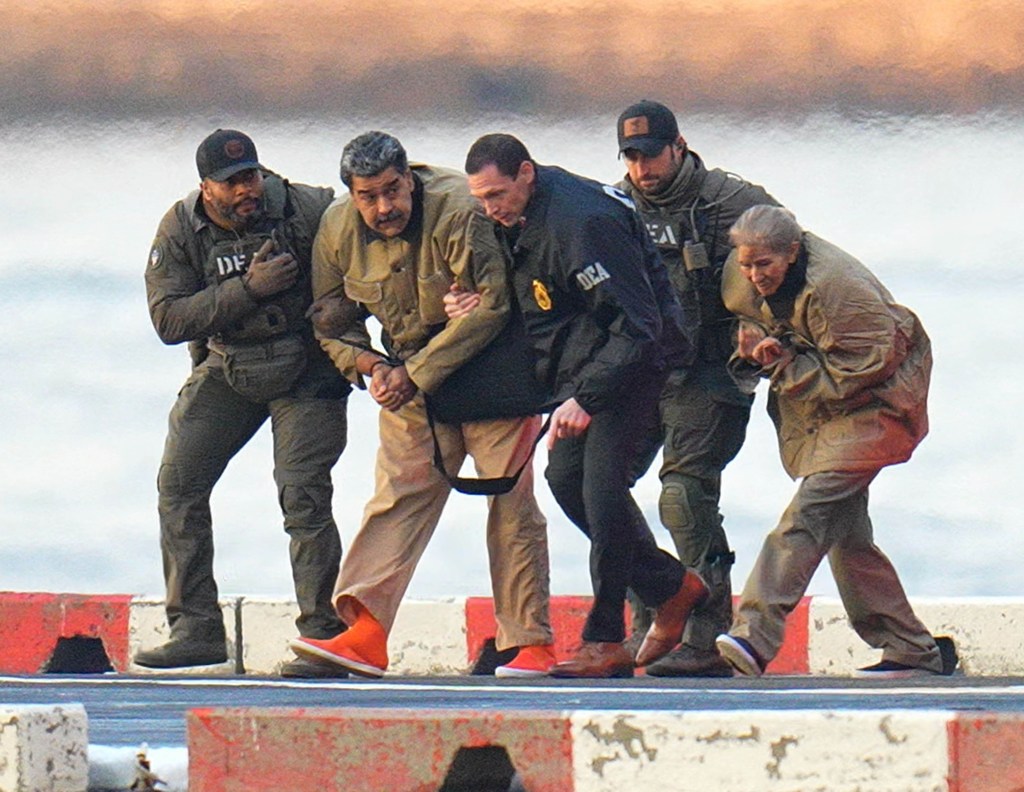
Hello and happy Saturday. So much for easing into 2026. One week ago, we woke to the news that the U.S. military had captured Venezuelan dictator Nicolás Maduro and his wife, Cilia Flores, so they could be brought to the United States to face drug and weapons charges. Adversaries and allies alike protested the move, which raised a number of questions, among them: Was it legal? Who will govern the country now? Is Greenland next? Before we could fully grapple with those, though, events on the home front stole some of our attention. On Wednesday, an ICE officer shot and killed Renee Good, a 37-year-old mother of three, as she drove her car away from a neighborhood protest in Minneapolis. Anti-ICE protests took place in cities throughout the U.S. on Thursday night.
Some questions raised by the Maduro capture lack the benefit of simple answers. For starters: Why, exactly, did the Trump administration take this step? Was it about the illegal drug trade? Or illegal immigration from people fleeing a dictatorship? What about oil? Projecting U.S. power in the Western Hemisphere? Yes. Contributing Writer Gil Guerra notes that the administration has at various times cited all of those issues as justifications for intervening. But that creates a different problem. “The administration’s hodgepodge of narratives means there is no simple, credible rationale for intervention that Americans and Venezuelans alike can get behind,” Guerra writes. “Yet this narrative incoherence is not merely a communications failure. It reflects genuine tensions between the arguments that work domestically, legally, internationally, and inside Venezuela.”
So what does the law say? Even experts disagree, as our Dispatch Debate shows. John Yoo, who served in George W. Bush’s Justice Department and is now a law professor at the Berkeley School of Law, points to numerous examples of U.S. presidents taking similar actions—from Barack Obama’s campaign against Muammar Gaddafi in Libya to George H.W. Bush’s seizure of Manuel Noriega, all the way back to Thomas Jefferson’s campaign against the Barbary pirates. He writes: “Bipartisan practice sustained over two centuries is not constitutional drift; it is the Constitution operating as designed.” But Erwin Chemerinsky, the dean of the Berkeley School of Law, counters that, “The invasion of Venezuela cannot be justified under any principle of international law. It obviously was not in response to hostilities by that country against the U.S., and Venezuela poses no threat to American national security.”
For his part, President Donald Trump justified taking Maduro by citing the Monroe Doctrine, established in 1823 by President James Monroe to assert U.S. influence over the Western Hemisphere. In a press conference last Saturday, he complained that “for decades other administrations have neglected or even contributed to these growing security threats in the Western Hemisphere” and rechristened the Monroe Doctrine as the “Donroe” Doctrine.
In his Wednesday G-File, Jonah Goldberg observes that the “Donroe Doctrine” might be a little too on the nose. He brought up the concept of nominative determinism, “a somewhat tongue-in-cheek idea that people tend to do things that fit their name.” He writes:
I think Trump is aptly named because he thinks his needs and desires should trump all other considerations. His effort to steal the 2020 election is only the most obvious example among scores of them.
And I think the “Donroe Doctrine” is a perfect illustration of the phenomenon. This isn’t a foreign policy crafted by prioritizing the national interest. It’s a foreign policy crafted to satisfy Trump’s self-interest. I do think that Marco Rubio has an actual theory of the national interest, and he’s trying to pursue it by selling it to Trump as a vanity play. Rubio doesn’t talk about “keeping the oil” but he knows that Trump has a long-standing obsession with the idea that conquering countries to take their oil is a brilliant idea.
About that oil: In the Saturday press conference after the Maduro raid, Trump said, “We’re going to have our very large United States oil companies … go in, spend billions of dollars, fix the badly broken infrastructure, the oil infrastructure, and start making money for the country.” U.S. oil companies have a complicated history in the country—Venezuela nationalized its oil industry in 1976, displacing U.S. companies such as Exxon and Mobil. The country took steps toward opening it back up in the 1990s, until Hugo Chávez came to power. Will U.S. companies even want to return to Venezuela? That’s another tough question, as reporting from Alex Demas indicates. While some conditions are favorable—U.S. refineries are well-suited to processing the country’s heavy crude and the oil deposits are well-mapped—the political uncertainty and aging infrastructure are negatives. In Dispatch Energy, Rory Johnston addresses those challenges and also looks at the future prospects for the Venezuelan oil industry.
As for the events in Minneapolis, you’ve probably seen at least one video of the moment an ICE agent approached Renee Good in her vehicle, yelling at her to get out of the car and attempting to reach in. As she pulls away, shots fired by a different agent ring out, and Good’s car proceeds down the street until it crashes into a parked vehicle. As much as the eyewitness videos from the scene aren’t entirely clear—what happened in the moments leading up to the confrontation is not included, and the most widespread videos don’t show whether Good’s car struck the officer who fired—they are at odds with statements from the president and his team. Homeland Security Secretary Kristi Noem claimed Good had committed an “act of domestic terrorism” and Trump said she “viciously ran over the ICE Officer. … Based on the attached clip, it is hard to believe he is alive, but is now recovering in the hospital.” (The officer walked away from any potential contact with Good’s car.)
Color Nick Catoggio unsurprised by the administration’s reaction. “In slandering Good and gaslighting the hell out of Americans about the shooting, Trump and his deputies aren’t earnestly trying to convince anyone that the ICE agent acted appropriately,” Nick writes in Boiling Frogs. “By lying so brazenly when video evidence of the truth is freely available, they’re signaling—to the public and especially to ICE—that they intend to support the agency’s renegade tactics with flimsy excuses no matter how indefensible they are.” Meanwhile, Contributing Writer Jeremiah Johnson called the shooting “the inevitable outcome of an immigration enforcement apparatus that has been poorly trained, sheltered from consequences, and empowered to behave recklessly.”
We’ll have more to come on both of these stories next week. In the meantime, thank you for reading and have a lovely weekend.
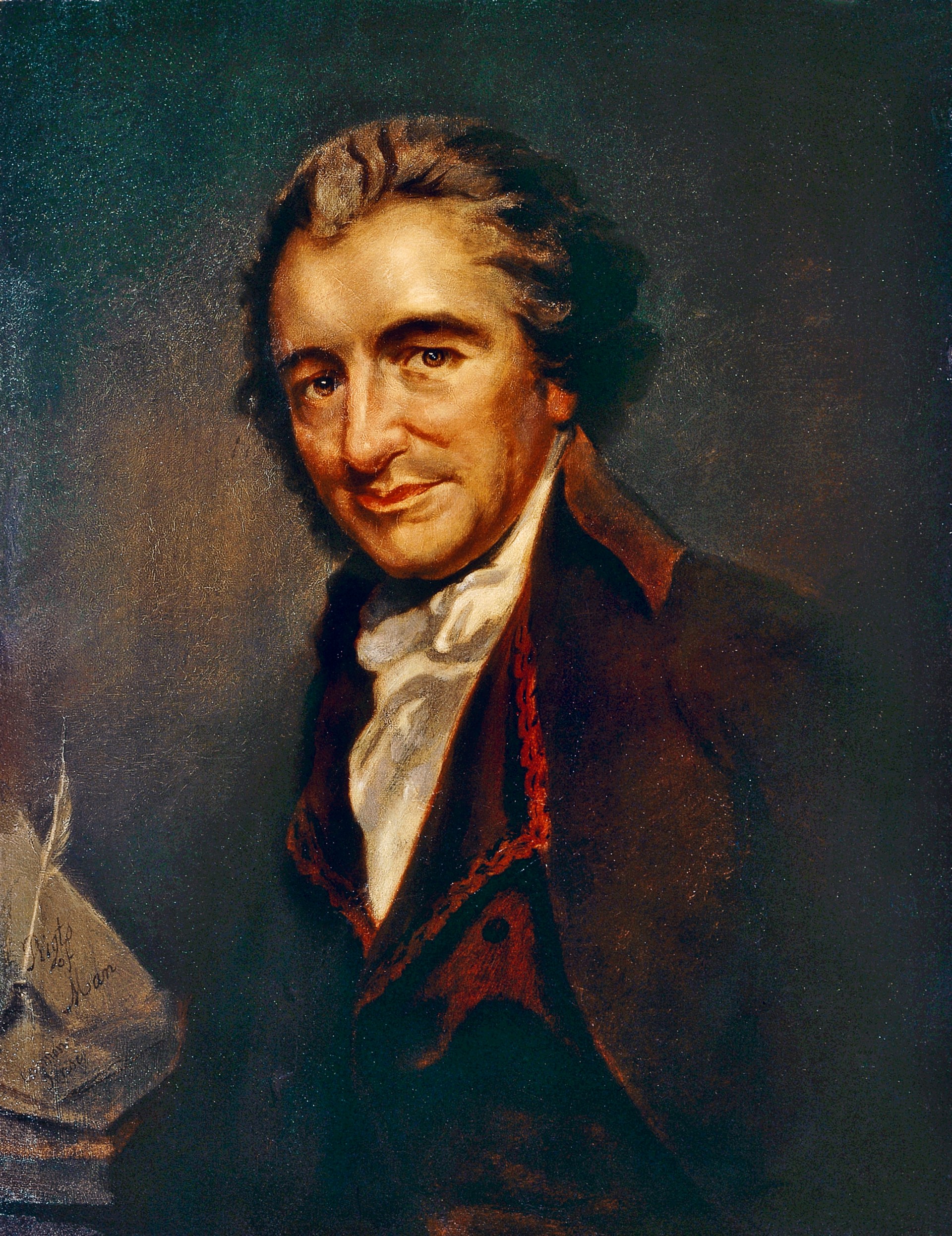
If the British had any idea of who this Thomas Pain would become—he wouldn’t add the “e” until later—they may never have let him set sail to the New World to begin with. In little more than a year, this impoverished 37-year-old, who had known only heartache and failure in Britain, would find his voice as a successful editor and journalist in America’s largest city. And with his newfound purpose and confidence, he would write one of the great world-changing pieces of political propaganda ever published and help birth a free and independent United States of America. On January 10, 1776, Thomas Paine unleashed Common Sense on the colonial public. In an economical 47 pages, which he wrote in the fall of 1775, Paine’s anonymous pamphlet articulated in plain English the rising sentiment that there could be no reconciliation with the mother country. Brimming with rage after the outbreak of hostilities at Lexington and Concord—“No man was a warmer wisher for reconciliation than myself, before the fatal nineteenth of April 1775”—Paine argued for complete independence from Great Britain and attacked hereditary monarchy with a populist and democratic fire.
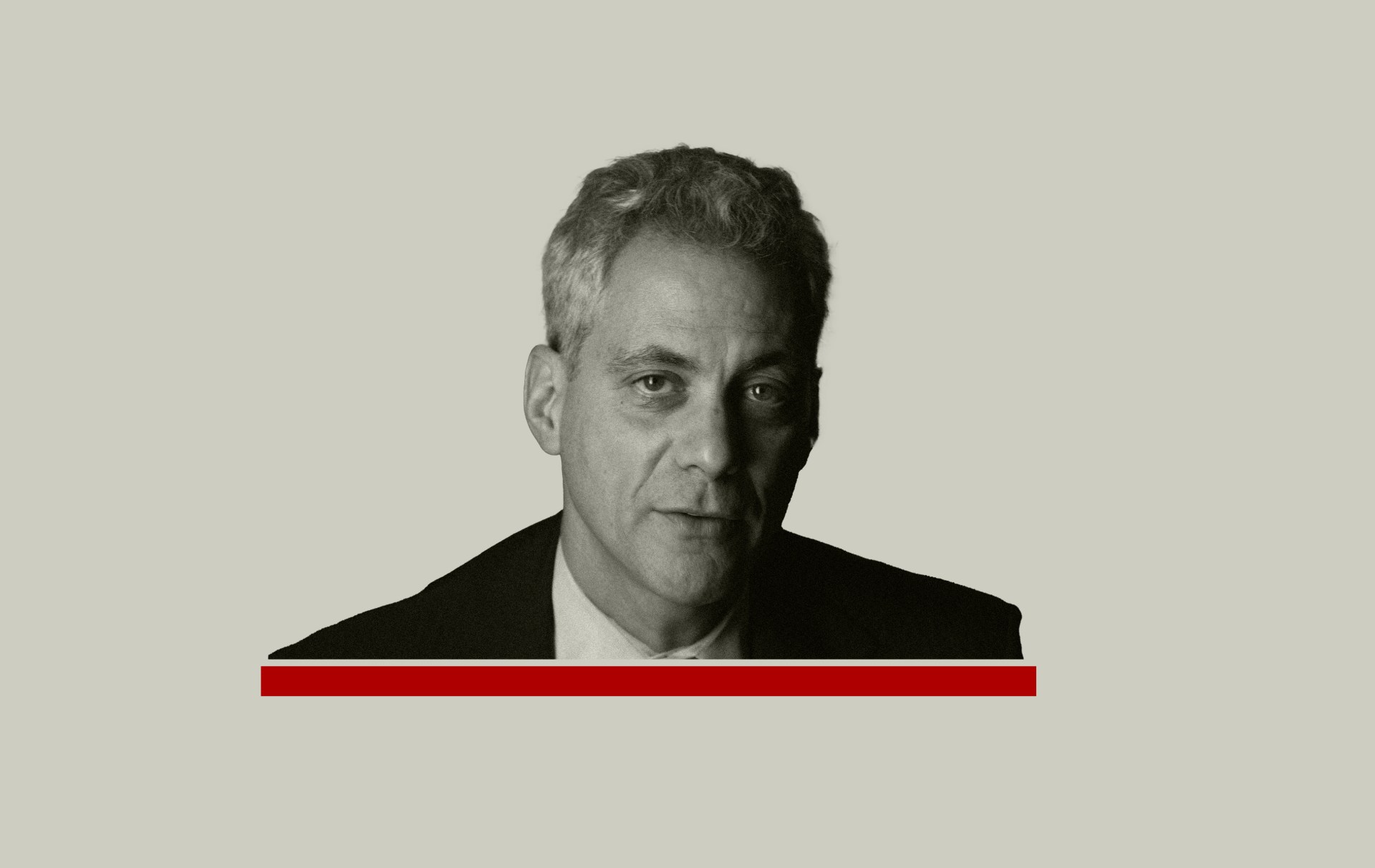
Rahm Emanuel is a politician. That’s a blindingly obvious descriptor for a prominent, 66-year-old Democrat who has made politics his profession—obsession, some might say. Emanuel was senior aide to Presidents Bill Clinton and Barack Obama, an Illinois congressman, Chicago mayor, U.S. ambassador to Japan, and coming in 2028, almost assuredly, a White House hopeful. But unlike most politicians in an era that frowns on politics and exalts outsiders, Emanuel bear-hugs the label, proudly. He believes many of the problems Americans have with Washington can be solved with more politics, not less. Emanuel said as much, more than once and to an array of audiences, during two days of meetings in Las Vegas in late December that had all the hallmarks of a presidential campaign swing.“I like politics. I don’t think you can govern without liking politics. I like meeting people. I like hearing what they have to say,” Emanuel told The Dispatch during a wide-ranging interview in the middle of busy Sadelle’s restaurant inside the Bellagio Hotel and Casino, Part 1 of our one-on-one conversation as I trailed the potential White House contender to visits with labor leaders, educators, and students and Nevada Democratic Party activists, donors, and officials. “I’m pretty partisan, pretty political, up front about winning, but I don’t do it at the expense of trust.”

The rise of “nerds” as a title of self-aggrandizement was one of the most predictable social trends of the late 1990s. Equally predictable was that nerdery was going to be used in dishonest and self-serving and sometimes intellectually sloppy ways, as, indeed, empiricism and rationalism and pragmatism often have—as a cover for ideological and partisan projects and tendencies. (The observation is, to say the least, not original to me!) If “unity” is shorthand for “Shut the hell up, peon, and do what I say!” then “pragmatism” is how politicians say, “I don’t want to hear about any principled objections to my program or any inconvenient questions about whether this is the sort of thing we should be trying to do in the first place.” And now that it is at last entirely undeniable that the net effect of PPACA is not going to be to reduce the national debt—what? Well, it would have worked better if not for Republican meddling. Maybe—but making policies that work only in a world in which Republicans do not exist and politics is abolished is not exactly sound program design. Well, nobody could have seen COVID coming, and that added a lot to health care costs. True—but making policies for a world in which there are no unexpected events is not exactly sound program design, either, and rainy days can be anticipated in general, even if we do not know precisely when and where the rain will fall. Well, Republicans are worse on the debt: Look at the $3.4 trillion the Republican tax-and-spending bill will add to the debt! Donald Trump is a veteran of one game show and three pornographic films and boasts the mental acuity of something that normally would say “Oscar Mayer” on the packaging—less dumb and reckless than the GOP circa Anno Domini 2026 is not a very high bar to clear.
Best of the Rest

The Women of January 6
A new book details the conspiratorial thinking and dark histories of two Capitol rioters.