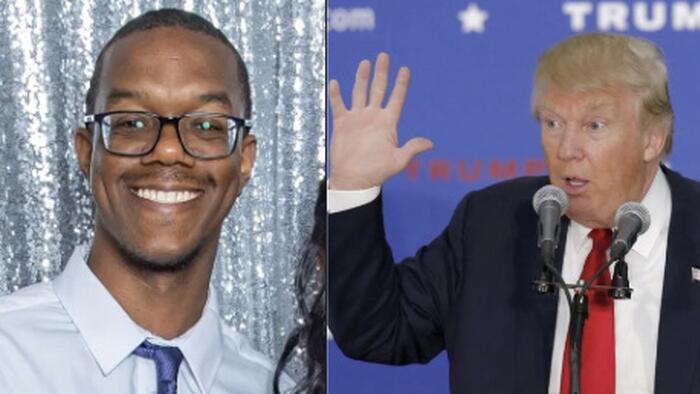
It took nearly five years for the FBI to finally arrest someone for planting pipe bombs outside the headquarters of the Democratic and Republican parties on the eve of the Jan. 6 Capitol Hill riot, but the suspect may avoid serving a prison sentence thanks to the language in President Trump’s sweeping pardon of those who participated in Jan. 6 mayhem.
In that pardon issued on the day of his 2025 inauguration, Trump commuted the sentences of 14 people convicted of offenses springing from the Jan 6 demonstrations. Next, seeking to free some 1,500 others from convictions or pending prosecutions, Trump wrote, “I do hereby…grant a full, complete and unconditional pardon to all other individuals convicted of offenses related to events that occurred at or near the United States Capitol on January 6, 2021.”

It seems immaterial that the charges against Brian Cole Jr for planting bombs came after Trump’s pardon, notes former federal prosecutor Ankush Khardori, writing at Politico:
Trump could have specified that the pardon applied only to people who had been convicted or charged “as of the date” of his pardon…but there is no such language in Trump’s proclamation. Lest there be any doubt, the Supreme Court made clear more than 150 years ago that presidents have the constitutional authority to do this — that is, to issue “preemptive pardons” for past conduct even if that conduct has not been charged at the time of the pardon.
In another context — relating to Trump’s pardon of those who sought to send alternate slates of electors to the 2020 Electoral College — Trump’s DOJ has claimed it has the power to determine which crimes Trump intended to include, but courts may take a dim view of that kind of de facto delegation of presidential pardon power, particularly where the plain language of the pardon is unambiguous and deliberately sweeping.
Federal prosecutors are behaving as if they fully appreciate the pardon’s potential to set Cole free and render their efforts futile. In both court filings and remarks in a hearing, they avoided using language that links Cole’s alleged actions to Jan. 6.

Federal agents say that, when they interviewed him, Cole confessed to planting the two devices. So far, no full transcripts of those interviews have been published, only quotes the DOJ chose to include in its court filings. Here’s one key excerpt:
“When asked why he placed the devices at the RNC and DNC, the defendant responded, ‘I really don’t like either party at this point’.” [Cole] also explained that the idea to use pipe bombs came from his interest in history, specifically the Troubles in Ireland. The defendant denied that his actions were directed toward Congress or related to the proceedings scheduled to take place on January 6.”
Seeking to make the case that the pardon doesn’t apply, prosecutors will surely emphasize Cole’s denial that his bombing attempt had anything to do with Jan. 6. (Then again, they don’t provide an actual quotation of this purported denial.) Then there’s the fact that both bombs were planted in the early evening of Jan. 5. Prosecutors also say he Cole set the kitchen timers on the bombs for their maximum duration of 60 minutes — meaning they would have also exploded on Jan. 5. He told agents that his timing sprang from wanting to avoid killing anyone.
However, before you conclude there’s nothing to the pardon concern, consider that the pardon uses the phrase “related to” events that occurred on Jan. 6. Having failed to detonate on Jan. 5, the bombs were discovered on Jan. 6. Cole’s lawyers can argue that the bombing attempt is “related” to Jan. 6 since it had the effect of diverting police to RNC and DNC headquarters.
There will also be scrutiny of Cole’s motives. While expressing disdain for both parties, some of Cole’s interview statements might be interpreted as sympathetic with the pro-Trump protesters, which could help substantiate a Jan. 6 nexus:
The defendant felt that “the people up top,” including “people on both sides, public figures,” should not “ignore[e] people’s grievances” or call them “conspiracy theorists,” “bad people,” “Nazis,” or “fascists.” Instead, “if people feel that their votes are like just being thrown away, then . . . at the very least someone should address it.”
Perhaps significantly, in his order directing that Cole continue to be detained, US Magistrate Judge Matthew Sharbaugh himself linked Cole’s alleged crimes to Jan. 6:
The specific circumstances by which the offenses are alleged to have been carried out—including the timing and broader context—further amplify their severity. After all, Mr. Cole is charged with placing the two IEDs in the immediate vicinity of the U.S. Capitol the night before U.S. lawmakers were set to gather to certify the results of the 2020 election. Although Mr. Cole, during his post-arrest interview, apparently disclaimed any intent to interfere with that process, the resulting fear and alarm followed all the same—and how could it not?
All that aside, there are some who still think there’s a whole lot more to the tale than has been told, including Rep. Thomas Massie, who has suggested the “autistic” Cole couldn’t have acted alone:
FBI claims an autistic man they arrested last month, 5 years after J6, is a lone wolf who planned, built, and placed the pipe bombs. They want to wrap up the case and put a bow on it, but I’m not buying it. It doesn’t add up.
latest from @SteveBakerUSA:https://t.co/TDVPoWgamw
— Thomas Massie (@RepThomasMassie) December 30, 2025
Loading recommendations…