Defense Secretary Pete Hegseth censured Sen. Mark Kelly, a retired Navy captain, last week for truthfully instructing service members in November that they “can refuse illegal orders.” If anything, Kelly—who on Monday sued Hegseth for violating his First and Fifth Amendment rights—put the matter too mildly: Troops must disobey—and also report—illegal orders. But this reminder of a basic duty of those who wear our country’s cloth, by a decorated naval aviator and Armed Services Committee member, was perhaps more timely than Kelly knew.
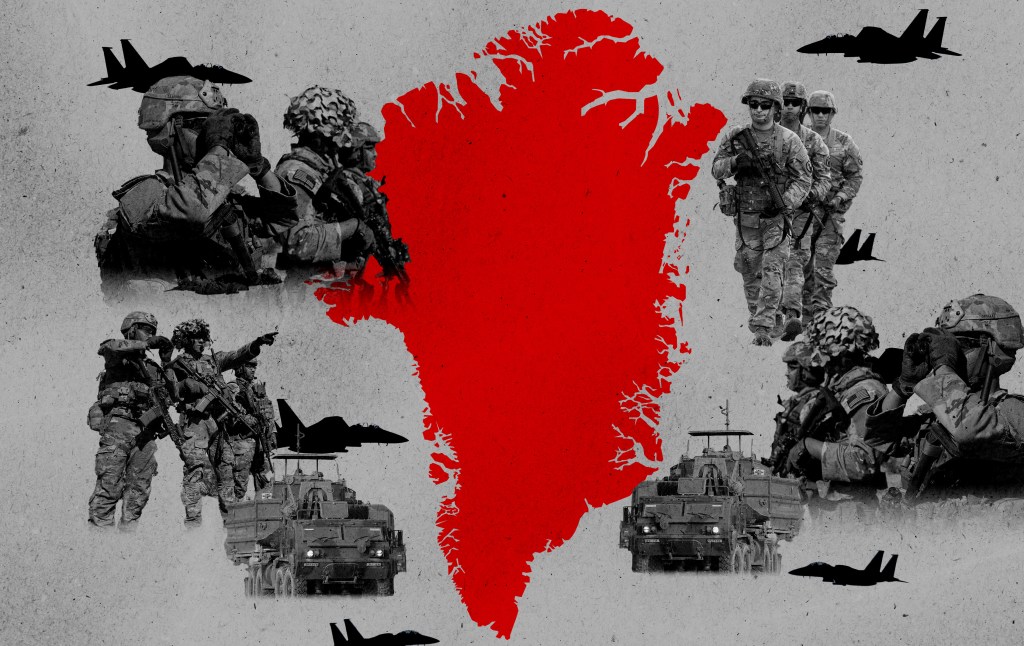
Last week, in the wake of the U.S. military’s capture of Venezuelan dictator Nicolás Maduro, President Donald Trump spoke generally of his desire to obtain Greenland, while deputy White House chief of staff Stephen Miller and press secretary Karoline Leavitt explicitly raised the possibility of the United States seizing territory belonging to our ally Denmark by force. Such orders are precisely the kind that our military must refuse to obey.
The United Nations Charter of 1945, to which the U.S. is an original signatory, provides that member states refrain from the threat of force against the territorial integrity of any state. Adherence to Article 2(4) of the charter is the foundation of the entire post-World War II order.It’s bad enough that Russia violated this principle by invading first Georgia and then Ukraine; if the United States also abandons its obligations under the charter, we might soon descend into World War III.
The Greatest Generation would be stupefied that we appear to have forgotten the horrors that the U.N. Charter intended to ensure never happen again: perhaps 90 million people dead from two world wars between 1914 and 1945. Conspiracies to wage aggressive war, and not subsequent war crimes against noncombatants such as the Holocaust or Rape of Nanjing, were the main charges against Axis leaders at the postwar Nuremberg and Tokyo tribunals—with American prosecutors levying the charges and obtaining death sentences in several cases.
The North Atlantic Treaty of 1949, to which America is also an original signatory, provides that North Atlantic Treaty Organization members consult whenever the territorial integrity of any of them is threatened, and that an attack against any is considered an attack against all, triggering mutual defense obligations.
Between 1950 and 2024, the U.S. and Denmark entered into 21 diplomatic agreements related to military matters alone, including a mutual defense treaty, many pertaining specifically to Greenland.
Denmark poses no security threat to the U.S. Our armed forces have maintained bases in Greenland since 1941, some crucial to warning us of nuclear attack. Denmark contributed troops to U.S.-led operations in Afghanistan and Iraq, losing more than 50 service members.
The administration’s loose talk of seizing Greenland already violates the U.N. Charter and North Atlantic Treaty as a threatened use of force against Danish territorial integrity, as well as some bilateral defense agreements between Washington and Copenhagen. And treaties are, legally speaking, superior to federal statutes and subordinate only to the U.S. Constitution.
What’s more, U.S. action against Denmark would mark the end of NATO, which has kept the peace in Central and Western Europe since the 1940s, and also U.S. leadership of what we quaintly but sincerely referred to during the Cold War as the free world—hereby fulfilling the primary postwar foreign policy goals of Soviet and Russian leaders from Joseph Stalin to Vladimir Putin. This raises the uncomfortable question of what, or perhaps who, is motivating President Trump to needlessly risk historic catastrophes for the U.S. The suggestion of such a self-destructive policy by a president would ordinarily trigger discussion of the 25th Amendment by his Cabinet, and impeachment by Congress. But we do not live in ordinary times.
Confronted with an order from President Trump and Secretary Hegseth to seize Greenland from a treaty ally with whom we are at peace, Chairman of the Joint Chiefs of Staff Dan Caine must reasonably and in good conscience decline to transmit, and relevant four-star combatant commanders refuse to execute, that order as illegal.
In accordance with pledges made as nominees before the Senate for their ranks and billets, these officers must then report the unlawful order to their congressional oversight committees of jurisdiction: the Armed Services committees and Defense Appropriations subcommittees. Congress might then prohibit spending funds on such a misbegotten operation. These officers should also seek a declaratory judgment from the Article III federal courts conclusively determining the order’s legality.
In 1974, President Richard Nixon fell apart emotionally as the walls closed in regarding Watergate, and Secretary of State Henry Kissinger and Secretary of Defense James Schlesinger told the military not to act on any nuclear launch order from a drunken and unstable president unless they concurred. In the first Trump administration, Defense Secretary James Mattis waved away the president’s perfervid suggestions to illegally shoot migrants in 2018 and his successor, Mark Esper, similarly rebuffed Trump’s notions of shooting demonstrators in 2020, and their chairmen of the Joint Chiefs transmitted no such orders to the force. In 2021, every living former defense secretary publicly warned the military to take no role in resolving the disputed 2020 election, and after the January 6 coup d’état attempt, Chairman Mark Milley reassured Speaker of the House Nancy Pelosi that the military would not obey any deranged order by an unhinged President Trump to misuse nuclear weapons. Milley was right to do so: Officers swear oaths to a Constitution establishing three coequal branches of government, including Congress, not to presidents.
Officers are taught from the beginning of their careers to distinguish between lawful and unlawful orders. This subject was taught to us as first-year Reserve Officer Training Corps cadets, as new second lieutenants at Officers Basic Course, and at every step of professional military education through war college. We know that even lawful but immoral and unwise orders ought sometimes to be disobeyed, at grave risk to an officer’s career and liberty, as when good men loyal to the Union ignored President James Buchanan’s command to surrender arms in Southern arsenals to the newborn Confederacy during the long transition after the 1860 election. Yet our current senior-most general and flag officers’ repeated, meek compliance with illegal orders over the past year is frankly an ongoing disappointment.
Domestic deployments of federal troops and federalized National Guardsmen to carry out law enforcement functions, beginning in June, were predictably found to be unlawful. Extrajudicial killings of at least 115 alleged narcotics traffickers since September, especially shipwrecked sailors hors de combat, will almost certainly be ruled unlawful homicides when eventually reviewed by courts. (To his credit, Southern Command’s Adm. Alvin Holsey appears to have been forcibly retired for privately objecting to apparent murder on the high seas, after his staff judge advocate, Marine Col. Paul Meagher, reportedly gave him sound legal counsel on the subject.) Last fall, 800 admirals and generals sat in silence at Marine Base Quantico as first the defense secretary insulted them, and then as the president proposed using illegally excessive force on American civilian demonstrators. Last week’s raid on Venezuela, unauthorized by Congress but facially legal as the execution of an arrest warrant, was subsequently described as intended to seize oil—likely an unlawful reason, but without disagreement voiced by Chairman Caine at the Mar-a-Lago press conference.
It is hard to picture, say, Army Chief of Staff George Marshall or Chief of Naval Operations Ernest King silently going along with this kind of abuse of their soldiers or sailors. Our country and our troops deserve uniformed leadership with more moral courage than thus far displayed by most four-star officers this year. Yet it is always the right time to do the honorable thing. An order to seize Greenland would be profoundly harmful to America and the rule of law. If President Trump and Secretary Hegseth give this unlawful order, the Joint Chiefs and combatant commanders, or if necessary subordinate leaders further down the chain, must follow Capt. Kelly’s good advice and refuse to obey.