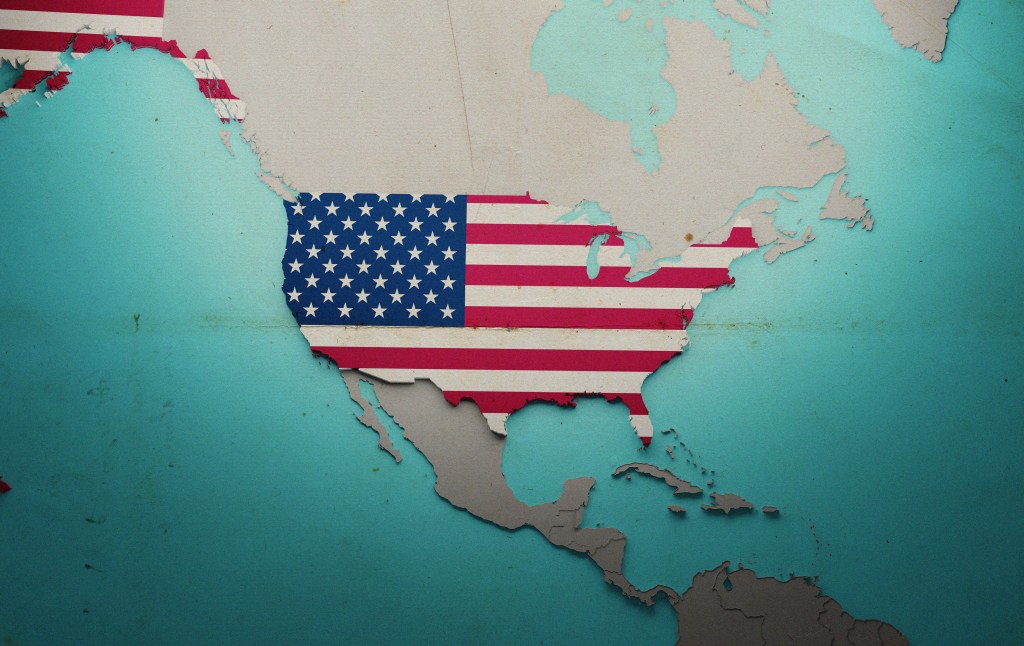
The raid on Venezuelan President Nicolás Maduro was a big surprise. But the absence of foreign interference during the U.S. military’s open buildup in the months leading up it was anything but. For all the Trump administration talks of “restoring American preeminence in the Western Hemisphere,” according to a White House spokesperson, we never lost it in the first place. And if we ever had, knocking off a local dictator, even one as menacing as Maduro, would not do much to restore it. We predominate precisely because no other great power, current or aspiring, can yet hope to challenge us in this hemisphere—not China, Russia, Iran, or any of them together.
Even if they take lower priority, U.S. interests still extend well beyond our backyard. The White House’s new national security strategy reiterates enduring stakes in the Pacific, Europe, and Middle East. The president’s warnings to Iran over its nuclear work, missiles, and now protests underscore this point. But refocusing closer to home makes it harder to defend these overseas interests, most immediately if there are further rounds of direct conflict with Iran: Assembling the Caribbean armada, for instance, entailed pulling U.S. forces from Pacific and Mediterranean duties.
The United States needs allies and partners to fill these growing gaps. But the way we have treated the countries that do the most on this front demonstrates Americans’ underappreciation of the roles our partners play in our own security. Take Israel and Ukraine, for example. Two presidents have shown reluctance to provide Ukraine with what it needs to fight Russia successfully, and some on the right have advanced claims that Ukraine and NATO sought war with Russia. Israel, too, is caricatured as a rogue actor in need of restraint. Its stunning military actions over the past two years are triggering critiques of its newfound “hegemony” in the Middle East—an “imperialism” that will supposedly exacerbate regional conflicts, inflame global energy markets, and sound the death knell of various peace processes. Aside from the personal sympathies of both Joe Biden and Donald Trump, there are pervasive and growing doubts about Israel’s continued salability as a partner on both sides of the aisle, and among the American public.
Misperceiving our partners as overweening, and ourselves as undermined, will be counterproductive. We need our partners to be more powerful, not kept in check, so they can help us “maintain global and regional balances of power to prevent the emergence of dominant adversaries.” Here Trump’s national security strategy is explicit: Our hemispheric predominance depends on us being the only such power anywhere on the planet. Our sphere of influence is exclusive of anyone else attaining an equivalent. As John Mearsheimer argues, “A great power that dominates its own region will be an especially powerful foe that is essentially free to cause trouble in [America’s] backyard.”
America fought major wars to keep Germany and Japan from such predominance, and we waged the Cold War for the same reason. Today, our adversaries openly state similar ambitions, and they work increasingly closely with one another. In the face of these challenges, strong U.S. partnerships help uphold our unique and precious position as the world’s only regional hegemon.
In their strictest definitions, international relations theories posit hegemony as an uncontestable preponderance of military and economic power, an “informal imperial order” that deters any and all would-be challengers, in the words of John Ikenberry. This bar is so high that the United States is the only country to have attained it, anywhere, in nearly 400 years of the Westphalian state system. This required an exceptional, and to date irreplicable, confluence of circumstances.
With the success of Manifest Destiny, we became a continental power, abounding with millions of square miles of natural and human resources. With the success of the Monroe Doctrine, we also became an island power, buffered by oceans that bestowed splendid geographic isolation from Europe’s and Asia’s cockpits of conflict. These informal policies culminated in making America the sole, unmatchable great power in the entire Western Hemisphere by the early 20th century. Seeing Europe encourage and exploit the splitting apart of this nascent behemoth during the Civil War, William Tecumseh Sherman told a Confederate general, “You cannot have peace and division of our country. If the United States submits to division now it will not stop, but will go on until we reap the fate of … eternal war.”
By avoiding that fate, the United States escaped the common lot of other great powers crowded on either end of Eurasia. At the same time, we had to translate very little of our wealth into military strength. This is the true essence of Pax Americana. By 1900, the U.S. population was equal to the rest of the Americas put together, and our gross domestic product, steel production, and oil output each were greater than the second- and third-place countries combined. Yet U.S. armed forces amounted to merely one-fifth the active personnel of the average European great power. Where Paris, Berlin, St. Petersburg, and Tokyo each planned to mobilize dozens of army corps in just weeks, Washington would struggle consistently to put more than a handful of regiments in the field.
Those other great powers maintained strong armed forces precisely because the tyrannies of geography and resources put American-style predominance out of reach. As an island power, but not a continental one, Britain needed the Royal Navy to overawe potential invaders and blockaders. Imperial Japan faced this same problem. As a continental power, but not an island one, Russia and the Soviet Union needed massive armies to shield their vast internal resources from overland invasion. Lacking either predicate for power, Louis XIV’s and Napoleon’s France, and Germany in both world wars, each built potent military machines that failed to conquer their way to supremacy.
Encircled by competitors with far larger resource bases, Israel is inherently far feebler than any island or continental power. It barely cracks the Middle East’s top 10 in terms of area or population and, even with the miracles of “Start-Up Nation,” it is only the region’s third-biggest economy. Per capita wealth, technological prowess, and nuclear arsenals cannot negate this small size and lack of strategic depth that make Israel a “one-bomb country,” in the unnerving words of Iran’s former president. No amount of U.S. defense assistance, however mutually beneficial, can alter this immutable arithmetic of Israel’s ceiling as one of several regional powers. Completely unlike the United States, simple survival requires Israel to convert as much of this relatively meager latent capacity into military strength as possible.
Israel goes to such lengths to maximize its security, not its power, in a Hobbesian Middle East that embodies Sherman’s eternal war among middling states. Kenneth Waltz famously observed how this international anarchy tends to “shape and shove” the states trying to survive in that system. The sharp edges of security competition dissuade and punish bids for hegemony, yet with all their peril and uncertainty, they also produce unintended outcomes.
Put another way, Israel’s military ascendance does not imply any rash desire for predominance, nor any such capability. The Western Hemisphere’s de facto hierarchy of power makes it possible to draw fairly straight lines from America’s policy decisions to regional outcomes, as the Maduro raid shows. The anarchical Middle East is categorically different. The notion of Israel proactively pursuing hegemony is a red herring for the structural factors Waltz describes, and the razor-thin margins for error they create in trying to navigate unexpected, potentially catastrophic threats. Analogously, Ukraine could well emerge with Europe’s strongest military from a war it never sought.
Indeed, Israel’s military triumphs were the result, not the goal, of a conflict that began in 2023 with Hamas’ assault and Hezbollah’s equally sudden opening of a second front. They collapsed Israel’s assumption that deterrence obtained and defense sufficed. Overnight, security seemed vanishingly scarce and, for that reason, all the more urgent, imperative, and difficult to regain. Echoing the guns of August 1914, risks of escalation became highly preferable to absorbing attacks. Thus set in motion, the conflict outran anyone’s control. Compounding fog and friction spread a local Gaza offensive to most of Israel and, by the end, much of Lebanon, Syria, Iraq, Iran, Yemen, and Qatar.
Israel’s wartime victories belie its ambivalent place in the postwar Middle East. Its fragile lattice of latent power was exposed by two years of grueling conflict, evidenced by the continual impact of U.S. political pressure and material assistance on its strategic and operational decision-making. In the war’s early days, two U.S. Navy carrier strike groups arrived off Lebanon’s coast to dissuade Hezbollah, but also Israel, from escalation. Thus compelled to focus on the lesser threat of Hamas, Israel continually found its Gaza campaigns affected by arms embargoes and arm-twisting from Washington, right down to President Trump’s successful insistence on a ceasefire. The same went for Israel’s responses to massive Iranian projectile barrages in spring and fall 2024.
Israel’s most brazen moves highlight this confinement. Hegemony enables America to fight wars “over there,” and thus pay little price for retreating inward when victory proves elusive. By contrast, Israel and Ukraine must expand the frontiers of conflict outward when the frontlines are frozen in their front yard, whether in Gaza or Donbas. Hightailing out of Vietnam or Afghanistan, and never looking back, is a perquisite of immense power. Striking Siberian bomber bases, or targeting Hamas in Tehran and Doha, is audacity begotten by the desperation of existing on anarchy’s bleeding edge.
The fallout from Israel’s audacity further underscores its constraints. Other regional actors are responding by strengthening their own capabilities and seeking new external strength. Iran is rebuilding missiles, reviving proxies, and pursuing Chinese and Russian military assistance. Alongside Saudi Arabia, Qatar and its close ally Turkey each have shown interest in ending Israel’s regional monopoly of U.S.-made, top-of-the-line F-35 combat aircraft. The United States will face no such counterbalancing for whatever we are doing in Venezuela, at least on our side of the globe.
Most Israelis struggle with just how great, and inbuilt, this disparity really is. For years, I’ve taught U.S. strategy to Israeli military officers as they rise from tactical to big-picture responsibilities. Uniformly, they are astounded to learn the yawning difference between what they take for granted—constantly having to guard their intrinsically vulnerable country from larger, hostile neighbors—and what we assume to be our birthright: vast expanses of land, sea, and resources that make security so plentiful and cheap. Growing up in a place where foreign policy is often life or death, Israelis cannot contain their confusion at average Americans’ default indifference to the rest of the world.
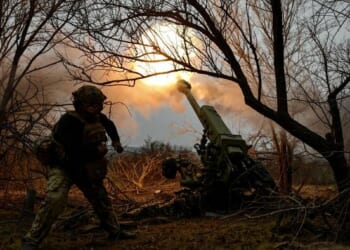
Yet our continued hegemony depends on Israel, Ukraine, Taiwan, and others whose geostrategic situations diverge most sharply from our own. America’s privilege to convert so little of our latent power to armed might depends on partners wringing every possible drop of military power out of their limited resources. Making our partners stronger does not beget their ostensible recklessness or prod them to upset delicate balances of power. Instead, their tough-willed pursuit of basic security hinders the hegemonic ambitions of our shared adversaries. This was true of the global coalitions that won the world wars, and of our alliances blocking communism in East Asia and Central Europe. Israel’s degradation of Iranian missile and nuclear arsenals, and its facilitation of follow-on U.S. strikes, is the latest shining example. Ukraine’s dogged defense, and its developing defense industry, have set back Vladimir Putin’s dream of renewed dominion in Europe and destroyed more Russian combat power than the wildest dreams of any NATO planner. Continuing to hold that line will require our European allies to act more like Israel or Ukraine. Armed to the teeth and prepared to fight for its life, Taiwan is a similar “hedgehog” that literally sits athwart China’s ambitions to dominate the Western Pacific.
Now, short of the best imaginable outcome for ongoing internal protests, Iran’s regime could redouble its military threats to the Middle East and deepen China and Russia ties, especially if military hardliners exploit unrest to consolidate control. Sensible planning suggests Israel’s abiding value as an anchor for U.S. regional interests—all the more so as America remains involved in brinkmanship, and potentially further conflict, with Iran.
China, Russia, and Iran desperately want daylight between the United States and our partners. The new “Donroe Doctrine,” and whatever succeeds it, cannot treat these relationships as extraneous to our core security. Washington needs to signal its continued support for Israel, Ukraine, and Taiwan, even if that requires adapting the partnerships to changing strategic circumstances. Two years of war certainly have impacted the U.S.-Israel relationship, at times creating new tensions. But in crisis there is opportunity. Israel’s wartime insight to make its defense industry more resilient, and expand its base of latent power, supports Trump’s official priority that partners expand their capacity and assume greater roles for collective defense. If part of a plan to align bilateral production, supply chains, and technology development, this could enhance U.S.-led deterrence and warfighting. Other once-unthinkable ideas, like using Israeli airbases to boost the U.S. military’s global mobility, strengthen our Middle East force structure and readiness, and bolster Israel’s freedom of action, are becoming equally attractive.
In a recent study of America’s rise to hegemony, Sean Mirski describes how it “freed the United States to leave the hemisphere behind and to become a global superpower, invested in the security and stability of the world at large.” That investment has paid great dividends. Our partners remain crucial to its success, not least in terms of the basic protections Americans easily assume away.