I’m not sure what to call the new era we seem to be entering. But I am sure it will make people poorer.
Let’s start with some basics. Imagine you inherit a thriving department store chain. Rather than listen to experts on consumer trends, supply-chain logistics, human resources, etc., you instead opt to go with your gut. Rather than follow market research or anything like that, you prefer to just hire your friends and do business with vendors who flatter you or sell stuff you think is cool. Under such a “system” you might make some good business decisions, but odds are very strong that you’ll more often make bad ones. The rep from the Pet Rock supplier who gives you a “World’s Greatest Businessman” award gets his products in the store window.
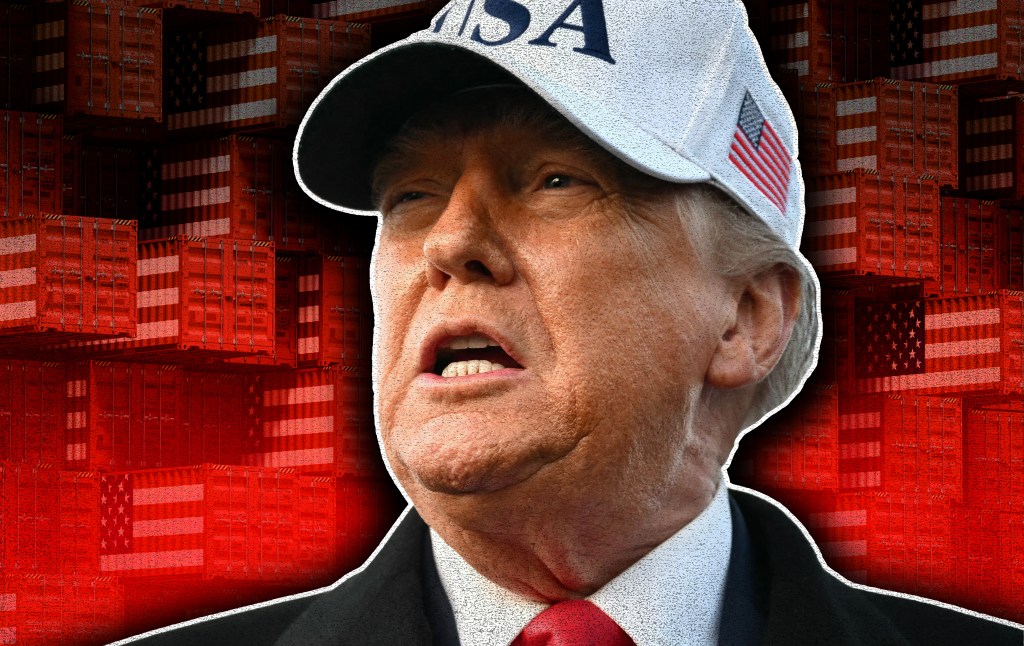
I chose a department store for this analogy because that’s precisely how President Donald Trump thinks about international trade, and the American economy in general. He sees America like “a department store, and we set the price. I meet with the companies, and then I set a fair price, what I consider to be a fair price.” That’s what tariffs are in Trump’s mind, even though they are mostly paid for by American consumers.
The problem, beyond the basic economic illiteracy inherent in the analogy, is that Trump keeps changing the “price” based on non-economic considerations. To name just the most recent example (of many), the president declared over the weekend that he’ll tear up trade deals he made with eight European allies and levy tariffs on their goods until they acquiesce to his demands for Greenland.
Now, in almost every business, there’s a little favoritism—giving a job or promotion to a nephew, offering a lucrative contract to a friend. But it’s understood that these are deviations from sound business practices. For Trump, sound business practices are the deviation from his policy of favoritism.
I should note that there are other forms of more explicitly ideological favoritism. For decades, many on the left have championed policies that prioritize social or political goals over sound economics. They’ve gone by different labels, including “social responsibility,” which morphed into things like ESG—environmental, social, and governance investing—and DEI. But the idea is always the same: The government should impose standards and policies based on something other than profit-seeking and shareholder value. This is not always wrong, either. Child labor and worker safety laws, for example, are worth the costs they impose.
But such examples are outnumbered by countless other laws and regulations that replace economic decision-making with political expediency. Populism has historically been one of the main drivers of such distortions. Hence, it should surprise no one that Trump and Sen. Elizabeth Warren see eye to eye on capping credit card interest rates.
What differentiates Warren from Trump is that she’s a traditional progressive populist ideologue arguing from a body of thought that exists as much on her bookshelf as in her own head. Trump’s approach resides entirely in his gut.
As a free market guy, I don’t trust Warren’s bookshelf or Trump’s gut.
Which gets us to why this new era—let’s call it the postglobalist era—will make us poorer.
Across the world, corporations large and small are making business decisions based upon geopolitical and plain old political calculations. Nowhere is this more obvious than in international trade. If you think tariffs can rise at a moment’s notice because the president of the United States woke up on the wrong side of the bed, you’re going to hedge against that risk. Firms around the world are reorganizing their supply chains to become less reliant on the American market. Almost by definition, these moves are not maximally efficient. Less efficiency equals less productivity. Less productivity equals less wealth creation and growth.
But it’s also true in other ways. If you know that the department store’s new boss likes gold, you’re going to paint more of your Pet Rocks gold. If the management insists on taking partial ownership of your company—something Trump has done more than any president in modern history—you’re going to make defensive decisions aimed at not pissing them off. As The Economist reports, everywhere you look, multinational companies are making decisions based on geopolitical considerations. “When companies are forced to allocate capital on geopolitical lines, they become less productive, reducing prosperity for all.”
For nearly my entire adult life, American conservatives understood this basic point and argued against excessive political or ideological distortions of markets. Remember all that talk about “picking winners and losers” and “crony capitalism” in the Obama era?
But for some reason, many conservatives think it’s fine to outsource economic decision-making to a single man. And most of us will be poorer for it.