MOSUL, Iraq—Ali al-Baroodi is treating me to coffee in the souq. The old bazaar in Mosul, Iraq’s second largest city, dates to the Ottoman era, when the trade routes through town meant brisk business. On a Saturday afternoon Souq Bab al-Saray reeks of fish, raw meat, and spices. Shouting is the only way to rival the anvil blows and the hiss as forgers scrape steel in the winding passageways known as blacksmiths’ alley.
We make several turns, dodging handcarts to reach a wide arcade. At Sarhan Coffee, men fill benches wedged between bulging sacks of beans, sipping. A sign above the doorway dates the shop to 1897.
Rumor has it that Sarhan’s owner keeps in his back office a mortar and pestle his forebears used to grind coffee beans. It had to be hauled from the rubble following a U.S.-led battle to liberate the city from Islamic State militants in 2016-17. Just one chapter in the Iraq War, the ISIS capture of the city forced more than 1 million people to flee Mosul. Its liberation claimed at least 10,000 civilian lives. Now a prototype for places like Kyiv and Gaza City, where civilians in their homes have endured years of punishing assaults, Mosul is the oldest and one of the largest cities to stage a comeback from the kind of urban warfare suddenly commonplace in the 21st century. Every day that Sarhan opens, it proves that what’s old can be made new again.
Baroodi, a University of Mosul English professor and professional photographer, who has survived two decades full of war in Mosul, orders two Arabic coffees and waits. The traditional brew is made according to an old family recipe, a secret, he says. Our barista heats it to a dark foam just below boiling and pours from the open pot, an ibrik, into paper cups.
What I taste, a dark but not bitter roast hinting of cardamom and ginger, is a world of its own, rich with the heat and the spice that for centuries defined life in Mosul. If you can taste a place in a cup of coffee, Sarhan proves that in Mosul what’s new can be made old again, too.
Recall that Mosul during the U.S. war in Iraq became the headquarters for Islamic insurgency, where Iraqis were most likely to be kidnapped, car-bombed, or outright killed. It was also where American forces endured some of their worst mass-casualty incidents.
Recall that the Islamic State captured the city in 2014, two years after U.S. combat forces withdrew. ISIS carried out genocide against Yazidis and threatened Christians and other non-Muslims with forcible conversion or death. From the pulpit of Mosul’s grand mosque, ISIS leader Abu Bakr al-Baghdadi declared himself leader of a global caliphate and summoned supporters worldwide to join his campaign in Syria and Iraq. ISIS-led terrorism fed war and a global refugee crisis the following year. In Mosul the group’s reign of terror lasted three years.
Recall that U.S. forces returned to lead a coalition that liberated Mosul in 2017—nine months of nearly nonstop airstrikes and house-to-house combat that climaxed in the heart of the Old City. The fighting destroyed its historic homes, some of the oldest churches, mosques, and archaeological sites in the world, plus all five bridges across the Tigris. ISIS retreated to Syria, where its leader was killed two years later.
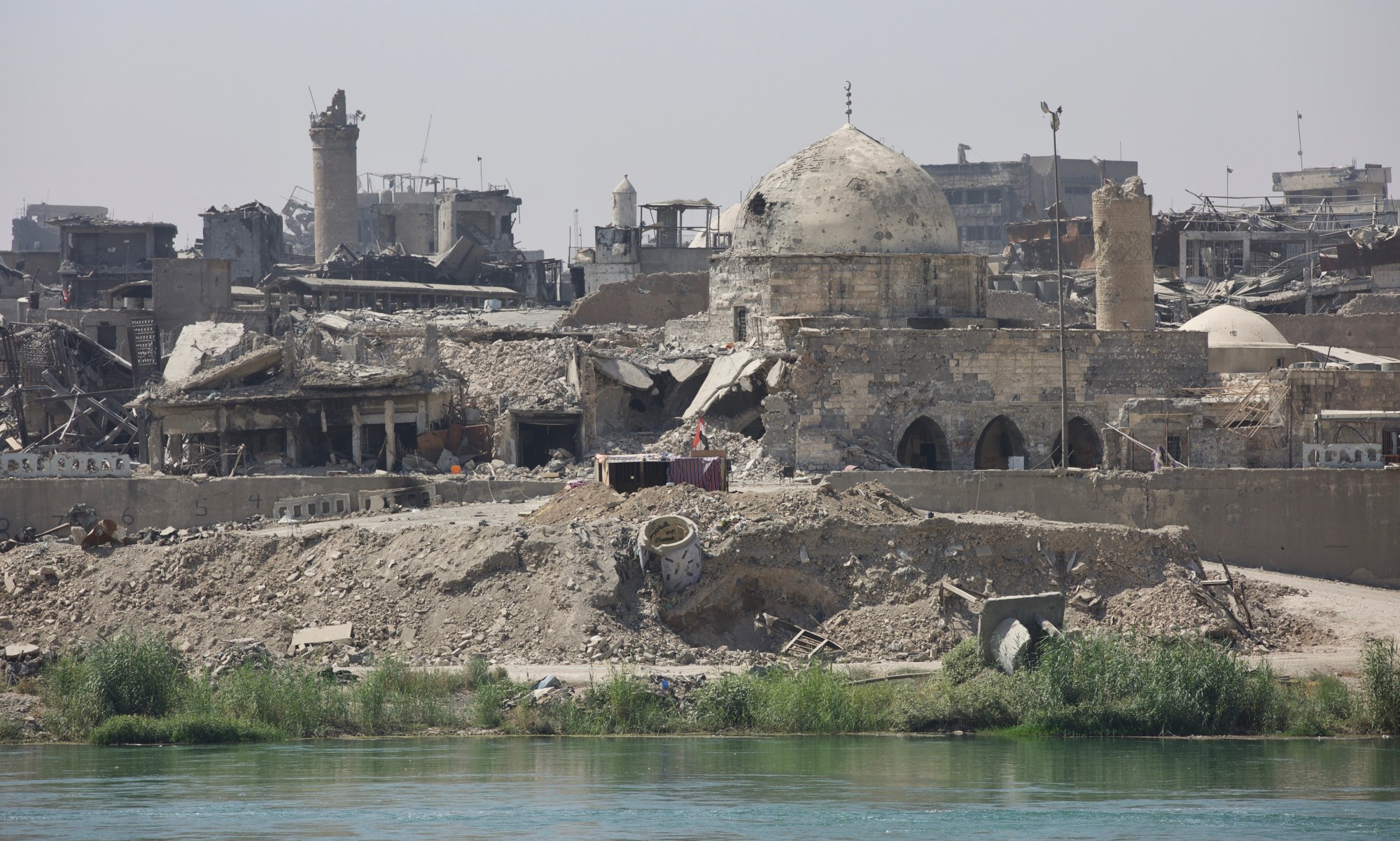
Mosul was once the seat of the Assyrian empire, the site of ancient Nineveh, a hub for Silk Road trade, and home to large populations of Arabs, Kurds, Christians, Jews, Turkomans, Yazidis, and others. In 2017 it sat virtually empty, a carcass.
Other wars have succeeded at ethnic cleansing, but in modern times only the Islamic State pulled off an ethnic and cultural cleansing. The layers of history, and the diversity of the population were gone. So too its libraries and bookshops, its art and music, and the Old City shops where Iraqis came to trade gold or find the best cheeses and fish.
The sights of the city’s comeback, therefore, are the stuff of dreams. Mosul has resurged to nearly its estimated pre-war population, with 1.9 million people, according to 2024 census figures. The alleyways of the souq, bombed by both sides in the 2017 war, sit under new canopied arcades and give onto streets full of traffic.
As construction continues, young men with hard hats and tool belts head off to lunch. New landscaping lines the courtyards of rebuilt mosques and churches. By night green lights of rebuilt minarets flicker over the skyline, the sounds of families on evening picnics drift over the Tigris, and the doors open for guests at the new Ramada Plaza Hotel along a reconstructed corniche.
Few leaders plan for peace when trying to win a war. Cleanup itself took years, and in that time Mosul residents learned that local initiatives gave them a stake in their community again. Also, they saw the work was too great to succeed without large-scale foreign donors.
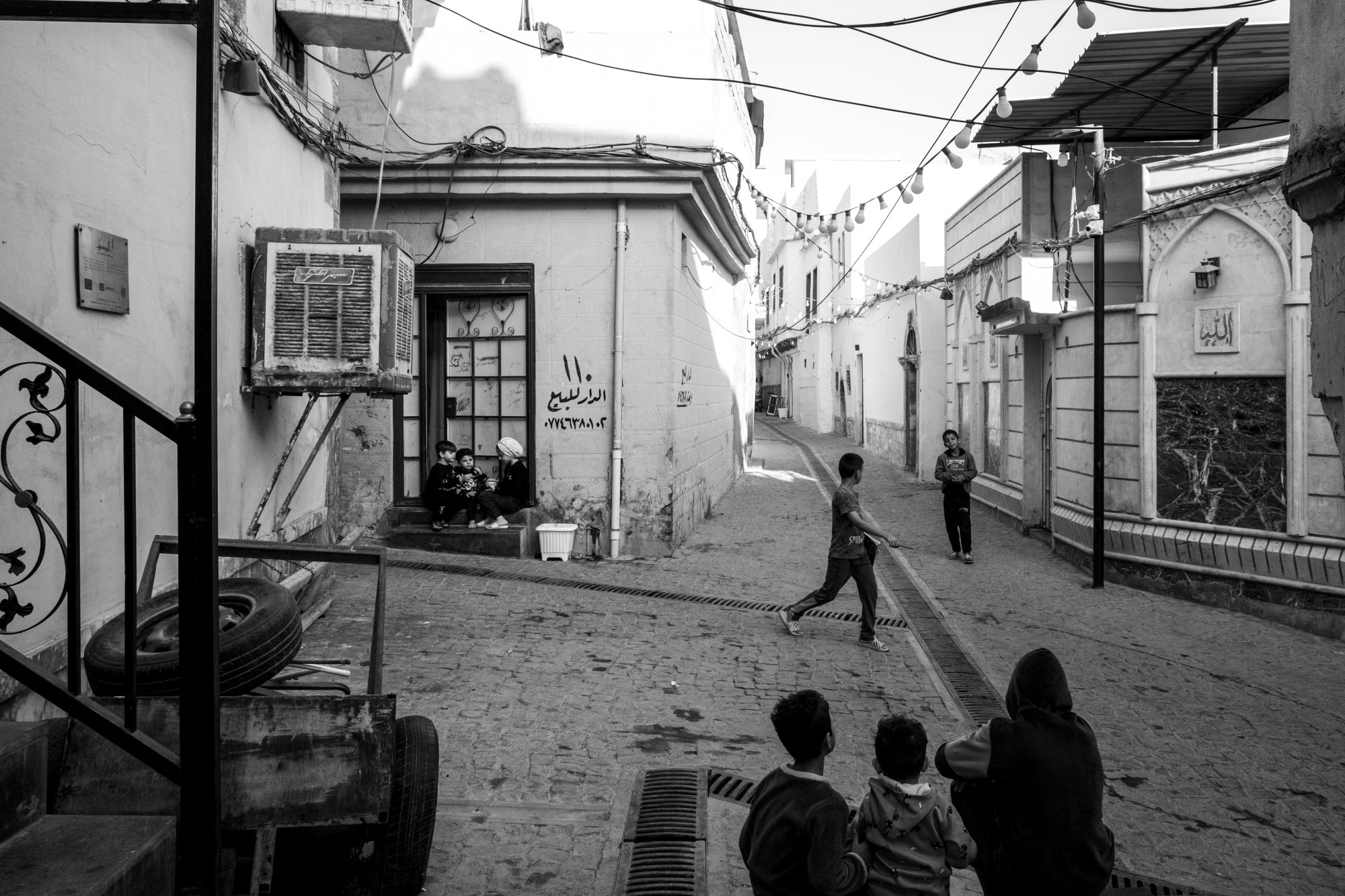
Baroodi has known Mosul at its worst. His family survived food shortages in the Saddam Hussein era, plus U.S. occupation and car bombings, all before ISIS occupation, when it was hard to avoid witnessing public executions and punishments.
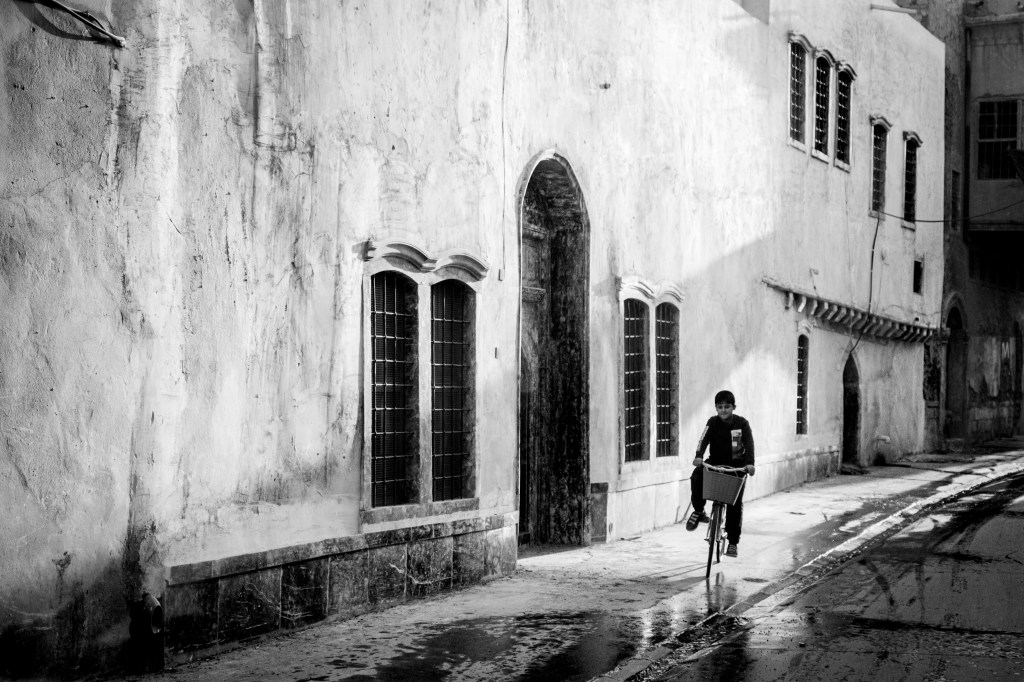
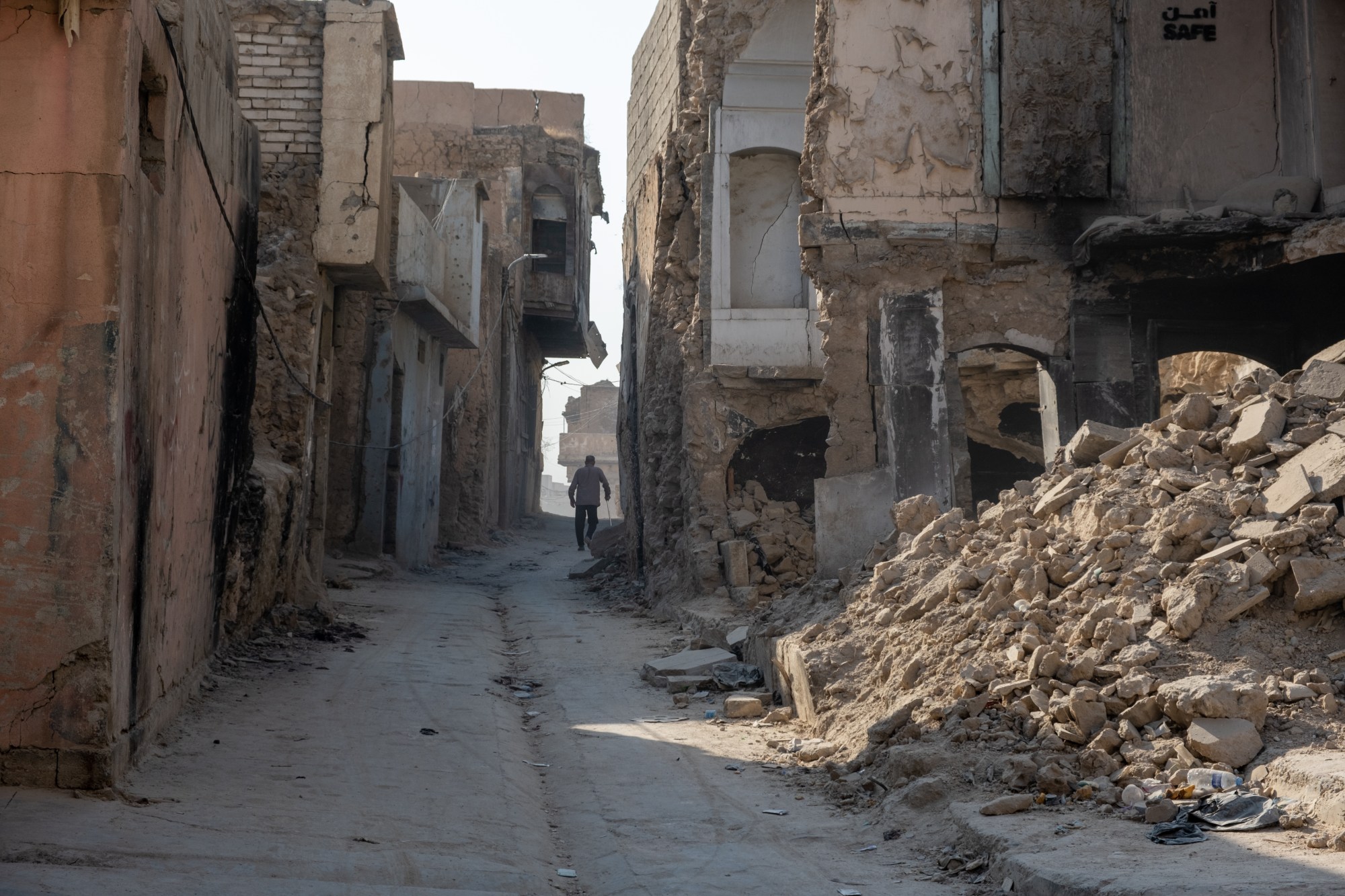
As fighting ended in 2017, Baroodi’s home was badly damaged and his family had no water. Much of the cleanup, including removal of dead bodies, was left to locals. One day he bicycled to the old bazaar to find “no bazaar at all. The bustling place we once struggled to walk without an elbow fight was now a heap of rubble.”
Despite the destruction and an unearthly silence, he followed the voices of the blacksmiths at work clearing debris. They would be among the first in the souq to restart their shops and make tools to help others begin again.
Family-owned businesses in the souq returned to their former spots, often where owners first learned the trade from their parents or grandparents. The souq’s prominent business clans came together to underwrite much of the cost. After the years of ISIS ordering many to close, most were eager to reopen.
We finish our coffees and move to the adjoining fish market, watching a man speed-gutting carp. Young helpers hose down blood pooling on the concrete. Veiled women eye the day’s catches, glistening in long rows on tables or swimming in tanks. On a balcony above the tables, fire pits glow as they grill masgouf, a butterflied and slow-roasted carp (that’s delicious). The dish, considered a national specialty, is a barometer of the city’s well-being.
Early in the Iraq War, Muslim clerics issued a fatwa against consuming wild carp, so contaminated were the Tigris and Euphrates with blood from fighting and human remains. Now Iraqis flock on the weekends to masgouf cookouts, the rivers having been declared clean, and most commercial carp are farmed from canals adjoining the Tigris.
Baroodi likes to bring visitors to the souq first because the signs of revival are hard to miss.
“Here you see, and hear, the determination of Moslawis to succeed,” he says. “What matters most is that people learn to do things, how to build from ashes, with patience, perseverance.” He pauses, then adds, “I’m not trying to paint a rosy picture, but we are coping. We are moving forward.”
What makes recovery of the old market unique is “not that it followed some master plan, but that it largely didn’t,” says Yousif Al-Daffaie, a researcher in architecture at the U.K.’s Falmouth University who has chronicled the rebirth of Bab al-Saray. “The rebuilding was driven by individual shop owners and craft communities who returned out of economic necessity, familiarity, and attachment to place.”
Al-Daffaie believes that’s a model for cities in postwar Syria, Gaza, or Ukraine. Small, everyday economic activities can be catalysts for growth, he said. “Mosul suggests that recovery does not have to wait for comprehensive political settlements or large donor frameworks.”
Yet local initiatives alone won’t sustain recovery in so blighted a landscape. It took months to clear central Mosul of dead bodies and unexploded ordnance. Then two years after liberation, UNESCO partnered with the UAE government, European Union, and some non-governmental organizations in a $115 million project to revive historic landmarks.
“The Old City was in rubble and it was a ghost city,” said Maria Acetoso, the UNESCO preservation architect and senior project manager in Iraq. A war zone veteran, she arrived in 2019. “The situation was horrible, horrible,” she recalled.
Acetoso has learned how important it is to connect with the community before leading new projects.
“There is not one right way to approach the reconstruction,” she said. “We have tried not to impose our way of looking at things, but rather to understand in terms of overall reconstruction strategy the expectation of the local community.”
Working to restore community, especially one traumatized by ISIS brutality, is as important as rebuilding structures. The Old City was a charged atmosphere where ISIS committed atrocities and terrorized the population. For Acetoso, it was a priority to hire local engineers and craftsmen, Christians and Muslims.
“When countries are affected by terrorist groups that weaponize religion, there is a sort of fear and discrimination that develops at the international level of these projects,” she said. “It was important to work against that, in particular the inclination to start looking at Muslims as all terrorists, which is absolutely not true.”
At first Muslim workers didn’t want to work on church grounds, she said, “but it changed over time.” Christian workers also had to be convinced, once several churches had been completed, to stay on the job at the al-Nouri mosque complex, which reopened in early 2025.
Along the way site leaders drew specialty craftsmen from the nearby souq, including blacksmiths, carpenters, and those trained to work with alabaster, a stone used only in the churches and a traditional craft for Christians.
“It became a cohesive social environment,” said Acetoso, and one that was slowly reconstructing Mosul’s former diversity. The religious sites, once flashpoints, now spurred hope.
When it came time to take on al-Hadba, the iconic “leaning minaret” that adjoins Al Nouri Mosque, even her best engineers did not believe it could be rebuilt, said Acetoso.
The 150-foot tower, nicknamed “the hunchback” by 15th-century travel scholar Ibn Battuta, had been leaning for centuries. ISIS blew it up in 2017.
UNESCO surveyed Iraqis, including Mosul residents still living in tent camps, and discovered residents overwhelmingly wanted the minaret built back as it was before, leaning. Then the engineers said it couldn’t be done.
Acetoso asked them to try. Workers retrieved 45,000 original bricks from the site. They used digital modeling and old records to calculate the tilt. As it went up, Acetoso saw workers and bystanders transformed to see their skyline again look like it always had, to see something so familiar and distinctly old in the new Mosul. “It radically changed everything,” she said. “There was a common joy.”
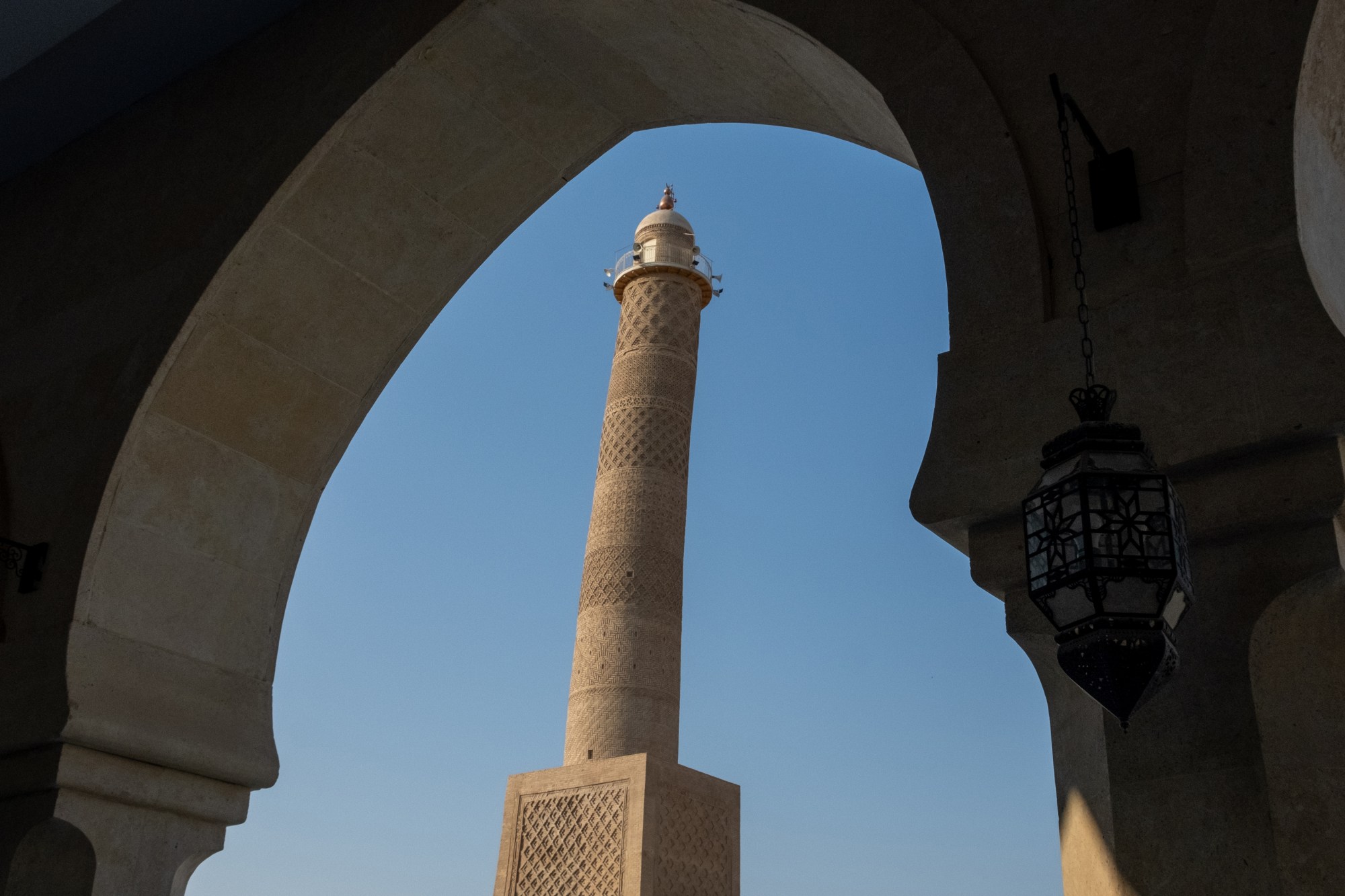
Reconstructing buildings has proved speedier than rebuilding community. When I visited the Al Nouri complex in late 2025, men and women mingled in and out of the hall, shedding shoes and taking carpets to pray where once ISIS leader Baghdadi declared his caliphate.
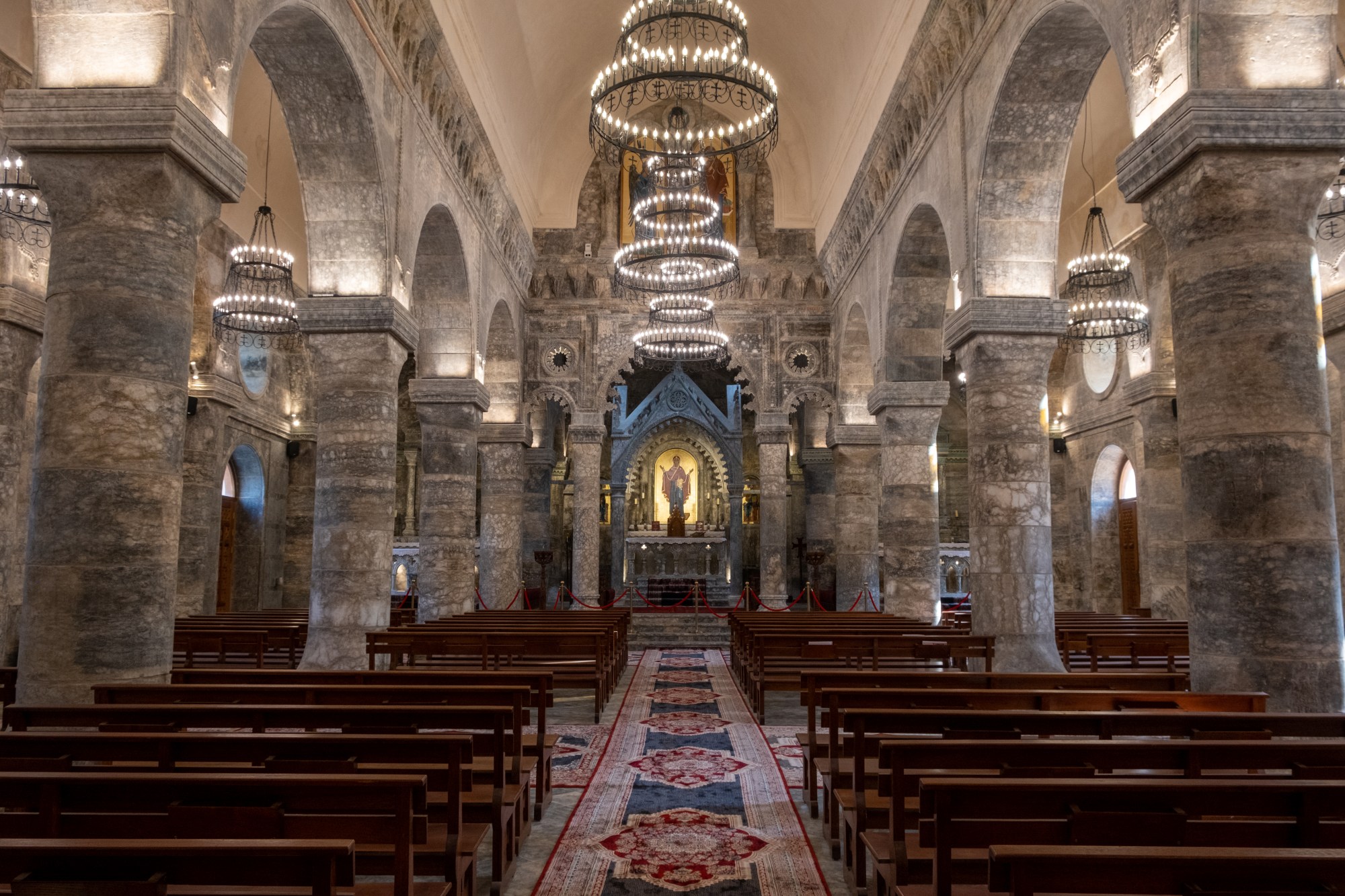
A short walk away, four churches have been completed, including Mar Thoma, the seventh century Syriac Orthodox church used as a prison by ISIS. It reopened in October 2025, and two more churches are under restoration in 2026.
But the psychology around the churches is different. The Christian population, forced to flee en masse, is slow to return. Many were killed, including prominent clergy, and Christians distrust security forces.
“Just 65 families at most have come back,” said Najeeb Michael , the Chaldean Catholic archbishop of Mosul. “Still the Christians are afraid, even though it’s very peaceful.”
Michael made a name for himself saving thousands of ancient documents out of church libraries in the Old City just before ISIS captured it. Those manuscripts are now stored permanently in an underground vault in Erbil, 50 miles away, that was funded in part by USAID.ar
One reason he rescued documents, Michael said, is that he trusts God to fill Mosul with Christians again. “Terrorist groups cannot stop this history.”
“It’s not too late, but it’s getting late in the hour to revive the Christian community in Iraq,” said Knox Thames, a senior fellow at Pepperdine University who worked as the State Department’s special adviser for religious minorities during the ISIS occupation in Iraq.
Most Christians from Mosul now live in other parts of Iraq, or have emigrated to Australia or Canada. With doors closing for asylum seekers around the world, Thames believes, the Iraqi government can do more to bring them back. One way is to recruit Christians into local police and militias, something he said previous U.S. State Department officials brought up regularly, and the Iraqi government has been “at best lukewarm and often hostile to doing.”
Recreating houses of worship helps too. “Religious freedom is inextricably intertwined with sacred sites,” Thames said. “ISIS understood that, better in some ways than we do.”
U.S. funding for development in Iraq helped in the immediate aftermath to rebuild bridges and roads, plus restore water, electricity, and sanitation. With last year’s cuts to USAID programming, “all the USAID money is done, it’s over,” said Thames. “The only [government] funder left in Mosul is the EU. It’s disappointing and discouraging because we have done so much to restore these communities, communities we protected from ISIS, and we’ve walked away from it.”
Back on the streets of the Old City, I join Ali al-Baroodi to inspect the historic homes still under construction. UNESCO has rebuilt 124 homes, many now inhabited in the tight web of streets. Yet other neighborhoods lie in ruins, as though war ended only yesterday. Around one turn children run past us, then a lone motorcyclist weaves his way through piles of wreckage. An older gentleman with a cane slowly walks toward us beneath a broken archway.
Abdullah was born in the Old City, he says, when it was full of Muslims and Christians: “People used to come here from near and far, and they used to be happy.” He points to an empty front stoop. “Our friends sat here, and they were like part of our bodies, and we want them to come back and live here,” he says.
If the noise of the souq is a sign of hope, says Baroodi, “the super silence of these streets is our huge problem. After years of occupation, years of liberation, and years of reconstruction, we need reconnection to the world.”
What Moslawis want most of all is a heritage that’s not only rebuilt but one they can share.