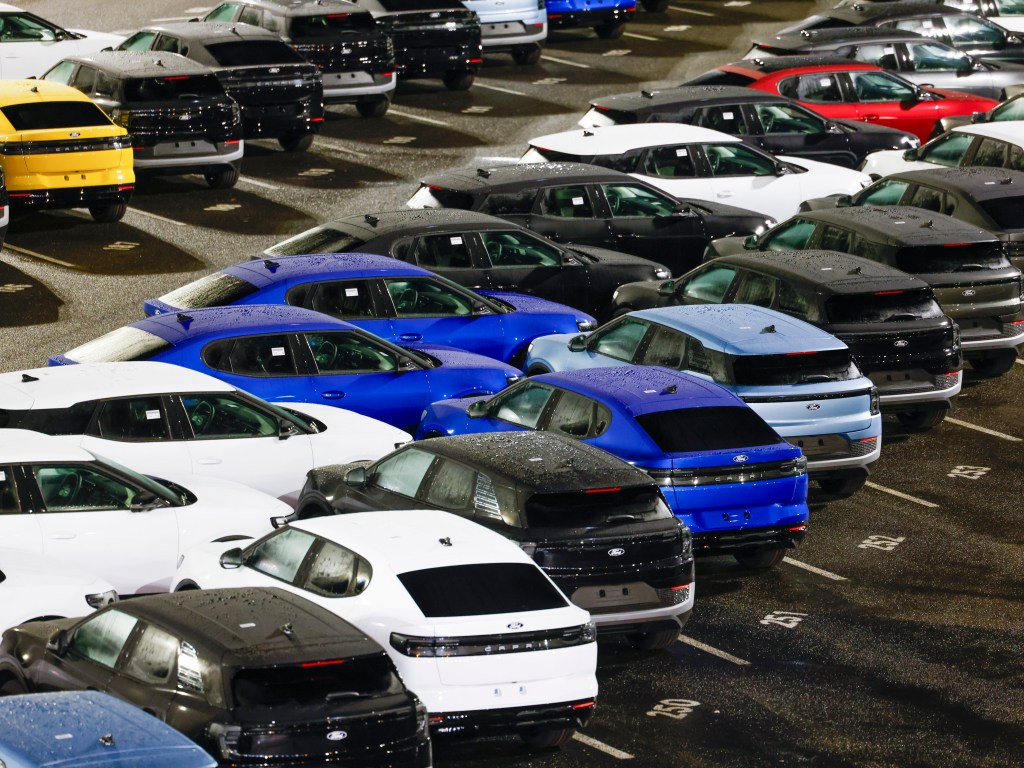

Welcome to Dispatch Energy! There has been a lot of energy news lately, and something that got less attention than the snatch-and-grab of Venezuelan dictator Nicolás Maduro was Ford’s multibillion-dollar pullback from electric vehicle (EV) investments, along with its decision to kill many EV models (including the flagship electric F-150). Unsurprisingly, there are many analysts who blame President Donald Trump, claiming that his decision to end EV tax credits is killing the market. Yet despite declining EV investment in the U.S., others insist there is a huge unmet demand for EVs in the country.
Both arguments are overly simplistic, but there is a lesson for policymakers here: No amount of political preference for an outcome can overcome economic reality.
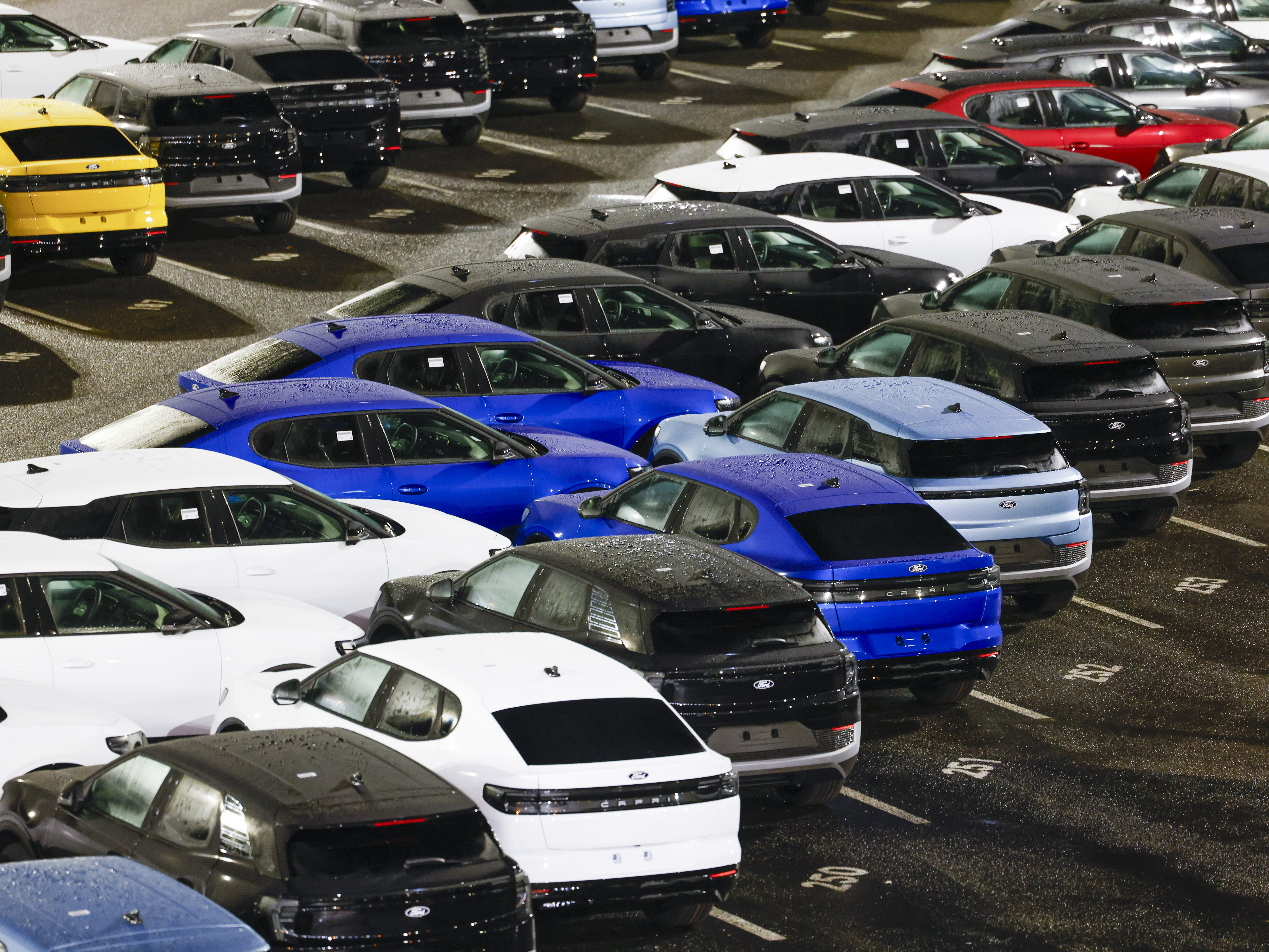
Hitting the Brakes on EVs
An objective look at EV data is in order. The truth is, EVs are doing pretty well in the U.S. market. Last year, 7.8 percent of new car sales were EVs, compared to 1.7 percent in 2020. That is certainly strong growth. Of course, however, proponents of EVs aren’t usually invested in them through the lens of enhancing consumer options—they’re focused on their decarbonization potential. On that front, EVs are not doing so great.
Transportation makes up the largest share of U.S. greenhouse gas emissions at 28 percent, and light-duty vehicles (cars, SUVs, pickup trucks) account for the largest share of transportation emissions at 57 percent. Needless to say, cutting these emissions is a central part of achieving many ambitious climate targets, and given how long people hold onto their vehicles, climate hawks feel there is an urgent need to shift to EVs. In this vein, former President Joe Biden pledged in 2021 that EVs would comprise 50 percent of new vehicle sales by 2030 (and pursued regulations to that effect). Clearly, there is a significant gap here between reality and political ambition.
It would be one thing if EV sales were accelerating and the Biden-era benchmark was achievable, but sales are actually slowing. While there was much ado about surging EV sales late last year, that was driven by the expiration of the $7,500 EV tax credit and customers rushing to buy vehicles within the eligible window. The economic phenomenon of shifting sales forward to capture a subsidy is an obvious one, but it also raises questions about the non-subsidized baseline for EV sales going forward.
Simply, the promised electrification of cars in the United States is not panning out as promised. From a basic math and economic perspective, there are three explanations: 1) Politicians were unrealistic in their expectations; 2) customers may not prefer EVs as expected; or 3) both.
Just because politicians like it doesn’t mean it’s practical.
As readers of this newsletter know well, politicians have a steady history of overpromising on … well, everything. When all you have is a hammer, everything looks like a nail, and politicians are naturally inclined to think that the policies they can implement are sure to work—something called optimism bias. A World Bank study found that government-funded projects run over budget 9 out of 10 times, with average cost overruns of 20 to 45 percent depending on the project type. The same biases that lead politicians to believe their projects will be on time and on budget influence preferences for some policies over others. In the case of transportation decarbonization, there’s only one currently commercially viable option: electrification. Politicians optimistically believe that electrification is simple and easy because they have no alternatives; acknowledging that it is not practical to quickly, easily, and cheaply electrify transportation means admitting it is not feasible to decarbonize in the near term.
There is another reason politicians are so wedded to the push for vehicle electrification: It’s the predominant option in net-zero greenhouse gas scenarios, as opposed to alternatives like low-carbon liquid fuels or using carbon capture to offset emissions. A meta-analysis of 177 net-zero studies found that electrification was the overwhelmingly favored policy solution; the International Energy Agency’s net-zero report assumed that 86 percent of cars globally would have to be electric by 2050, and the International Renewable Energy Agency similarly assumed 88 percent in their own analysis.
Why is there so much reliance on electrification in these outlooks? Because analysts must assume electrification is possible to achieve the predetermined emission targets of their scenarios. Policy consequently became circular, with politicians favoring electrification because it was the prescribed solution of net-zero analyses, and with additional policy support for electrification, it further became the preferred decarbonization option in those studies.
Breaking new ground: Ending public land ‘ping-pong’
In 2023, the Biden administration issued Public Land Order 7917, locking away the world’s largest untapped copper-nickel deposit in Minnesota. While Congress can overturn executive agency regulations via the Congressional Review Act, the Department of the Interior claimed that it didn’t apply to public land orders. Until now.
By submitting the order to Congress in early January, the Trump administration opened the door to a historic shift in federal land management.
Why isn’t everyone driving an EV yet?
But the electrification push ran smack into a hard reality: Americans just don’t seem to want EVs all that much. Don’t misunderstand me; I like EVs—I think it’s great that we have new vehicle options that are cleaner and fit some customers’ needs better than conventional vehicles. Meeting many daily driving needs is much cheaper with an EV. But in the world of climate policy and analysis, the overriding assumption is that there is no fundamental difference between an internal combustion engine vehicle (ICEV) and an EV, and that’s just not true.
The biggest reason for political optimism surrounding EVs was that they were getting cheaper. And because politicians struggle to appreciate complex analyses, it is simpler to assume that EVs and ICEVs are functionally the same, and once EVs are cheaper than ICEVs, Americans will simply switch over. As it turns out, however, consumers’ vehicle purchase choices involve a lot more than cost.
For example, one analysis found that of the people who bought EVs in California between 2015 and 2019, about 18 percent reverted to ICEVs. Among EV owners, two separate studies (one looking at electricity usage, another at odometer readings) found that people do not drive them nearly as much as expected. These are significant findings because they contradict the narrative that people will replace their polluting cars with clean ones. Instead, it seems, EVs are often a secondary vehicle for wealthy households.
The issues preventing a broader EV uptake are numerous. Despite EVs theoretically costing less to maintain and own than ICEVs, Tesla ranked dead last in used-vehicle reliability last year. While rapid charging is theoretically available to drivers, 1 in 5 public EV chargers are broken. And even though EVs may be good for 99 percent of daily driving tasks, people tend to buy cars based on their rarer needs, and range anxiety remains a big impediment to EV adoption. (Who, after all, wants to spend an hour charging their car at the halfway point of their six-hour trek to Thanksgiving?) Add to that the fact that the owners of older EVs may need to spend $5,000 to $21,000 to replace their batteries outside their warranty period, and the reluctance of customers to switch over becomes clear.
When government meddling fails.
What, then, is a government official to do when the market doesn’t agree with their preferred course of action? Mandate that the market do what they want, of course. The Biden administration in 2024 finalized a de facto EV mandate for new vehicle sales by setting strict emission caps for vehicles, and, in an almost impressive example of government accounting magic, argued that the regulation was virtually costless because any increase in vehicle costs would be offset by the Inflation Reduction Act’s EV subsidies. It should be noted that when Congress passed those subsidies, they were expected to cost about $7.5 billion, but with the magic of regulation, the former president was able to increase that subsidy to $180 billion. And of course, a de facto mandate to buy a subsidized product necessarily increases the cost of the subsidy to the public.
However, no amount of rhetoric from politicians can change how people feel. Rising vehicle prices, disappointing EV options and charger buildout, and general dissatisfaction with “Bidenomics” led to the demise of the EV mandate and the IRA’s EV subsidies. Trump and congressional Republicans may have been the ones to pull the trigger, but the truth is this was just a reflection of shifting American attitudes on all forms of climate subsidies.
The lesson here is that a policymaker working on any issue needs to be able to keep their biases in check and recognize that analytical limitations don’t turn bad policy into good. Basic economics tell us that competition and consumer choice drive innovation and improvement, and under those conditions, I have every confidence that EVs will flourish, even if they don’t rise to the level of deployment that climate hawks would prefer. On the other hand, attempts to heap subsidies and mandates to turn the tide of economic forces are like trying to turn a container ship with a paddle oar.
It was a climate policy mistake to assume that EV cost reduction and uptake would comport with idealized scenarios, and if politicians care about decarbonization, they shouldn’t be putting all their eggs (and subsidies) in the EV basket. Instead, they should focus on the nuts and bolts of good economic policy, allow competition and the market to drive innovation, and value outcomes instead of mandating solutions.
Policy Watch
- With a major permitting reform bill, the SPEED Act, passing the House of Representatives in December, the Senate is now taking up the issue. Next week, the Senate Committee on Environment and Public Works will hold a hearing on permitting reform to debate what priorities they would consider in a Senate-led bill. It is not yet known if the Senate will advance its own bill, adopt the House’s SPEED Act, or attach provisions to must-pass legislation.
- PJM, the grid operator for the mid-Atlantic United States, may hold an auction to secure more capacity for large loads. Last year, the grid operator’s capacity auction fell short of its reliability target by 6.6 gigawatts, prompting a proposed revision to its procedure that will enable large load customers (e.g., data centers) that secure their own generation to expeditiously interconnect to the grid. This development coincided with a White House-organized meeting of governors from PJM states, which resulted in a “statement of principles” urging changes to how the grid operator secures capacity. How PJM remedies the generation capacity shortfall may have implications for the future dynamic of how the federal government and grid operators coordinate to bring online more power generation for data centers.
Innovation Spotlight
- A second life for retired nuclear warships? A Texas power developer is requesting that the federal government repurpose reactors from naval ships to power data centers. Proponents of the action argue that it would be an economical means to secure reliable nuclear power for data centers. However, commercial nuclear power is licensed by the Nuclear Regulatory Commission, and it is unclear whether there is a viable regulatory pathway for repurposing the military’s nuclear reactors for civilian use.
Further Reading
- The almost-mythical Apollo program has long been touted by Washington bureaucrats as evidence of the feats government can achieve. But as Dispatch alumnus Will Rinehart found in his deep-dive on Apollo, the initiative is often misunderstood in the rush to justify today’s costly government-led innovation programs. For Exformation, Rinehart outlines the reasons behind Apollo’s success: a healthy dose of luck, and effective management changes that helped the project overcome early delays. “Probably the most surprising thing I learned is that Apollo came exceptionally close to missing the decade deadline. By 1963, Apollo was in trouble and schedules were slipping, so much so that estimates put the earliest moon landing in 1971. So George Mueller (pronounced Miller) was brought in to manage it all. More than anyone else, Mueller made Apollo successful,” he wrote. “The uncomfortable implication of all this is that Apollo doesn’t support many of the arguments it’s routinely used to make. Money cannot solve coordination problems. Scientific uncertainty cannot be scheduled away by political will. The government cannot replace private industry.”
Pacific Legal Foundation has been fighting for freedom since 1973. We sue the government on behalf of farmers, fishermen, teachers, nurses, and entrepreneurs—Americans from every corner of the country and from every walk of life—and we win.