You’re reading Dispatch Faith, our weekly newsletter exploring the biggest stories in religion and faith. To unlock all of our stories, podcasts, and community benefits—as well as our newest feature, Dispatch Voiced, which allows you to listen to our written stories in your own podcast feed—join The Dispatch as a paying member.
During lunch earlier this week, a friend and I discussed the difficulty of judging which version of events are real and which aren’t, which analyses to trust and which to disregard, during a quickly developing news story. Sometimes our public debates make it seem as if we’re all arguing from different sets of underlying facts.
The same dynamic plays out in more metaphysical discussions too: Instead of different sets of facts, we argue from different sets of assumptions about the nature of the world—or reality itself—and our place in it. And as Kevin J. Brown writes in today’s Dispatch Faith, so many times the fights we have about the concrete details of our lives are really about bigger, more eternal questions. Call those beliefs worldviews or religions or ideologies. But whatever monikers we choose, those deeply held differences are the wellspring of so many of the political, cultural, and societal arguments of our day.
We should be paying more attention to them, Brown writes.
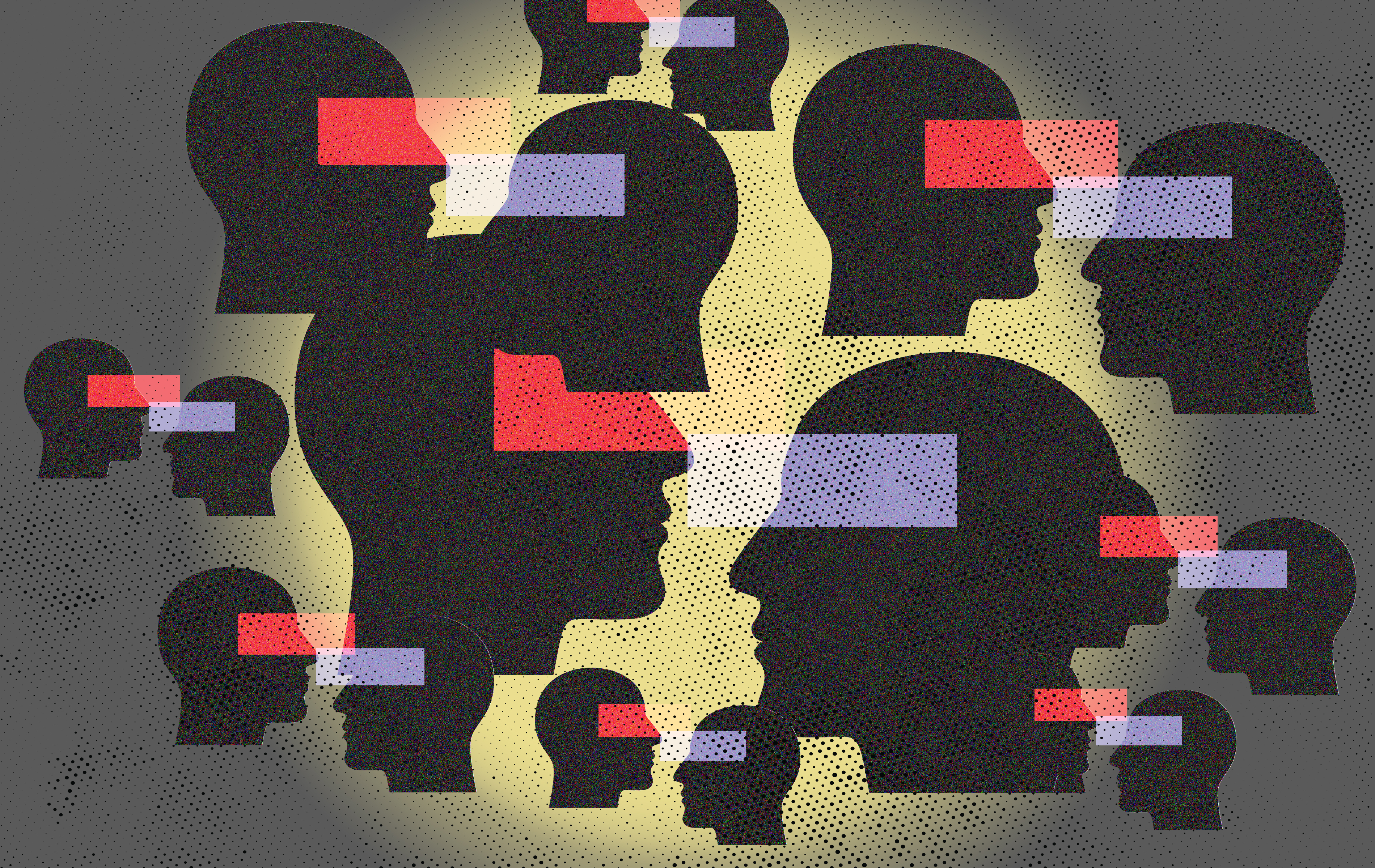
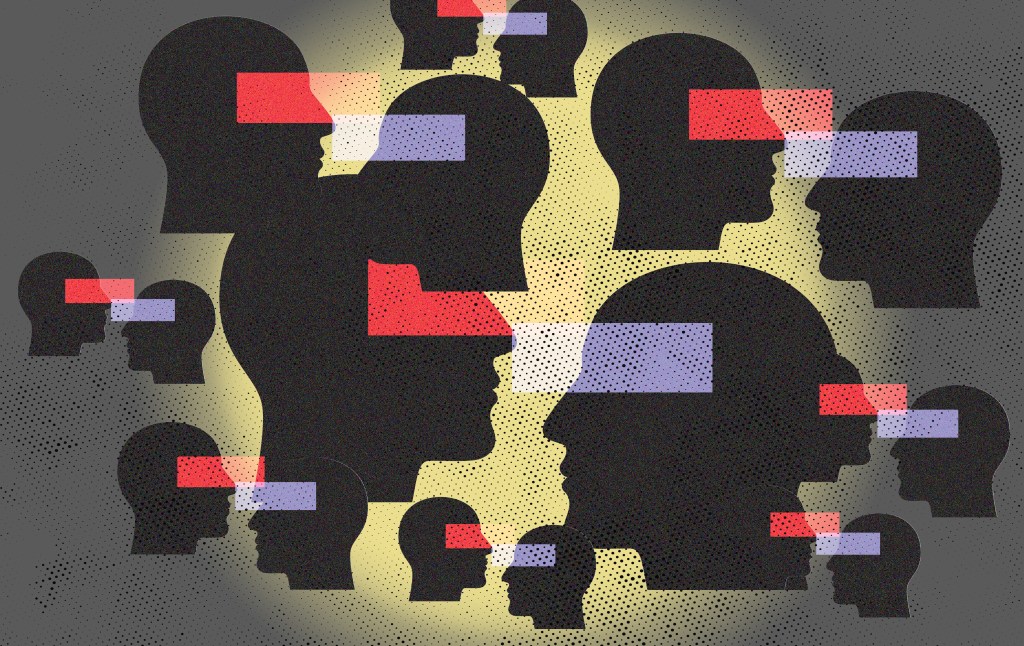
The Religion Underneath Our Arguments
My first marital argument was over the existence of aliens.
I was surfing TV channels and came upon a show about supposed extraterrestrial activity. After a sarcastic remark about what I was watching, my wife paused, then asked, “You don’t believe in aliens, do you?”
I gave the most unhelpful response possible. “Define alien.” This led to a nonsensical argument over space creatures, the limits of knowledge, and whether it even mattered.
Several decades of marriage later, we now know our first argument had little to do with aliens. It had to do with us. She wanted to know if I was going to be dependable, like her father, and not weird. I wanted to know if she was going to accept a husband who did not conform to her idea of what a husband should be.
Put differently, the thing we were talking about was not really the thing we were talking about.
Disagreement is seldom about the presenting argument. Beneath our disputes lie animating commitments, values, and a mental map of the world. Arguments cannot be separated from belief, and belief, at its core, is a matter of faith.
Stories We Think You’ll Like
In recent years, stories of fractured discourse and division have dominated the headlines, but the problem of pluralism—people with different visions of the good life living among each other—has bedeviled the Western landscape for centuries. Polarization, remarked political scientist Jonathan Bernstein more than a decade ago, is “not some sort of freakish un-American phenomenon.”
Helping people with different visions of the good life live together peaceably and productively is the goal of political liberalism. It seeks to foster conditions of fairness, impartiality, procedural justice, and state neutrality toward competing conceptions of what people believe and how they want to live their lives. For example, political liberalism says that whatever else we want to attain, the government should function to protect things like rights, liberties, and equality because they represent fair conditions and secure basic freedoms for everyone—hallmarks of a liberal democracy. Beyond that, live and let live.
At face value, these ideals are desirable. Political liberalism is a proven solution to the challenge of navigating reasonable disagreement. But what if our problem is deeper than disagreement, or worse, what if we are attending to the wrong problem?
Today, social discord and affective polarization are not simply the consequences of differing opinions. They are symptoms of social groups who find one another more and more incomprehensible. And, importantly, agitating for fair(er) conditions won’t fix the underlying problem. In other words, the thing we are talking about is not really the thing we are talking about. We cannot have productive discourse without considering the transcendent, world-shaping narratives underneath our beliefs and values.
Here is why. It is a mistake to think difficult questions can be settled by conditions of impartiality alone. Modern societies have understood justice in a manner that does not rely upon a particular vision of the good life or human purpose, grounding individual rights in a neutral framework which, among other things, requires impartiality. In political philosophy, this is the idea that human rights are established prior to any universal vision of what gives life meaning, what is morally worthy of our pursuit, and what makes us flourish. The freedom for individuals to pursue their own visions of the good life was expressed and embodied in America’s founding.
But there is a problem. Impartiality alone is still inadequate to sort out contestable moral traditions. This is helpfully illustrated in a thought experiment by Nobel Laureate Amartya Sen. Imagine three children fighting over a flute, he says. Anne wants it because she is the only one who can play it. Bob wants it because he is poor and has no toys. Carla wants it because she made the flute herself.
Each child makes a separate claim appealing to a particular philosophical tradition. Anne would find favor with the utilitarian, Bob with the egalitarian, and Carla the libertarian. All three appeal to impartiality, but the very impartiality they appeal to is partial to a specific moral tradition. Awarding the flute will not come from criteria of equality or impartiality, but rather the moral tradition the giver aligns with.
The same problem arises with pluralism. While there is value in creating room at the table for a variety of voices and backgrounds, not all forms of pluralism are the same.
Cultural pluralism—various food, literature, art, music, artifacts, and history—enriches a society. Equally valuable is institutional pluralism. A wide variety of heterogeneous institutions—schools, businesses, charities, non-profits, interest groups, sports, arts—make for a healthy, well-functioning community. Citing a host of desirable benefits, organizations increasingly strive for ethnic pluralism,and rightly so.
But in a different category altogether is diversity of meaning and purpose—what some have called “directional pluralism.” Societies have long addressed enduring questions central to human existence and flourishing. Who am I? What defines a good person? What is a good life? What makes a society just? Here, differing answers are unlike the diversity we appreciate in cultures, institutions, and ethnicity, because when it comes to questions of meaning and purpose, the goal is not simply to represent various perspectives, but to discern what actually leads to flourishing.
Not only are these questions fundamental, attempts to answer them trade on competing moral visions that are often incompatible and cannot be simultaneously true. The famous political philosopher John Rawls understood this. But Rawls’ answer to directional pluralism was for social participants to set aside moral and religious convictions when entering the public square—as if we could neatly separate debates about rights, privileges, laws, and social institutions from the larger bundle of inherently religious questions about meaning, purpose, and the good life.
The desire to empty politics from contestable moral and religious considerations may seem practical or even fashionable (e.g., John Lennon’s song “Imagine”)—but “this ambition cannot succeed” writes Harvard Philosopher Michael Sandel in his book Justice. “Many of the most hotly contested issues of justice and rights can’t be debated without taking up controversial moral and religious questions.” To borrow a phrase from Wendell Berry, pluralism may only amount to “a superficial courtesy to … a confusion of claims.” Without interrogating the moral vision underneath these claims, questions of justice are often settled through power and privilege—not persuasion.
Here is the point. When it comes to pluralism and civil discourse, the thing we are talking about is not really the thing we are talking about.
While we may appeal to neutrality, fairness, and equality or other desirable ideals—we are really talking about which moral vision should guide our lives and how we relate to one another in society; we are talking about the proper way to see the world. As Jonathan Haidt argued in his 2012 bestseller The Righteous Mind, there is no neutral ground. We are all beholden to an underlying moral vision—or metanarrative—which animates our political beliefs, establishes values, and governs our actions.
And, importantly, religion is the most developed form of metanarrative we have. You might say that our underlying vision of the world is inescapably religious. Even in the wake of institutional religiosity’s decline, faith or no faith, we still, writes Tara Isabella Burton in her book Strange Rites, practice religion that “seeks … to provide us with the pillars of what religion always has: meaning, purpose, community, ritual.”
To comprehend one another requires us to look at the stories underneath our presenting arguments and behavior. “Narratives make intelligible our actions and our utterances,” writes the late philosopher Alasdair MacIntyre. Related, in his book Moral Believing Animals, sociologist Christian Smith cites a variety of totalizing cultural metanarratives that govern our lives. “Much of the social discourse of the West for the last two hundred years and even today,” writes Smith, can be attributed to “struggles between these major rival narratives.” He cites the Christian metanarrative, the Capitalist Prosperity narrative, the Progressive Socialist narrative, the Expressive Romantic narrative, or the Scientific Enlightenment narrative as examples.
These narratives share core elements—sacred and profane, higher and lower, light and dark—moral matrices that inform our evaluative judgments, shape our action, and tell us what is valuable and worthy of commitment.
Charitably considering the narratives of those we disagree with will not necessarily dislodge deeply held commitments or settle entrenched and emotionally charged ideological disputes. Nor is this an argument for moral relativism—the belief that all metanarratives are equal. They are not.
Rather, mining the narratives underneath our presenting arguments recalibrates the discussion to what we should be talking about—the totalizing stories guiding and governing how we talk, act, and live together.
For decades, Sandel has critiqued U.S. politics as devolving into a “procedural republic” concerned with enabling consumers to choose their own values, and less with cultivating their character as citizens. Among other problems, a procedural republic reinforces the illusion that we can neatly separate our public and private lives—the latter of which carries our beliefs, values, and moral obligations.
Not only is it difficult to separate our public and private selves, says Sandel, we shouldn’t. Our political deliberations must reflect our best understanding and articulation of human ends and their relationship to flourishing. “Don’t arguments about justice and rights unavoidably draw on particular conceptions of the good life?” he asks.
He is right. The thing we are talking about is not really the thing we are talking about. Like the alien argument early in our marriage, my wife and I were really arguing over deeper questions of what kind of people we would be. Similarly, our social discourse will not rise and fall on conditions of fairness. Public reasoning cannot be separated from deeply held assumptions of meaning, transcendence, and directionality. Our moral visions are not mere personal preferences. They are stories suffused with what is ultimate, religious in character, telling us how to live, who we are, and why life matters.
Disagreement is the surface of deeper stories. Whether sacred or secular, these underlying narratives often rely on religiously shaped assumptions about the good life. Moving from inflammatory discord to functional discourse will require more than impartial procedure or empty platitudes of respecting another’s differences, fairness, or niceness. It will require disciplined practice of seeing our neighbor as someone governed by a story. Mutual comprehension is made possible by attending to the narratives that give life its ultimate meaning.
That is what we should be talking about.
Portions of this essay appeared in Front Porch Republic’s print publication, Local Culture 6.2.
Elsewhere

Mosul, Iraq, was once one of the most diverse and culturally rich cities in the Middle East, including its mix of Muslims and Christians. But the brutality of ISIS compounded by years of war left the city ravaged. But, as my friend Mindy Belz reported in a piece we published earlier this week, the city is finally rebounding. Recovery is coming both from the bottom-up work of those who call the city home, but also from international actors who care about preserving the city’s heritage who find that rebuilding community—especially among believers of different religions—is harder than rebuilding structures.
When I visited the Al Nouri complex in late 2025, men and women mingled in and out of the hall, shedding shoes and taking carpets to pray where once ISIS leader Baghdadi declared his caliphate.
A short walk away, four churches have been completed, including Mar Thoma, the seventh century Syriac Orthodox church used as a prison by ISIS. It reopened in October 2025, and two more churches are under restoration in 2026.
But the psychology around the churches is different. The Christian population, forced to flee en masse, is slow to return. Many were killed, including prominent clergy, and Christians distrust security forces.
“Just 65 families at most have come back,” said Najeeb Michael, the Chaldean Catholic archbishop of Mosul. “Still the Christians are afraid, even though it’s very peaceful.”
Michael made a name for himself saving thousands of ancient documents out of church libraries in the Old City just before ISIS captured it. Those manuscripts are now stored permanently in an underground vault in Erbil, 50 miles away, that was funded in part by USAID.
One reason he rescued documents, Michael said, is that he trusts God to fill Mosul with Christians again. “Terrorist groups cannot stop this history.”
More Sunday Reads
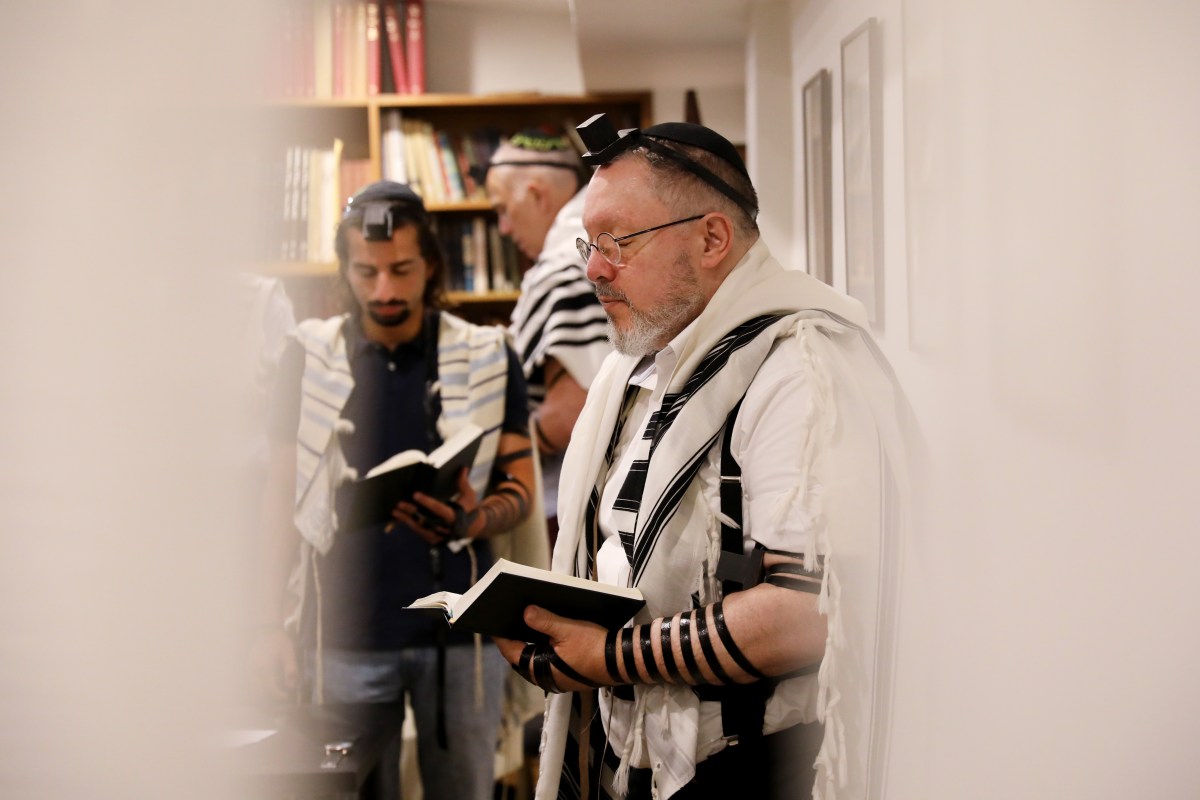
- For Arc, Henry Michaelson writes how taking a break from social media eventually led him to genuine Jewish faith. “As I’ve explored my religious commitments—observing Shabbat (albeit a limited Shabbat that involves no digital technology, spending money, or working), praying and attending weekly services, making an active effort to be aware of God during intimate moments with people and in nature, and feeling an answer to the question ‘why?’ when submerging myself in the utter beauty of the small cosmic possibility of every moment I live—I’ve received unexpected lessons that only reinforce my religious cravings. What started as a search for answers about Truth and the universe has become a training in rewiring one of my most basic functions as a human: relating to others. I can’t say with certainty what drove the turn to religion for me, but I do know that statistics fail to capture the experiential reality of what it means for someone like me to seek God in an age of digital connection.” He continues: “Even partial observance of Jewish traditions places demands on me that I never previously experienced. Prayer, for instance, requires approaching a conversation in which you cannot control the outcome, curate the response, or even guarantee you will receive one. No algorithm exists for optimizing engagement, nor does a notification confirming your message was received. Prayer forces me to show up repeatedly to a relationship that offers no tangible metrics, no feedback loop, and no way to measure your performance or progress. This is profoundly disorienting, yet incredibly exciting. Prayer allows me to determine my own priorities and cares, rather than relying on Instagram’s targeted ads and sponsored accounts to introduce me to ideas and goods that pique my interest.”
- I can’t recommend highly enough sociologist George Yancey’s piece in Christianity Today discussing why he thinks “Christian nationalism” and the conversations around it are poor ways to understand many conservative Christians on the political right. “There are reasons not to trust the analytical tools often used by academics to assess Christian nationalism, such as a popular scale developed to capture similarities between religious and secular institutions. Several academics have questioned the statistical soundness of these scales, and conservative Christians have rightly argued that agreement with some statements used in the measurements (‘The success of the United States is part of God’s plan’ or ‘The federal government should allow prayer in public schools’) does not necessarily make one a Christian nationalist. If the people being described reject that description, caution is warranted when using it to assess their motivations. That said, conservative Christians have become politically active in ways that are concerning. Some, particularly activists, prioritize political salvation over spiritual salvation and view electoral victories as a key needed to remake society. There is value in finding a term that captures this activism and help us understand politically active conservative Christians and what motivates them. In my work as a sociologist, I have come to believe the concept that best describes the current phenomenon is conservative identity politics.” Later, he writes: “Blanket accusations of racism and authoritarianism are often thrown around by academics and pundits in discussions about Christian nationalism. I am not saying these aren’t real concerns – racism and authoritarianism do exist. But making sweeping charges won’t alter the attitudes of activists if they don’t see those things as the driving factors in their political choices. The conversation around Christian nationalism pathologizes conservative Christians. By the media and many on the left, they are envisioned as uniquely authoritarian and possessing fear and hostility toward outgroups.”
Religion in an Image