Crime statistics weren’t so encouraging only a few years ago. Violent crime spiked dramatically in 2020, with the COVID pandemic’s disruptions—shuttered courts, reduced policing, economic stress, and social upheaval—coinciding with the largest single-year increase in homicides since modern record-keeping began. The first five years of the 2020s also saw widespread overdose deaths from fentanyl, a potent synthetic opiate that saturated the U.S. drug market. Drug overdose deaths peaked at more than 110,000 in the 12 months ending in early 2023.
With the exception of the pandemic years, the drop in homicide rates is part of a decades-long decline in almost every sort of crime. In 1991, violent crime rates peaked at 758 incidents per 100,000 people; by 2024, that number was less than half, at 359 incidents per 100,000 people. “Depending upon which crime type you look at and which data source you pay attention to, we are somewhere near the neighborhood of the 1960s with respect to certain crime types,” said Alexis Piquero, a professor at the University of Miami and former director of the Bureau of Justice Statistics. The U.S., especially in its major cities, is far safer than it was during the later decades of the 20th century, he argued. “We are much lower than we were with respect to where we were right before COVID,” he told TMD.
Nationwide, compared to 2024, gun assaults and robbery have both dropped. The only crimes that did not decrease were sexual assault, which remained steady, and drug crimes, which increased by 7 percent.
Still, experts are trying to determine why. “We really need to understand that we do not know what’s happening here, and to be extremely aware of the way in which plausible speculation gets taken as fact,” David Kennedy, a professor of criminal justice at John Jay College of Criminal Justice, told TMD.
FBI Director Kash Patel hailed the new numbers as a vindication of the Trump administration’s approach to criminal justice. “Media gymnastics can’t hide the reality that this administration brought law and order back,” he wrote on X on January 22. But the decline in violent crime began in late 2022, resuming a decades-long trend through Republican and Democratic presidencies alike.
One explanation is that hard-won experience brings down crime spikes. “An enormous amount of the change in crime patterns comes because people look around at the world they’re in, and they change their behavior,” said Kennedy, pointing to evidence from the crack cocaine epidemic of the 1980s and ’90s that many people, even if they were involved in criminal activities like drug dealing, began to associate less with people known for being prone to violence. “The only reason you know that is if you’re close to the street, and if you don’t ask and answer those questions, then what you’re left with is the big pictures.”
Some analysts argue that the revival of community programs, which shuttered during COVID and then were partially restored by federal funds, has played an important role. Philadelphia leaders credit an approach that coordinates city agencies, law enforcement, and local nonprofits: One such strategy has included hospital-based violence-intervention programs, which look to provide longer-term care and counseling to gun violence victims to reduce the risk of cycles of retaliation.
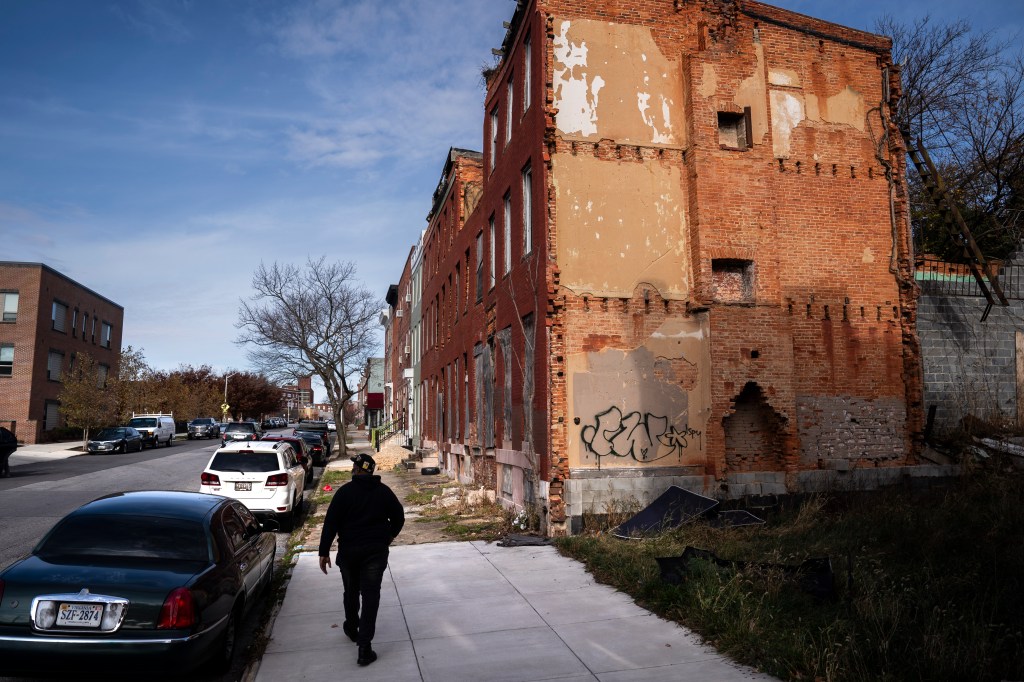
“It’s entirely plausible to think that all of that startup work in community violence prevention is paying off,” Kennedy said, noting that funding from the 2022 Bipartisan Safer Communities Act has played a role in scaling up programs, like a basketball league in Philadelphia meant to keep teens away from gangs. “[If] you go to police chiefs in Baltimore, and Philadelphia, and Detroit, and Oakland, they will all say we are working with our community partners to do violence prevention in a way that we never have.” Recent federal funding cuts, however, threaten many of those efforts.
Policing itself has also changed. U.S. departments have recovered some of the morale lost during the pandemic and George Floyd-inspired unrest and riots of 2020. “In 2020, the whole system stopped and broke,” Peter Moskos, a sociologist at John Jay College and a former police officer, told TMD. A combination of social distancing, rioting that demoralized many police departments, and in some cities, movements for “de-policing” led to an observable decline in police activity. In 2020, arrests in Los Angeles decreased by 37 percent.
Moskos noted that higher arrest numbers don’t automatically mean less crime—both crime and arrest rates have been far higher in the past—but serve as a valuable proxy for energy and activity. If falling crime rates might be the result of decades of gradual, albeit poorly understood improvements, the decline in opioid deaths might be the result of one decision—by China.
Earlier this month, the journal Science published a paper that argued that lower numbers of drug deaths, starting around mid-2023, tracked with observed declines in the potency of street fentanyl, using data from the Drug Enforcement Administration. Tracking the procurement process for international drug gangs is tricky business. But this “supply shock,” the paper’s authors hypothesized, could be due to China cracking down on its pharmaceutical component factories, many of which are deeply involved in the black market drug trade. Keith Humphreys, a professor of psychiatry at Stanford University and one of the paper’s authors, told TMD that the supply shock theory was the simplest way to explain how drug deaths dropped in so many places at once.
“The only thing that really moves death up or down like that is supply shocks,” he said. Humphreys pointed out that areas with widely divergent drug policies saw decreases in opioid deaths: New York City, which strongly favors “harm reduction” strategies (like providing users with clean needles to avoid infection), and West Virginia, which does not, both saw declines in overdose deaths. But Humphreys also cautioned against projecting current trends forward, noting that fentanyl supply chains could reconstitute themselves in other countries.
The supply shock thesis, while plausible, is not entirely conclusive. “I am not persuaded that there was a decline of precursors from China that could explain the decline in U.S. deaths before the second half of 2024,” Vanda Felbab-Brown, a senior fellow at the Brookings Institution and an expert on transnational armed groups and illicit markets, told TMD, pointing to her research.
Nabarun Dasgupta, an epidemiologist who runs a street drug analysis lab at the University of North Carolina at Chapel Hill, doesn’t think supply shock is the whole story either. “The supply shock was really transient,” he told TMD, noting that regional data on drug use trends isn’t available at high enough quality to draw precise conclusions, or know whether supply shock affected all states equally.
But other factors could also keep pushing the opioid death rate down. “The other major change that explains some of the decline is a huge shift in age demographics and who’s dying from an overdose,” said Dasgupta. He pointed to data from Maine, where people under 25 are dramatically underrepresented among overdose victims. “People know fentanyl is dangerous, but knowing it actually doesn’t change behavior. What actually does change behavior is things like going to your aunt’s funeral,” he said.
Slow, patient work at the community level, often funded by settlement payouts from pharmaceutical companies, is also beginning to temper the opioid crisis, argued Dasgupta. “When you go outside of big cities, into places like Arkansas, or Maine, or Louisiana, you see communities just doing really innovative stuff,” he said. In Snohomish County, Washington, the local government launched a mobile opioid treatment center last year for rural communities.
So there may not be a singular, simple answer to the twin problems of murder and overdoses. But successes in Philadelphia and elsewhere over the past few years show that a wide range of government workers, law enforcement, and ordinary citizens and discovering solutions.
“Somebody, somewhere, is doing something,” Moskos said. “They deserve credit.”