I have to admit, I’ve been waiting a long time for Trump to throw the gun rights folks under the bus. They were the last major constituency he never really betrayed, even rhetorically (though there was that moment in 2018, in the wake of a school shooting, when he suggested that the federal government should “take the guns first, go through due process second.”). It’s nice to finally be able to say that Trump is unreliable on every major issue his most hardcore ideological supporters care about (including immigration, by the way, but we can talk about that another time).
The point isn’t Trump’s flip-flop. Making a big deal about Trump being inconsistent is like stalking a bear, waiting in the woods for it to start defecating, and then blasting out a video of it to the world saying, “See! I was right!”
But the almost instantaneous switch in talking points from Republicans to mirror Trump shows you how little you can rely on politicians.
Look, I get it when people go wobbly on the Second Amendment in the wake of a mass school shooting. I’ve done that myself. But this wobbliness was in response to the shooting of a guy who was shot after he was disarmed. At least 10 times, mostly in the back. The real purpose of defending this homicide was to defend the party, and really just the president, in power. When you hear that power corrupts, this is the kind of thing you should think of. In deference to power, Republicans either abandoned their Second (and First!) Amendment principles, or they mostly stayed silent as other members of their party did it for them.
Principled hedge fund.
Okay so let’s get back to the realist case for principles. Let’s take democracy.
I keep saying that democracy is not a guarantor of good or even the best outcomes, it’s a hedge against bad or the worst outcomes. Now, when I say this, I’m not referring to all of the flowery and atmospheric things people often assign to the word “democracy.”
Indeed, the more I think about it, the more opposed I am to poetic license when it comes to democracy. I’m increasingly of the mind that we should simply make “democracy” synonymous with the word “elections.” As in, democracies are places that have (free and fair, and ideally, competitive) elections.
If you want a word or phrase that conveys more of the fancy stuff we associate with democracy, well, freedom, liberty, popular sovereignty, republicanism, public opinion, the “American way” will probably do the trick, depending on the situation. There’s no shortage of terms that can carry the unnecessary load we pile on poor democracy’s back. The more we talk about the “spirit” of democracy, the easier it gets to ignore the important fact of democracy—the elections part. The more flowery you get, the more actual elections seem like just one item on a list of things democracy means, along with net neutrality, street protests (“This is what democracy looks like!”) and socialized medicine. The tipoff might have been when prison states like East Germany and North Korea felt free to put “democracy” in their official names.
The reason elections are the critical attribute of democracy is that elections allow us to fire people. That’s really it. There’s no magic to it. That’s the realist case for democracy. It makes oppressive government less likely. It doesn’t make dictatorship impossible, but there’s a reason that democratically elected dictators routinely do away with free and fair elections: They don’t want to get fired.
But I’m not here to talk about democracy. I just use it to illustrate how I increasingly think about a lot of abstract political rules or principles. Their most important function in the real world is to simply serve as a hedge or insurance policy against bad outcomes.
Take free markets. I love free markets. But lots of critics of the free market from the left and increasingly the right, have a point: Free markets do not guarantee optimal outcomes.
Free markets gave us all sorts of bad, icky, or wasteful things. Pet rocks, Love Island, Milli Vanilli, The Oogieloves in the Big Balloon Adventure, AI porn, OnlyFans, and the colorized versions of Casablanca and It’s a Wonderful Life are just a few examples of thousands, nay millions, of suboptimal products brought to you by capitalism.
But while it’s true that free markets don’t guarantee optimal outcomes, they do guarantee better outcomes over the long haul, than any system which assumes technocratic experts are smarter than the market. In other words, devotion to free market principles insures against a government that gets to decide what people can and should spend their money on, and what investments can and should be made. There will always be exceptions to the rule. But the more dedicated society is to free markets, the higher the evidentiary burden to grant an exception. After all, the point isn’t that the government never gets it right—I can make a very strong case for government spending on basic scientific and medical research. It’s that in a system which by default assumes the government should direct the economy gets you a worse economy, and less freedom.
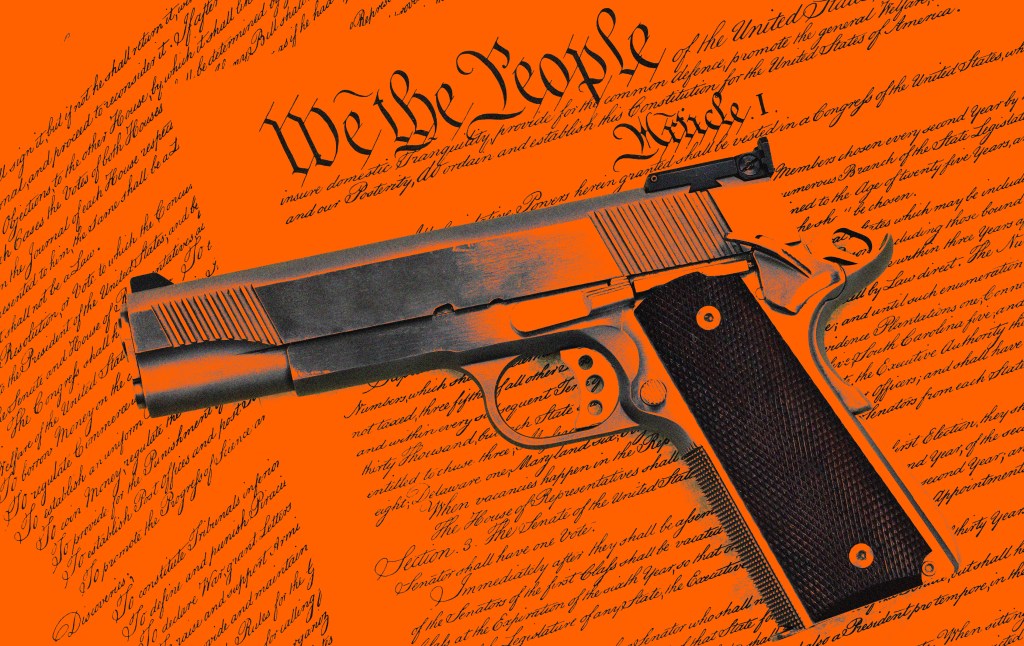
Or take the Constitution. Again: Huge fan. But I don’t think the Constitution guarantees great results. When operating properly, however, it protects us—even more than mere democracy —from bad results. People vote for bad things all the time. The Constitution makes it hard to vote — successfully — for extremely bad things. If forced to choose, I’d take an undemocratic nation dogmatically committed to honoring the Bill of Rights over one that is so fiercely democratic that it thinks the voters can vote away your rights. But history tells us you need elections to fire the people who don’t care about your rights, so elections are a necessary precondition for a lasting liberal society.
So here’s the thing. If you’re going to have principles, it can’t just be when they’re convenient and popular. If you believe in elections only so long as your team wins, you don’t really believe in elections. If you believe in the free market, but only when the other team is engaging in central planning and industrial policy, you don’t believe in the free market. And if you’re a passionate Second Amendment supporter when it comes to, say Kyle Rittenhouse, or some militia occupying the Michigan Statehouse, but a nurse with a holstered legal firearm was asking for death when he annoyed a federal agent, then you don’t really believe in the Second Amendment.
If you’re a Democrat or progressive who’s been nodding along, I’d like to say a few things in service to my point. First, if you believed that carrying a loaded weapon to protests was wrong, suspicious, or creepy when right-wingers did it, you should ask yourself whether outrage over Republican hypocrisy is blinding you to your own.
Likewise, if you were outraged by Republican governors threatening defiance of the Biden administration over immigration policy—or really anything else—you might want to do a rigorous personal inventory to figure out why you’re cheering the Democratic politicians in Minnesota resisting or defying the federal government. But I also think such introspection would be beneficial for many on the right. Being for something like states’ rights when the other party is in power but federal supremacy when your party is in power is not really a principle.
I don’t bring this up as a both-sides thing. I bring it up because my point about principles has no partisanship to it. There are all sorts of lofty or noble reasons to stick to your principles in politics, starting with it being the right thing to do and all that. But the most basic and realistic reason is that doing so makes it just a bit easier to hold the other party accountable when it is in power. Any time one team abuses power, the other team thinks the abuse is worse than it actually is, and that it will be justified to abuse power even more when it has it.
Lastly, what the hell do people think principles are anyway? Divine revelation notwithstanding, they are rules that have evolved over time that have proven to be useful. A lot of wisdom and trial and error has gone into these rules, which is why they become more important in times of stress and emergency, not less. Like they tell cops and soldiers, when in doubt, remember your training. Why? Because people have been through this stuff before, and they wrote down some rules to follow. And when you don’t have proper training or you’re told to ignore it for political reasons, you might end up shooting a disarmed nurse in the back.