Authored by Kimberley Hayek via The Epoch Times,
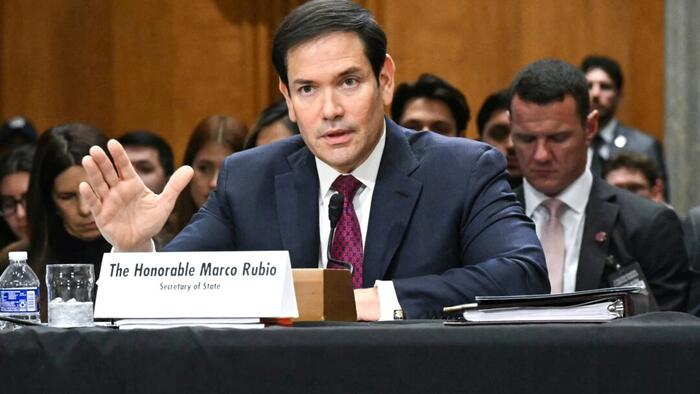
Technical discussions between the United States, Denmark, and Greenland on improving Arctic security have begun, Secretary of State Marco Rubio said Wednesday.

The talks originate from a working group created earlier this month during a Washington meeting including Rubio, Vice President JD Vance, and the foreign ministers of Denmark and Greenland.
“It begins today and it will be a regular process,” Rubio told the Senate Foreign Relations Committee. “We’re going to try to do it in a way that isn’t like a media circus every time these conversations happen, because we think that creates more flexibility on both sides to arrive at a positive outcome.”
“We’ve got a little bit of work to do, but I think we’re going to wind up in a good place, and I think you’ll hear the same from our colleagues in Europe very shortly,” Rubio said.
The initiative comes after President Donald Trump has said that the United States must secure Greenland to increase national security against Russia and China. European allies have rebuked Trump’s approach.
Trump recently threatened tariffs on Denmark and other European nations opposing his Greenland overtures before brokering a preliminary framework with NATO Secretary-General Mark Rutte.
At the World Economic Forum in Davos, Switzerland, last week, Trump said no military force would be used for acquiring the island, stating, “I don’t have to use force. I don’t want to use force. I won’t use force.”
Trump has portrayed the deal as providing total access to Greenland without payment or time limits, underscoring the Golden Dome missile defense system.
“There’s no end, there’s no time limit,” he said, adding, “We’re not doing a 99-year or a 10-year [deal] or anything else.”
The president assigned Rubio, Vance, and special envoy Steve Witkoff to work on the negotiations.
NATO has highlighted the framework’s goal of preventing Russia and China from establishing economic or military footholds on the island.
Alliance spokesperson Allison Hart noted discussions among Arctic member states to bolster collective security, stating that talks with Denmark and Greenland strive to deter adversaries.
“We need to defend the Arctic,” Rutte said at Davos.
Greenland lies along key missile trajectories, vast mineral resources, and emerging shipping routes.
The United States maintains Pituffik Space Force Base there, where it has situated early-warning radars.
Russia oversees extensive Arctic infrastructure, such as dozens of bases and icebreakers.
Russia’s robust Arctic infrastructure poses a direct challenge, with more than 50 revitalized Soviet-era installations, including six army bases, 10 radar stations, and more than 60 icebreakers—far outpacing the United States’ two.
“It is important to consistently strengthen Russia’s positions in the Arctic, comprehensively develop our country’s logistics capabilities, and ensure the development of a promising Arctic transport corridor from St. Petersburg to Vladivostok,” Russian President Vladimir Putin said in November 2025.
China, meanwhile, pursues a “Polar Silk Road” for influence through investments in infrastructure and resources, according to a 2024 RAND Corporation analysis.
Eric Cole, a former CIA officer and CEO of Secure Anchor, described Greenland as a “forward lookout post for the entire North Atlantic security architecture.”
“Greenland’s geographic position places it directly beneath the shortest flight paths between North America, Europe, and Eurasia, making it a natural vantage point for monitoring air and missile activity,” Cole told The Epoch Times.
“Sensors based in Greenland can track aircraft, space objects, and missile launches that would otherwise go undetected until much later in their trajectory. This early detection is critical for both U.S. and NATO forces, as it expands warning times and improves coordinated response options.”
Loading recommendations…