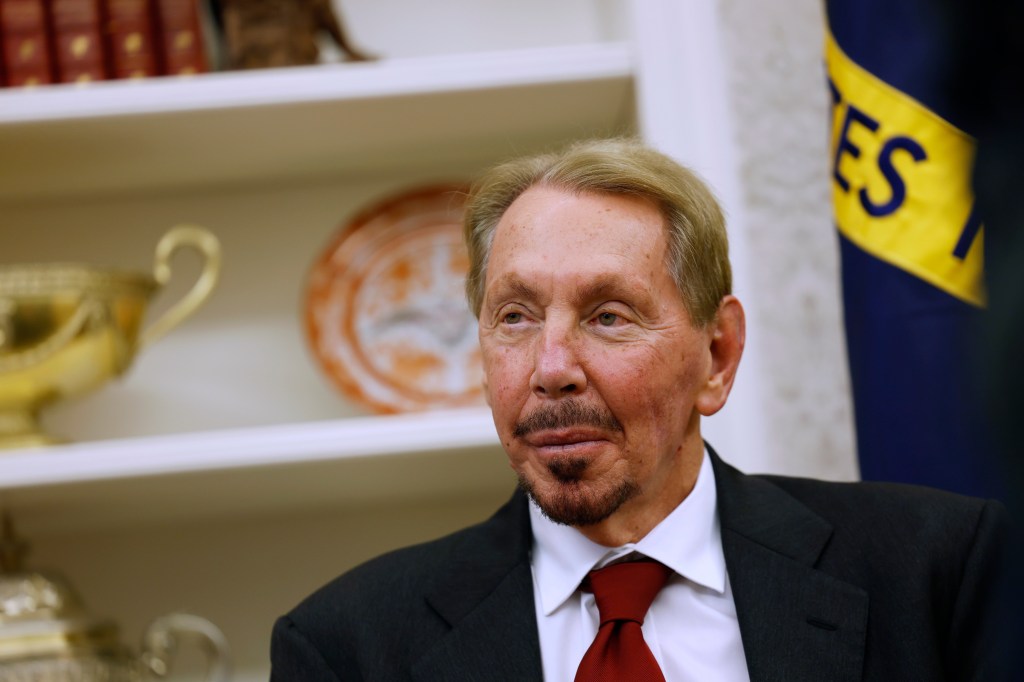
The new ownership features three managing partners that each hold a 15 percent stake: tech giant Oracle, private equity firm Silver Lake, and the UAE government-owned AI investment firm MGX. Oracle’s cloud computing network has stored TikTok user data on its servers since 2022. Below the trio of managing firms are eight companies that collectively hold 35 percent ownership, six of which are U.S.-based, including the investment firm of Dell founder and CEO Michael Dell. Additional investors include an investment arm of a science foundation founded by Israeli entrepreneur Yuri Milner and his wife, Julia, and French business mogul Xavier Niel. Meanwhile, ByteDance, with a 19.9 percent stake, owns more than any other single investing entity in the new venture.
Anupam Chander, a professor of law and technology at Georgetown University who specializes in global regulations of new technologies, emphasized that removing ByteDance’s majority ownership stake of TikTok addresses the propaganda risk of the app because the U.S.-led venture “doesn’t answer to any company that’s answerable to the Chinese government, and so it doesn’t answer the Chinese government in any way.” Chander told TMD that, under the new TikTok structure, “There’s really no theoretical mechanism by which the Chinese government tells the Americans, ‘Hey, turn over all this [data and] … promote our talking points.’”
Daniel Castro—vice president of the Information Technology and Innovation Foundation, where he directs the think tank’s Center for Data Innovation—explained that the non-American investors in the new TikTok venture “reflects the fact that this isn’t, of course, a fully American operation either.”
At the helm of the new venture as CEO is Adam Presser, who had been TikTok’s head of operations and trust and safety, reporting directly to TikTok’s global CEO Shou Chew, according to Bloomberg. Chew now holds ByteDance’s board seat in the American company. Presser, who wrote in a 2024 court filing for TikTok that “a severance of the U.S. TikTok platform from the rest of the globally integrated TikTok platform and business is not feasible,” is now tasked with proving his former self wrong.
The algorithm powering the U.S.-based platform will still be Chinese-engineered, but, according to TikTok, the American company will be entrusted to review the code and provide updates when necessary. The algorithm was a significant contributor to the video platform’s rise to popularity, in part, because of its capability to take user data, analyze potential interests, and promote videos based on that information. The new consortium of investors will need to develop processes to monitor the algorithm, but the specific details of that plan are currently unknown.
Samantha Bradshaw, an assistant professor in new technology and security at American University, attributed TikTok’s popularity to a “combination of their personal data collection and then their algorithm.” Bradshaw told TMD that the algorithm reads user data as “indicators about how relevant content is to you, and then that can be fed into the algorithm to make it even more addictive or compelling for you to watch and stay.” For example, the platform promotes videos not only based on the number of “likes” or comments it received, but also from user-specific data, including assessing the length of time users watch a video, the time of day when a user is active and watching videos on a particular subject, and whether they share the video, with the algorithm consistently feeding various videos based on those user context clues. This structure won’t change under the U.S. investor-led TikTok. John Newman, a University of Memphis law professor and former deputy director of the Federal Trade Commission’s Bureau of Competition, told TMD, “The underlying algorithm appears to still come from ByteDance. So, if you were worried about that before, it’s really not clear to me that that worry has gone away.”
As TMD reported in September, when the framework for the U.S. venture was announced:
The source of the app’s wild success, TikTok’s video recommendation algorithm, is the industry benchmark—U.S. TikTok users average nearly twice as much time per day on the app compared to users of Snapchat, Facebook, and Instagram. But this algorithm is one of the main reasons Congress was alarmed by TikTok’s success in the first place: Parent company ByteDance uses it across multiple products, including the Chinese equivalent of TikTok, Douyin. ByteDance claims to have no relationship with the Chinese government, but it’s bound by Chinese law to collaborate with the country’s intelligence agencies and works with Beijing on military technology projects. The Chinese Communist Party also owns a “golden share” in ByteDance, entitling it to a seat on the board of the company’s Chinese subsidiary.
According to the new U.S.-led TikTok business, the company is entrusted to “retrain, test, and update the content recommendation algorithm on U.S. user data.” The company also stated that the algorithm will be “secured” in Oracle’s cloud infrastructure, though neither the U.S. venture nor Oracle specified how it plans to monitor and potentially alter specific lines of code. Adam Segal, the director of the Council on Foreign Relations’ Digital and Cyberspace Policy program and a former senior adviser in the State Department’s Bureau of Cyberspace and Digital Policy, told TMD that the new U.S.-led venture plans “to inspect the code” and identify any prospective Chinese-influenced biases, but emphasized the lack of publicly available “details to know how that’s going to work.” While it’s possible that Securities and Exchange Commission regulations could require Oracle to disclose its process for vetting the algorithm, he told TMD, “it’s unclear if we’ll ever get the details.”
It’s also not immediately clear what oversight, if any, the federal government will exercise over vetting the new algorithm. Anat Alon-Beck, a law professor at Case Western Reserve University who specializes in corporate law and governance, explained that the new U.S. leadership will need to ensure that the algorithm is properly monitored, but added, “It would also be nice to have some sort of … quasi-governmental agency, right, or some sort of supervision to make sure that all these things happen.” While Alon-Beck said that she’s supportive of the TikTok deal, she acknowledged plenty of unknowns. “I would like to see the fine print of how are things going to work [and] who’s going to control what,” Alon-Beck told TMD. “And I’m hoping that we’ll have more information on that soon.”
For the new joint venture to allow millions of U.S. users and content creators to continue using the app, Trump had to get China’s approval. “Clearly the most important thing was getting the Chinese government to sign off” on the U.S. joint venture, Castro said, noting that it could have vetoed the deal and ceased negotiations over TikTok. Chinese leader Xi Jinping was unlikely to greenlight the deal without concessions, yet it’s not clear what ultimately enticed China to move forward. “I think the reality is we don’t actually know what the Chinese government got” in exchange for agreeing to the deal, Castro said. “This is very possibly part of broader trade negotiations.”
The U.S. and China have had costly trade spats with one another since Trump returned to the White House, with both sides ratcheting up tariff duties on each other’s goods to rates upwards of 100 percent. Trump and Xi reached a truce in November to reduce tariff rates and remove other trade barriers, a deal that, so far, has held.
Segal told TMD that he believes China “gave way in this case because they want the trade truce just to hold—that’s more important for them right now.” He explained that while Chinese government leaders don’t like “pressure from the U.S. government, they seem pretty willing to give Trump a win on this one for the larger trade agreement” reached in November.