Recent novels about translators and translation have been a thrilling yet cheerless lot. Take Ayesha Manazir Siddiqi’s magnificent speculative thriller The Centre, which revolves around a mysterious language-learning center that can bring its students from zero knowledge of any language to native-level mastery in two weeks flat. Alas, it turns out that the secret ingredient is cannibalism. Or consider The Extinction of Irena Rey by the internationally renowned translator Jennifer Croft, whose translation credits include rendering in English the work of the Nobel Prize-winning Polish novelist Olga Tokarczuk. In her own translation thriller, Croft isolates eight translators in a remote mansion in a Polish forest for (what else?) an intensive translation retreat. But the author who is the object of their work, Irena Rey, goes mysteriously missing—or does she?
Nestled within these translation-themed thrillers are difficult questions about what it means to translate, to be a translator, and to consume books in translation. What does translation require and at times (some worry) violently claim from the authors and books conveyed from one language into another? How does this affect the portrayal of the culture that is being relayed to another tongue? And how might the publishing industry treat more ethically the translators themselves, whose highly demanding work too often goes unnoticed beyond a meager paycheck? Indeed, Croft has been an outspoken advocate of giving translators credit on book covers, thus recognizing their work in bringing books to new audiences.
Novelist and translator Sarah Bruni’s new novel, Mass Mothering, picks up on these themes—but with a new twist. While others have considered translation as cannibalism, extinction of the original, or civilizational destruction, Bruni’s story revolves around the intricate connection between the work of translation and the work of mothering when done in a world as broken as ours.
Bruni tells the story through two main threads, domestic and foreign, that become closely interwoven over the course of the book. First and most important, in an unnamed land far away, where another tongue is spoken, a mysterious author wrote the book Field Notes. It is an investigative series of interviews, true crime and ghostly thriller combined. At the center of the investigation are mothers whose sons—always sons, never daughters—have mysteriously disappeared in broad daylight, never to be found again. Walking or biking to or from school, running to the corner store for a soda, living the ordinary life of childhood or early adolescence until disappearing without a trace in a sort of strange, twisted version of the Rapture. Through interviews with the mourning mothers, whose whole lives become defined by their tragic losses, the author of Field Notes keeps trying to find the truth while also investigating the mothers’ quest for justice, their desperate desire to find someone—anyone—who will listen to them.
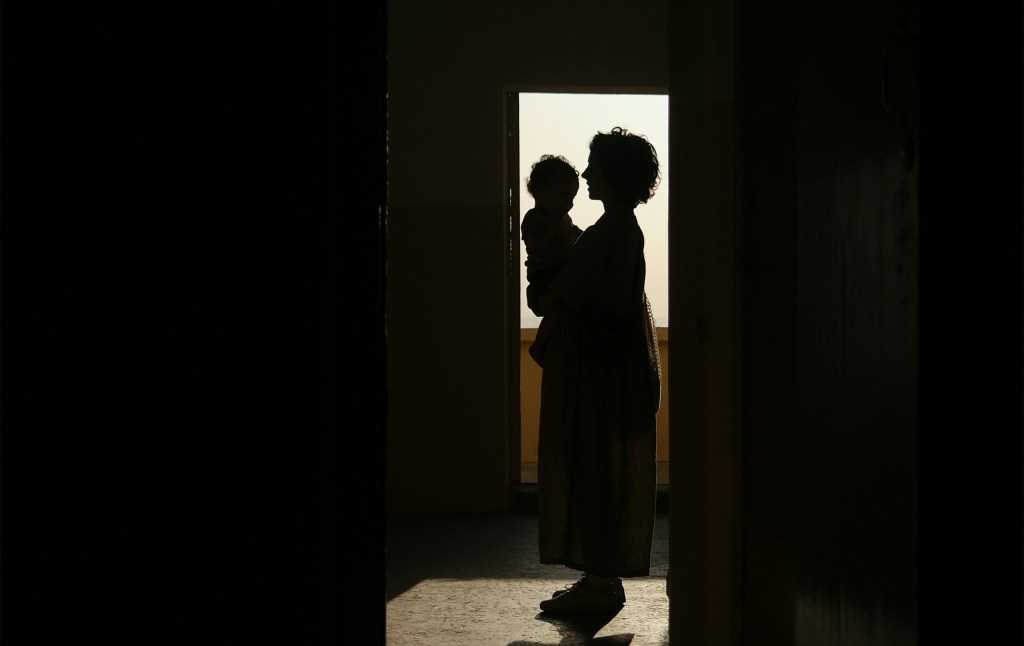
In the second narrative thread, we switch to a large city in the U.S. There, in a complicated set of circumstances, Field Notes finds a compassionate reader and translator—A., who luckily is proficient in the original language of this book. She is a troubled single woman in her 30s. Hailing from a long line of loving mothers, she is devastated when a routine medical checkup leads to a cancer diagnosis and a full hysterectomy, leaving her deprived of any opportunity to have children. It is during this period of mourning the children she will never have that she meets N., a no less troubled young man from another country, in whose possession she discovers Field Notes.
Both A. and N. are storytellers at heart, Bruni suggests, as she juxtaposes their respective imaginations about the world in A.’s words, weaving together reflections about their oral and written stories:
At some point I realize that a gun appears in every one of N.’s stories. By the time I meet N., I have spent a lot of time processing stories in his language and in mine—I practically consider myself a professional listener—so I understand that when a gun appears in a story it’s only a matter of time before it goes off. This is one of the rules I’ve learned. There are others.
My stories are different. They are mostly about mothers and poets, their bodies and collected works. Mothers and poets are often considered minor. Mothers and poets rarely carry guns. This is one of the reasons that their stories don’t capture the imagination of the consumer public.
It’s not merely the difference of living in another language, A. realizes. The potential for motherhood, whether actualized or not, brings powerful stories of its own. “A mother is a mother, regardless of the latest information regarding her child.” So states the first entry in Field Notes. And so, the story of the mourning mothers in Field Notes takes over A.’s sleeping and waking imagination as she struggles to come to terms with her own barrenness. Determined to translate the book for the English-speaking public, she applies for a grant to go to the foreign country and city where the original author worked on this project. The result is the discovery of more mysteries about the book and the women in it, yet no real answers—except, perhaps, about herself and about N.
For A., the work of translation ends up being life-giving work—she finds in it a new temporary meaning and purpose in her life. She befriends the mourning mothers of Field Notes, talks to them, weeps with them, and gets to know the otherwise shadowy author of the book. And yet, it is unclear what it is all for. No one listens to the mothers’ voices in their original country, in their home tongue. Field Notes is no bestseller in its original language. And likewise it is unclear what A.’s translation will accomplish. Books can be translated, but can the experience of motherhood? A.’s mourning suggests that no matter how desperately she tries, she is not sure she has succeeded in fully understanding the mothers. Perhaps motherhood cannot be translated, only experienced.
The novel concludes on a note of uncertainty, portraying broken lives filled with grief without redemption. Sometimes, it seems, the labor of translation, just as the work of motherhood, is in vain. The children are lost forever, whether through mysterious kidnapping or because they grew up and left home. The book about mothers is buried in a library, forgotten. The book’s author is dead, gunned down too young. The translation remains unpublished, or if published, little read. The translator will never be with child, and might never write anything else again. “Vanity, all is vanity.” The words of Ecclesiastes come unbidden.
But the very fact of the novel’s existence should remind us that Bruni herself has greater faith in the meaning of her own craft as a novelist and (outside this novel) translator than the storylines here suggest. And for those of us who appreciate good translations and the work of gifted translators, there is much encouragement to keep reading books translated from other languages—consuming them responsibly and gratefully, recognizing the work that went into them. My own gratitude for the work of translators is, indeed, from my experiences as a native speaker of Russian. It was in Russian translation that I first encountered many masterpieces of American literature—Harriet Beecher Stowe, Jack London, James Fenimore Cooper.
Furthermore, I’ve spent my life after age 10 living, writing, and reading in several other languages. I am writing this review in my third language. Yet I am no translator. Ironically, a translation of my own first book is coming this month in another language, one I do not personally know. Still, knowledge is not enough. Siddiqi, Croft, and Bruni all agree: Translation requires something else, a certain je ne sais quoi, beyond merely fluency in multiple languages. Not everyone has a gift for conveying the raw beauty of one language into something that involves the same emotional cadence in another—or something that is the closest to it, at least. To translate never involves merely navigating language but culture and civilization as well.
Perhaps, at the end of the day, to be a translator does not require being a mother. But it does require being a poet.