Is it too kind to give any cheers at all to Congress’ appropriators during the second government shutdown of this fiscal year? Should we need to congratulate our legislators for the simple achievement of keeping the lights on—when they haven’t even managed that?
Well, in this 119th Congress, we are grading on a curve. Just a few months ago, it seemed Congress might lose hold of the government’s purse strings entirely. Relations between Republicans and Democrats were so strained that Capitol Hill’s powerful third party—the appropriators—seemed unlikely to be able to broker an acceptable deal. Failure would have invited the White House to implement its spending preferences for fiscal year 2026 by fiat. Russell Vought, director of the Office of Management and Budget (OMB), explicitly wished for a “less bipartisan” appropriations process. More than that, one could infer that he hoped the normal appropriations process would crash and burn, and his implementation of a controversial “pocket rescission” in August 2025 attempted to ensure that it would.
At least for fiscal 2026, appropriators’ bipartisanship has won out. Even in a year when Congress is maddeningly passive and tentative in checking the executive branch, legislators have fulfilled their most important constitutional duty. That is worth celebrating.
A quick review of our fiscal 2025 and 2026 appropriations saga is in order. In 2024, the previous Congress kicked the can past the presidential election with two continuing resolutions to fund the government. Their successors in the 119th Congress decided that, in the second Trump administration’s go-go first 100 days, the best they could do was more of the same. Putting aside their appropriations committees’ efforts, lawmakers simply extended the previous year’s spending levels with a full-year continuing resolution in March 2025. Spending decisions that President Joe Biden signed into law in March 2024 would therefore remain in place through September 30, 2025, the end of the fiscal year.
This was hardly anything for a Republican Party that held the White House and both houses of Congress to brag about, yet many Democrats were aghast that their leaders had consented to any measure that allowed the Trump administration to carry on. Senate Minority Leader Chuck Schumer of New York found himself savaged for his complacency. To retain his party’s confidence, when the next spending deadline came around, he felt obliged to rally Senate Democrats for a fight. They dutifully filibustered Republicans’ attempt to pass a continuing resolution in late September, beginning a government shutdown that would ultimately last 43 days, the longest on record.
This was among the more confusing government shutdowns Americans have ever experienced. Although the truth was that Democrats welcomed the shutdown almost entirely for its own sake—to show their constituents they would fight against President Donald Trump’s many abuses—they still had to decide what to tell the public it was all about. If they had wanted to focus on the appropriations process itself, their case would have been strong. Republicans had meekly allowed Vought’s pocket rescission to stand, even though it was an offense to Congress’ constitutional powers. More than a formal transgression, the maneuver threatened to render appropriators’ bargains irrelevant: If the OMB director can simply wait until the end of the fiscal year and then cancel any spending he does not like, what does it matter what the spending laws say? But such matters are rather abstract to make political fodder, and Democrats decided that they needed something meatier.
They chose the impending expiration of the enhanced premium subsidy for buying health insurance from public exchanges, which had been put in place during the COVID pandemic and was scheduled to end on December 31, 2025. Democrats said they would not give their votes to reopen the government until this subsidy was extended. Republicans felt, quite fairly, that their own desire to keep the government open as appropriators continued bargaining—a perfectly mundane aspect of our annual spending process—ought not be held hostage to a politically controversial demand, especially one that was entirely outside the appropriations bills. The confrontation dragged on, apparently redounding to Democrats’ political advantage, without ever really making any sense. Eventually, some Senate Democrats got worried about the real-life consequences of keeping the shutdown going, and they voted to end it.
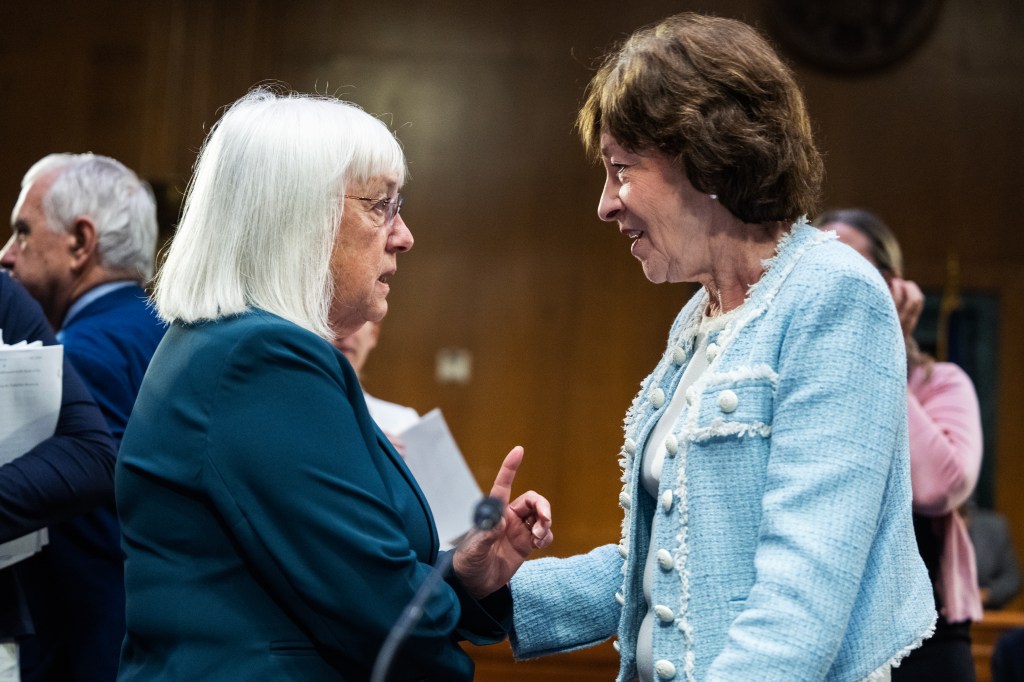
Such a long standoff might well have poisoned appropriators’ attempts to work out a bipartisan compromise, but it did not. Showing a sense of maturity unusual in our political moment, appropriators and their staffers soldiered on, secure that the noise of the shutdown had little to do with them. By the time the shutdown ended on November 12, they had prepared three of the 12 appropriations bills for final passage, and those were adopted, along with a continuing resolution to keep other spending flowing through January 30. They packaged three more bills in early January and got those passed into law with overwhelming bipartisan support. Then on January 22, the House passed the final six bills, including defense spending and the thorny matter of spending for the Department of Homeland Security. Thanks to the detailed work of staffers, conducted out of the public eye, Congress was on pace to have 12 of 12 appropriations laws in place, avoiding another shutdown. The four leading appropriators, Reps. Tom Cole of Oklahoma and Rosa DeLauro of Connecticut, and Sens. Susan Collins of Maine and Patty Murray of Washington, deserve enormous credit for bringing this work to completion despite innumerable obstacles.
In the event, their accomplishment was somewhat derailed by events entirely outside of their control—the killing of Alex Pretti by Border Patrol agents operating in Minneapolis, just 17 days after the killing of Renee Good by Immigration and Customs Enforcement agents in the same city. Given the public outrage that welled up in the last week of January, Senate Democrats decided that they could no longer approve the Homeland Security spending bill unless it contained significant checks on the administration’s immigration enforcement efforts. Rather than passing the House’s bill unaltered on January 30, the Senate amended it to substitute a two-week continuing resolution for the Homeland Security portion. Appropriators would have to settle for 11 out of 12.
As I write, House leaders are trying to bring that amended package to the floor amid a partial government shutdown. If they can, it will almost certainly pass with bipartisan support, as the other appropriations bills did. By and large, members believe the appropriators are working in good faith, and they want to see Congress remain relevant. Unfortunately, getting a vote in the House is complicated. For such important legislation, the normal way to schedule a vote is through the action of the House Rules Committee. But, according to the House’s current convention, Democrats are almost assured to oppose every move the committee makes, even when bipartisan legislation is at stake. President Trump will be pressuring Republicans to support quickly taking up the Senate’s bill, but some Republicans are threatening to withhold their support unless they can get action on their own priorities. Legislation could be moved without a rule through “suspension of the rules,” but that requires a two-thirds vote, which would be uncertain given how many Democrats want to vent their spleen just now.
The political and substantive importance of the immigration enforcement questions is huge, and Democrats have every right to play hardball. But they will have plenty of chances to do so even if the current bill is signed into law. In that case, absent further congressional action, the Department of Homeland Security would return to being shut down on February 13 (next Thursday!). Meanwhile, the appropriators’ considerable accomplishment does not deserve to be casually tossed aside. Legislators should relish opportunities to support good-faith cooperation when they have them.
Mostly, they do, even if small triumphs of normalcy rarely shine through in the media’s coverage of our beleaguered first branch. The Armed Services Committees continued their unbroken streak of passing the annual bipartisan National Defense Authorization Act in December. Mutual respect among appropriators is one of the most potent checks against the second Trump administration’s instinct to go rogue. The pocket rescission came as a shot across the bow—but it was not followed up by an overturning of the established order. Congress has certainly seen better days, but it’s not yet down for the count.