Political leaders are increasingly prioritizing affordability (without the need for subsidies) as a cornerstone of electricity policy. They are now recognizing that high costs burden households, stifle economic growth, and fuel public discontent in wealthier nations that are providing taxpayer subsidies to support unreliable electricity from wind and solar.
These same political leaders in the wealthier nations are oblivious to the fact that “net-zero” is not affordable for the six billion living in poverty! Shockingly, 80 percent of the eight billion on planet Earth, or more than six billion, are living on less than $10 per day.
Amid this “worldwide” economic reality backdrop, nuclear energy presents a far superior affordable alternative to unreliable electricity sources like wind and solar. Economically, it makes no sense to abandon working production methods until new ones can replace the existing and future demand. World citizens are facing this reality in higher electricity prices.
The Truth About Continuous Electricity
One cannot compare baseload continuous electricity to intermittent wind and solar on a like-for-like basis. Due to wind and solar being unable to provide continuous electricity, those projects are not investable by the private sector and only exist in the wealthier countries that can afford to subsidize their existence with taxpayer subsidies.
However, electricity from wind and solar are unpredictable and intermittent and cannot be used as baseload without 100 percent back up, meaning continuous sources like nuclear, coal, or gas must be constructed, manned, and ready to be dispatched when the wind stops or the sun sets. For solar, we can predict nighttime lapses, but wind’s unpredictability exacerbates the issue. So, if one megawatt of continuous backup is needed for every megawatt of wind or solar, why build the intermittent wind and solar in the first place?
Countries like Germany and Denmark, which led with aggressively subsidized wind and solar projects, now suffer some of Europe’s highest prices. This serves as a cautionary tale of a self-inflicted economic disaster that the U.S. can readily avoid. States with high renewable penetration, like California, have seen systemic rises in electricity prices due to full system costs, including that 100 percent backup requirement. Today, California has the highest electricity cost in America (except for Hawaii).
U.S. Secretary of Energy Chris Wright has been clear about such inefficiencies: “Germany invested half a trillion dollars, more than doubled the capacity of its electricity grid, and today produces 20% less electricity than before that investment, selling it at three times the price.” He adds, “We’re in the greatest malinvestment in human history,” noting that globally, $10 trillion has yielded only about 6 percent of electricity from wind and solar, with high penetration driving up prices and prompting mass industry exodus.
It’s time for America to lead with sane electricity policies, unlocking investments in nuclear, coal, oil, and gas. These are the industries that power the modern world that we know today. Nuclear, in particular, provides continuous baseload power with no harmful pollution during operations, positioning it as the clean, reliable cornerstone for a prosperous future.
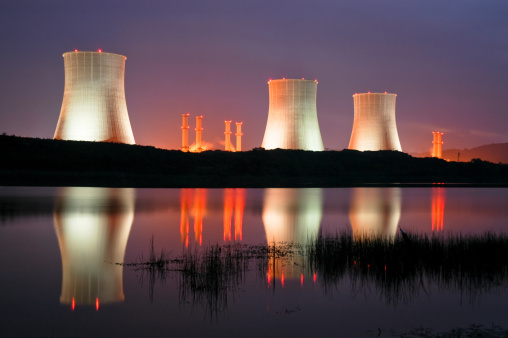
Nuclear power excels in delivering stable, affordable electricity, operating at high-capacity factors, often exceeding 90 percent, to generate power continuously, regardless of weather or time of day. This translates to lower long-term costs, as uranium fuel is vastly superior in the amount of output it produces as opposed to other sources.
True Generation IV SMRs, which fit specific criteria including sustainability (effective fuel use and waste minimization), economics (cost advantages and low financial risk), safety and reliability (very low core damage risk and no need for offsite emergency response), and proliferation resistance and physical protection (deterring misuse), are ideally suited for this role. The Department of Energy endorses fast-tracking these technologies as the clean solutions of the future, with systems like the High-Temperature Gas-Cooled Reactor (HTGR), Sodium-Cooled Fast Reactor (SFR), and Molten Salt Reactor (MSR) leading the way.
Unlike those unreliable wind and solar sources, nuclear provides stable, baseload power that ensures reliability and long-term cost savings, making it the optimal solution for meeting rapidly escalating electricity needs without compromising economic stability. To policymakers and voters alike, embracing nuclear, particularly advanced Small Modular Reactors (SMRs), offers a long-term path to electricity independence, job creation, prosperity, and a means to bring the six billion living in poverty to join the industrial revolution.
The surge in electricity demand is unprecedented. Tech giants such as Amazon, Google, Microsoft, and Meta are backing nuclear power while they are constructing massive data centers to power AI advancements, with facilities requiring six to 10 times more power than previous generations. These centers demand round-the-clock, uninterrupted electricity. AI workloads cannot tolerate fluctuations or downtime. U.S. electricity consumption could double by 2050, necessitating an increase in the always-available supply.
What About the Grid?
The inherent safety in Gen IV SMRs, such as passive cooling that enables automatic shutdown without external power, should translate to reduced regulatory burdens and shorter build times, addressing historical delays in large-scale reactors plagued by overruns and grid constraints.
SMRs, with capacities from 10 to 300 megawatts, are factory-assembled and standardized, substantially reducing construction timelines and costs and will rapidly benefit from economies of scale. They scale efficiently as demand grows, allowing modular additions for precise planning rather than massive, risky projects.
Crucially, SMRs serve as behind-the-meter solutions, deployed on-site with reduced exclusion zones due to their safety features. This means large users like industry and data centers avoid waiting for grid connections or burdening existing systems, connecting directly via short, dedicated lines while maintaining grid interties for resilience. As baseload generators, SMRs supply on-demand, continuous power 24 hours a day, 365 days a year.
Distributed designs incorporate continuous refueling systems, eliminating downtime. For example, the Stratek Global High Temperature Modular Reactor (HTMR), with its foundation on the Pebble Bed Modular Reactor (PBMR), requires no refueling shutdowns, with its multi module configuration enabling rotational maintenance on downstream equipment. This allows data centers and industrial users to coordinate system maintenance and redundancy, building in future scaling from the outset while aligning future construction with demand.
Policies and Shifting Sentiment
The issue of nuclear “waste” is overstated, it is better termed spent fuel, retaining nearly 90 percent of its energy potential. Companies like Oklo are advancing recycling technologies that are integral to the future of affordable and abundant electricity. France, Russia, and China are already reprocessing spent fuel to extract further value and minimize long-term storage needs. Advanced fast reactor recycling (Gen V reactors), such as that proposed by Oklo, can increase the energy output over reprocessing by at least 10 times. Since more spent fuel is being made all the time, recycling spent nuclear fuel transforms it into a truly renewable resource.
Recent U.S. policy shifts, including executive orders aiming to quadruple U.S. nuclear capacity to 400 GW by 2050 and partnerships with firms like Cameco, Brookfield, and Westinghouse, give gravitas to the urgency of this potential. Efforts to restart shuttered plants will further revitalize the sector and provide continuous power needed by States, their industries and citizens.
Regulators, policy makers, and financiers should take these inherent safety characteristics of Gen IV SMRs into account when making long term decisions about the trajectory of the country’s energy future. Cutting time to license and build is not nice to have, it is an imperative step policymakers need to act on.
The Path to Affordable Electricity
As electricity demand balloons and affordability drives political agendas, policymakers and voters must prioritize nuclear energy over intermittent wind and solar power. By embracing nuclear power (particularly Gen IV SMRs, with their inherent safety, scalability, and behind-the-meter advantages), America can secure a stable, cost-effective power supply that fuels innovation, protects consumers from price volatility, and ensures energy independence for generations to come. Failing to invest now risks grid instability and higher costs. These are outcomes no leader or citizen can afford. It’s time for America to lead the world toward rational, nuclear-powered progress.