Submitted by Thomas Kolbe
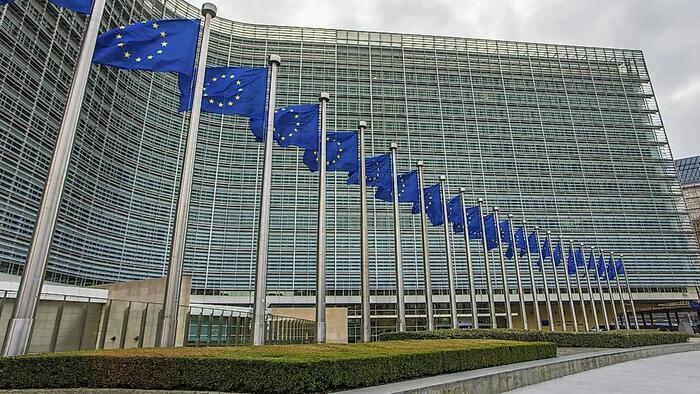
The European Commission is responding to mounting criticism of over-bureaucratization with the introduction of a new corporate legal form. “EU Inc” is intended to create a uniform legal structure that applies across the entire European Union economic area. A charming idea—but one that quickly sinks in the general bureaucratic madness.
The European Union has reached a point where it is considered lucky if a handful of days pass without new regulatory initiatives from the Brussels central apparatus.
To ease some pressure and deflect growing criticism of the EU’s bureaucratic jungle, Commission President Ursula von der Leyen presented the idea of a Europe-wide corporate legal form during the World Economic Forum in Davos.
The proposed new pan-European company type is called EU Inc. It would become the 28th European legal form, alongside national corporate types such as GmbH, SA, or Limited.
What von der Leyen pitched as an innovative project aims to simplify company formation for startups and scale-ups. The goal is to operate cross-border in all 27 member states of the Single Market without needing to create additional subsidiaries to comply with each nation’s legal requirements.
EU Inc is intended to enable a uniform, fully digitalized formation and administration process. Companies could be registered online within 48 hours—without a notary and without cumbersome paperwork.
The Commission also plans to introduce a central EU register, functioning as a one-stop shop and providing transparency on company formations, capital increases, and ownership structures. The project is currently in the early parliamentary consultation phase and could take effect in national law no earlier than 2027.
The Commission’s idea is attractive. Besides facilitating fast and simple company formation, it would be the first substantial initiative in years moving beyond mostly repressive regulation—truly aimed at deepening the European Single Market.
Faster market entry, simplified mergers, and potentially easier venture capital financing could follow—if national tax deregulation also occurs. That, however, seems unlikely given European regulatory practices.
The politically oft-cited capital markets union would thus receive its first, modest boost—a real-world link to the situation of entrepreneurs. Evidently, fragments of criticism from the business world occasionally reach Commission circles—who would have thought?
Where Are the Entrepreneurs?
As always with Brussels initiatives, the devil is in the details. First, national adoption of this new legal form must be achieved.
It is expected that powerful lobbying groups—from tax advisors to auditors—will work intensively to protect their interests, which are largely derived from the complexity of tax law, capital requirements, and formation procedures.
Over any supposed liberalization of economic activity looms the long shadow of European regulatory policy.
This is the real crux of European politics. Considering the economic structure of the European economy, one inevitably asks: where are the entrepreneurs who would even be willing or able to utilize this new EU Inc framework?
A single number illustrates the grotesque regulatory work of Brussels: last year alone, the European economy was flooded with over 1,400 new EU legal acts. That’s four new regulations per day. Directives, regulations, delegated acts, implementing acts—companies are drowning in an ideologically driven Brussels regulatory swamp.
CO₂ policies and supply chain directives are often in focus, scrutinizing every economic activity in detail and generating immense bureaucratic costs. Entrepreneurs increasingly work to fund administration—less to serve their markets.
What we see in Brussels is classic bureaucracy: once established, politically nurtured, and treated as a political vanguard, it develops a life of its own. Cynically, the production of legal acts is the only “good” keeping it alive.
The truth of this bureaucratic phenomenon often reveals itself openly—when politicians proudly list the laws they initiated, without any understanding of real economic life. It is the work record of a gravedigger, carving a path through the increasingly paralyzed productive sector of society.
Political and media support for EU climate regulation has created a self-referential bureaucracy now spreading into member states. With state quotas beyond 50%, the Rubicon of economic imbalance is crossed. Europe risks becoming a purely administrative hub while productive economy steadily shrinks.
The parasitic body consumes its host, accelerating its decay. Europe is degenerating into an administrative site with declining production activity.
Centrifugal Forces Gain Momentum
EU Inc could indeed be a charming solution for deepening the Single Market—if one day an orderly regulatory turnaround is initiated.
It is quite likely that the accelerating downward spiral of high public debt, falling productivity, rising unemployment, and a dramatic geopolitical decline of the continent will eventually pave the way for a conservative, market-oriented shift.
For Brussels central planners, particularly in Eastern Europe, a political storm is brewing that, once unified, could one day shatter the regulatory chains.
From a German perspective, however, it seems likely that the driving forces of climate-socialist transformation—undoubtedly concentrated in Berlin—will marshal their forces to continue the fatal path toward a command economy after breaking with the opposition.
* * *
About the author: Thomas Kolbe, a Germany a graduate economist, has worked for over 25 years as a journalist and media producer for clients from various industries and business associations. As a publicist, he focuses on economic processes and observes geopolitical events from the perspective of the capital markets. His publications follow a philosophy that focuses on the individual and their right to self-determination.
Loading recommendations…