
Editor’s Note: We’re excited to announce Dispatch Energy: The Current State, a live symposium event taking place in Dallas, Texas, on Wednesday, March 11 at 5 p.m. CT. Join Steve Hayes, Jonah Goldberg, and more of your favorite Dispatch authors as we bring our Dispatch Energy newsletter to life. Learn more and get tickets here.
Welcome to Dispatch Energy! Energy politics have polarized significantly in recent years. The types of legislative reforms that were once negotiated in bipartisan energy policy bills or other omnibus packages have more recently been decided by hyperpartisan budget reconciliation legislation, like the Biden-era Inflation Reduction Act and last year’s One Big Beautiful Bill Act. But the depth of the nation’s energy supply and affordability crisis is pressuring Democrats and Republicans to once again work together on energy permitting reform legislation. The critical question at this juncture is whether the seriousness of the nation’s energy challenges, and the political bravery of reform-minded lawmakers, can override the dispiriting polarization that has come to define our energy politics.
Slouching Toward Permitting Reform
For several years now, congressional debates over permitting reform have centered on the National Environmental Policy Act (NEPA). In the wake of post-COVID supply chain challenges—and amid AI-driven demand, concerns about energy affordability, and Democratic ambitions to build a new clean energy economy—both parties have zeroed in on the procedural bottlenecks imposed on new infrastructure development by NEPA and other federal environmental statutes.
The landmark environmental law, which was a mere five-page bill when President Richard Nixon signed it in 1970, was originally intended simply to encourage federal agencies to better consider the environmental impact of major government actions. In the decades since, it has become the lodestone of federal environmental regulation on all sorts of infrastructure investment, facilitating sprawling public comment processes, requiring environmental review documents that take years to produce, and inviting endless litigation from deep-pocketed interest groups.
Congress has taken several whacks at fixing NEPA in recent years, including through limited reforms in the Fiscal Responsibility Act of 2023 and the Energy Permitting Reform Act, which narrowly failed to pass Congress in 2024. Perhaps the most ambitious permitting legislation to date, the SPEED Act, passed the House in December. The bill would significantly limit the need for government agencies to conduct environmental reviews of major infrastructure projects. As of the House’s passage, all eyes turned to the Senate, which was expected to produce companion legislation before the winter holidays.
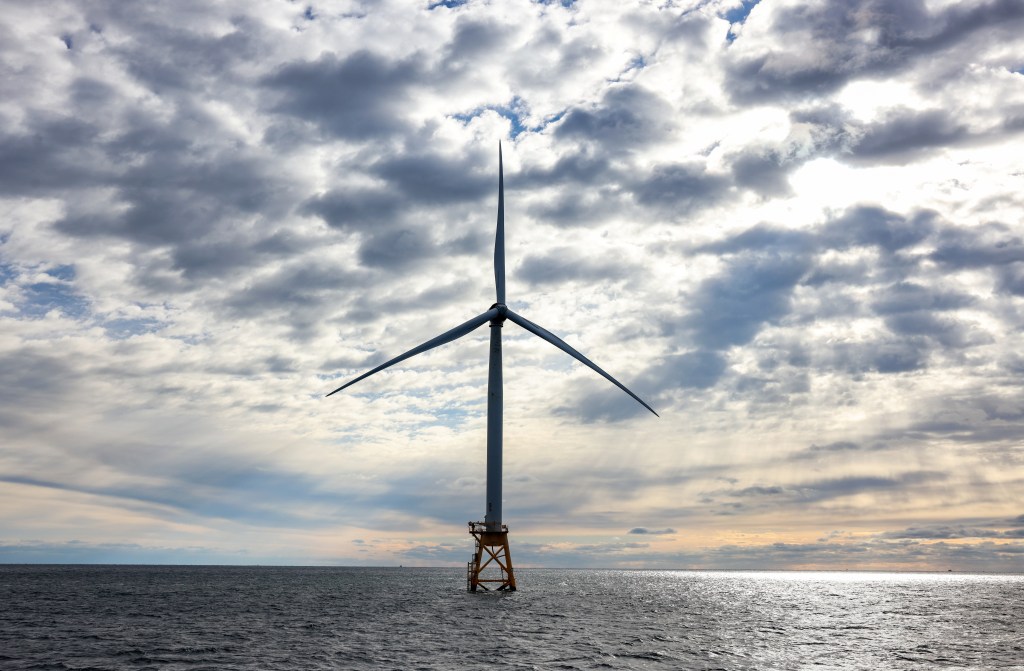
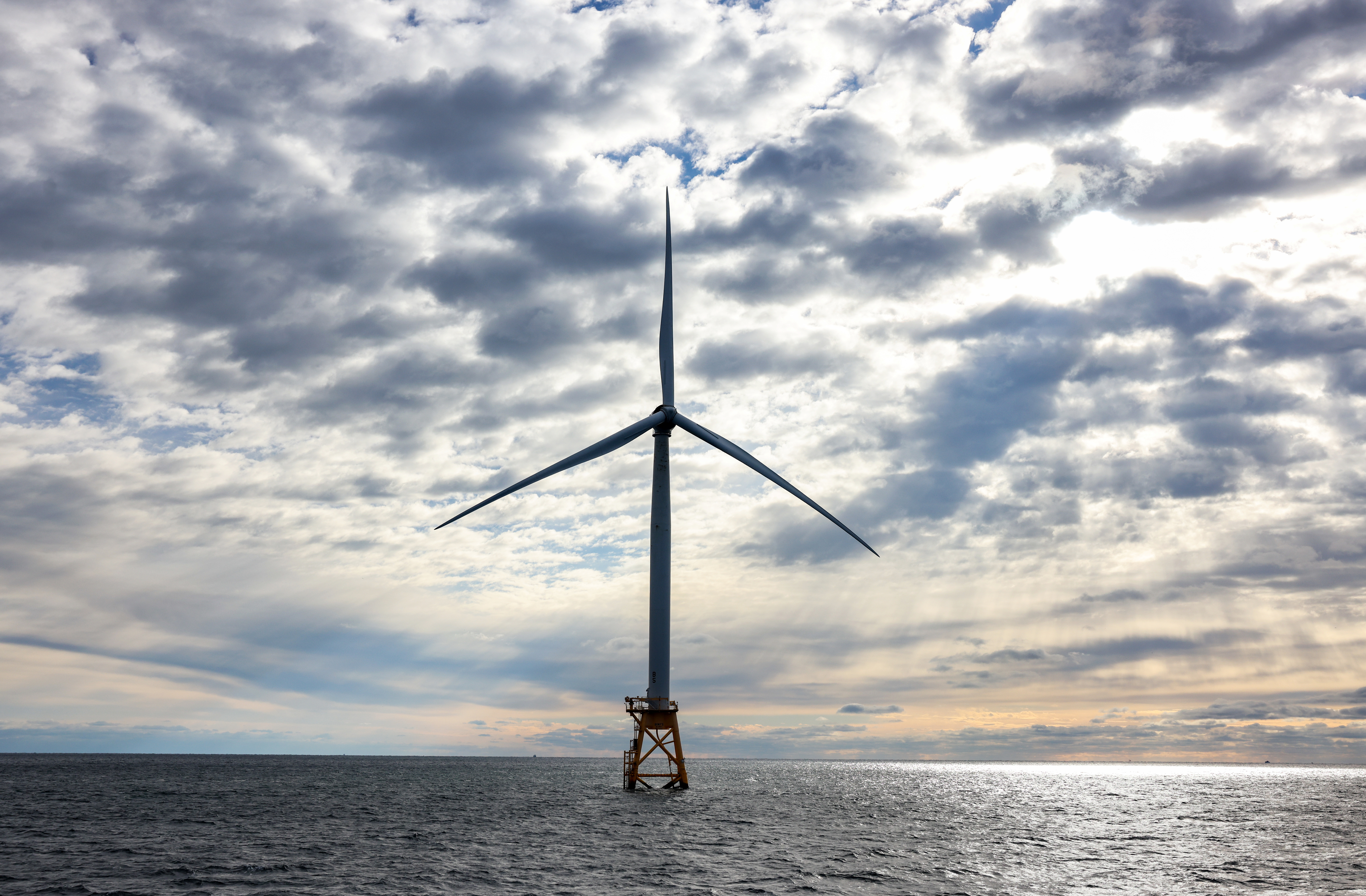
Then, on December 22, the upper house’s efforts to pass permitting reform legislation hit an unexpected snag when the Trump administration abruptly suspended work on five large-scale offshore wind projects on the East Coast that were already under construction, citing broad national security concerns. These projects—Sunrise Wind, Empire Wind, Vineyard Wind, Revolution Wind, and Coastal Virginia Offshore Wind—together represent more than 6 gigawatts of carbon-free capacity. The Interior Department’s directive effectively froze construction on fully permitted projects days before Christmas.
Developers and states immediately went to federal court, and judges have been unimpressed with the administration’s rationale. In the latest ruling this week, a federal judge granted a request to lift the stop-work order on Sunrise Wind, sealing a clean-sweep in judicial victories for the five affected wind projects. The courts found the government failed to justify an imminent national security threat sufficient to halt construction already underway, and ordered work to resume.
But on Capitol Hill, the damage was already done. As soon as the Trump administration announced the stop-work orders, key Senate Democrats walked away from permitting negotiations. “The illegal attacks on fully permitted renewable energy projects must be reversed if there is to be any chance that permitting talks resume,” said Sens. Sheldon Whitehouse of Rhode Island and Martin Heinrich of New Mexico, the ranking members of the Environment and Public Works and Energy and Natural Resources Committees. “There is no path to permitting reform if this administration refuses to follow the law.”
It remains to be seen whether the courts’ reversals of the administration’s offshore wind cancellations will bring Democrats back to the table. Last week, the Senate Environment and Public Works Committee held a hearing on permitting reform, during which Sen. Whitehouse told reform advocates, “I don’t think you have a problem in this room. I think you have a problem at the other end of Pennsylvania Avenue.”

Report: How to unlock America’s natural resources
Modern environmental law too often assumes that human activity is inherently harmful—that protecting the planet requires slowing growth, limiting resource use, and constraining development.
Pacific Legal Foundation’s report, Natural Resources and Human Flourishing, challenges that assumption—demonstrating the link between natural resource use and prosperity, the scale of America’s natural abundance, and the policy barriers holding us back from a more prosperous future.
The quest for ‘permitting certainty.’
What Whitehouse, Heinrich, and other Democrats are now demanding has become known as “permitting certainty”—legal provisions to ensure that, once a project has been duly permitted by a federal agency, the White House cannot unilaterally withdraw, cancel, or pause federal leases or permits for infrastructure projects.
Importantly, the Trump administration is not the only guilty party here. The Biden administration revoked the operating permit for the Keystone oil pipeline and canceled oil and gas drilling leases that had already been issued. The Trump administration’s attacks on offshore wind and other renewable energy projects are, in a way, simply a proportional response to the permitting proceduralism instigated during the Biden years.
That may explain why both parties show interest in strengthening permitting certainty. And last month, my organization, the Breakthrough Institute, proposed one mechanism for achieving such certainty: extending the same procedural protections currently enjoyed by offshore oil and gas projects under the Outer Continental Shelf Lands Act to all energy projects, including offshore wind farms and onshore energy projects.
Congress is toiling away at similar ideas. In December, two House Democrats and two Republicans introduced the CERTAIN Act, which would ensure “lawfully issued permits that remain in compliance are safeguarded from political interference.” And earlier this week, a bipartisan group of representatives introduced another permitting bill, the FREEDOM Act, which would prohibit “any order or directive terminating the construction or operation of a fully permitted project.”
There are many other components of NEPA that need reform. We at the Breakthrough Institute have proposed a comprehensive “reboot” of NEPA which would modernize both public input and judicial review under the law, while enabling artificial intelligence tools to streamline environmental review. The FREEDOM Act, likewise, would set strict timelines for environmental reviews and impose constraints on judicial review of permitted projects.
But to some extent, all of these proposals hinge on the durability of the permits themselves. With both parties guilty of abusing the system, permitting certainty may prove the keystone for any broader reform legislation to cross the finish line this year.
Can the center hold?
SPEED. CERTAIN. FREEDOM. There is no shortage of bills drafted to reform NEPA and the broader morass of federal environmental statutes that inhibit energy and infrastructure development in the United States. What’s lacking, to date, is sufficient political bravery to actually pass one or several of these measures.
That isn’t to say the need or support for permitting reform is underwhelming. Environmental regulatory reform is no longer a discrete concern of developers or a partisan deregulatory priority for Republicans. It now sits at the center of a host of widely held national policy imperatives: lowering energy costs, scaling low-carbon power, rebuilding domestic manufacturing, hardening supply chains, cultivating new industries, and competing with China. The status quo—in which major projects routinely take years or longer to permit, litigate, and re-permit—is incompatible with any serious vision of energy dominance, decarbonization, or reindustrialization.
The new Abundance movement and a host of clean energy and “climate-tech” industries have joined with conventional energy and other “hard-tech” industries to make a sincere environmental case for permitting reform. Endless process, serial litigation, and regulatory paralysis do not protect nature so much as they entrench scarcity, raise costs, and push development to jurisdictions with weaker environmental standards.
But despite the substantive case for reform, and the new coalitions behind it, Congress keeps chickening out. So it should be noted that, while permitting legislation has attracted support in recent years, the institutional environmental movement on the left and a cohort of anti-renewables voices on the right stand opposed.
The fate of permitting legislation is a test, both of the “all-of-the-above” energy abundance agenda and of a civil, bipartisan politics that has come under threat in recent decades.
Policy Watch
- The Department of Energy has officially scrapped the decades-old “As Low As Reasonably Achievable” radiation safety principle from its regulatory framework—a move aimed at reducing regulatory burdens and lowering costs for advanced nuclear projects. Department of Energy Secretary Chris Wright implemented the change in January, following a presidential directive and a technical recommendation from Idaho National Laboratory that questioned the scientific basis of the standard and the underlying “linear no-threshold” model. The model presumes that any dose of ionizing radiation carries a proportional risk of harm, even though no serious evidence exists of harms from the low doses experienced by nuclear power plant workers. As my Breakthrough Institute colleagues Adam Stein and PJ Seel recently argued, that model is not based in proven scientific certainty but is “rather a conservative, simplifying assumption used for regulatory policy in the face of this ambiguity.” The shift is intended to align radiation protection with risk-informed standards and expedite the deployment of next-generation reactors.
- The White House announced a major expansion of U.S. critical minerals policy, unveiling “Project Vault,” a nearly $12 billion initiative to establish a strategic reserve of rare earths and other critical minerals. Backed by up to $10 billion in loans from the Export-Import Bank and about $1.7 billion in private capital, the stockpile is designed to reduce U.S. dependence on China’s dominant rare-earth processing capacity and cushion domestic supply chains against future disruptions.
- Alongside broader reforms to federal environmental regulations, congressional lawmakers have also reintroduced a law aimed at streamlining forest management projects. The Fix Our Forests Act would streamline environmental review and expand so-called “categorical exclusions” for forest projects under NEPA, allowing the U.S. Forest Service to bypass lengthier and more complex environmental review processes. As our research at the Breakthrough Institute has shown, these projects account for the bulk of NEPA litigation, as environmentalist organizations routinely sue the Forest Service to stop controlled burn and mechanical thinning projects intended to mitigate wildfire risk.
Further Reading
- Writing for Compact, Tracy Stone-Manning reflects on her time atop the Bureau of Land Management, illuminating the longstanding structural and statutory challenges within federal land and resource management. Stone-Manning gets at the ways in which environmental statutes and other regulations obstruct not just private infrastructure development, but also government operations and stewardship over natural areas. “Environmental analysis became less about crafting the best solutions and more about producing documents that could survive inevitable lawsuits,” she writes.
- In The Atlantic, Noah Kaufman, who previously served as a senior economist for President Joe Biden’s Council of Economic Advisers, issues a conspicuous critique of the way that agencies in Democratic administrations tend to design climate regulations. As he writes, the “quantitative estimates” demanded by the White House to guide climate regulations “lie far beyond our analytical capabilities.” Kaufman’s warning is an important reminder that climate policy is about managing uncertainties, not about pinpointing precise impacts.
Pacific Legal Foundation has been fighting for freedom since 1973. We sue the government on behalf of farmers, fishermen, teachers, nurses, and entrepreneurs—Americans from every corner of the country and from every walk of life—and we win.