Editorial note: this essay originally appeared at The Giving Review.
***
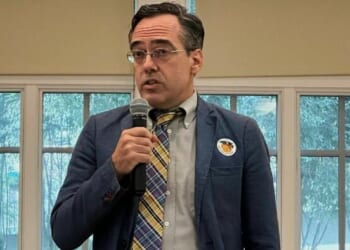
Tevi Troy understands and enjoys policy and politics—and appreciates historical context. He has knowledge and wisdom, and affably imparts both. A senior fellow at the Ronald Reagan Institute and a senior scholar at Yeshiva University’s Straus Center, Troy was a deputy secretary of the Department of Health and Human Services and White House domestic-policy aide during President George W. Bush’s administration. He’s also been a Capitol Hill policy staffer.
He has studied and written widely on particular presidents and themes surrounding the presidency in general, as well, including in his most-recent book The Power and the Money: The Epic Clashes Between American Titans of Industry and Commanders in Chief. Among other things, the book well-covers the contentious relationship between John D. Rockefeller, Sr., and President Theodore Roosevelt.
Last month, in response to a Wall Street Journal column by Barton Swaim bringing to light and lamenting “the Byzantine network of activist nonprofits created and fostered over the past decade and a half by liberal foundations and progressive billionaires,” Troy penned a letter to the editor underscoring Swaim’s point, though noting “it’s important to point out that the problem long predates his flashpoint date of 2010.”
Troy was kind enough to join me for a recorded conversation last week. The less than 14-minute video below is the first part of our discussion; the second will appear tomorrow. During the first part, we talk about left’s nonprofit problem and its history, origins, and effects, and how to consider doing something about it.
President “Lyndon Johnson was skeptical of the Ford Foundation back in the 1960s,” Troy tells me, when Johnson’s advisor
Joe Califano suggested, “Why don’t we get a neutral observer like McGeorge Bundy, the head of the Ford Foundation, in here to discuss these matters about urban violence?” Johnson wrote in the margins of the memo, “Ha! Ha!.” So that’s already how they thought about the Ford Foundation back in a Democratic administration in the 1960s.
Then, President Richard “Nixon was not a fan of the Ford Foundation” either, according to Troy. “I found this great rant where he went off about how much funding they had given to Ed Muskie, who was his presumed opponent in the 1972 election,” Troy continues. “Nixon complained about how much Ford Foundation had sponsored [Muskie’s] travel and—look, as we all know, money is fungible—if the Ford Foundation is paying for your travel, then you don’t have to raise money for it or use government funds for it.”
Asked whether, more largely, progressivism has been in philanthropy’s “DNA” since its beginnings in America, Troy answers, “This has been an issue of philanthropic drift for a long time, but I’m not willing to go so far as to say progressivism is in philanthropy’s DNA.” He adds, “We focus on [George] Soros and what he does to promote criminality in our cities and we focus on all the left-wing things that happen in foundations, but there’s a lot of good things that happen in foundations that have nothing to do with politics,” including” in “hospitals, and educational institutions, and school choice.”
Troy says there are “all kinds of great, conservative think tanks that get philanthropic help, including the Reagan Institute where I work, and the Hudson Institute and American Enterprise Institute where I’ve worked previously.” He adds,
That said, at the same time, there are a lot of foundations that are giving money to causes that I don’t agree with, and I think some of them are destructive not only to America, but to the idea of capitalism writ large. I think as conservatives, we should push back against that. But I really don’t want to throw the baby out with the bathwater and get rid of the philanthropic system that is really unique to America and something that is an advantage I think America has over other countries.
Addressing whether contemplated reform of philanthropy’s ability to fund and engage in partisan political activity could be characterized as throwing “the baby out with the bathwater,” Troy says, “I absolutely think that you cannot engage in partisan activities from a foundation, if you have” Internal Revenue Code § “501(c)(3) status, which is tax-exempt status. Now, that said, that is already the law.
“I think we need to be very careful that whatever changes we make to the law will apply to both conservative and liberal foundations,” he adds. “Progressivism is definitely in government’s DNA, and so we’ve got to be careful about who is guarding the henhouse.”
In the conversation’s second part, Troy further discusses how the right should consider what to do about problems caused by the left’s intermingling with and reliance on politicized nonprofits.