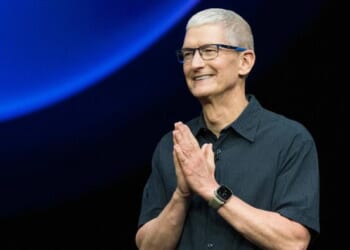
“The FTC is not the speech police,” FTC Chairman Andrew Ferguson wrote to Apple CEO Tim Cook on February 12. Ferguson might want to ask himself why he felt compelled to pre-empt such an accusation.
The letter cited reports claiming Apple News “has systematically promoted news articles from left-wing news outlets and suppressed news articles from more conservative publications.” He warned Cook that this may put Apple in violation of its own terms of service as well as the Federal Trade Commission Act—a 1914 federal law establishing the FTC and preventing unfair methods of competition and deceptive acts in commerce—for “material misrepresentations and omissions” toward its consumers.
“I encourage you to conduct a comprehensive review of Apple’s terms of service and ensure that Apple News’ curation of articles is consistent with those terms, and, if it is not, to take corrective action swiftly,” Ferguson concluded.
This kind of baseless, flagrant intimidation tactic would be frightening if it weren’t so obviously ridiculous.
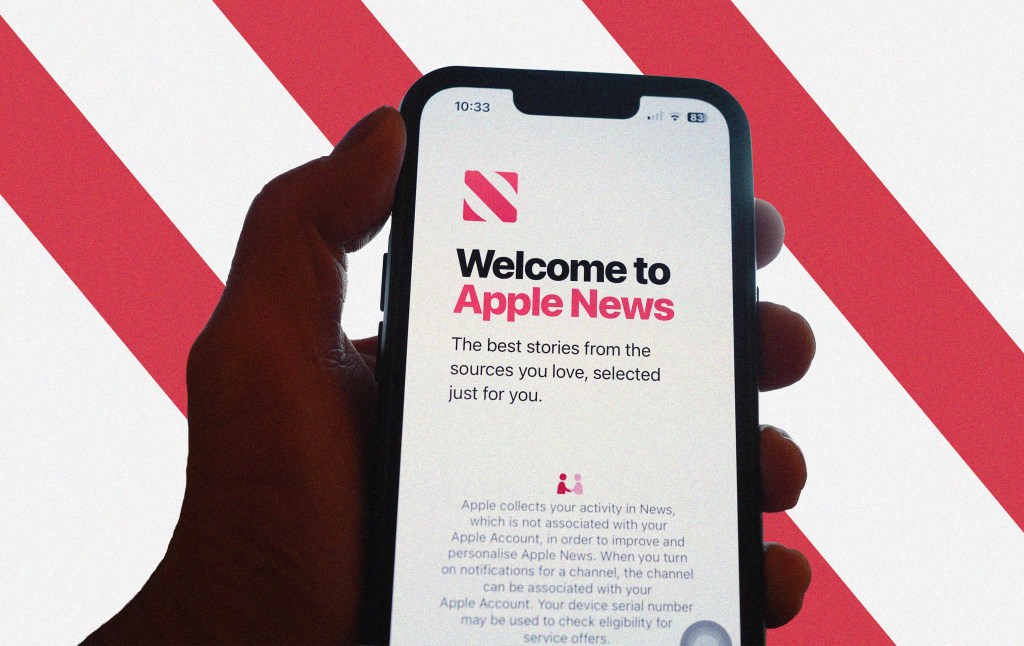
For starters, the claim about left-wing bias comes from recent research released by the Media Research Center. According to MRC, “only one of the 560 articles examined in November came from a right-leaning source.” But the reliability of MRC data is far from a given. To begin with, it relies on subjective pronouncements of what outlets are “left-wing,” which are at best arbitrary and at worst themselves biased. Critics have also noted that some of the news outlets the MRC claimed were suppressed, such as Breitbart and The Gateway Pundit, don’t even post on the platform. Yes, really. And on top of it all Apple News is an aggregator with in-depth customization tools. Users can tailor the platform to their own preferences, and they can even eliminate all of Apple’s editorial content if they so choose. Writing for Forbes this month, media and culture journalist Andy Meek concluded that “the app largely reflects the choices that its users make themselves.”
But even if the allegations were true, they would still be irrelevant.
The fact is that Apple has the same First Amendment right to decide which content to share or feature as a newspaper editor does. The government isn’t free to replace Apple’s editorial judgment with its own just because it disagrees with Apple’s decisions. Imagine Ferguson asserting authority over the order and visibility of newspapers and magazines at newsstands, or the organization of bookstore shelves. Everyone would view that as unacceptable government overreach, and there is no reason to view it otherwise simply because the target is digital.
Or imagine the FTC investigating whether Fox News was really “fair and balanced,” as its slogan used to claim, threatening punishment for unfair or deceptive trade practices if the government decided its coverage was slanted. Actually, you don’t have to imagine it—the FTC received a petition asking it to do exactly that, which the agency properly rejected as obviously foreclosed by the First Amendment.
Apple’s First Amendment rights aren’t limited by the fact it’s a technology company, despite the FTC’s attempt to frame it as an issue of the platform’s terms of service. This kind of inquest is about as transparent and lazy as censorial pressure can get. But the consequences of letting it slide can be fatal to free speech and a liberal democracy. If the government can supplant a website or app’s interpretation of their subjective terms of service with its own, the FTC could easily censor any ideas it doesn’t like by threatening to punish an alleged “failure to live up to” them.
Democratic administrations could use “terms of service” inquiries to pressure private platforms and organizations into eliminating “hate speech.” Conservative administrations could do the same to force removal of posts calling them “fascists” or reporting on ICE activity in public.
It’s precisely this kind of “We must violate the First Amendment in order to save it” tactic that led Supreme Court Justice Elena Kagan to conclude in Moody v. NetChoice, LLC: “On the spectrum of dangers to free expression, there are few greater than allowing the government to change the speech of private actors in order to achieve its own conception of speech nirvana.”
This is just the latest example of the coercive and censorial abuses of power the FTC has taken during President Trump’s second term. In May 2025, it opened an investigation into the liberal watchdog organization Media Matters for America, claiming illegal collusion with other advocacy groups to cut off X’s advertising revenue.
Media Matters sued the FTC in June, arguing that the agency’s action was retribution for a 2023 report showing that ads on X for brands like Apple, IBM, and Xfinity were shown alongside antisemitic content. In August, a federal judge blocked the investigation, calling it “a straightforward First Amendment violation.” As the judge ruled, Media Matters did nothing more than engage in “quintessential First Amendment activity when it published an online article criticizing Mr. Musk and X.”
The FTC is waging a similarly censorial campaign against NewsGuard, a private news and information website rating company, over its alleged practice of maliciously rating conservative media companies like Newsmax lower than liberal ones like the New York Times. Yet NewsGuard rates both National Review and the Wall Street Journal, both considered right of center, higher than the New York Times. That, of course, didn’t stop the FTC. Claiming antitrust violations, the FTC has demanded that NewsGuard turn over virtually every document it has created or received since its founding in 2018—including memos, emails, texts, reporters’ notes, subscriber lists, analyses, financial reports, and more.
And you thought an IRS audit was bad.
But that’s not all. The FTC also forced other private companies to blacklist NewGuard. When the large media corporation Omnicom announced a merger with Interpublic, the FTC immediately launched an investigation. Their claim was that the merged entity—which would become the largest advertising entity in the world—could violate competition law by steering “advertising away from media publishers based on the publishers’ political or ideological viewpoints.” In other words, by exercising their First Amendment rights. As a condition for approving the merger, the FTC barred the newly formed company from using NewsGuard’s ratings and journalists—which it has been doing as early as March 2021.
Once again, this is a clear violation of the First Amendment. That’s why, with the help of our organization, the Foundation for Individual Rights and Expression (FIRE), NewsGuard is suing the FTC for this unconstitutional speech-based retaliation and jawboning.
While Ferguson’s letter to Apple correctly notes that he and the FTC “do not have authority to require Apple or any other firm to take affirmative positions on any political issue, nor to curate news offerings consistent with one ideology or another,” that’s exactly what he’s doing. The FTC has no more business policing the editorial decisions of Apple News under the guise of “consumer protection” than it does the “fair and balanced-ness” of Fox News’ coverage.
Ferguson’s letter is egregious and absurd, and one can only hope that Apple will push back on this pressure—especially since Tim Cook’s attempts to flatter and gift his way out of the crosshairs didn’t seem to work for very long. The response to these strong-arm tactics is principled opposition and a willingness to stand on its rights. We’re lucky enough to have these legal tools to fight back with, but they’re nothing without the spine and resolve needed to wield them.
When the history of this peculiar period is written, the story will be told not by those who capitulated, but by those who chose to defend time-tested constitutional principles.