You’re reading Dispatch Culture, our new weekly newsletter exploring the world beyond politics. To unlock all of our stories, podcasts, community benefits, and our newest feature, Dispatch Voiced, which allows you to listen to our written stories in your own podcast feed, join The Dispatch as a paying member.
Much ink has been spilled over AI’s possible effects on business, law, tech, journalism, and pretty much every other field. What about art? In today’s “American Artifacts” section, the writer Jenna Stocker argues that AI can’t be a true artist—and she contrasts the mechanistic nature of AI with the late Milton Glaser, the artist behind the “I Love NY” slogan. Elsewhere in this newsletter, you’ll find a blog suggestion from yours truly, as well as three recommendations from Dispatch executive editor Declan Garvey and a Work of the Week submitted from a former Dispatch intern!
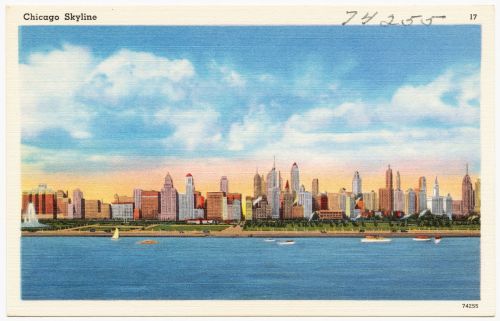
On the site today, we have two pieces. New York City has long been known as America’s literary capital—it is, after all, where the major publishers are, and its reputation as a creative hub is nearly unmatched. But, writer Sam Buntz argues, Chicago’s poetic potential shouldn’t be overlooked. “The literary life of Chicago has been defined by the work, rather than the scene,” Buntz writes. “As befits Carl Sandburg’s ‘City of the Big Shoulders,’ Chicago is concerned with production, with hustling, with getting the work done. It is plainspoken and populist in comparison to New York, yet still creatively fecund.”
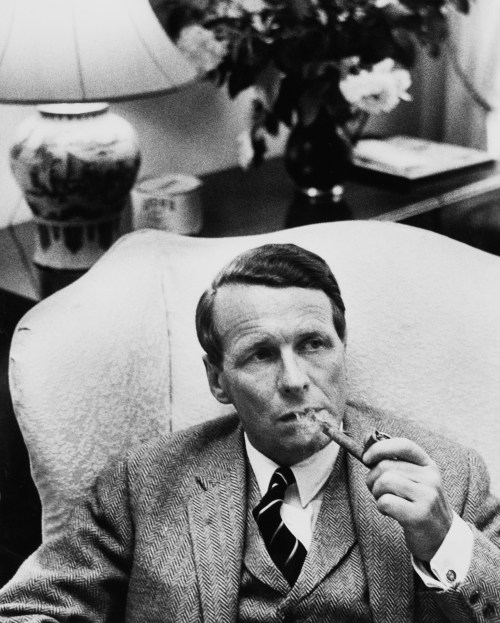
And speaking of creatively fecund, Thomas Dichter writes about his father, Ernest Dichter—a psychologist-turned-marketing-expert considered to be the “father of motivation research”—and how digital advertising today seems to have lost the joie de vivre of the Mad Men days. Writes Dichter: “Digital ads have become just one more stressor in a hyperspeed era where most of us are overstimulated and over talked-at and where every technology and every media is competing for our attention. All this leads to a kind of dismal dance.”
From earlier in the week, we have Sam Kronen on heroes in literature and movies and Jeremiah Johnson on inclusion taken too far. That’s all!
American Artifacts
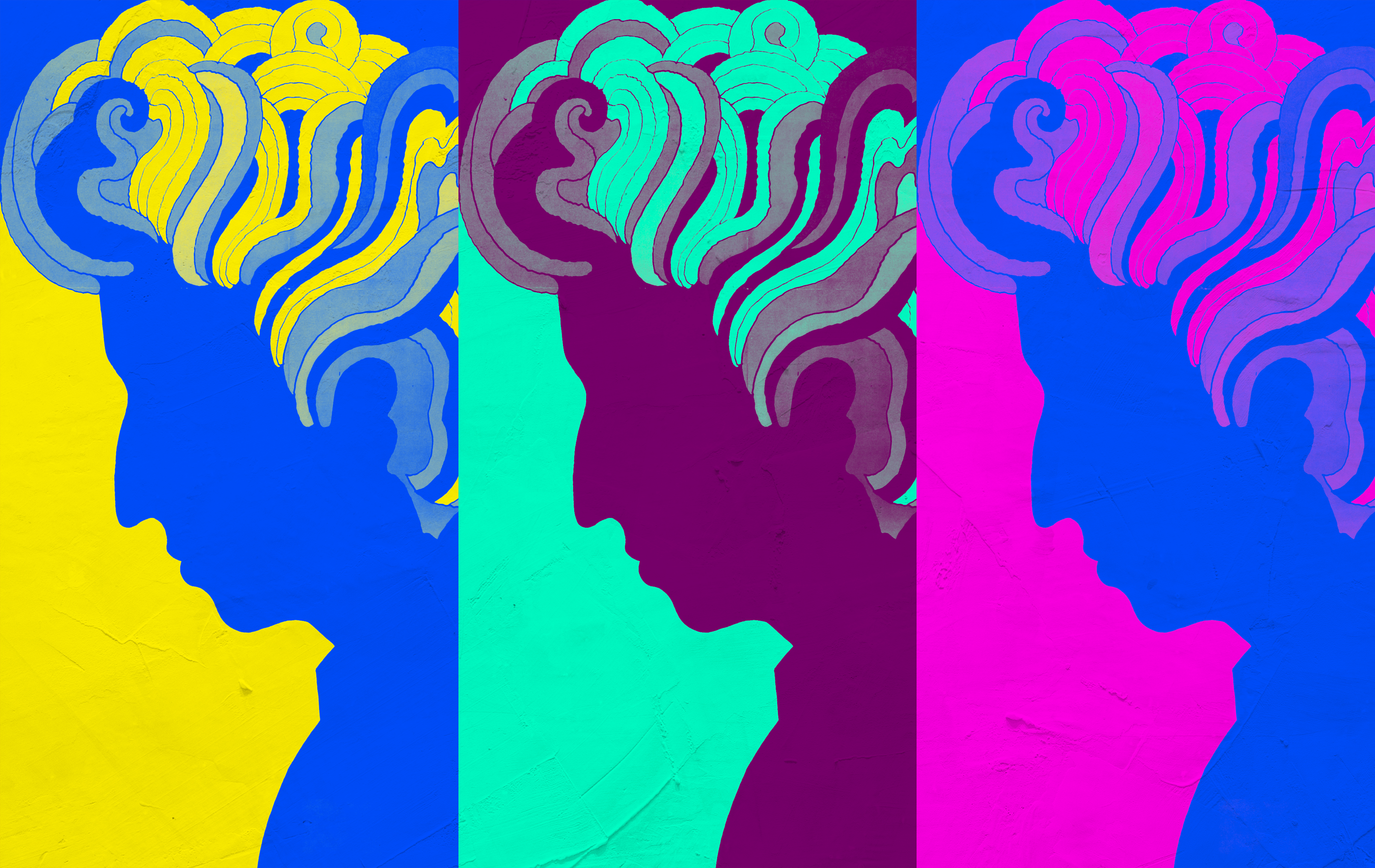
Can AI Create Something Entirely New?
Legendary graphic designer, artist, and co-founder of New York magazine Milton Glaser, who created the “I Love NY” logo and had a hand in revolutionizing the fusion of advertising, art, and design in the 1960s, explained in an interview for the New York Times in 2016 what it means to create:
It’s the greatest source of pleasure in my life. I am so thrilled by making something that didn’t exist before. There’s nothing, nothing even close. I never go to the theater, I never go to concerts, I no longer go to movies. I don’t do anything except work. It’s like magic. I also think there’s an opportunity to do good. Not in a moralistic sense, but to feel that you’re a part of something larger than yourself.
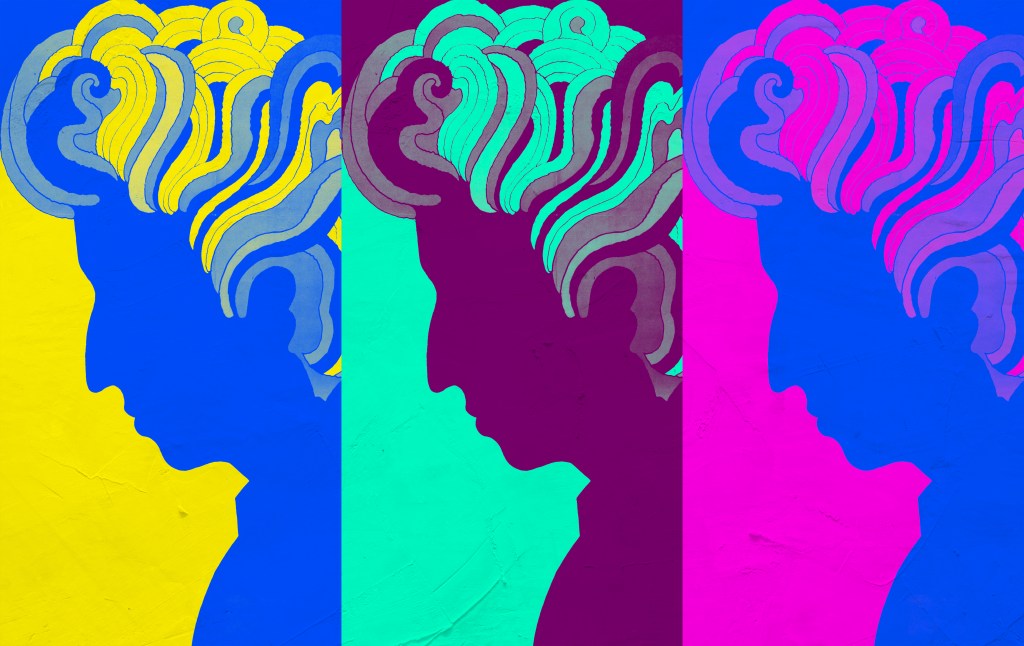
Glaser, who died on his birthday in 2020 at age 91, was the epitome of a “creative.” He defined an era of graphic design and midcentury, post-World War II aesthetic, and ushered in the psychedelic design that evokes the end of Mad Men and Donovan’s albums Sunshine Superman (1966) and Mellow Yellow (1967). Glaser revolutionized album art and concert posters, becoming well-known for his design for Bob Dylan’s Greatest Hits.
Glaser lived well before the time of artificial intelligence. But would AI be able to launch an entirely original aesthetic out of nothing—essentially building a generation’s visual experience from nothing but imagination and dedication to craft and originality?
The answer is a resounding no. AI isn’t capable of the cultural context and contact necessary to form a bond with the societal conversations that define a generation. What is missing is the intimacy of feeling—an unspoken, elusive bearing that can’t be meaningfully perceived by an algorithm. It is up to us; it has always been up to us to assign value to what seems intangible. We either care about the world around us or let it fall into a stagnant wasteland of inactivity, boredom, and apathy, contented with the banality of complacent conformity and blind acceptance that this is all there is.
It was man’s failing and bad policy that brought ruin to New York City in the 1970s and ‘80s—and it was Glaser’s inspired work of art (and new leadership) that helped resuscitate a community without hope. He was commissioned by the New York State Department of Commerce to bring a fresh, simple message to the city, and he came up with “I (Love) NY” as a tribute to lovers who carve their initials in trees, reminding people of their love for the city. It’s hard to imagine AI alchemizing human wishes and passions into a work like that.
In his 1958 book La Poétique de l’Espace, the French philosopher Gaston Bachelard considers how we live: Our homes, our environment, and our attitudes are formed by and reflected through imagination. But AI lacks the myriad inputs that shape human imagination—from social and cultural common experiences (as waning as that may seem currently) to countercultural attitudes that are imperceptible to AI. “When the image is new, the world is new,” Bachelard writes. “Space that has been seized upon by the imagination cannot remain indifferent space subject to the measures and estimates of the surveyor. It has been lived in, not in its positivity, but with all the partiality of the imagination.”
Glaser lived, dreamed, and worked in a hypercolor-infused weightlessness that fused his dreams, energy, and vision. He collaborated with his Cooper Union friends, Seymour Chwast and Edward Sorel, to form Pushpin Studios in 1954, where “he splashed his boldly colored, exuberantly referential designs across posters, record covers, book jackets and magazines.” Early on, he reimagined book covers for such classic reissues such as 1984, Cyrano de Bergerac, G.K. Chesterton’s The Man Who Was Thursday, and Signet’s Classic Shakespeare collection. He cofounded New York magazine in 1968 and served as president and design director until 1977. The iconic script and striking covers inextricably tied New York with Glaser, making his promotional design for the seventh season of AMC’s Mad Man a flawless choice with his use of saturated colors, semi-psychedelic lines, and bursts of excess.
The great danger to art and humanity doesn’t stem from fear of the unknown. Rather, the danger comes when we stop exploring the unknown, relinquishing our creative sense to artificial dreck. We owe it to men like Glaser who never stopped reveling in doing the work. AI alone won’t usher in the end of humanity. It would need our help to succeed.
An Outside Read
I am a Gen Z woman, so perhaps it wouldn’t make sense for me to like the new blog of Jennifer Steinhauer, a former New York Times writer who belongs to Gen X (and who signs her posts with “Jen X”). But I do, and I think it’s because Steinhauer’s voice has a great blend of warmth and wry wit—not to mention confidence, something Gen Z appears to lack. Writes Steinhauer in a recent post: “I am well past the life stage of navigating friendships with people who may or may not have sh-t-talked me in the group chat; that my adult children are perfectly happy to hear from me once a week (unless I have something to say involving expensive vacation rentals or they have a pressing dining issue that they have texted me while I had the temerity to be showering) and that my husband is perfectly happy with me making him a drink while he talks (as I marginally listen) about people in his workplace who I either do not know, do not like, or who had already told me that story themselves. Girls, I AM AT PEACE!”
P.S. Despite this section’s name of “An Outside Read” (denoting a singular read), I am also going to share “The century of the maxxer,” by the British writer Sam Kriss. The essay will appeal mostly to the internet-poisoned, so I apologize to those of you who are normal. But I think Kriss makes a good point about single-minded obsession and how it will impact our culture going forward.)
Stuff We Like
By Declan Garvey, Executive Editor
- British music. Have you guys heard of these “Beatles” fellas? No, when Valerie asked me to recommend something for this newsletter my mind immediately jumped to a crop of young-ish artists in the U.K. who have been dominating my Apple Music of late. Sam Fender (who I got to see live last fall) does a pretty good translation of Bruce Springsteen’s working-class anthems for the 21st century, and Olivia Dean (who I first discovered from a feature on a Fender song) somehow manages to transport me back to the 1980s. (I was born in 1995.) Honorable mentions: Holly Humberstone, Jack Garratt, James Bay, and, because they have a new album out this month, Mumford & Sons.
- It Was Just an Accident. My wife and I watched this film from Iranian director Jafar Panahi a few weeks ago, and it managed to keep us from falling asleep on the couch halfway through—no small feat at the end of a long week of work. Part-thriller, part-black comedy, the movie follows several former Iranian political prisoners trying to move on with their lives until they stumble upon a man who they believe to be their former torturer (they were blindfolded during the sessions). The uncertainty—not only over whether they have the right man, but over what to do with him if they do—drives the plot forward and puts a very human face on what authoritarian regimes do to both the oppressed and the oppressors. That Panahi has himself been a political prisoner of the mullahs in Iran—and filmed portions of the movie in-country without the regime’s permission—is icing on the cake.
- Going to bed early and waking up early. My mom is going to pull her hair out reading this—she’s been giving me this advice for nearly 25 years—but I completely revamped my sleep schedule a few months ago and I don’t know that I’ll ever go back. After four years of working until 2 or 3 a.m. most nights to edit The Morning Dispatch, I’ve been getting to bed by 11 p.m. and waking up at 5 or 5:30 a.m. I’m still averaging about six hours of sleep, but they are a much better six hours—and getting a jump start on the day, whether to hit the gym or knock out a few hours of work before the day gets overtaken by calls and meetings, has been a game-changer. Who knew!
Work of the Week
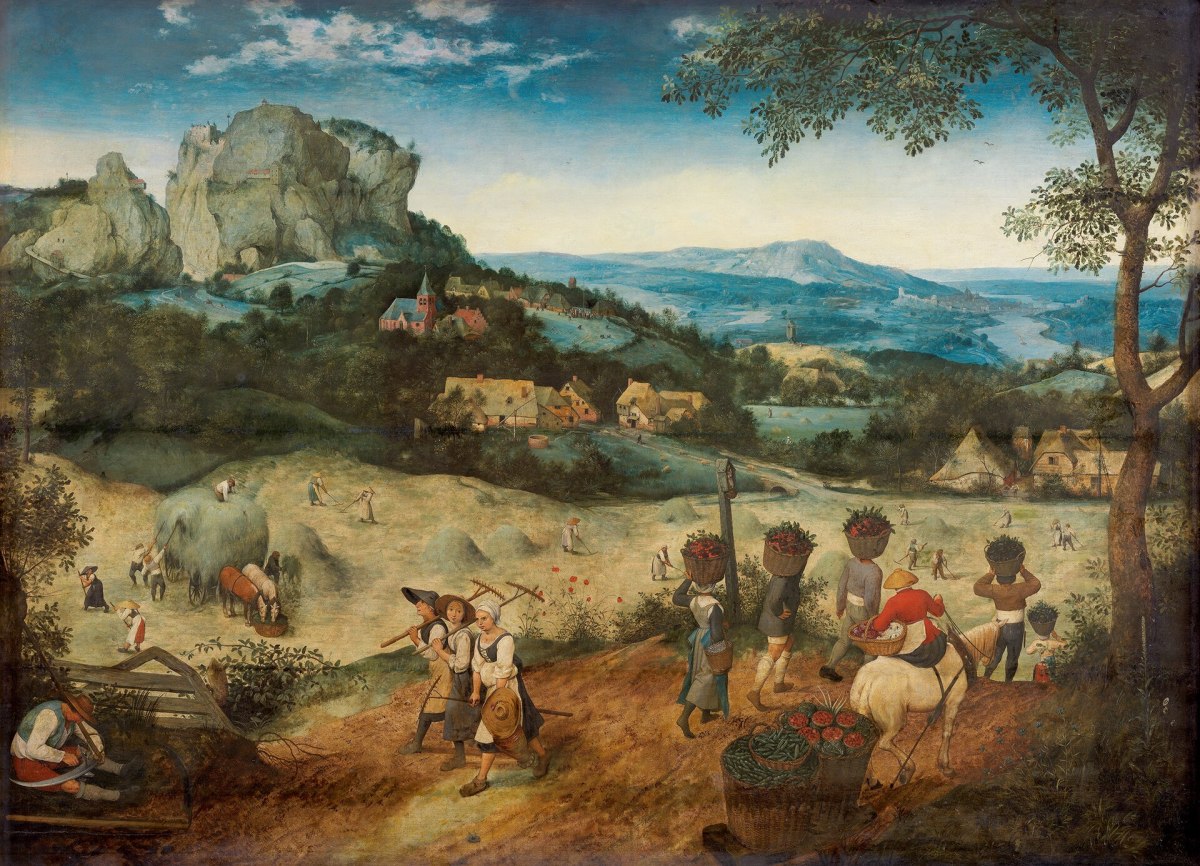
Work: The Hay Harvest, Pieter Bruegel the Elder, 1565
Why I’m a Dispatch member: I had the good fortune of interning at The Dispatch last summer. It is no small thing that The Dispatch is both a new institution and not an outrage factory—institutions like it will be important to teach my generation the importance of conviction but the folly of partisanship. For this reason, The Dispatch is required daily reading.
Why I chose this work: I am currently studying abroad in Vienna, which is the best city in the world to see Bruegel, the northern master whose art I had only previously encountered as the cover for the Fleet Foxes’ brilliant 2008 album.
There are 12 of his 40 surviving paintings at the Kunsthistorische Museum in Vienna. As a newly minted Bruegel fan, I’ve been planning my weekend excursions around seeing his work.
In Central Europe, and in Prague, where this Bruegel is on display and where I most recently visited, the splendor of the nobility and the church is in full relief. So it is striking to come across Bruegel, who, similar to Rousseau 200 years later, subversively found dignity and perhaps even heroism in the common man’s communion with nature.
Interested in being featured in this section? Submit a work of art here.
Interested in being featured in this section? Become a Dispatch member here.