When I was a child, I took some pleasure in pointing out that my father was a natural-born Californian. His parents were temporary visitors or, in the language of the 19th century, “sojourners” in the Golden State at the time of his birth. Despite his son and his father and his many fathers’ fathers before him all being native-born Texans, and despite his parents’ rapid return to Texas, he was forever an alien-born to the Lone Star State.
California had not been particularly welcoming to migrants at the time. Less than a decade before his birth, the state had adopted the “Anti-Okie Law,” a 1937 provision of its welfare code, to block the immigration of those fleeing the Dust Bowl. Oklahomans were only the exemplar of the unwanted migrants whom California hoped to keep out. The Supreme Court would later strike down such efforts to block the free movement of Americans across state borders.
My father is a natural-born citizen of the United States, regardless of the state in which he was born, and that is what legally matters. But even as a child, I understood the logic of the American constitutional rule that nativity determines citizenship. No matter that my grandparents were Texans. No matter that they were only passing through the state of California at the time of my father’s birth. No matter that Texas was first in their hearts and their political allegiance. No matter even that California probably did not want them in the state. My father was a natural-born citizen of the place where he was born and under whose governing authority he came into this world.
There is no legal significance to whether my father was born a citizen of California. He is an American either way. There is a great deal of legal significance to whether the child of an alien to the United States born in California thereby becomes a citizen of this nation. The longstanding understanding is that such a child benefits from birthright citizenship, that such a child is a natural-born American citizen by virtue of having been born within the United States. That would have been true under the English common law prior to the American Revolution. It was the dominant understanding of American common law after the Revolution. It was the established meaning of the text of the 14th Amendment adopted after the Civil War.
President Donald Trump thinks all that is mistaken, and he has attempted to carve out a large exception to the general birthright citizenship rule. Trump talked about doing so during his first term of office, but nothing came of it. This term of office is different, and advisers like Stephen Miller hold much greater sway. The architect of presidential executive orders and someone who apparently gives orders to Cabinet secretaries, the White House deputy chief of staff for policy holds that birthright citizenship “is an atrocity flatly and flagrantly incompatible with any concept of nationhood.” Eliminating birthright citizenship is not only an important step toward realizing his broader goals for mass deportation, but is also essential to preserving the country for those whom Miller would regard as real Americans.
One of Miller’s earliest signature policy moves in this term was Executive Order 14160, pitched as “Protecting the Meaning and Value of American Citizenship.” The executive order directs federal agencies to refuse to recognize citizenship claims of anyone born within the United States to a mother who “was unlawfully present in the United States” and whose father was neither an American citizen nor a lawful permanent resident and of anyone born to a mother whose presence in the United States was “lawful but temporary” and with the same restrictions on the father. In practice, the goal is to exclude American-born children of unauthorized aliens and American-born children of aliens who are in the country on work visas, student visas, or tourist visas.
The lawfulness of the executive order is now squarely before the Supreme Court. Oral arguments are scheduled for April 1. The court will likely issue an opinion in the case in June. It could largely duck the major constitutional issues by holding that the president cannot do what he is attempting by executive order alone and leave open the question of whether Congress could adopt a similar policy if it could ever muster the votes to do so. Both parties in the case would prefer that the court answer the main question now: What is the constitutional rule that governs the scope of birthright citizenship?
Countering Dred Scott.
The relevant constitutional text is the first sentence of the 14th Amendment, adopted during Reconstruction in 1868. It specifies that “All persons born or naturalized in the United States and subject to the jurisdiction thereof, are citizens of the United States and of the State wherein they reside.”
This language was a response to the court’s 1857 decision in Dred Scott v. Sandford. Infamously, Chief Justice Roger Taney argued in that case that “descendants of Africans who were imported into this country, and sold as slaves” were a “subjugated race” and could never be citizens of the United States. Taney’s argument was part of an emerging set of claims by jurists from slaveholding states that held that whites alone could be American citizens. Even a free black man, a Georgia chief justice wrote, “resides among us, and yet is a stranger.” To be a citizen meant being a full member of the “political community” and equally entitled to vote and hold office (women and children created a thorny complication for this theory). Those who were regarded as undesirable members of the electorate were necessarily an “inferior caste” and excluded from the possibility of citizenship.
The great abolitionist Frederick Douglass had emphasized the scope of birthright citizenship in the years before Dred Scott. “By birth, we are American citizens; by the principles of the Declaration of Independence, we are American citizens; within the meaning of the United States Constitution, we are American citizens.” He was hardly alone. A Vermont legislative committee responded to Dred Scott with a report declaring “all free persons of whatever color in the United States, or in any Territory, if born in this country, are citizens.” The abolitionist William Lloyd Garrison pointed out that the “common law principles” are “the foundation of our law of citizenship,” and the common law was clear that “all persons born within the jurisdiction of any State are citizens of it.”
The modern legal argument surrounding Trump’s executive order turns on the meaning of the phrase “subject to the jurisdiction thereof” in the text of the 14th Amendment.
Northern jurists elaborated on this more traditional view, which was likewise embraced by the Republican Party. In their view, birth within the territory and under the laws of the United States was sufficient to establish citizenship. That was the “true principle,” according to Edward Bates, Abraham Lincoln’s attorney general. “Nativity furnishes the rule, both of duty and of right, as between the individual and the government.” Lincoln’s State Department had likewise explained to foreign ministers that “it has uniformly been held in this country … that the children of foreigners born here are citizens of the United States.” They chose to square the circle by separating the status of citizenship from political rights. Citizens were entitled to a variety of civil rights, but the right of suffrage was a further privilege available to only some. In keeping with this view, the 14th Amendment itself did not grant voting rights to anyone, and the 15th Amendment was required to prohibit suffrage from being restricted on the basis of race.
‘Subject to the jurisdiction thereof.’
President Trump has asserted that birthright citizenship “was meant for the babies of slaves.” Of course, no one doubts that securing the status of the former slaves was the immediate purpose of the 14th Amendment, but that is not what the constitutional text says. It adopts a broader rule. The question is, how broad?
The modern legal argument surrounding Trump’s executive order turns on the meaning of the phrase “subject to the jurisdiction thereof” in the text of the 14th Amendment. The court last spoke on this issue at the end of the 19th century, declaring “the fundamental principle of citizenship by birth within the dominion was reaffirmed in the most explicit and comprehensive terms.” The court then concluded that “subject to the jurisdiction thereof” was to be construed in light of the common law and American practice. It recognized three standard exceptions to the nativity rule: children born of foreign ambassadors, children born of alien enemies in hostile occupation, and children born as members of an Indian tribe that held itself apart as “an alien, though dependent, power.”
The Trump administration will have to lean heavily on a revisionist theory of the original meaning of the 14th Amendment. There are subtle differences among the competing historical claims, but the fundamental position of the revisionist theory is that the language of “subject to the jurisdiction thereof” requires that individuals not merely be subject to the laws of the United States but that they demonstrate allegiance to the United States and be “members of the political community.”
Historical revisionism is sometimes useful, but in this case it is simply wrong. Edward Bates pointed to the traditional rule and the traditional sources familiar to 19th century American lawyers in his opinion on citizenship early during the Civil War. James Kent, a New York jurist and one of the leading legal treatise writers of the early republic, had summarized the law simply as “all persons born within the jurisdiction of the United States” are native citizens. William Blackstone, the author of the treatise upon which Americans from the Revolution onward relied for their understanding of the English common law, likewise summarized, “Natural-born subjects are such as are born within the dominions of the crown of England.” Blackstone restated this in more technical terms, explaining that “within the dominions” was synonymous with “within the ligeance” of the king. Being born within those circumstances created a mutual bond between king and subject, in which the subject owes the king allegiance and the king owes the subject protection. Once established, that bond was extraterritorial; a subject leaving the king’s dominion still owed him allegiance and was still owed protection.
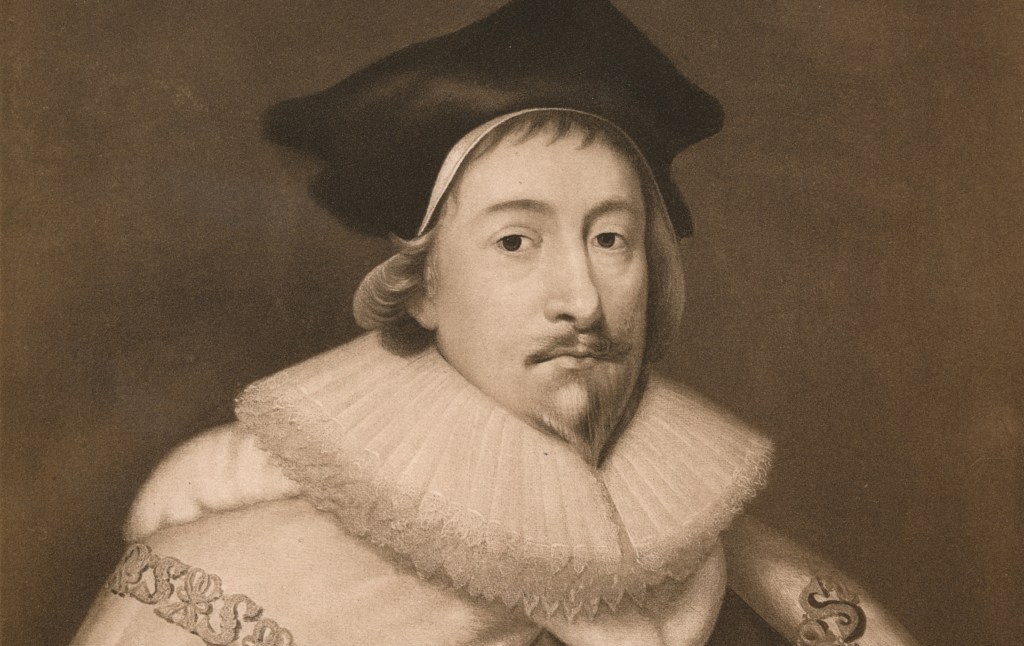
Both Kent and Blackstone were putting a modern gloss on the landmark decision of Sir Edward Coke nearly two centuries earlier. Coke had determined that it is not the soil as such “that makes the subject born” but that “the place of his birth be within the King’s dominion” and under his actual governing authority. A “stranger born” owed obedience, and could likewise claim protection, only while within the king’s dominion. The bonds tying natural-born subjects to their sovereign were stronger and more durable and had extraterritorial reach. A Canadian visiting the United States is expected to obey American law, but is no longer an American concern when she returns to Canada. An American visiting a foreign country can still expect help from the American Embassy, and the American government can still put demands on Americans abroad. But as Blackstone noted, “the children of aliens, born here in England, are, generally speaking, natural-born subjects, and entitled to all the privileges of such.” Those children could not themselves be aliens, despite the status of their parents, because they were not “borne in a strange country under the obedience of a strange prince.” Conversely, a statute was required in the United States, as it had been in England, to extend citizenship to children of Americans born abroad “in a strange country.” By the operation of the common law and the Constitution alone, such children had been born outside the dominion, or the jurisdiction, and were thus aliens by birth regardless of the status of the parents.
The logic of birthright citizenship that Coke first outlined at the beginning of the 17th century also determined the circumstances in which it did not apply. Individuals born outside the country’s territory were the obvious and most common case. If one is in France and not in the United States, one is outside the “jurisdiction” (or “dominion”) of the United States. Less obvious were those situations in which the parents were not in a state of what Coke called “actual obedience” to the sovereign authority of the territory. The king might assert ownership of a foreign territory, for example, but exert no actual governing authority over that distant land. The king might temporarily (or permanently) lose possession of a territory to an invading army. Any children of those invaders are not natural-born subjects because their parents are likewise not in a state of “actual obedience” to the king. More amiably, government ambassadors were “at home” even when abroad, and thus their children were aliens to the country in which they were born while the ambassador was performing that foreign service.
These are not ad hoc exceptions to the general rule of birthright citizenship. They are the natural implications of its central logic. Because they are not just ad hoc exceptions, it is not possible to simply create more exceptions out of thin air because it might suit the incumbent government’s policy preferences. The rule is the rule; the “exceptions” simply tell us where the limits of the rule can be found. What is covered and what is not covered by the rule are determined by the same set of principles. The question for the Trump administration is whether the president’s executive order identifies similar situations in which the principle of birthright citizenship developed in the common law and declared in the 14th Amendment does not apply.
Are authorized temporary visitors or unauthorized alien residents beyond the reach of American jurisdiction? If they give birth to children within the territory of the United States, is there some reason to think that they are outside of its jurisdiction? Nothing suggests that they are. They tread on territory that is actively governed by American officials, and the alien parents in those categories are nothing like ambassadors or an occupying army. They are expected to obey the local laws while present within the territory, and demands can be placed upon them by the local government.
While in the territory, no matter for how long or how they arrived, aliens have an obligation of what Coke called “local obedience.” If they violate the law, they can be appropriately punished and deported. If they engage in warlike behavior, they can be treated like enemy soldiers. So long as they are allowed to remain in the country, however, they are under the local sovereign’s governing authority. Any children they produce while in that situation are necessarily under the local sovereign’s governing authority as well; they are “subject to the jurisdiction thereof.” In the United States, they fall within the coverage of the 14th Amendment.
To imagine otherwise is to imagine that undocumented aliens are like sovereign citizens roaming the land, ungoverned and ungovernable. But that is not what they are, and their children born in the United States are constitutionally no differently situated than the children born of permanent legal residents or aliens who have been granted asylum in the United States. Under the law that has existed in the United States since before the American Revolution, “birth in this country does of itself constitute citizenship.” The president cannot change that simply through an executive order.