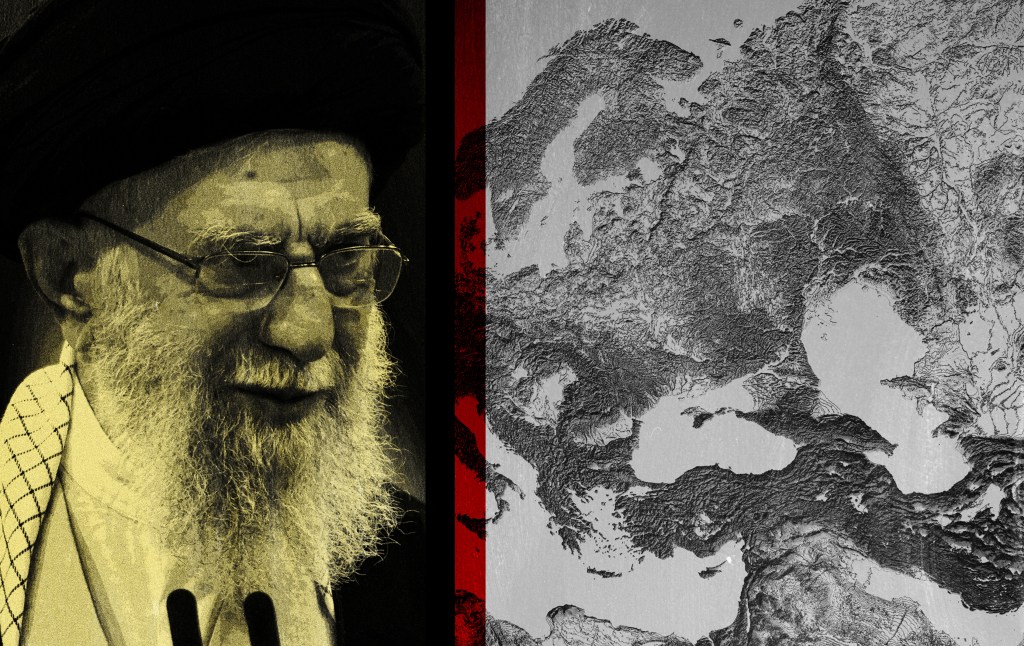
The assassination of Ali Khamenei by the United States and Israel wasn’t just a massive event in modern history of Iran. It was also a massive event in the history of Shia Islam.
Sitting atop Iran’s strange political system, Grand Ayatollah Khamenei was both the head of state of the world’s pre-eminent Shia-majority country and a ranking authority for the global Shiite community, one of the about 30 clerics carrying the title of marja’ or “source of emulation.”
His death would have been consequential in any case, but the fact that it came violently and as part of a broad war makes it ever more so. Shiite grand ayatollahs often live to a long age and die peacefully (the oldest current one, Vahid Khorasani, is 105.) The last instance of a marja dying a violent death that I can think of is that of Mohammad Sadr, whose shadowy assassination in 1999 is often blamed on Iraq’s then-president, Saddam Hussein. A bete noire of the country’s Shiite majority, Hussein had also executed Mohammad’s cousin, Grand Ayatollah Baqir Sadr, a marja in his own right, in 1980.
Khamenei’s dramatic death is even more remarkable because he almost seems to have welcomed it. Knowing full well that he could have been a target of American-Israeli strikes, he didn’t hide but was in his home office when he was assassinated alongside a few members of his family, including his young grandchild. Ominously, he hadn’t taken precautions to save the lives of his family members either, perhaps preferring an emblematic martyrdom tale, hoping he could be compared with Imam Hussein ibn Ali. The third Shiite imam died in an Islamic civil war in Karbala, Iraq, in 680, setting the standard of Shiite martyrdom. Since then, with Shiites being a minority sect of Islam and thus often persecuted, there have been many Shiite martyrs. The dispute between Sunnis and Shiites is rooted in the days after the death of Prophet Muhammad, when early Muslims fought over who should succeed him. Sunnis regard the arrangement that separated political and religious leadership as just whereas Shiites believe it unduly deprived the prophet’s family from their right to rule as charismatic religious leaders. Shiites have thus long had an oppositional bent, ready to battle the status quo even at the cost of martyrdom. Khamenei, who knew he had little life left on this earth anyways, perhaps couldn’t resist the temptation of joining these hallowed ranks.
Unsurprisingly, Shiites across the globe have reacted dramatically to Khamenei’s demise. In Pakistan, home to the world’s second largest Shiite population after Iran, the U.S. Consulate in Karachi was attacked by protesters and at least 26 people died as protesters clashed with the police. A Shiite digital activist who organized a vigil to mourn Khamenei called him “our representative … like our pope.”
In Malaysia, where a tiny Shiite community exists alongside the overwhelming Sunni majority, Khamenei has been hailed by many in the community, with one figure calling him “our imam and rahbar,” using the Persian word for “leader.” In 1996, a fatwa issued by a federal religious committee declared Shiite teachings to be deviant and yet top authorities such as a federal mufti and leader of Malaysia’s main Islamist party have commemorated Khamenei. Their respect seems to be due not to his religious role but to his role as an anti-Western state leader who died fighting the U.S.
Khamenei might indeed be remembered as a martyr both among most strands of Shia Islamism and the broader anti-Western strands of Islamist politics. But what will be his legacy as a religious leader, and what will Shia Islam look like after his demise?
The most important consequences of his death have little to do with the image of “martyrdom” or his own station as a religious authority but with the system of governance in Iran. The Islamic Republic is organized around the principle of velayat-e faqih or Guardianship of the Jurisprudent, an eclectic and unprecedented reading of Shia Islam, devised by Khamanei’s predecessor, Ayatollah Ruhollah Khomeini. Based on the system, much of political power in the country belongs to a preeminent jurisprudent who acts as a guardian to the nation. Khomeini’s main stated inspiration in devising this system was Plato’s concept of philosopher-king. In the original 1979 constitution, the supreme leader had to be a marja, the highest ranking Shiite status, attained by few clerics. But when Khomeini died in 1989, it was very clear that no other marja had the political credentials to ascend to the position. The more eligible candidates would have been more political clerics like Khamenei (then serving as president) who lacked the religious credentials. The Islamic Republic thus changed its constitution, allowing non-marja clerics to serve in the position.
With Khamenei’s death, it is quite likely that this strange position—vali faqih or the supreme leader—with its unusually intimate mix of religion and politics, will go through another transformation, if it survives at all.
For generations, Shiite clerics boasted significant social power, playing a key role in political events such as the Constitutional Revolution of 1906 in Iran and the Iraqi revolt of 1920. Founders of the Islamic Republic defined themselves in this tradition, but the clerical state they built ironically defanged the clerics. Previously, Shiite clerics had boasted an independent base that allowed them to play such a crucial moral and political role. But by making them all wards of the state, the Islamic Republic has done real damage to the independent standing of the clerics. It even organizes a Special Clerical Court whose job is to prosecute clerics who stray from the regime’s official reading of Islam. Most governments in Iranian history couldn’t have dreamt of such an affront to the independent stature of clergy. Assumption of state authority also means massive unpopularity for the clerical class, which is being blamed for problems of Iranian society.
On an international level, too, the Iranian state has flexed its muscle, attempting to convert Muslims and non-Muslims around the world to the Shiite faith, spending billions of dollars in sponsoring Shiite institutions. In doing so, Tehran has usurped one of the key functions of marja who’ve long had their own independent global networks, usually anchored in hubs such as London. It is hard for the marja to compete with Iranian state resources, while the Iranian taxpayers have come to despise the resources their government spends on these activities.
It will be a period of decentralization and experimentation for Shiites.
Under Khamenei, the Iranian state also became the sponsor of paramilitary Shiite politics, helping to sectarianize Middle Eastern politics in the aftermath of the fall of Saddam Hussein in 2003. Thus emerged the informally named Axis of Resistance, the coalition of mostly Shiite anti-Israel and anti-Western militias led by Iran. But the demise of the Axis preceded Khamenei’s. In the past two years, the Axis has become a shadow of its former self, crushed under dissidence of Shiite communities in the Arab world, Israeli strikes, and the fall of its second main patron: the regime of Bashar al-Assad in Syria. Shiites now have to get used to a world without Khamenei, without the Axis, and maybe without velayat-e faqih.
Another model of Shiite political leadership has long emerged to stand as a contradistinction to Khamenei’s: that of Ayatollah Ali al-Sistani, a cleric of Iranian origin who is based in Najaf, Iraq. He has played a key political role in Shiite politics in Iraq, intervening at crucial moments. One such moment arrived in 2015 when his fatwa called for armed mobilization of Iraqis (not just the Shiites) against the rise of the Sunni jihadist Islamic State.
What makes Sistani distinct, however, is an aversion to assumption of state authority and avoidance of stooping down to the level of partisan politics. Sistani continues to enjoy his own powerful networks, independent from the Iraqi state and with significant global reach, while he also maintains unparalleled moral authority among Shiites in Iraq and elsewhere. While the Iranian state, led by Khamenei, has furnished Iraqi Shiite militias with arms and financial resources, Sistani operates on another level, his religious authority unsoiled by quotidian realities of governance and state sponsorship.
Astoundingly, Sistani is accepted as marja by many more Shiites than Khamenei. By some estimates, 80 percent of the global Shiites accept him as the marja. Khamenei’s well-known lack of scholarly credentials and Sistani’s long life partially explain that phenomenon. But it is also a stinging rebuke of the Khamenei model. Even with billions of dollars at his disposal and the symbolic position of leading the world’s main Shiite state, Khamenei had not attracted as many religious followers compared to the old man in Najaf who barely appears in public.
The future of the Islamic Republic, and with it the future of velayat-e faqih, is still very much in the air. The ferocious American-Israeli war on Iran might yet overthrow the republic or deeply transform it. But it’s clear that the future of the Shiite world will be in flux. Khamenei is gone and Sistani, at 95 years of age, will be gone sometime soon too. Without their sponsor in Tehran, Shiite political parties will have to embed themselves differently in their national contexts. Lebanon’s decision this week to ban the military activities of Hezbollah, once the jewel in the crown of the Axis of Resistance, is telling.
Shiites will thus have to live in a world with two new realities: transformation and perhaps overthrow of the Islamic Republic, which has fundamentally rearranged the Shiite world since 1979, and, soon, the passing of the world’s leading marja, Sistani, without a clear successor.
It will be a period of decentralization and experimentation for Shiites—and an opening for existing and newly emerging marja to offer a different model of spiritual and political leadership to the devout.