“Every Afghan regime has had friction with Pakistan,” dating back to Pakistan’s creation in 1947, Aparna Pande, a senior fellow at the Hudson Institute and an expert in Pakistani foreign policy, told TMD. “Clashes are not [from only the] last few years, last few months—this goes back decades,” she said.
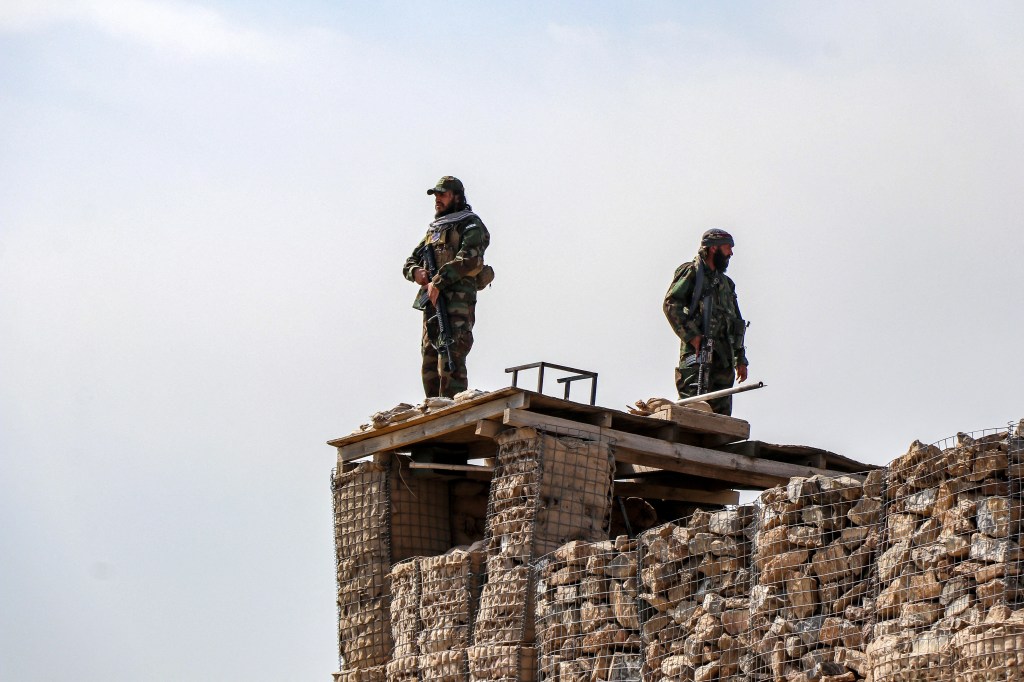
Pakistan’s strategic calculus has been shaped by unforgiving geopolitical logic: Bordered to the east by its larger, hostile neighbor India, Islamabad has always sought to ensure that no Afghan government can threaten it from the west. This has led to conventional defenses—Pakistan has erected hundreds of military outposts and checkpoints along the 1,600-mile Durand Line, and has fenced and mined large sections of the border in recent years—but also measures to undermine the Afghan government’s authority.
“Historically, Pakistan has always found itself supporting insurgents against the incumbent, regardless of who was in power in Kabul,” Ibraheem Bahiss, a senior analyst with the International Crisis Group’s Asia program who resides in Kabul, told TMD. And so, from 1994, Pakistan’s powerful military intelligence organization, the Inter-Services Intelligence (ISI) agency, supported the then-insurgent Afghan Taliban—providing the group with arms, training, safe haven, and funding, as well as deploying military advisers and personnel alongside Taliban fighters.
Pakistan is formally a non-NATO ally of the U.S., and yet, throughout the American war in Afghanistan, the ISI and others in Pakistan’s government continued to support Taliban operations while occasionally cooperating with Washington, and often looked the other way when its fighters hid from U.S. forces in Pakistan’s remote border regions. The Taliban’s leadership council operated for years from the Pakistani city of Quetta, and senior al-Qaeda figures—including Osama bin Laden—sheltered in Pakistani cities.
“Many people made this point to Pakistan’s leadership before the Taliban took over,” Lisa Curtis, a senior fellow at the Center for a New American Security and the former South and Central Asia director for the National Security Council, told TMD. “If you’re supporting this group that is ideologically driven,” she said, “if they come to power next door to you, it’s going to cause problems for you.”
But Pakistan’s Taliban problem wasn’t limited to Afghanistan. In 2007, Islamist Pakistani militants—who had been fighting in Afghanistan and then turned against their own government for cooperating with the U.S.—formed the Tehrik-e-Taliban Pakistan (TTP). This started as a self-declared affiliate of the Afghan Taliban and an ally of al-Qaeda, but in the late 2010s, the group pivoted, gradually moving away from al-Qaeda’s influence and focusing squarely on its home nation. Rather than achieve global jihad, its goal was now to overthrow the Pakistan government and install a radical Islamist emirate.
The TTP has allied itself with other Pakistani rebel groups, even ones not committed to its Islamist mission, such as separatists from the Baluch and Pashtun minorities, two ethnic groups residing in the country’s western provinces. Similarly, though ISIS-K was formed in late 2014 by disaffected TTP members, the two groups function as competitors, not enemies, and share a goal of destabilizing the Pakistan government through violence (though, for ISIS-K, this is only one part of starting a global caliphate). And the TTP’s hardline Jamaat ul-Ahrar faction retains close contacts with ISIS-K.
“The way [Pakistan’s security services] tried rationalizing [their support of the Taliban] was by saying the Afghan Taliban were the ‘good Taliban,’ and the Pakistani Taliban were the ‘bad Taliban’ trying to overthrow our state,” said Bahiss. But the two have always been closely bound.
A February United Nations report found that the TTP “operates as one of the largest terrorist groups in Afghanistan” and that the Taliban provided a “permissive environment” for the group, with attacks against Pakistan increasing as a result. After the fall of Kabul, TTP returned to the country to rearm and formally ended its ceasefire with Pakistan in 2022. “For decades now, TTP structures and the Taliban have been intermeshed,” with both sides aiding each other in the fight against the U.S. and Pakistani governments, Vanda Felbab-Brown, the director of the Brookings Institution’s Initiative on Nonstate Armed Actors, told TMD.
ISIS-K adds a complicating element, with TTP leaders reportedly telling their Afghan colleagues that if they were to give up jihad against Pakistan, they would face large-scale defections to the Islamic State, an enemy of the Afghan Taliban. ISIS-K views the Afghan Taliban as too nationalist and insufficiently jihadist.
Together, these developments have led to a dramatic escalation in violence. Last year was Pakistan’s deadliest in a decade, with 699 terrorist attacks resulting in 1,034 deaths, carried out largely by TTP and ISIS-K. But the new state of war is unlikely to change much.
“We are very far away from having any reason to believe that the attacks would eradicate the group and prevent its recreation,” Felbab-Brown argued. “The group spans both sides of the border. It is very much embedded in Pakistani communities.” After all, she argued, the much more capable U.S. military spent decades trying to eradicate the Afghan Taliban, with little success.
There is also the complicating and unclear role of India, which Islamabad has repeatedly accused of supporting jihadist groups in Pakistan. There is no public evidence linking India to the TTP or other Pakistani militant groups, and New Delhi denies the allegations. But Prime Minister Narendra Modi’s government hosted a delegation from the Taliban in New Delhi in October 2025, during which India announced it would reopen its embassy in Kabul, and the governments have maintained contact.
If Pakistan and Afghanistan seem locked into a medium-grade border conflict for the time being, the outlook is grim. The U.S., although it has affirmed Pakistan’s right to defend itself against terrorism, has little leverage in the region, Curtis noted. Instead, it’s more likely that a neighboring power would broker a peace. Yue Xiaoyong, China’s special envoy on Afghan affairs, has embarked on a diplomatic mission between the two capitals in an effort to keep the conflict from escalating. Qatar, Turkey, and China are the most likely candidates to mediate a peace, Pande said.
In the meantime, Afghan civilians are caught between two wars. The conflict with Iran has also closed the aid corridor between India and Afghanistan, meaning that already beleaguered Afghan civilians risk widespread hunger and displacement. And over the last few years, millions of Afghans residing in Pakistan have been expelled from the country, creating an internal refugee crisis.
So far, neither side has shown much willingness to back down, even as large-scale ground operations remain relatively unlikely. “But as long as the TTP is a threat to Pakistan, Pakistan will reserve this right to strike targets inside Afghanistan,” said Curtis. “I don’t see an early end in sight.”