By Ben Picton, senior market strategist at Rabobank
Mine, Yours
Major US, European and Asian equity indices all closed in the red yesterday as Brent crude prices again breached the $100/bbl level. Ten year sovereign yields were sharply higher for most countries (Sweden being an exception), with UK Gilts conspicuous for posting an 8.7bps increase. Short end yields rose even faster as markets priced in higher policy rate paths.
Canadian two year yields were up 9.8bps and in New Zealand yields rose 10.1bps. Canada now has 41bps worth of policy rate hikes priced into the forward curve for this year and New Zealand has 77bps priced. Prior to the outbreak of war, the market was still pricing cuts in Canada and it was still seen as uncertain that the RBNZ would be raising rates at all in 2026. Market bets on Fed rate cuts this year are evaporating fast.
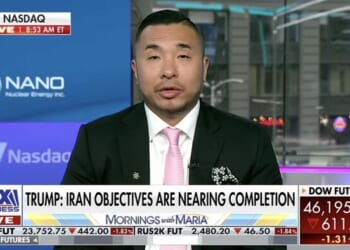
Market optimism following Donald Trump’s comment earlier this week that the war is “very complete” and news that the G7 will coordinate on the release of 400mn barrels from strategic reserves appears to have been short-lived. Iranian Supreme Leader Khamenei (the new one) has issued his first public statement, in which he echoed previous IRGC vows to keep the Strait of Hormuz closed.
There was a bit of a ‘Weekend at Bernie’s’ vibe about this as Khamenei himself did not appear on camera. Rumors that he was injured – perhaps severely – in the opening strikes of the war are now circulating alongside suggestions that the Iranian Revolutionary Guard Corps are now running the country and that Khamenei is being used as a convenient figurehead to give the impression of continuity under external pressure.

Despite Khamenei’s vow to keep the Strait closed market pricing is still signalling optimism that the war will be relatively short – although this optimism waned somewhat over the last 24 hours. Prediction markets have a ceasefire before month end as a 21% probability (down 5pts since yesterday), before April 30th as a 45% probability (-2pts since yesterday) and before June 30th as a 61% probability (unchanged).
The Brent crude forward curve remains heavily backwardated, with prices converging back to $75/bbl by mid next year. There has been some speculation in recent days that the US government could play a bit of “mine, yours” in oil derivatives in an attempt to reduce energy prices. Some point to the wild gyrations in crude prices on Monday to suggest that this might have already happened, while others have nod towards a hastily-deleted X post by Energy Secretary Chris Wright claiming that the US navy had escorted an oil tanker through Hormuz as an indication of funny business going on in paper oil markets.
Whatever the case, the FT is today reporting comments from CME Chief Executive Terry Duffy that government intervention in oil derivatives would be a “biblical disaster”. Crypto bros might counsel newly-minted oil traders on the virtues of physical custody, while our own Michael Every has drawn parallels to how pricing in the former Soviet Union worked: “the price of bread is only three roubles, comrade. There is simply none available.”
Not one to be deterred, Secretary Wright said overnight that naval escorts of tankers through the Strait could begin by the end of the month. One might have thought that the (largely unsuccessful) experience of Operation Prosperity Guardian in the Red Sea would serve as a cautionary example that naval escorts could prove ineffective in restarting shipping, but the reaction to Wright’s deleted X post suggests that the market would see this as progress. Nevertheless, the end-of-month timeline implies that prospects of de-escalation in the short term are remote.
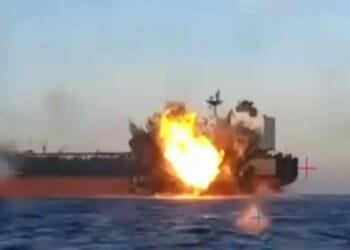
The situation in the Strait itself remains troubling. Three commercial ships have been struck over the last two days, with the IRGC saying that “American aggressors and their allies have no right of passage.” The FT reports that ships stuck on the wrong side of Hormuz are ‘Sitting Ducks’ and comments earlier this week from US officials that Iran had begun laying marine mines also complicate the picture for any near-term resumption in shipping.
News emerged yesterday that India and Bangladesh-bound cargoes have been granted permission to transit, and China-bound cargoes have been moving for days. The fact that some shipping is being allowed seemingly confirms that mine laying operations remain limited in scope, but that does not mean that Iran cannot escalate if it chooses to. CNN reports that Iran still has 80-90% of its mine-laying fleet and retains the capability to lay ‘hundreds’ of mines, so the IRGC could conceivably play a bit of “mine, yours” with world energy markets for months.
If Iran allows China and India oil through the Strait, that’s more than half of normal oil traffic already (7mmb/d). Throw in the Saudi East-West pipeline for redirection (another 7mb/d) and the blockade suddenly shrinks a lot pic.twitter.com/64xoGJpiHG
— zerohedge (@zerohedge) March 13, 2026
As it stands. the IRGC is now effectively playing Little John with the Strait by insisting that anyone attempting transit must have Iranian permission. The world’s most important hydrocarbon chokepoint has – for now, at least – become an Iranian toll road. Is this acceptable to the United States, or broader Western civilization? Almost certainly not. That makes a Trump TACO all the more improbable, even if it were actually possible without catastrophic loss of US prestige.
So, tanker traffic through the Strait remains at a virtual standstill. Khamenei said in his statement that Tehran believes in “friendship” with Gulf neighbours, but that American bases in Gulf states will continue to be targeted. The message to GCC states is not subtle: break from the US, or suffer the economic and military consequences of continued association.
Of course, while the Iran war continues to dominate all of the headlines, other issues are bubbling away in the world economy. Problems in private credit markets remain a point of risk, perhaps even more so now that swings in commodity and equity markets are precipitating margin calls that need to be funded somehow. A number of funds have placed limits on redemptions, others have sought injections of new capital, and shares in Blackstone, Blue Owl, and KKR have come under pressure. Rising bond yields and widening credit spreads don’t help, and Bloomberg has noted that financials are the worst performing sector of the S&P500 over the last week.
Many portfolios have incorporated private credit exposures in recent years, to the extend that “the golden age of private credit” became a somewhat notorious meme in markets. Some investors have undoubtedly seen their portfolios bolstered as a result of incorporating these exposures, but others may now be hoping that private credit doesn’t ‘mine, theirs’.