Meme war, literally.
Posting hype videos about America’s military success at a moment when Iran has the global oil supply in a chokehold is like doing an end-zone dance after a first down when you’re two scores behind.
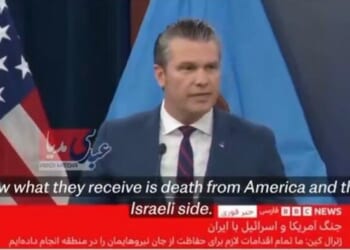
That hasn’t stopped the White House, though, which gave new meaning to the term “sizzle reel” this week by posting clips to social media of bombs going off in Iran intercut with footage from video games, movies and TV shows, and sports. (“Pure American dominance,” reads the caption on one.) Multiple former U.S. military commanders told NBC News they’re mortified by the videos, with one calling the gimmick “absolutely disrespectful to everyone involved, including the Iranians themselves who are at war and disrespectful to the Americans who risked their lives.”
I don’t think the White House comms team means to frame the war as a joke. This seems to me like an earnest attempt by postliberal chuds to process military conflict through the morally enfeebled heuristics about politics that their movement has equipped them with.
In the first place, meme-ifying the war detaches the president’s supporters from the consequences of his viciousness. That’s always been a secret ingredient of Trump’s appeal: Because he treats politics like pro wrestling, frequently sounds like an insult comic, and generally behaves like an online troll, even his sinister impulses carry a disarming air of performance that can make them seem less threatening than they are. The phrase “mean tweets” has become shorthand for the phenomenon, a way for his apologists to dismiss his menacing insanity as harmless outbursts from an overgrown edgelord that aren’t worth bothering about.
The Iran sizzle reels are a wartime version of that. The conflict is a game and a spectacle, not quite real or worth freaking out about even if we blow up a school occasionally.
They’re also a case of the president and his team believing they can create their own reality by insisting upon it strenuously enough, another Trump specialty. He convinced more than two-thirds of his party that the 2020 presidential election was illegitimate despite lacking a single solid piece of evidence, and he’s still hard at work trying to win that argument six years later. He’s spent the last few months preparing to run the same playbook in the midterms by treating the SAVE Act that’s languishing in the Senate as the only way to rescue American democracy from blatant election-rigging by blue states.
A country that’s overflowing with credulous hyperpartisan dopes desperate to believe that their politics is infallible is an obvious target for the White House’s Iran sizzle reels. If the president is confident enough in victory to be putting out clips equating what’s happening in Iran to brutal tackles in the NFL, America must be winning, right? Only CNN could think otherwise.
More than anything, though, I think the clips are about communicating the administration’s unapologetic belief in ruthlessness as a moral ethic. Postliberalism reduces all political problems to failures of will: From crime to trade to immigration to war, America would have far fewer challenges if only its leaders were less timid about using force to neutralize its enemies, foreign and domestic. Hegseth, the government’s foremost war-crimes aficionado, is the epitome of that attitude. If you find yourself at an impasse in some policy matter, you aren’t hitting hard enough.
That’s why his big answer to the standoff in Hormuz is to bomb Iran harder and why the White House’s answer to public anxiety about the war and its economic fallout is to post what’s essentially combat porn. When morale falters, when progress seems stalled, the only sensible thing to do is to double down on ruthlessness by, say, mocking the enemy with footage of an NBA defender getting posterized via a savage dunk.
Or vowing to kill more of them, of course, as the president did when he also doubled down on ruthlessness in a Truth Social post last night. “We have unparalleled firepower, unlimited ammunition, and plenty of time – Watch what happens to these deranged scumbags today,” Trump warned. “They’ve been killing innocent people all over the world for 47 years, and now I, as the 47th President of the United States of America, am killing them. What a great honor it is to do so!”
We might not be able to stop our enemies from achieving their goals but we can and will kill more of them and exult in their deaths. Dominance without strategy: This war is getting more postliberal by the day.
Anti-strategy.
As anyone old enough to remember the Before Times knows, this isn’t the first war America has fought in the Middle East that failed strategically. And in fairness to the president, it’s a near-lock that his misadventure in Iran will involve vastly fewer dead Americans than George W. Bush’s misadventure in Iraq did.
Although, given the latest deployment news, maybe we should revisit that prediction in six months.
What’s distinctive about Trump’s Iran campaign isn’t that his strategy was flawed. It’s that, as far as I can tell, he had no strategy.
Bush thought the U.S. could depose Saddam Hussein, dissolve Iraq’s security forces, seize and dismantle an Iraqi WMD arsenal that didn’t actually exist, and stand up a democratically elected government in Baghdad that would inspire other Arab states to liberalize—all without triggering a sectarian Thunderdome or empowering a new Shiite regime that would end up under Iran’s thumb. Not a good strategy, it turned out, but a strategy. And it involved a display of American power commensurate with the task: Regime change in Iraq would be carried out by an enormous occupying infantry force.
By contrast, and without exaggeration, Trump’s “strategy” in Iran appears to have been a variation of a famous South Park joke. Phase one: Launch a decapitating strike on Iran’s leadership. Phase two: ???? Phase three: Peace on America’s terms.
Phase two seems to have consisted entirely of wishful thinking. The president reportedly believed that the regime would either crumble after Supreme Leader Ali Khamenei was killed or surrender immediately to the U.S., placing itself at America’s service like Delcy Rodríguez in Venezuela. When that didn’t happen, the administration began sniffing around for a regional proxy force that might be willing to battle Iranian regime forces. When that didn’t happen, Washington and its Israeli partners crossed their fingers and waited for an uprising among Iranian civilians.
That’s not happening either. Despite having been one of the two highest priorities of the war for American and Israeli officials, regime change already seems off the table after two weeks of conflict. Once the initial strike failed to collapse the government, there was no Plan B.
The other high priority for the two allies was to further degrade Iran’s ability to build nuclear weapons, either by seizing the country’s enriched uranium or rendering it useless. It occurred to me this morning that that might have been a lot easier, ironically, if not for the first U.S.-Israeli attack on Iran last year.
That attack successfully entombed the material under the rubble left by American strikes on Iran’s enrichment facilities but didn’t destroy it completely, as far as anyone can tell. Had those strikes never happened, the uranium might still be stored today in some structure that would be comparatively easy for U.S. special forces to breach. Instead, getting to it will be an ordeal. “Nuclear-handling equipment, diggers to move earth and rubble from tunnel entrances and other heavy machinery” will be needed, according to The Economist. So will hundreds of American boots on the ground and constant air cover to repel attempts by Iranian forces to advance on the site as excavation takes place.
And even if the U.S. managed to secure the uranium, it could explode in transit if it isn’t handled properly.
Regime change could have solved the uranium dilemma, as the White House would be less anxious about leaving the buried material behind once a government that’s better disposed toward America and Israel was in place. As it is, we’re stuck. Either we risk a deadly fiasco by inserting U.S. troops for a dangerous mission that might not succeed, or we withdraw and leave the uranium under the soil of wounded fundamentalist lunatics who bear the United States more of a grudge than ever. A strategic master stroke.
Still, the singular strategic debacle for which this war will be remembered is the closing of the Strait of Hormuz.
Administration officials have reportedly admitted in briefings to Congress that they didn’t plan for it even though a crisis in the strait has factored into U.S. wargaming involving Iran for ages. “Planning around preventing this exact scenario—impossible as it has long seemed—has been a bedrock principle of U.S. national security policy for decades,” one former U.S. official told CNN of the strait’s closure. “I’m dumbfounded.”
Holding the world’s oil supply hostage is the next best thing to an actual nuclear weapon that Iran has, yet somehow the White House is surprised that the regime would resort to it in a war that threatens its survival. Bad enough that administration officials believed closing the strait would “hurt Iran more than the U.S.,” according to CNN, but what’s the excuse for not having a solution ready to go just in case the Iranians did execute their economic doomsday plan?
Two weeks in, oil tankers are burning and America’s Arab Gulf allies are disgruntled about Washington’s impotence in keeping the strait open and protecting their airspace from Iranian attack. When the U.S. finally calls off the dogs and goes home, those allies will be left with an Iranian neighbor that’s either still intact and out for revenge or in full collapse and dissolving into anarchy. “Analysts say the war has left Gulf states reassessing both their security dependence on Washington and the prospect of eventually engaging Tehran on new regional security arrangements,” Reuters reported.
There was no “Phase two” in the White House war strategy, as hard as that is to believe. And to the extent that there was, I think it wasn’t much more complicated than “dominate.”
A failure of will.
It would be quintessentially Trumpian for the president and his aides to have assumed that any wrinkles during the war could and would be ironed out by simply ramping up the firepower.
I repeat: Postliberalism reduces all political problems to failures of will. And so if Iran closed the strait or defiantly fought on after its leader was killed, solving those problems would logically seem to our leaders to be a straightforward matter of breaking the regime’s will with more explosives. That may explain why the administration stupidly declined Volodymyr Zelensky’s help with drone warfare last year even though it was completely predictable that drones would figure heavily into Iranian battle plans against the U.S. in any future conflict.
Team Trump probably expected that it didn’t need to worry about repelling puny weapons when it commands the most awesome military arsenal on Earth. In the event that Iran began harassing our ships and bases with drones, we’d just bomb them harder until they stopped. If you can muster enough dominance, you don’t need strategy. In theory.
That attitude does often work for postliberals. Corporate America has repeatedly allowed itself to be extorted by Trump since he returned to office last year; Delcy Rodríguez and the Maduro remnant in Venezuela also opted to play ball when he positioned the U.S. military off their coast. Many political standoffs really are a contest of wills, and Trump’s taste for ruthlessness serves him well in those cases. Intimidation is the One Neat Trick of postliberalism and it’s a pretty neat one as fascist political tricks go.
It’s just not foolproof. In Iran, no doubt to his great surprise, Trump finds himself facing an opponent that won’t be intimidated. Fanaticism, existential panic, megalomania, national pride—take your pick of motives that might explain why “bomb harder” hasn’t caused the regime’s will to fail. Whatever the reason, the president has suddenly run up against the limits of dominance as a strategy in a conflict with supremely high stakes.
“When past presidents balked at the possibility of war with Iran, they weren’t just dodging a hard choice,” Franklin Foer alleged at The Atlantic a few days ago. “They were deterred by all of the obvious reasons a conflict could perilously spiral.” That’s the problem in a nutshell. An administration of postliberals will inevitably understand the failure of Trump’s predecessors to confront Iran as due to insufficient nerve when, really, it was due to insufficient hubris and stupidity.
A politics that treats every problem as a failure of will is destined to be recklessly willful when it should be cautious. Trump sold himself to Republican voters in 2016 as an alternative to neoconservative incaution. Ten years later, “bomb harder” is what’s left.