Summary:
-
Iranian retaliation accelerates, including use of cluster munitions, especially against Israel
-
Gulf countries reported new attacks Sunday morning, a day after Iran called for the evacuation of three major ports in the United Arab Emirates.
-
Iran says it targeted U.S. forces at Saudi base with missiles
-
Israel reportedly running low on missile interceptors
-
Iran arrests dozens accused of spying for Israel amid escalating conflict
-
World’s largest Aluminum smelter shutdown
-
Araghchi said the strait was only shut to US ships and those of its allies
-
Trump not ready to reach a deal with Iran yet
Days after President Trump told reporters that Iran has “shot everything they have to shoot” and has “nothing left,” Iran continues to rain retaliatory fire down on the region. Amid fresh imagery of fires burning around Tel Aviv, Saturday also brought a report that the Israel Defense Forces are running critically low on missile interceptors.
Meanwhile, in another indication that what was supposed to be a speedy, regime-change-triggering attack on Iran is mushrooming into a conflict consuming much of the region, the US government is urging every one of its citizens in Iraq to flee Iraq as quickly as possible. That advisory comes after a second damaging assault was carried out by Iran-allied militias against the American embassy in Baghdad.
Fire, smoke rise at US Embassy Baghdad after drone strike pic.twitter.com/hU4XHl6wCr
— Roya News English (@RoyaNewsEnglish) March 14, 2026
Citing unnamed US officials, Semafor reported that Israel informed its American partners that its ballistic missile interceptor supply was critically low. Both US and Israeli supplies had been severely diminished in last summer’s 12-day war on Iran — with the Pentagon burning through a quarter of its THAAD interceptors. It appears the two countries had launched this year’s surprise attack on the false assumption that the resulting warfare would be brief. One of the officials claimed that American supplies were not running low, but US forces reportedly used interceptors valued at $2.4 billion in just the first five days after attacking Iran.
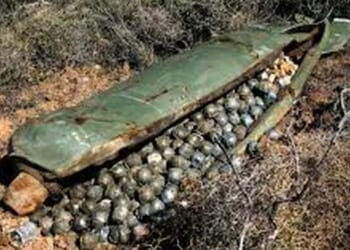
Working to run down the IDF’s interceptor supplies even faster, Iran has increasingly been using cluster munitions in its attacks on Israel. These release 24 to 80 11-pound bomblets at high altitude, making interception all the more difficult. Over Saturday night, more mayhem rained down on Israel from Iran and Lebanon’s Hezbollah militia. While Israeli censorship and AI make it challenging to find authentic imagery, Grok says this is legit:
🇮🇱 Israeli media:
An Iranian missile has fallen in Ramla, in the Greater Tel Aviv area. pic.twitter.com/pXoomzZ0R7
— China live (@ChinaliveX) March 15, 2026
Earlier on Saturday, the US embassy in Iraq came under fire, and the Kataib Hezbollah militia claimed responsibility. In January, the group’s chief warned the United States against attacking Iran, saying, “We affirm to the enemies that war against the [Islamic] Republic will not be a walk in the park. But rather, you will taste the bitterest forms of death, and nothing will remain of you in our region.” No injuries were reported in Saturday’s attack.The Emirati consulate in Iraqi Kurdistan was also hit — the second strike in the last week.
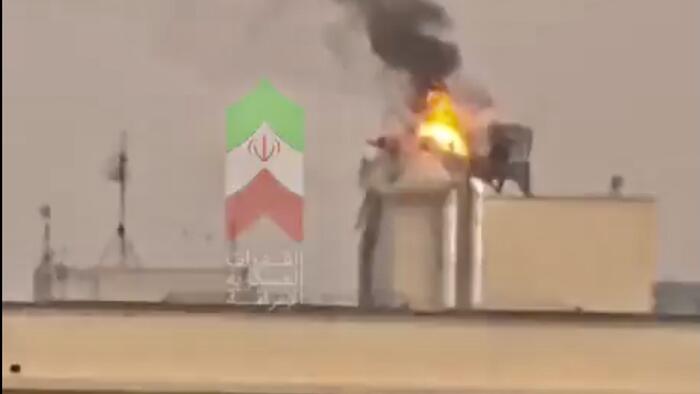
Two Iraqi security officials told AP that a helipad at the US compound was hit. While AP’s sources said the strike used “missiles,” Agence France-Presse said the militia used a drone. Video also showed a structure atop an embassy building was set ablaze. Comparing the video to pre-attack imagery, observers concluded the structure was a radome — a weatherproof shell covering radar and communications equipment. A nearby Counter Rocket, Artillery and Mortar (C-RAM) system, which spews 20mm or 35mm rounds at incoming fire, appeared to have been unscathed. However, to the extent the C-RAM relied on the equipment in the radome, its usefulness may have been diminished if not neutralized.
IRANIAN DRONE STRIKES US EMBASSY IN IRAQ, TAKES OUT HIGH-END RADAR — Clash Report/MenchOsint report pic.twitter.com/3nkTIVbuxh
— RT (@RT_com) March 14, 2026
After the attack, the State Department told Americans to get out of the country. “U.S. citizens should leave Iraq now,” said the US State Department in a security alert. Noting that Iraqi airspace is closed and commercial flights unavailable, the advisory told endangered Americans to use “overland routes to Jordan, Kuwait, Saudi Arabia and Türkiye.” It also warned about violent protests against the US government, and said “terrorist militia groups have encouraged and conducted indiscriminate attacks on U.S. citizens.”
In another Saturday development, Trump used claimed that other countries “will be sending War Ships” to the region to “keep the Strait [of Hormuz] open and safe.” However, after saying “will,” he meagerly applied the word “hopefully” to the notion that China, France, Japan, South Korea, the UK and others” would commit naval assets. Italy’s Meloni has already declared her country “won’t be part of an illegal war,” and there’s no indication any other country is about to send their ships into an Iranian gauntlet guarded by cruise missiles, ballistic missiles, drones and armed speedboats.
https://t.co/kLmAe596oN pic.twitter.com/iRg1By7wlO
— Joe (@JoePostingg) March 14, 2026
Iran’s Revolutionary Guards said late Saturday they had launched a missile salvo at U.S. forces stationed at Prince Sultan Air Base, a major base in Saudi Arabia’s Al-Kharj that has long hosted U.S. forces.
The Guards said the base was being used to equip “F-35 and F-16 fighter jets and is the storage place for fuel tankers.”
While there has been no immediate confirmation of the attack from Saudi Arabia, the kingdom’s defense ministry said earlier it intercepted six ballistic missiles headed towards Al-Kharj.
Aluminium Bahrain BSC, which runs the world’s largest single-site smelter of the metal, started a phased production shutdown to preserve raw materials.
The company, known as Alba, said it has initiated a shutdown of three production lines, which together represent 19% of its total output capacity of 1.6 million tons a year.
Dozens of people accused of collaborating with Israel have been apprehended across various regions of Iran, local media reported on Sunday, amid ongoing Israeli and US airstrikes targeting the country.
As The Independent reports, in northwestern Iran, the semi-official Tasnim news agency stated that 20 people were arrested after being accused by the provincial prosecutor’s office of transmitting location data on Iran’s military and security assets to Israel. Further east, in a region largely untouched by the recent air campaign, Tasnim also reported the arrest of 10 individuals, some of whom are alleged to have gathered intelligence on sensitive sites and economic infrastructure.
A provincial branch of the Revolutionary Guards’ intelligence organisation commented on the situation, according to Tasnim: “As the Zionist enemy (Israel) and the U.S. are attempting to invade Iran, they simultaneously activate mercenaries and spies to carry out riots as the next step.”
President Trump said Iran is ready to make a deal to end the war but the US wants better terms, signaling no letup in a war that’s brought shipping in the strategic Strait of Hormuz to a near standstill and upended energy markets. Meanwhile, Iran’s foreign minister Abbas Araghchi has insisted that Tehran has not requested a ceasefire or sought negotiations with Washington, saying that the country will continue defending itself amid the ongoing war with the US and Israel. He also added that Iran’s nuclear facilities are now buried deep under rubble, and Tehran has no plans “for now “to retrieve enriched nuclear material, adding that any future effort would take place under the supervision of the “agency,” likely referring to the IAEA: perhaps another tentative olive branch.
BREAKING: Iran’s FM Abbas Araghchi has insisted that Tehran has not requested a ceasefire or sought negotiations with Washington, saying that the country will continue defending itself amid the ongoing war with the US and Israel.
🔴 LIVE updates: https://t.co/dQ9NY3ULiO pic.twitter.com/2OJReO7f38
— Al Jazeera English (@AJEnglish) March 15, 2026
Separately, Kevin Hassett revealed this morning on CBS’ Face the Nation that the US has spent $12 billion on the war so far. And in the clearest sign of what Trump’s “red line” to end the war is, Hassett said that Trump would call an end to the war if Iran is no longer able to “blackmail” with its control over energy flows.
Hassett also said that the futures markets indicate a rapid end to the “situation” (unclear where he got this, the backwardated oil curve is hardly the indicator he thinks it is), while the Dept of War believed as of yesterday that the war in Iran will likely last 4-6 weeks; he said that US GDP is unlikely to go negative with a 1970s-like oil shock, and predicted that the war is not going to last for months, but if it does, the US has “lots and lots of energy” that can come online.
HASSETT: The latest number I was briefed on is $12 billion
BRENNAN: $12 billion for six weeks of war?
HASSETT: No, I’m sorry. The $12 billion was what I was briefed has been spent so far. pic.twitter.com/osidIvmklN
— Aaron Rupar (@atrupar) March 15, 2026
Separately, Iranian Foreign Minister Abbas Araghchi said the Islamic Republic hasn’t asked for talks or a ceasefire. “We don’t see any reason why we should talk with Americans, because we were talking with them when they decided to attack us, and that was for the second time,” he said in an interview aired Sunday on CBS’s Face the Nation.
And perhaps most notably, Araghchi said the strait was only shut to US ships and those of its allies. There have been 16 reported attacks on vessels in and around Hormuz since the war began, according to the UK Maritime Trade Operations.
“We welcome any regional initiative that leads to a fair end to the war,” he told Al-Araby Al-Jadeed, in a rare sign of a possible shift in stance from Iran, where officials have previously said they could sustain the conflict for months. “Ending the war is conditional on guarantees that it won’t be repeated and on the payment of compensation.”