The White House has struggled to present the American public and the world with a clear timeline or precise strategy on Operation Epic Fury, but Israel has seemed clearer on signaling it is settling in for a longer war.
Israel is bracing for its war with Iran to stretch well into April, even as officials quietly concede the government in Tehran is unlikely to collapse, according to Israeli media.

This has Israel has expanded its attacks not just to Iran’s oil and energy sites, but more broadly to its defense industrial sector, wanting to see even Tehran’s ability to manufacture new missiles utterly destroyed.
And according to Ynet, “At the same time, the idea of encouraging public unrest inside Iran has not been abandoned, though officials acknowledge uncertainty about how effective such efforts might be.”
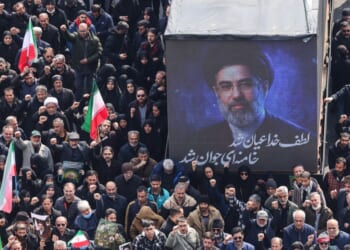
“We continue to strike regime targets, mainly in Tehran. We are entering the decisive phase. We are aiming to bring the people out into the streets. It’s not only us – the Americans are also working toward that,” an Israeli official stated.
“Not everything can be controlled, but everything possible is being done to make it succeed. The regime must be weakened as much as possible, including the Basij,” the official added. “We are striking them and killing them in the thousands.”
Israeli officials have further made clear they have assets on the ground, or Iranians who have helped spot IRGC/Basij checkpoint and security locations. Israel’s military has publicized some instances of active strikes on these locations.
As for whether targeting information is actually being communicated by anti-regime Iranians, this could just be Israeli propaganda intent on sowing discord and suspicions among the Iranian populace.
Still, Israeli officials have admitted they are skeptical that street protests alone could topple the Iranian government. Over in Washington, President Trump apparently thought ‘decapitation strikes’ would quickly result in some kind of rapid uprising in the streets and change of government, but that didn’t appear even close to happening.
On the White House’s series of miscalculation as this war is in week three with no signs of an off-ramp, Robert D. Kaplan has written in Foreign Affairs:
The biggest U.S. foreign policy fiascos happened because policymakers were obsessed with regional and global consequences they often could not properly manage, and thus ignored critical conditions on the ground. In Vietnam, U.S. leaders overlooked the history and nature of Vietnamese nationalism; in Iraq, it was sectarianism. Tuchman has encouraged leaders to trust area specialists more than grand strategists or democracy promoters. Sophisticated and specific cultural knowledge, she has observed, is much more useful than metrics and shadowy schemes.
Middle-sized wars often stem from misunderstandings about the place intervention is meant to help. The key, then, is for the intervening country to know what it is getting itself into. This may seem easy, but it can be the hardest part of policymaking. Bringing up cultural matters and differences is tricky because it can easily be misconstrued as prejudice, which pushes people to avoid critical conversations about realities on the ground. But it is such discussions that can keep a superpower out of trouble.
Meanwhile, as far as a timeline, Israeli leaders have admitted that it’s renewed war with Hezbollah is expected to outlast the conflict with Iran. Hezbollah has been launching missiles on northern Israel, while IDF ground forces have moved in, also as Beirut continues to get pounded from the air.