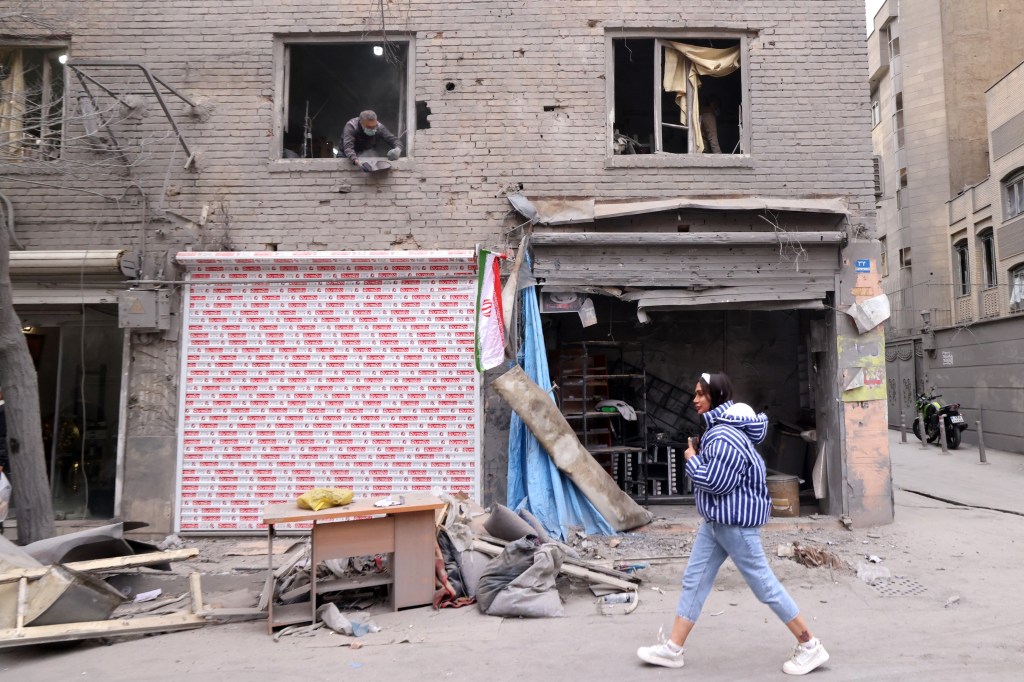
The Islamic Republic has largely throttled the internet in Iran since the start of the war. Users occasionally pop up online for short periods of time. Limited connectivity barely allows them to post on social media or send messages. Making calls is impossible; therefore, it is exceedingly difficult to understand what is happening inside the country.
But last week, I had the rare opportunity to correspond via Instagram with a woman whom I will refer to by the pseudonym Golnaz to protect her from retribution by Iranian authorities. I knew her when I still lived in Iran and we were both in our late teens. She is now in her mid-30s. I promised to share her perspective on the unfolding fight for the soul of Iran. But first, I must give you a bit of background about the girl I knew and who she has become.
When I first met Golnaz in 2008, she was not at all political. She did not appear to be religious. Whatever her personal beliefs, she did not show piety beyond what the regime demanded, namely, wearing a hijab. She was the stereotypical middle-class woman from Tehran. And she stayed out of trouble. She did not participate in the Green Movement demonstrations, which sprang up in response to the fraudulent reelection of Mahmoud Ahmadinejad in 2009. I never heard her talk about the protests, either.
That has all changed. I first noticed Golnaz’s transformation on social media during the 2022 protests that followed 22-year-old Mahsa Amini’s death in custody after her arrest for dress code violations. Golnaz’s posts became radical, on both politics and religion. I remember thinking to myself that it took serious courage to mock Muhammad inside Iran, as she did.
The Iran that I left in 2011 changed alongside people like Golnaz. Most people I knew—from the urban, educated middle class, by far the largest portion of the population—believed in Islam but did not practice it. By 2020, just 32 percent of Iranians identified as Shiite Muslims, according to GAMAAN, a Netherlands-based diaspora organization that provides the most reliable public opinion polling on attitudes inside the country. “Nones,” atheists, agnostics, and spirituals composed 44 percent. An additional 8 percent identified as Zoroastrians, an apparent homage by many secular Iranians to their national heritage (the country’s actual Zoroastrian population is about 20,000 people—0.02 percent of the population—and the religion generally does not accept converts). Based on anecdotal evidence, it is a safe bet that secularization has continued and even accelerated. Old friends tell me, You will not believe this, but Masoud now curses at the saints. Remember when he would not even drink?
Over the past year, I realized that Golnaz had begun following the same trajectory, including in her public support for Reza Pahlavi, the son of the last shah. After the end of the Mahsa Amini protests, the crown prince grew in popularity among Iranians. Many revolutionaries see him as their only hope. Golnaz’s Instagram includes veiled references to life under tyranny. Her political evolution resembles the latest twist in the revolution, which has transformed from demands for greater political freedom for the society as a whole into something deeply personal—and often personality-driven.
Hopelessness animates Golnaz’s defiance. She attended an elite engineering program but now works in the service economy. When I asked why she changed her career path, she explained that nobody makes anything in Iran. The conversation picked up from there. I asked her what she wanted people in the United States to know. Immediately, she turned on Instagram’s disappearing feature, fearing surveillance due to a past encounter with government authorities.
She then went on for minutes uninterrupted. “Look, we just want regime change,” she said, speaking in Persian before switching to English to say “regime change.” I asked her about people’s opinion of the war. She told me what others had already: “Nobody likes war. The conditions are terrible. But it is our only chance for the regime to leave.” Then she made a request: “Tell people that we do not have internet here, and it is our right to know about the conditions of our political prisoners who do not have food. Many of them are being executed.” She angrily exclaimed, “Where the hell are human rights groups?”
War has not broken Golnaz or her peers; it has made them more determined. “We do not want to go back. War is not important at all. Just [the regime] cannot stay.”
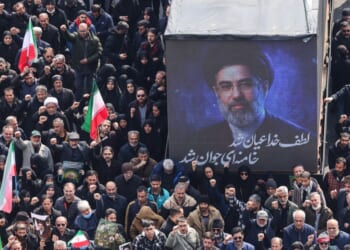
In the absence of a reliable internet connection and public opinion surveys in Iran, it’s difficult to say whether Golnaz’s views are representative of the broader Iranian public. However, social media posts and other conversations I had with Iranians since the start of the war until the internet went completely dark last week, together with nighttime chants against the regime, indicate that the conflict has had a galvanizing effect against the Islamic Republic. Tellingly, pro-regime demonstrations have begun to shrink in size, forcing the government to use clever techniques to make them appear larger.
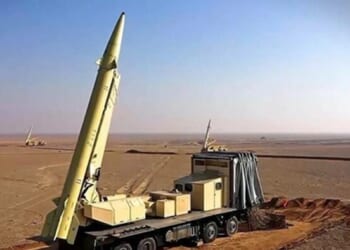
Yet this round of fighting has been significantly more painful for the Iranian people than the 12 days of Israeli bombing in June, which inflicted only minimal damage on civilian and dual-use infrastructure. Though the coalition has provided minimal information about its targets and the munitions used to strike them during this war, available reports indicate that there have been significantly more attacks—using much more powerful explosives—in residential areas. The number and types of targets have also been more ambitious this time around, with U.S. forces going after the military supply chain and command, control, and communications centers, including the suppression apparatus.
Given the level of destruction, I asked Golnaz whether either she or her loved ones had been affected by the conflict. Nobody had been hurt, but “a missile hit near me and destroyed my beautiful home,” she replied, telling me she had moved in two months before the bombing. Newly homeless, she had to leave Tehran earlier this month to stay with a friend. The destruction, she emphasized, hardened her resolve to see a better future for Iran. “We endure all these explosive sounds and damages just so they leave,” she said. “Do not let the war stop until they surrender.”
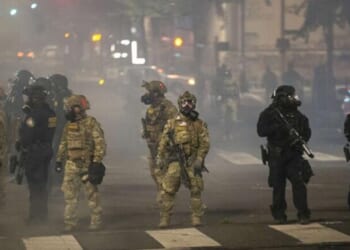
Golnaz told me about life in Iran’s capital city, where she lived during the first week of the war. Across the city, military checkpoints are guarded by Lebas-shakhsi, plainclothes police who embed in protests in order to spy on dissidents. According to reports, these officers search people’s phones and beat—and sometimes shoot—them if they find anti-government content. (Two days after our conversation, Israel began hitting street checkpoints with drones, using information provided by Iranians to select targets.)
The heightened presence of security forces has helped the Islamic Republic keep mass protests of the kind the country saw in January at bay. “There are too many of them, and they have guns. They are at every roundabout,” Golnaz told me.
It is also unclear whether demonstrators share the White House’s vision for the future governance of Iran. When asked about the potential of someone from within the regime—but more malleable to the U.S.—coming to power, as occurred in Venezuela with the elevation of Delcy Rodríguez—Golnaz was livid. “We don’t want them! We only want Pahlavi!”
Golnaz is likely not an outlier but a representative of a young, politically radical generation that sees no path forward under Iran’s current government. “We tried reform during the Green Movement, and we all saw how that turned out,” she said. As it did with so many other disillusioned Iranians, the regime forced her into radicalism because it closed the door to reform.
For many Iranians, a satirical meme from the 2000s has become an accurate description of their desperation for basic liberties: America, bomb us into freedom!