The political fallout from President Donald Trump’s mass deportation program has damaged his job approval ratings, led to the firing of Homeland Security Secretary Kristi Noem, and prompted the White House to urge Republicans in Congress to abandon the issue and instead tout administration efforts to remove criminal aliens.
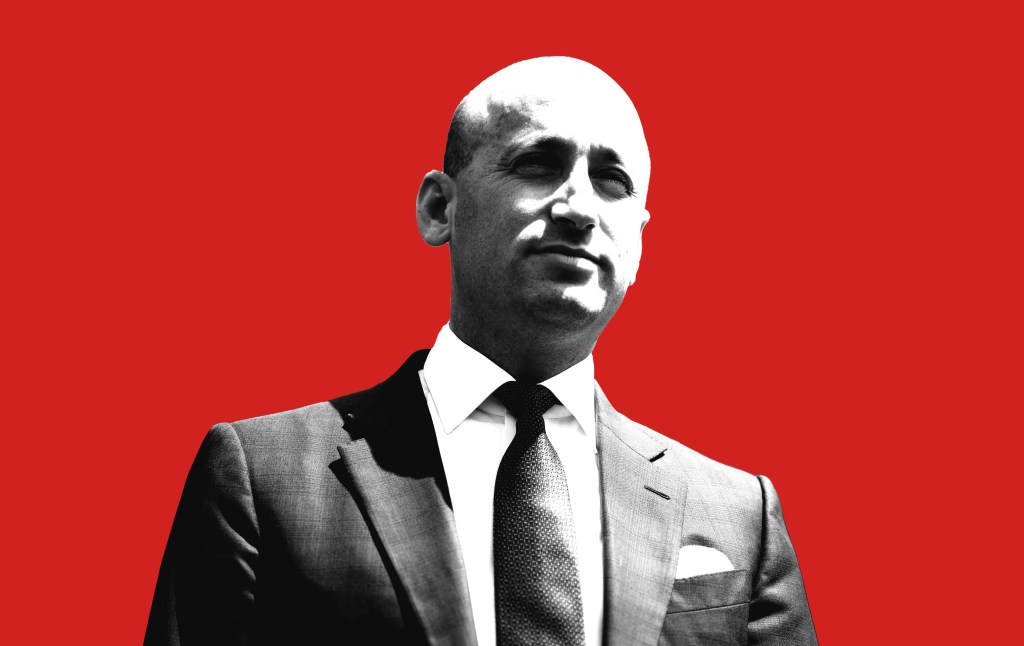
But the main architect of mass deportations, Stephen Miller, remains the White House deputy chief of staff because of his unquestionable loyalty to Trump and personal popularity among GOP voters. Few if any Republicans in Washington, D.C.—elected officials, lobbyists or operatives—are demanding Miller’s ouster, or even that immigration be removed from his portfolio. That’s despite the boost the mass deportation operation has given to the Democratic Party’s bid to recapture the House of Representatives and Senate in midterm elections.
A key reason why: The White House aide enjoys a following all his own inside the GOP.
“He’s the Holy Grail of MAGA,” a Republican lobbyist told The Dispatch, requesting anonymity to speak candidly, as did most who were interviewed for this story. “He’s the true north of MAGA for the president.” In a January Quinnipiac University poll, Trump’s job approval among Republican voters was 88 percent. Miller scored an impressive 73 percent rating in the same survey.
John Fredricks, a conservative talk radio host and a Trump supporter since the president first sought the GOP nomination a decade ago, has known Miller for 15 years. He explained Miller’s rise in the Make America Great Again movement, and White House staying power, to The Dispatch this way: “He’s got balls and a plan—most people have one without the other. He’s got them both, and you can quote me on this. He’s got balls and he’s got a plan. And that’s why he is revered within MAGA.”
“Stephen Miller is the guy, that if he were to leave the administration, everybody would doubt the sincerity of the other administration people,” Fredricks, who is based in Washington, D.C., added.
Many Republicans who work in the nation’s capital view Miller with “a combination of admiration and hate, but mostly fear,” a second GOP lobbyist said. This party insider added that Miller’s adept management of his close relationship with Trump is among the reasons the long knives haven’t come for Miller the way they did Noem, a Senate-confirmed Cabinet secretary, and others who have been in the president’s orbit as long as he has.
“He operates in a fiefdom with almost unlimited power and he’s smart enough not to overstep—a very dangerous combination for such an opportunistic hardliner,” this lobbyist said.
That keen sense to avoid big-footing Trump has made Miller an elusive figure for many Republican professionals in Washington. Even Republican lobbyists supportive of the president, or at least not openly hostile, have told The Dispatch they have had no interaction with Miller, despite his broad sway over domestic and foreign policy. “Stephen is way more focused internally than externally,” a GOP operative said. However, this experience is not universal.
Miller has been in town, and involved in Republican politics for years. He has relationships that predate Trump. And so some Republicans with business or concerns related to the administration’s agenda have, from time to time, used Miller as a high-level White House conduit. Given Miller’s deep involvement in immigration policy, he is often sought after for help on that issue. “People backchannel to Miller all the time,” a Republican who works on K Street said. “The consensus is, unless immigration-related, it usually isn’t a useful backchannel.”
Miller, 40, is something of a MAGA wunderkind.
Well before Trump first campaigned on a platform of securing the border and limiting immigration—both legal and illegal—Miller was making a name for himself fighting the fight on Capitol Hill. In 2013, Miller was a communications aide to then-Sen. Jeff Sessions, an Alabama Republican. As many Republicans in Congress negotiated with Democrats to pass a bipartisan overhaul of federal immigration law, Miller worked furiously to kill the legislation and at times seemed more emotionally invested in the legislation’s defeat than Sessions. (The bill cleared the Senate but died in the House.)
During Trump’s 2016 campaign, Sessions was among the first congressional Republicans to endorse, precipitating Miller’s move to the populist candidate’s campaign and eventually, Trump’s first White House. Throughout that period and in the years since, Miller’s power in Trump’s circle, and his stature in the MAGA movement, has grown. He played a key role in planning Trump’s second administration during the four years out of power, became a regular warmup act at the president’s campaign rallies, and now exercises inordinate influence—far more than his title, deputy chief of staff for domestic policy, suggests.
This has made Miller a unique force to contend with in Washington, a phenomenon appreciated by Republican operatives supportive of Trump.
For instance, one Republican government relations executive friendly with the White House conceded that Miller is often a terrible messenger for Trump’s agenda, causing supporters like this individual to gripe privately among themselves about his television appearances and preference that he leave on-camera interviews to more capable voices in the administration. The same is occasionally said of the president. But observe how Trump and Miller are viewed through a similar lens: “The benefit of the doubt is given to Trump at every turn—and that applies to Miller,” the government relations executive said.
Republicans in town who lack the same affection for Trump tend to find Miller’s political durability frustrating. The generic ballot gauging which party voters would prefer to be in control of Congress has worsened for Republicans over the past few months, suggesting the GOP’s 2026 turbulence is at least partially related to the public backlash against the mass deportation program. While midterm elections are historically challenging for the president’s party, some Republicans argue Miller is making matters worse.
“It’s probably time for him to move on. I don’t think he’s helping the president,” a veteran GOP lobbyist said. “There was a victory here: Trump sealed the border. Let’s get rid of—using Trump’s words, not mine, the ‘bad hombres,’ and call it a day. This is a classic example of snatching defeat from the jaws of victory.”
The White House did not respond to an email requesting comment.