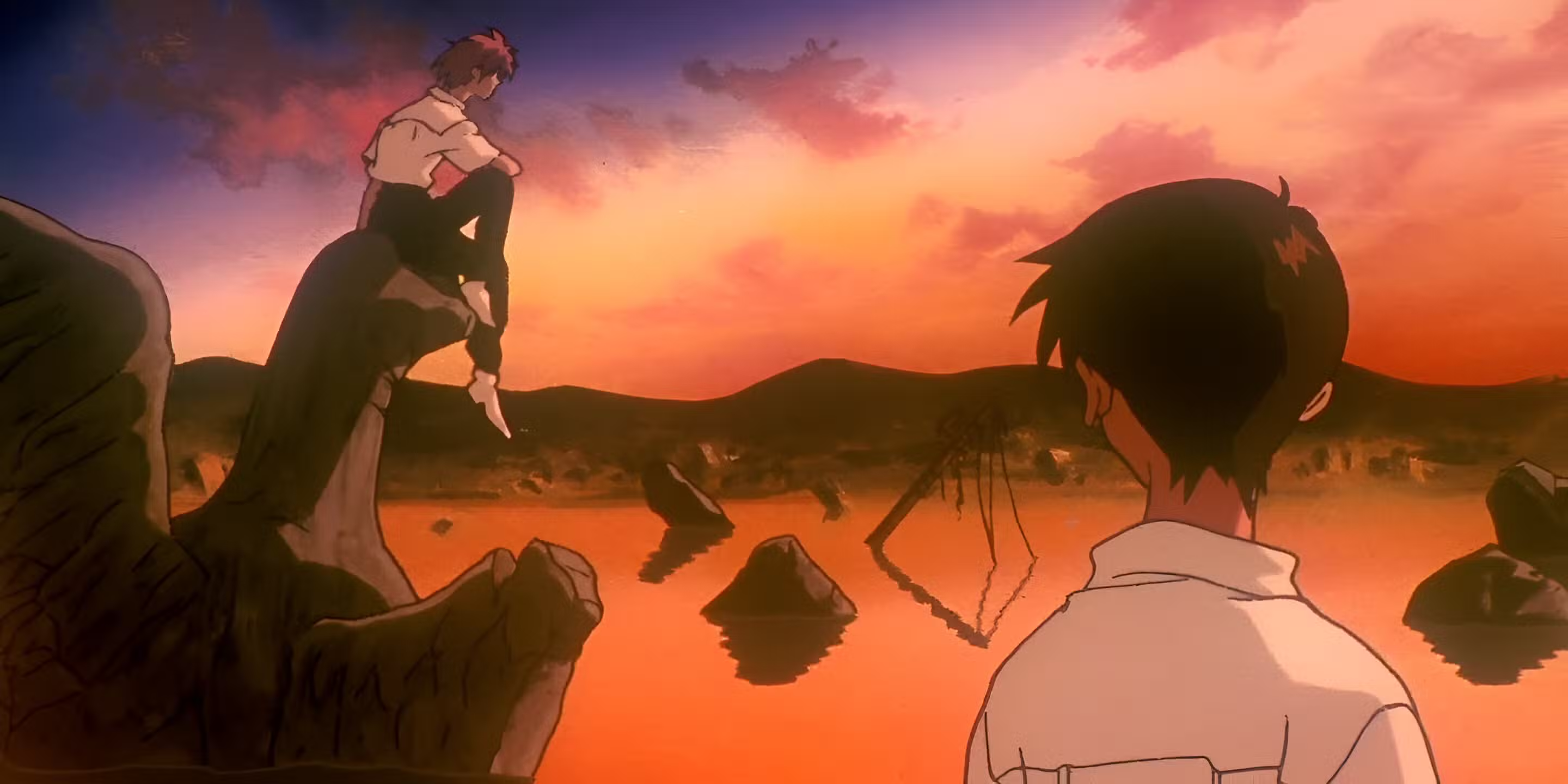
It is 2015, and the apocalypse is now. Years ago, a U.N.-affiliated Antarctic research base suddenly exploded, and the blast rocked the earth so violently that it tilted the planet’s axis, instantly vaporizing countless tons of glacial ice. The resulting lack of seasonal change has had a domino effect, destroying supply chains and disrupting global politics. Most regimes are desperate to preserve some semblance of order in their decaying societies.
It is monstrous; as tall as a skyscraper, humanoid but with a head hunched underneath its shoulders. The Japanese military is the first point of contact, and the angel shreds all of the conventional weaponry it encounters. It descends upon the sci-fi fortress of Tokyo-3. The Angel is looking for something.
While the entire city evacuates, 14-year-old Shinji Ikari runs the wrong way, back into Tokyo-3. That’s because he’s just received a call from his father Gendo, whom he hasn’t spoken to in three years. Gendo is a scientist and the director of something called NERV, a U.N.-backed institution with a vague mission to “defend humanity” against future apocalyptic threats.
When he arrives, Shinji gets a sense of what his father and NERV have been up to all these years: They’ve created an “Eva,” a gigantic, humanoid robot. With barely a word of greeting, Gendo commands Shinji to get into this monstrous thing, “pilot” it, and kill the invading angel. No one feels the need to explain why NERV needs a teenage boy to pilot the Eva unit, much less why it has to be the director’s estranged son. Shinji can’t help but acquiesce; as much as he hates his father, it looks like the fate of the world is at stake.
What Shinji can’t see is that his compliance to his father’s demands is about to change his life forever. He will meet Rei, who he is instantly attracted to for reasons that seem to extend beyond physical desire; Asuka, a half-German, half-Japanese pilot who will narcissistically inflict her superiority upon Shinji; and eventually another boy, named Kaworu, who seems wise beyond his years—which makes his same-sex advances on Shinji seem more predatory than anything else. Together, they will carve their way through the coming invasion of angelic warriors.
It is almost impossible to actually summarize Neon Genesis Evangelion—the “New Beginning Gospel”—much less without spoiling the entire show. What you see above is a synopsis of the first episode, sprinkled in with some later information so that it’s at least comprehensible. I rewatched all of this generation-defining anime series in celebration of its turning 30, and in spite of the fact that it is a cartoon, it isn’t exactly made for passive consumption.
In fact, I feel like watching so much NGE in such a short time has put me into a kind of hypnosis. NGE’s plot is complicated, yes, but so was a lot of Japanese-turned-English media marketed to American adolescents in the mid- to late-90s. No, the thing that makes NGE interesting is not its plot. It’s that the show is an emotional powerhouse, and it uses a great many experimental techniques to bring the audience along for the ride.
No discussion of NGE is complete without addressing its dizzying symbolism. Viewers of what is ostensibly a show for teenagers can expect colossal doses of psychology, mystic spirituality in the forms of Kabbalah and Christian gnosticism, and even some rather vulgar Freudian stuff. Some of these themes are explored in such detail that the show probably would have been banned in more American households if it wasn’t for the patina of cartoonish humor that makes the show seem palatable to the casual parental observer.
I have a distinct memory of coming home from elementary school and catching NGE’s second episode during “Giant Robot Week” on Toonami, a subsidiary of Cartoon Network. The network got its audience by hosting shows in half-hour time slots, and it all had to be exciting and action-packed to keep its young audience engaged. Giant Robot Week only showed the first two episodes of NGE, plus a lot of other Japanese shows in the so-called “Mecha” genre—robot action fluff aimed at young boys.
But as NGE continues, you realize it’s not just fluff. In NGE’s second episode, Sachiel beats Shinji within an inch of his life while he’s inside the Eva unit. The Eva unit appears to be destroyed, and the NERV operators are helpless. But the Eva unit, well, “wakes up” on its own. Something in the suit is alive—and whatever that living kernel is has decided to go berserk to protect its pilot.
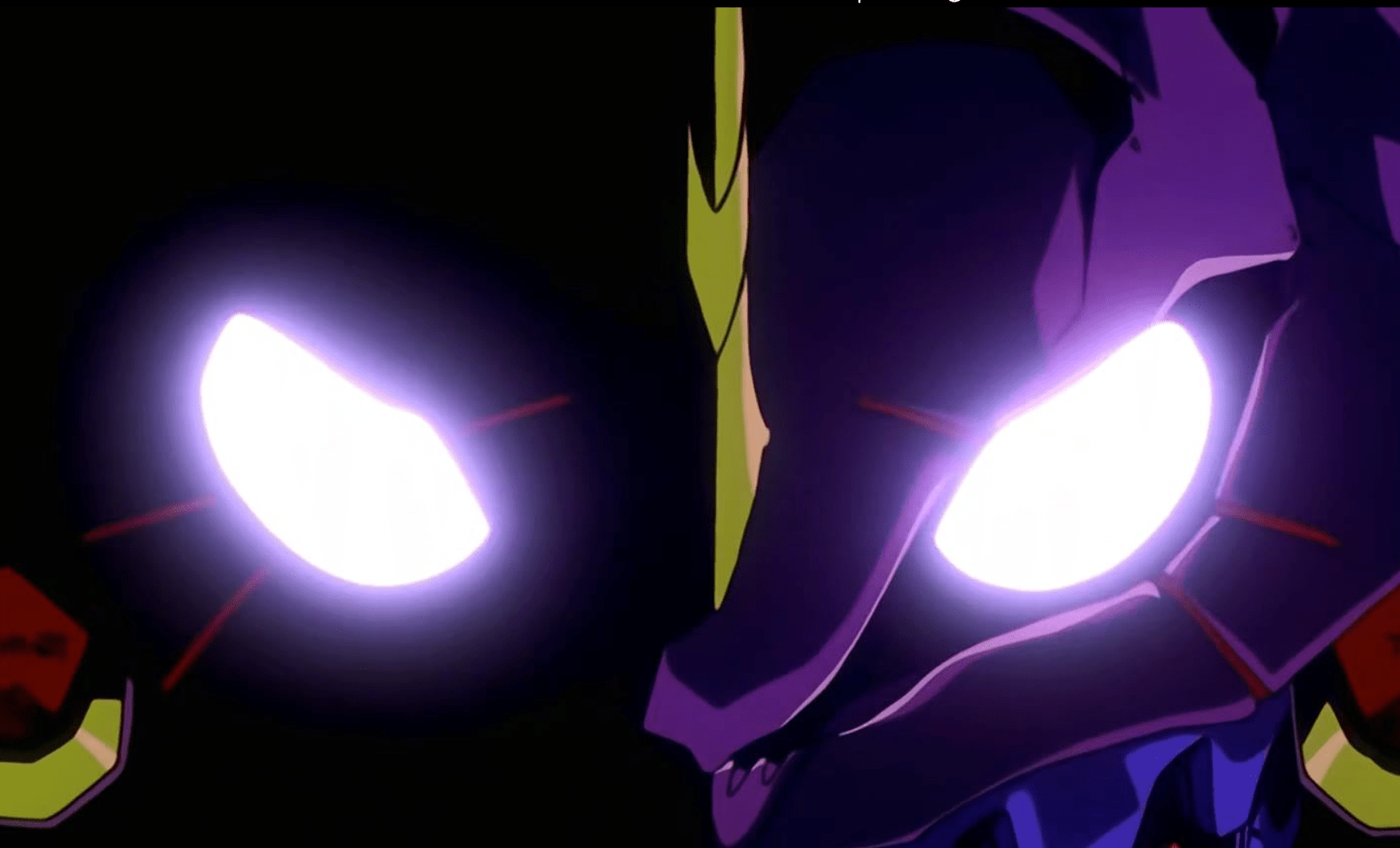
I remember the feeling of creeping horror I had when the Eva unit returned to life. It is animated perfectly; it’s still the same suit of armor, but its eyes have gone from robotic rectangles down to pinprick circles of pure white. It roars, showing a row of teeth, and it walks on all fours. It beats Sachiel to death with its metal hands. As a kid, when I saw those eyes shining like those of a nighttime predator, I knew that whatever was to come in NGE, it was not going to be robot action fluff. And it might go far beyond what I could grasp at that age.
NGE is unmistakably Japanese, and the culture that created this show had—and has—totally different standards for what could be shown in young adult media. The “point” of NGE isn’t found in the numerous battles with angels, or even in its various plot twists, but in the moments where a scene lingers on a character’s face for a little too long. Or where viewers witness a knock-down, drag-out fight between Shinji and Asuka. NGE has a realistic, often literary depiction of friendship and love. Arguments between characters usually don’t “resolve,” really—at least not in some tidy way that’s wrapped up by the end of the episode. The most terrible fights between characters often permanently damage their relationship, and getting trust back is either hard or impossible.
In one example, firebrand Asuka is constantly poking at Shinji. She finds him dour, weak, and self-pitying. But she’s hardly the villain in these fights, because Shinji is all of those things. It wasn’t until I rewatched NGE that I noticed these fights are not between poor, innocent Shinji and the implacable Asuka, who could’ve been a natural romantic partner for him if she could just let go of her massive ego. Instead, what viewers are shown in the Asuka/Shinji war is a sequence of fights between two different kinds of narcissists.
Shinji became this way through a bad combo of daddy and mommy issues. Not only did Gendo basically abandon his son to a foster family when he became NERV’s director, but Shinji’s mom, Yui, died in a freak accident related to Gendo’s first major research project. Shinji has never given up the suspicion that his dad had his mom killed, even though he can’t imagine why. But more broadly, Shinji’s abandonment has left him feeling unsure of himself and eager to be useful to others.
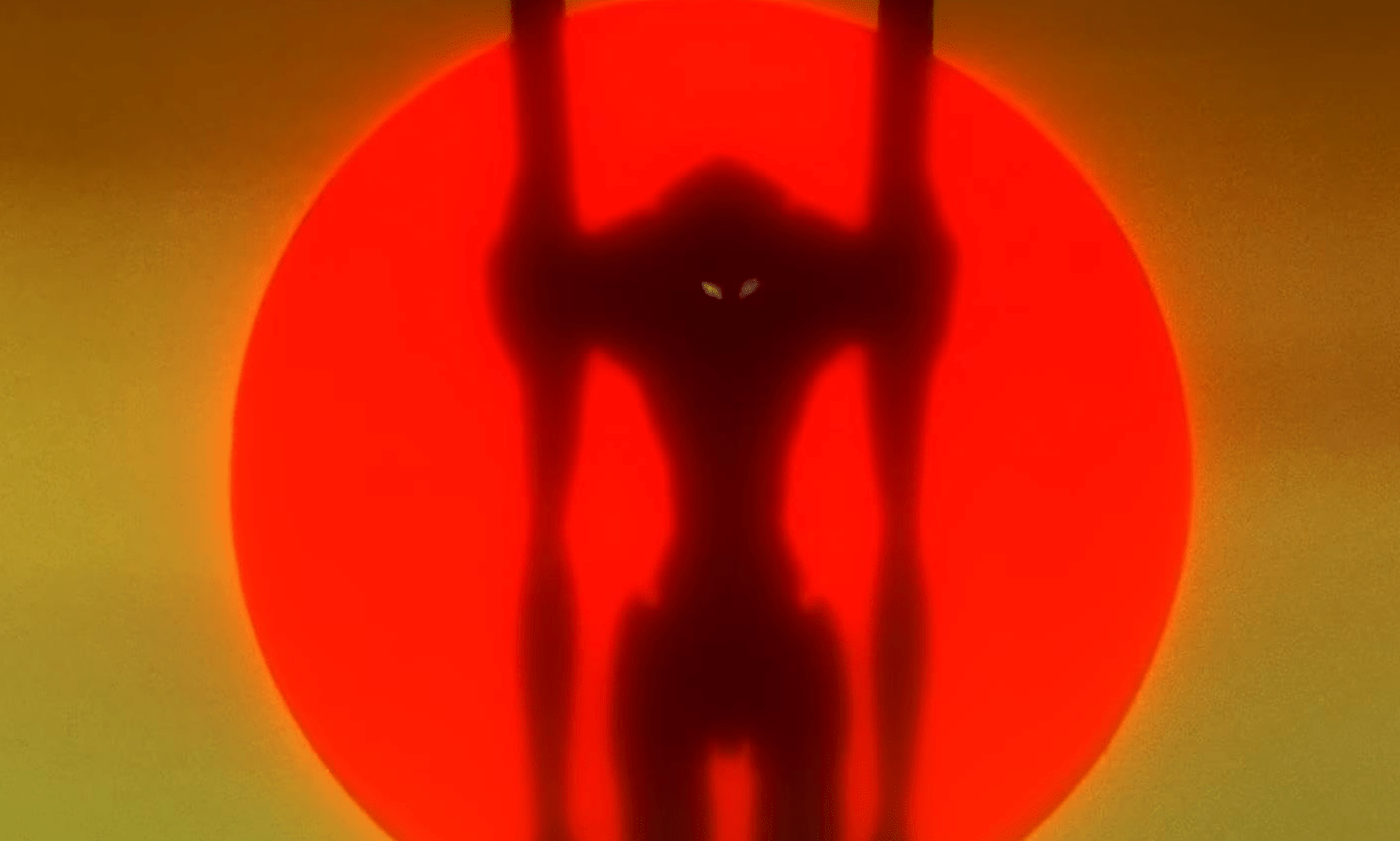
Since his mother died when he was so young, Shinji has had little exposure to women. Consequently, he has no idea how to respond to the many women who suddenly appear in his life at NERV. The shy Eva pilot Rei seems to like Shinji, but she is very close to his father (closer than he ever was), so he hates her for it. His NERV caretaker and battle commander, Misato, dotes on Shinji. But he is repulsed by her immaturity, by the fact that she seems to want his approval so badly, by the fact that she still lives like a college student while pushing 30.
NGE explores these psychosexual conflicts in excruciating detail. It can be hard to bear even as an adult viewer, which might explain why there weren’t really any Western young adult programs that depict male-female friendships at NGE’s level of meticulousness. The Western shows that did make boy- and- girl-problems central themes, like Kim Possible, didn’t really want to deal with the deeper nuances of these relationships. Maybe Avatar: The Last Airbender got close; it had Aang and Katara’s “will they/won’t they” romance, but it never got inside the characters’ heads in the same way. With how much NGE demands of its audience, and with how controversial the show’s ending was, it’s amazing that it has accrued such a dedicated following both in the East and West.
NGE finally got a full-series run on American television in 2005. In the average U.S. home, I don’t think anyone knew what to make of NGE; by 2005, the only Japanese animation parents were likely aware of was the 1960s Speed Racer show. But politically and economically, they had lived through a period of Japan Panic, for lack of a better term, where America’s leading minds were convinced that Japan was going to take over the world. In the ’80s and early ’90s, it was a fact that we were all going to become the victims of Japanese innovation and economic power. Japan was going to colonize the world with their Walkmans, reliable cars, and VCRs; a moderately successful real estate mogul named Donald Trump informed us that Japan was reinvesting all of the money it made from Americans into “buying all of Manhattan.”
After the fear of a Japan-U.S. great powers competition eventually fell on its face, cross-pollination between media distributors became economically viable. It was cheap for U.S. distributors to buy scripts and tapes for old shows that Japanese studios assumed would do poorly abroad; these distributors could do a slapdash in-house “localization” and translation job, and broadcast it in weird timeslots to fill up their weekly programming. Some of them unexpectedly took off. The live-action sci-fi/martial arts show Power Rangers premiered in 1993, although it went through a truly bizarre process of Americanization: It (even to this day) consists of chopped-up battle footage from a Japanese show called Super Sentai interspersed with story scenes filmed with American actors to make it more palatable. Dragon Ball Z, Sailor Moon, and Pokémon came to the U.S. in short order, exposing more kids to a less Americanized form of Japanese media. But this was all still pretty fluffy.
NGE, then, was not only culturally dissimilar from Western kids’ media, but even from the other Japanese stuff that had come to the U.S. by that time. There was no mistaking that this was a weird piece of anime, one that dealt with some heavy themes, and was uncharacteristically honest about how gross and awkward inexperienced young people can be about romance and sexuality. There is no universe in which NGE could’ve been produced by Disney Animation Studios, for instance. It also couldn’t have been broadcast in full even on Toonami, I suspect. No, it eventually aired in the 12:30 a.m. slot of Adult Swim, where there was a built-in young audience intentionally looking for shows they perceived as more “grown-up.”
NGE creator Hideaki Anno has been both grateful and troubled by his show’s profound influence. NGE itself was conceived during one of Anno’s depressive episodes, when he felt that anime was fated to remain juvenalia forever. The show was a last-ditch effort to try something new.
Anno is frequently disappointed by anime’s audience, and suspects that what viewers actually want—what they clamor for above all other artistic considerations—is juvenile fluff. His suspicions seemed to be confirmed after NGE’s finale was first broadcast in Japan on March 27, 1996. The show undergoes a sudden tonal shift in its final two episodes. NGE looks to be racing toward a potentially world-ending cataclysm, but instead it zooms in on Shinji and becomes introspective. What viewers received in the finale was not a resolution of the sci-fi plot, but a psychological bookend that left the audience with a transformed Shinji—more of a man, ready to take on the world with an emotional resilience he previously lacked.
The ending proved controversial, and Anno apparently received hate mail (maybe even death threats, although that remains unclear) shortly after its broadcast. Even the office of Gainax—NGE’s publisher—was vandalized in the following days.
Anno got back at the haters in the long run, though. Gainax later funded a film, End of Evangelion, which was pitched as a re-do of the ending. Thus, the critics got their bombastic sci-fi conclusion. But right before the film’s climax, it moves to a live-action sequence. Standing on a Tokyo sidewalk, there are women dressed up, cosplaying characters like Asuka and Rei. While this footage plays, an on-the-nose narration declares that people like Shinji “[use] fabrications to escape from reality,” that he can “only find happiness in [his] dreams” because he avoids the truth of the world by remaking it in his mind “with convenient fantasies.”
What’s so incredible about this sequence in End of Evangelion is not only that Anno had the courage of his convictions to not-so-subtly mock the superfans to their faces, but that he had the studio buy-in to get away with it. All of this is much harder to imagine in a Hollywood context. Anno’s honesty with his own audience is part of why NGE remains so revolutionary, and experimental even by modern standards. Current young adult programming still can’t seem to ride the line that NGE did—that is, create a show that actually plays into young viewers’ interests while challenging them to deal with messy, all-too-human complexity.
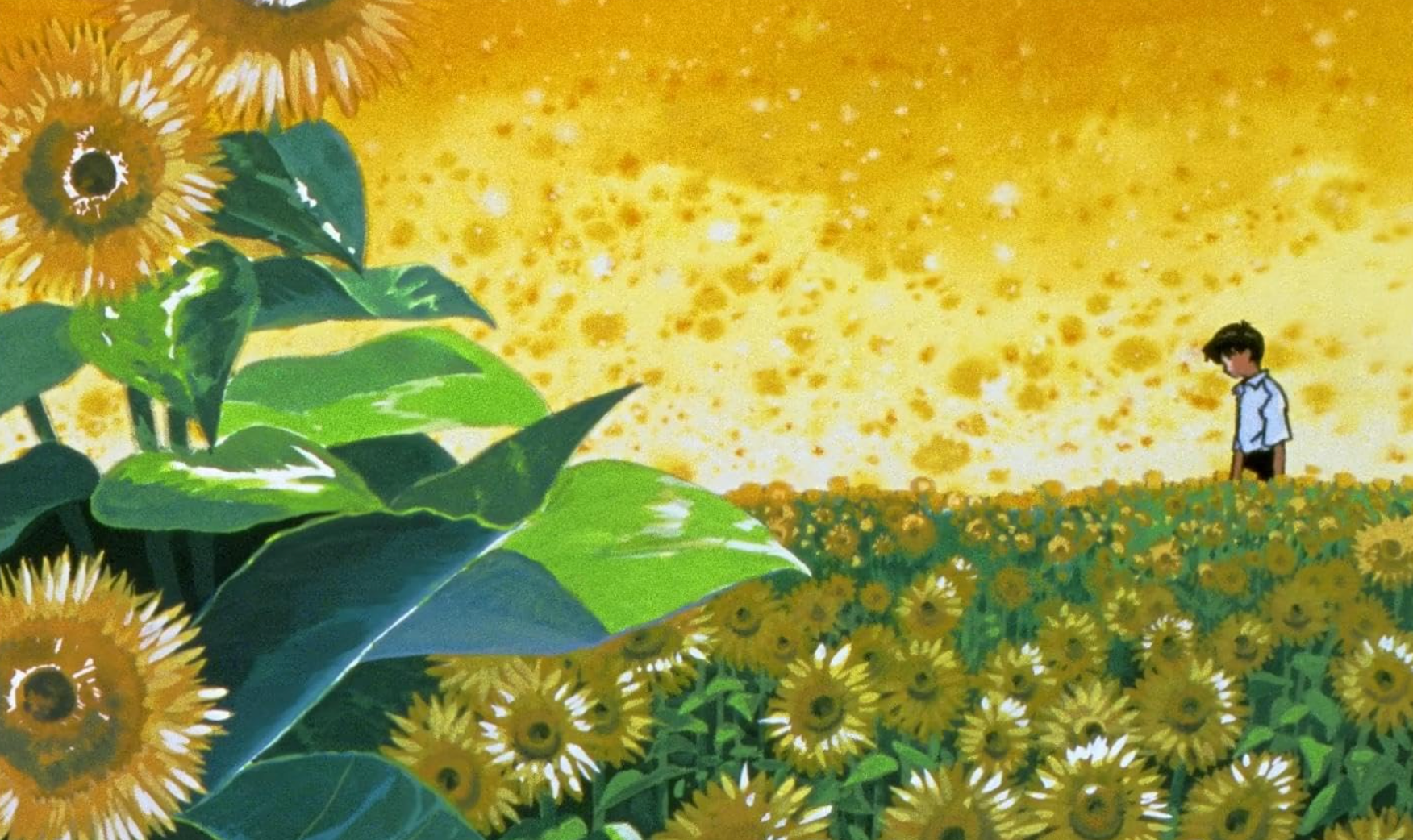
Western shows that used to have hints of this brilliance seem to have gone off the deep end. I know many people used to talk about the hidden complexity of the cartoon Adventure Time, but if one reads about its latest spinoff, the show and its fans seem to think of its themes entirely in “therapy speak.” By contrast, NGE remains so striking because it provides no platitudes. It meaningfully pushes the limits of what a young viewer is emotionally prepared for, and it never resolves such tensions with guidance counselor quips.
NGE’s best trait, then, is its radical honesty: about youth, about relationships, about where our fickleness and insecurities come from. As End of Evangelion shows, it is even willing to point the finger at the audience, demanding that they explore their own insecurities. NGE starts out looking like a Transformers spinoff, before deftly pivoting into a thrill-a-minute sci-fi epic with labyrinthine symbolism and ultimately embarking on a dark, psychic journey—a relentless, experimental coming-of-age story that gripped those elder millennials who managed to sneak some late-night TV back in 2005 and 2006.
NGE grabbed hold of a generation abroad and in Japan, and it never let go. The latest film installment came in 2021 and was a box office hit. The appetite for NGE is still present, and many of its international fans have grown up alongside it. In speaking to a generation’s anxieties and hopes, NGE became millennials’ version of The Catcher in the Rye—if The Catcher in the Rye was filtered through Eraserhead, Blade Runner, and the Book of Revelation. If that description isn’t enough to make newcomers test the waters on NGE’s 30th anniversary, then I don’t know what will.